First Communion: Preparation and Traditions

More than a milestone photo
It's easy, from the outside, to see First Communion as a rite of passage — white dresses, family gathered, a nice lunch afterward. Inside the Church's own understanding, it's something considerably weightier: the day a Catholic child receives what the Catechism calls the "source and summit" of Christian life, the Eucharist, for the first time (CCC 1324). Everything about the months of preparation beforehand exists to make sure that moment isn't just ceremonially nice but genuinely understood, at least in the way a seven-year-old can understand something this large.
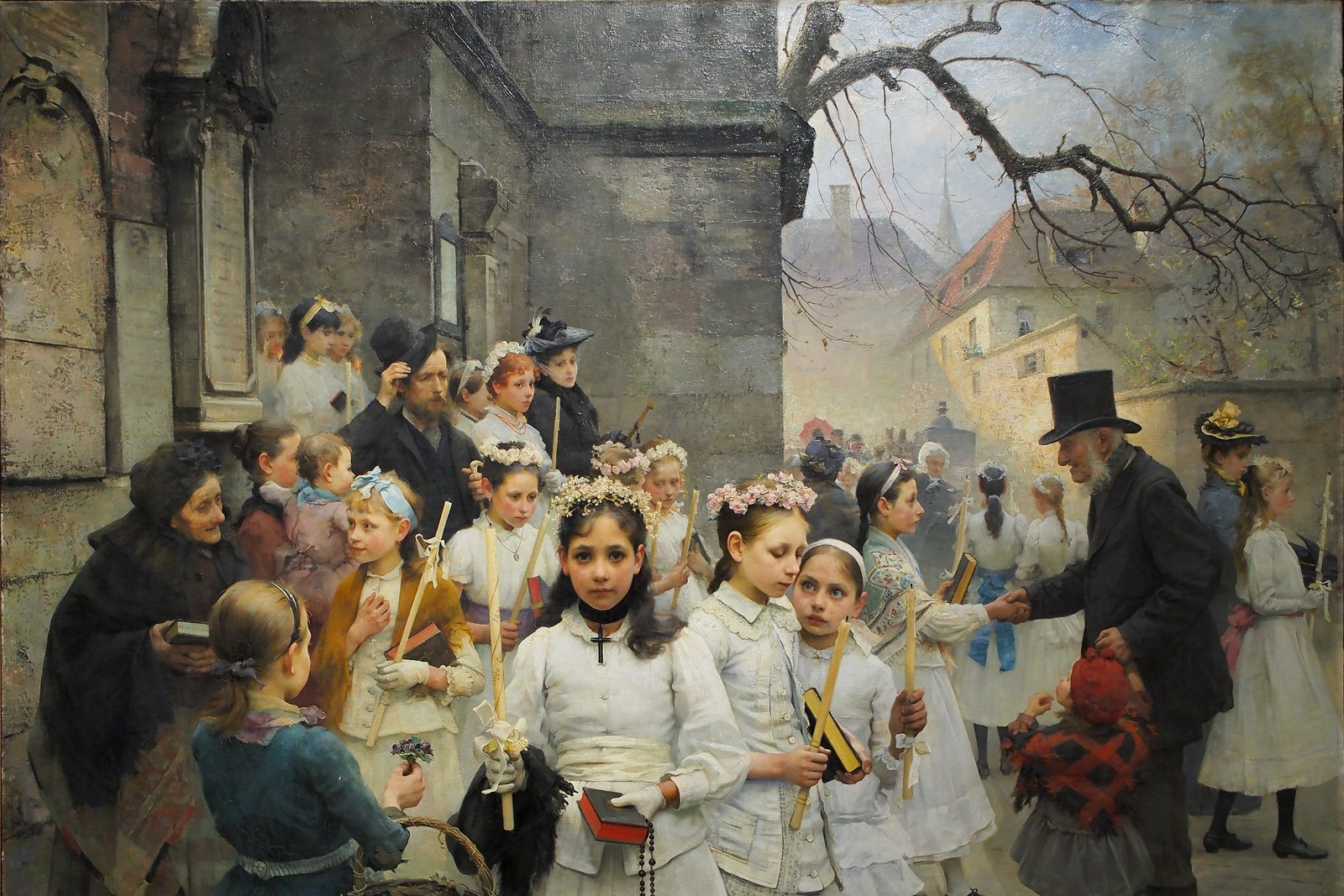
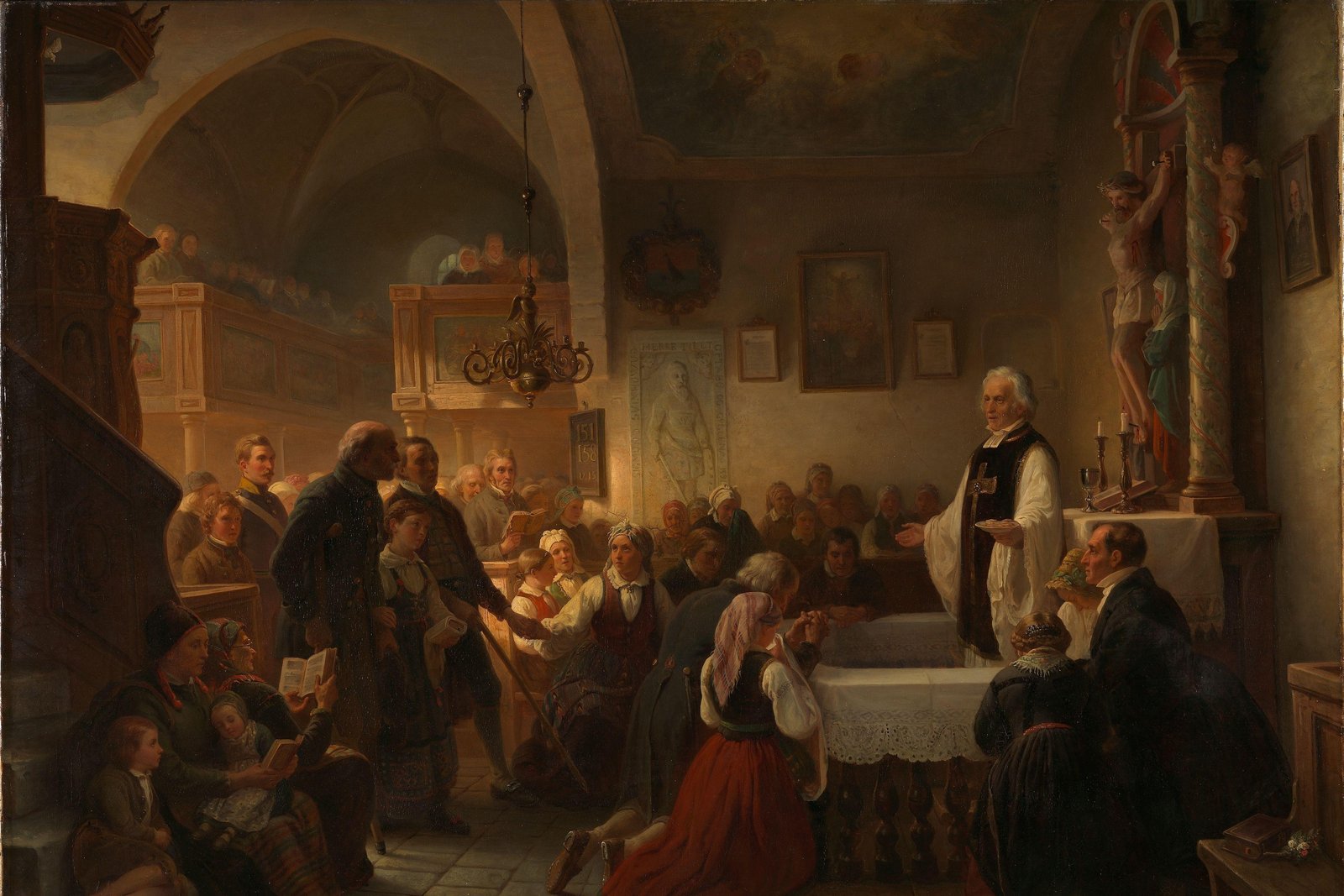
Carl Frithjof Smith, "After First Communion," 1892 — public domain.
Why age seven, roughly
Canon law sets the general benchmark for First Communion at the "age of discretion," traditionally understood as around age seven — not because seven is a magic number, but because it marks, in ordinary child development, the point where a child can begin to distinguish the consecrated host from ordinary bread and grasp, at a basic level, that something remarkable is happening (canon 913-914). Parishes exercise real flexibility here: children with developmental delays might prepare later; in rare pastoral cases, a priest may permit an earlier reception if a child in danger of death shows sufficient understanding. The number isn't rigid, but the underlying requirement — genuine comprehension, not just memorized answers — is taken seriously.
What a preparation program actually covers
Most parishes run First Communion preparation over one or two years, typically folded into a parish's broader religious education (often called CCD, from the historic Confraternity of Christian Doctrine, or simply "faith formation"). Classes usually walk through the structure of the Mass, the meaning of transubstantiation in age-appropriate language, key Gospel stories about Jesus and the Last Supper, and how to receive the host reverently, whether on the tongue or in the hands. Along the way, children typically make their First Confession, since the Church requires a person be free of unconfessed mortal sin before receiving Communion, meaning First Reconciliation is scheduled ahead of, not on, First Communion day itself (canon 914).
Family involvement is usually built into the program deliberately — many parishes require a parent or guardian to attend sessions alongside the child, on the theory that faith formation sticks better when it's reinforced at home rather than treated as something that happens only at church one hour a week.
What happens at the Mass itself
First Communion is typically celebrated during a special parish Mass, often with an entire class of children receiving together rather than individually, dressed in either matching or personally chosen formal attire. The structure of the Mass itself doesn't change from any ordinary Sunday liturgy — the Liturgy of the Word, the Liturgy of the Eucharist, the consecration — but the moment of first reception is often marked visibly: children process forward as a group, sometimes preceded by a procession carrying the Eucharist itself, and many parishes invite the children to stand near the altar or in reserved front pews so the significance of the moment is unmistakable to the whole congregation. The same Eucharistic Adoration these children will (ideally) grow into as adults begins, quietly, on this day.
Where the white dress tradition actually comes from
The now-common image of a girl in a white dress and veil for First Communion isn't an ancient liturgical requirement — it's a 19th-century custom, strongest in France, that spread widely from there. It drew on existing symbolism around baptismal white garments (worn once already, at baptism, to signify being "clothed in Christ") and on a broader Marian and devotional culture that treated white as a visual sign of purity and innocence. Boys' formal suits developed alongside it as the general expectation of "Sunday best, elevated" rather than any specific theological requirement. Parishes today vary enormously in how strictly they expect this dress code followed; some ask for simple white attire, others leave it to family discretion entirely.
Gifts, missals, and family memory
Historically, and still today in many Catholic families, First Communion comes with gifts meant to last well beyond the day itself: a rosary, a scapular, a cross or medal, and especially a First Communion missal — a compact prayer book containing the Mass texts and common devotions, often inscribed by godparents or grandparents with the date and a personal note. In an era before printed missals were common, this was often a family's most treasured religious book, passed down and marked with decades of a person's own handwritten prayers. The custom persists partly because it quietly communicates something the whole day is built around: that this isn't a one-time event but the start of a lifelong relationship with the sacrament, one the Church hopes will be renewed at Mass every week that follows.
A beginning, not a finish line
Perhaps the easiest thing to lose track of amid the dresses, cake, and relatives is that First Communion isn't a graduation — it's an opening. The Church doesn't consider a child "done" with sacramental formation once the Eucharist has been received once; if anything, First Communion marks the point where ordinary, weekly participation in the Mass is supposed to begin in earnest. The white dress gets put away, the missal gets shelved, but the thing they marked — a child's first taste of what Catholics believe is Christ himself, truly present — is meant to keep happening, quietly, every Sunday after.
Trivia
At what age do Catholic children typically make their First Communion?
Why do Catholic children usually receive First Confession before First Communion?
Where does the tradition of white First Communion dresses come from?
What is a First Communion missal or prayer book traditionally given as a gift?
Is First Communion the same thing as Confirmation?
Related Reading