Sacramentals Explained — Holy Water, Medals, and Scapulars

A category the Church built on purpose
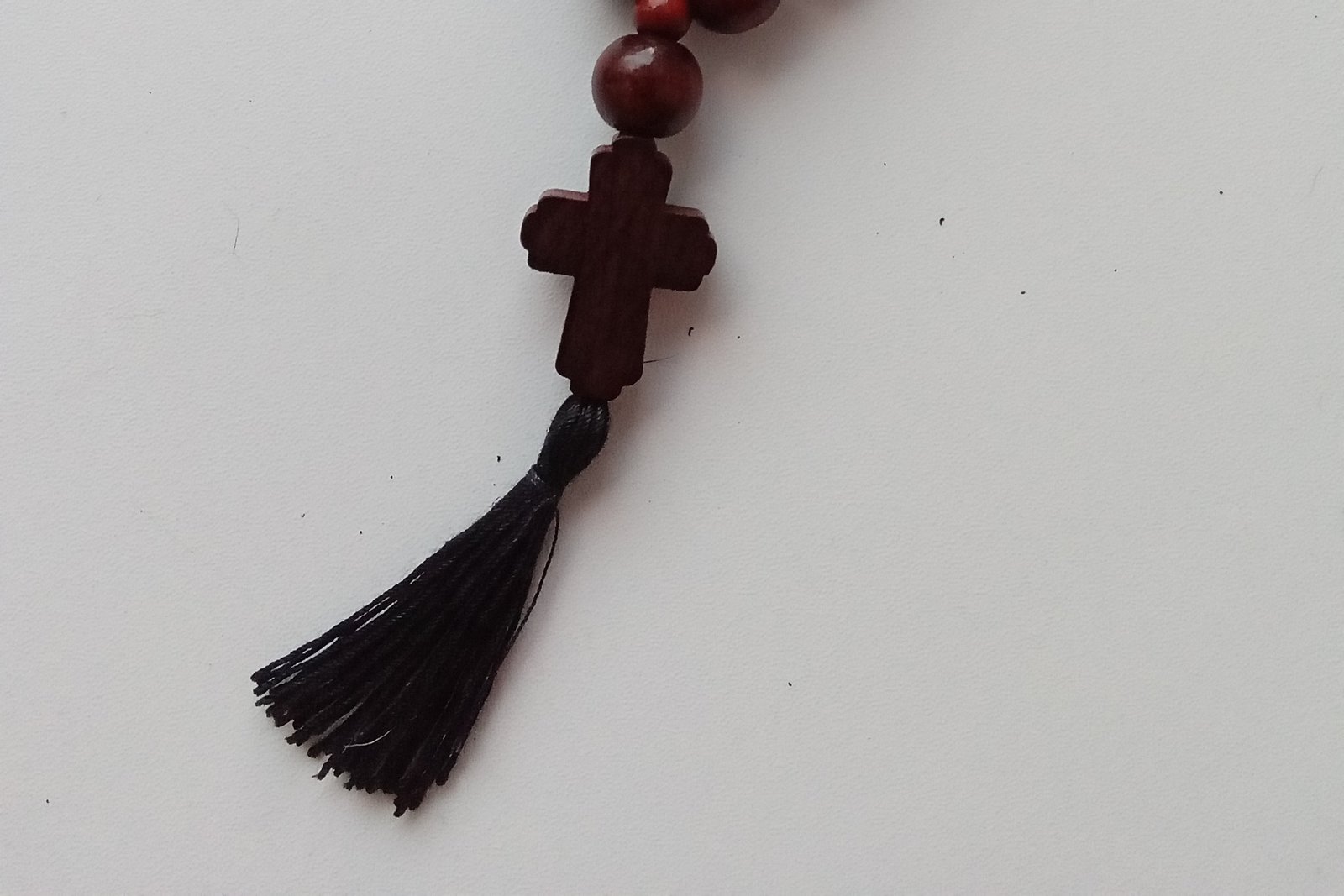
Walk through a Catholic home and the objects that mark it as Catholic are rarely the seven sacraments themselves — those are events, not things you can hang on a wall. What you're more likely to find are sacramentals: a crucifix over a doorway, a bottle of holy water near the exit, a medal on a chain, a rosary draped over a bedpost. The Church gives this whole category a precise definition: "sacred signs which bear a resemblance to the sacraments. They signify effects, particularly of a spiritual nature, which are obtained through the intercession of the Church" (CCC 1667). The resemblance to the sacraments is deliberate — sacramentals borrow the same basic logic of sign and grace that shapes the seven sacraments — but the mechanism underneath them works differently in an important way.
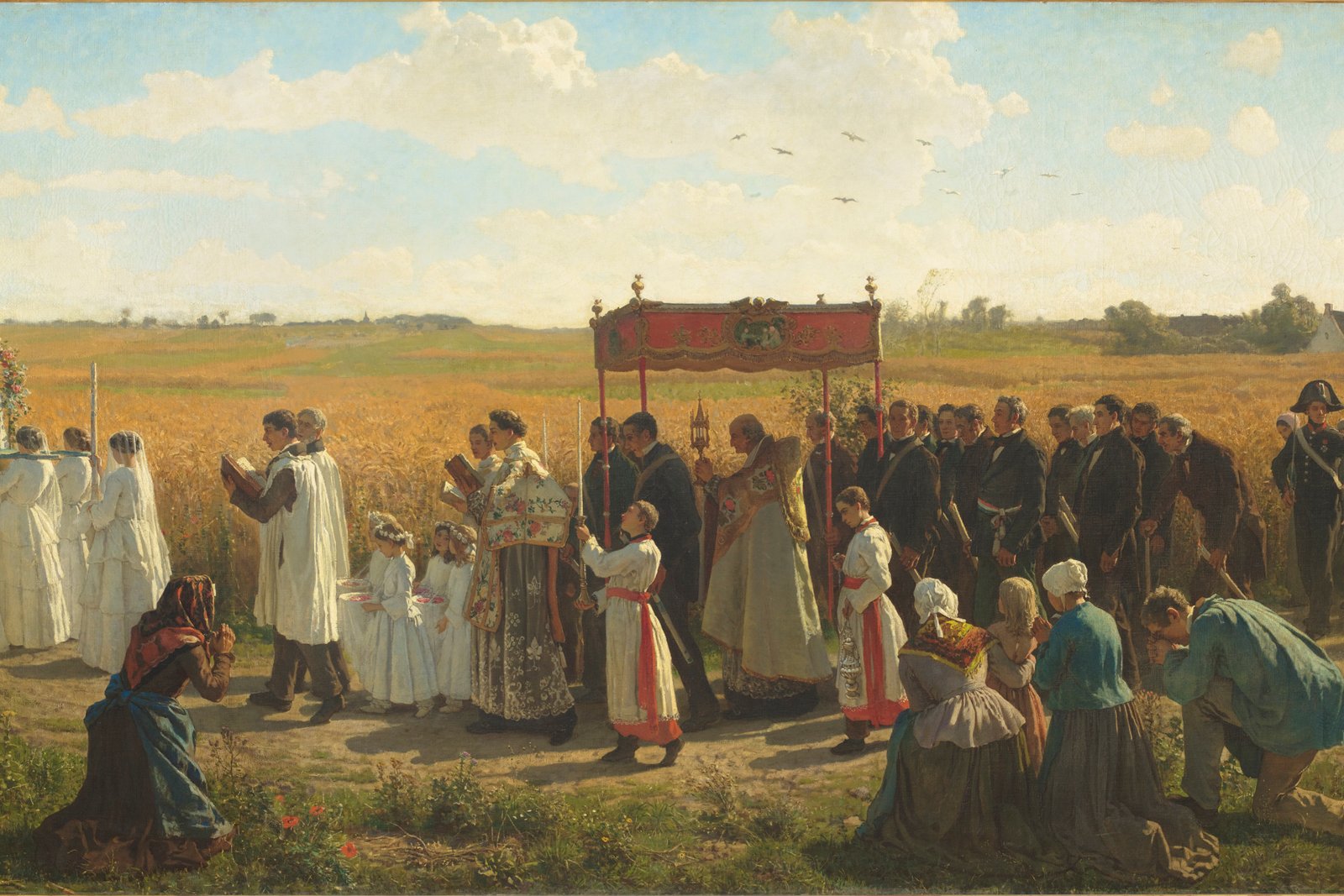
Jules Breton, La Bénédiction des blés en Artois (The Blessing of the Wheat in Artois), 1857, Musée d'Orsay, Paris — public domain.
Instituted by the Church, not by Christ directly
The seven sacraments — Baptism, Confirmation, Eucharist, Reconciliation, Anointing of the Sick, Holy Orders, and Matrimony — are held by Catholic teaching to have been instituted by Christ himself, and to confer grace reliably whenever they're validly celebrated, independent of the holiness of the minister administering them. Sacramentals sit in a different category entirely: they were instituted by the Church over the course of its history, not directly by Christ, and their effect works through a different mechanism. The Catechism draws the line clearly: sacramentals "do not confer the grace of the Holy Spirit in the way that the sacraments do, but by the Church's prayer, they prepare us to receive grace and dispose us to cooperate with it" (CCC 1670).
That distinction matters more than it might first appear. A sacramental doesn't act automatically, and it isn't a smaller, weaker version of a sacrament. It's a different kind of thing altogether — a sign that, through the Church's prayer and the disposition of the person using it, opens a person toward grace rather than delivering grace directly the way, say, Baptism does.
What sacramentals include, and how they're structured
The Catechism describes sacramentals as always including "a prayer, often accompanied by a specific sign, such as the laying on of hands, the sign of the cross, or the sprinkling of holy water" (CCC 1668). This covers a wide range of practice: blessings of people, places, meals, and objects; the use of holy water, blessed palms, and blessed candles; wearing a blessed medal or scapular; and even, in a more solemn form, exorcism, described in the Catechism as a specific case in which the Church "asks publicly and authoritatively in the name of Jesus Christ that a person or object be protected against the power of the Evil One" (CCC 1673) — a use of the Church's blessing far removed from ordinary devotional objects, and one reserved to priests acting with a bishop's permission.
Among all sacramentals, blessings themselves come first in importance, according to the Catechism (CCC 1671) — every other sacramental, including holy water and blessed medals, ultimately derives from an act of blessing, invoking God's name and grace over a person, place, or object.
Holy water: a sign that recalls Baptism
Holy water is probably the most familiar sacramental to anyone who has walked into a Catholic church — a font near the door, dipped into and used to make the Sign of the Cross on entering. Its meaning is tied directly back to Baptism: the sprinkling or touching of holy water "recalls Baptism" (CCC 1668), functioning as a small renewal of the baptismal promises made once at the font and, ideally, remembered every time a Catholic crosses that threshold again.
Blessed medals and scapulars: wearable reminders
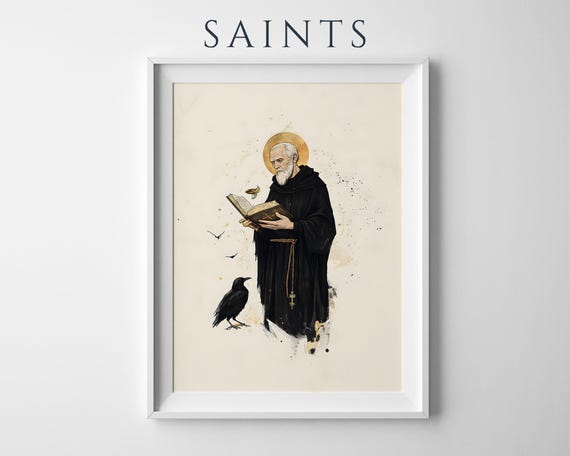
A blessed medal — a Saint Benedict medal, a Miraculous Medal, a medal of a patron saint — works the same underlying way: the object itself holds no independent power, but wearing something blessed by the Church is meant to serve as a constant, physical reminder of faith and protection, tied to the intercession of the saint depicted and the Church's own prayer of blessing.
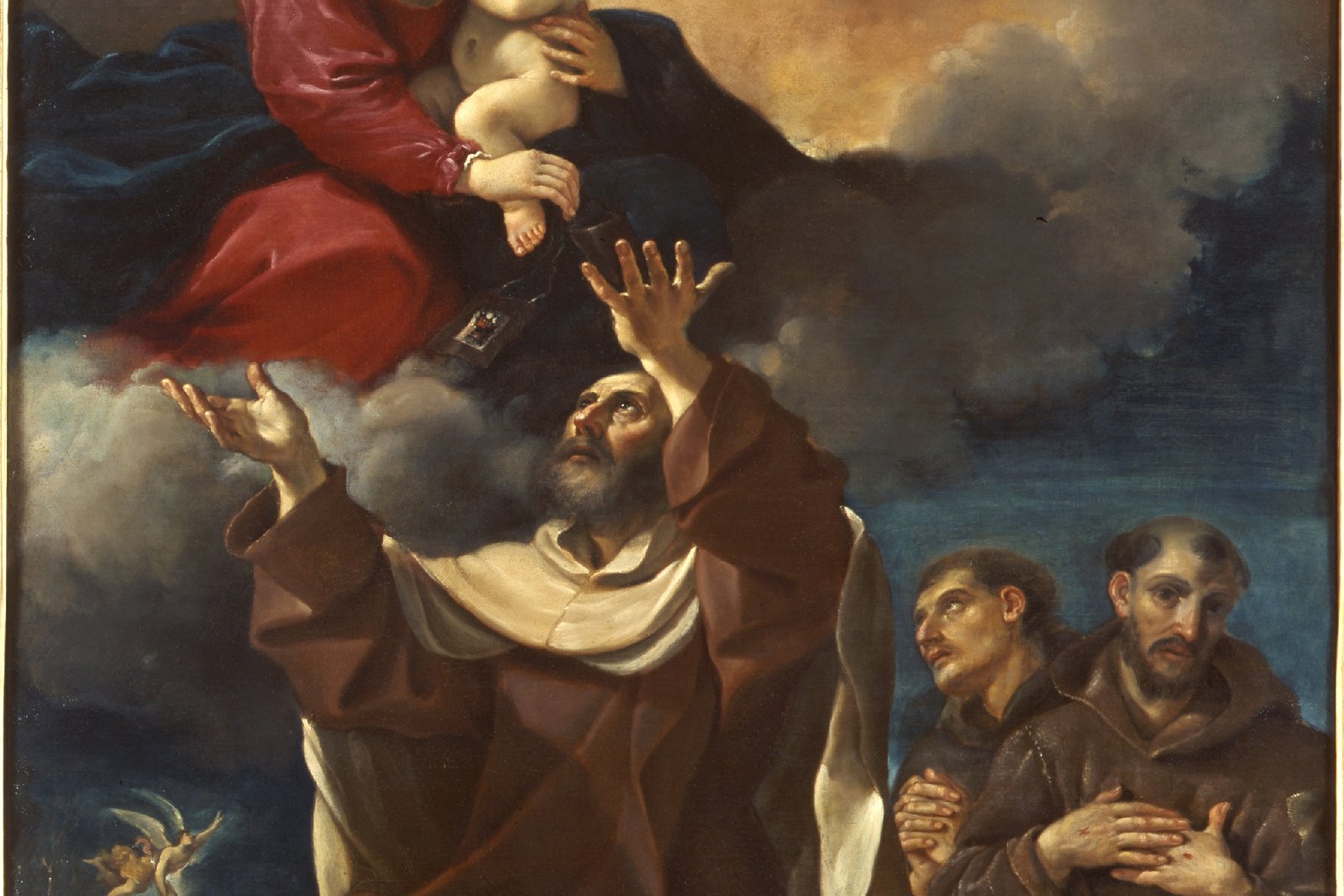
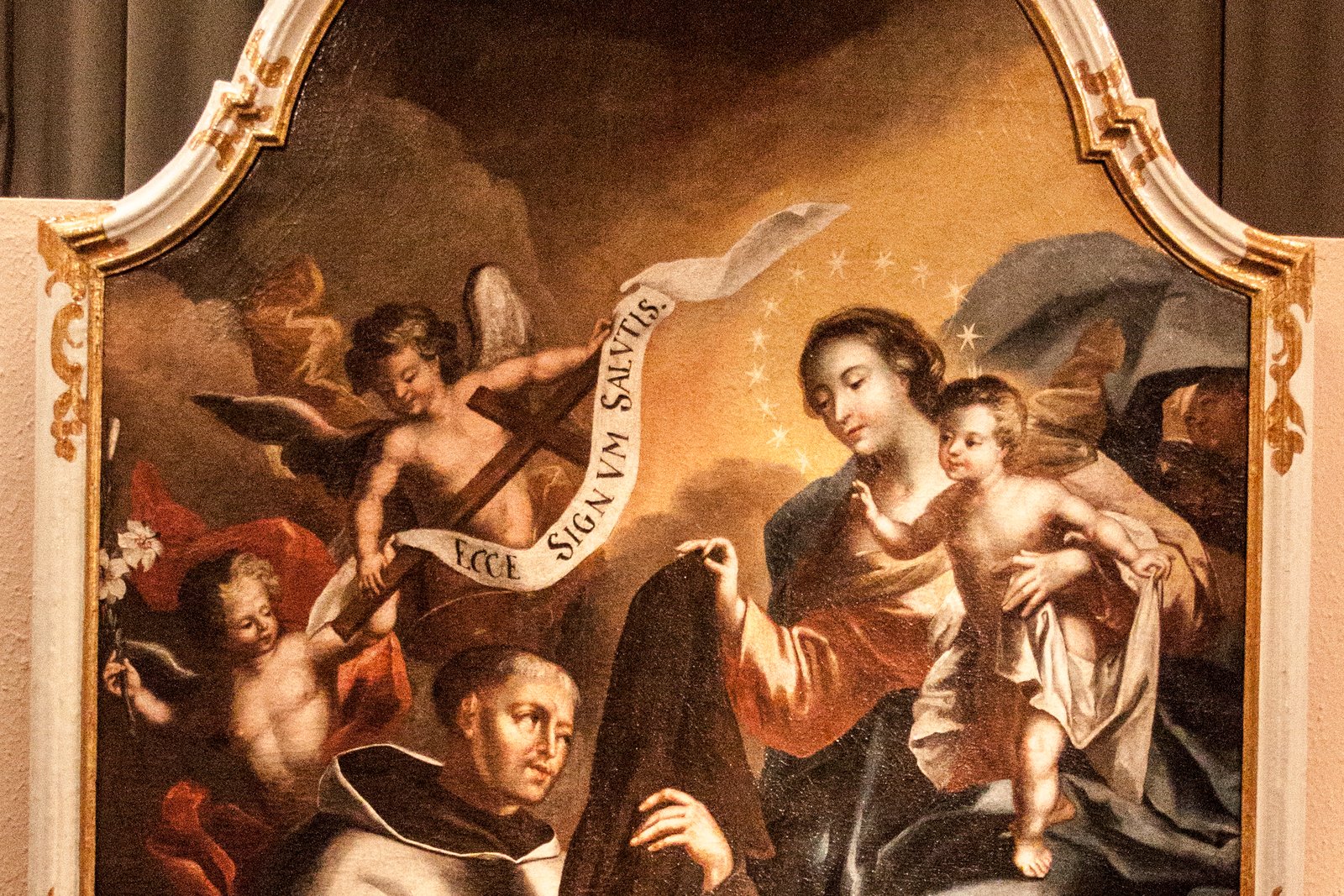
The brown scapular follows the same logic on a larger scale, carrying a specific Marian devotional history of its own — see the brown scapular for the fuller story of that particular sacramental. Both medals and scapulars share the same basic Catholic understanding: neither is a talisman that acts automatically, and neither substitutes for the interior faith and disposition the Church consistently insists must accompany any sacramental's use.
Who can bless a sacramental
Because sacramentals flow from the baptismal calling of every Christian to be a source of blessing, the Church allows some blessings to be given by any baptized layperson — a parent blessing a child before bed, for instance. Other blessings, more closely tied to the Church's liturgical and sacramental life, are reserved to ordained ministers: the Catechism notes "lay people may preside at certain blessings; the more a blessing concerns ecclesial and sacramental life, the more is its administration reserved to the ordained ministry" (CCC 1669).
Popular piety, kept in its proper place
Sacramentals overlap closely with what the Church calls popular piety — devotions like pilgrimages, the veneration of relics, and the wearing of medals, which the Catechism describes as extending the Church's liturgical life without ever replacing it (CCC 1675). The Church actively encourages these forms of devotion while also insisting they remain properly ordered beneath the sacraments and the liturgy, never substituting for them. A blessed medal worn faithfully, a home sprinkled with holy water, a scapular carried in memory of a specific Marian devotion — none of these confer grace on their own. What they do, consistently, is what the Church designed sacramentals to do from the start: keep ordinary life oriented, in small and constant ways, toward the grace the sacraments themselves deliver in full.
Trivia
What is a sacramental, in Catholic teaching?
What's the actual difference between a sacrament and a sacramental?
Does holy water or a blessed medal have any power on its own?
Can a lay Catholic bless a sacramental, or does it require a priest?
Is wearing a brown scapular or a Saint Benedict medal required for salvation?
Related Reading