Easter and the Resurrection — What Are We Actually Celebrating?

The claim that everything else depends on
It's worth sitting with how far Paul pushes this in that same passage. He doesn't say the Resurrection is the best part of the Gospel, or the most moving. He says that without it, Christian preaching is empty, Christian faith is empty, and believers are, in his blunt phrase, "the most pitiable people of all" (1 Corinthians 15:19). That's not rhetorical flourish from a man exaggerating for effect — it's a structural claim about how the whole thing holds together. If Jesus stayed dead, there is, by Paul's own account, no forgiveness of sins, no resurrection to hope for, and no reason to have organized a religion around him in the first place. The Catechism echoes that weight directly, calling the Resurrection "the crowning truth of our faith in Christ," a truth confirmed by all his other words and deeds and standing at the center of the entire Christian message (CCC 638).
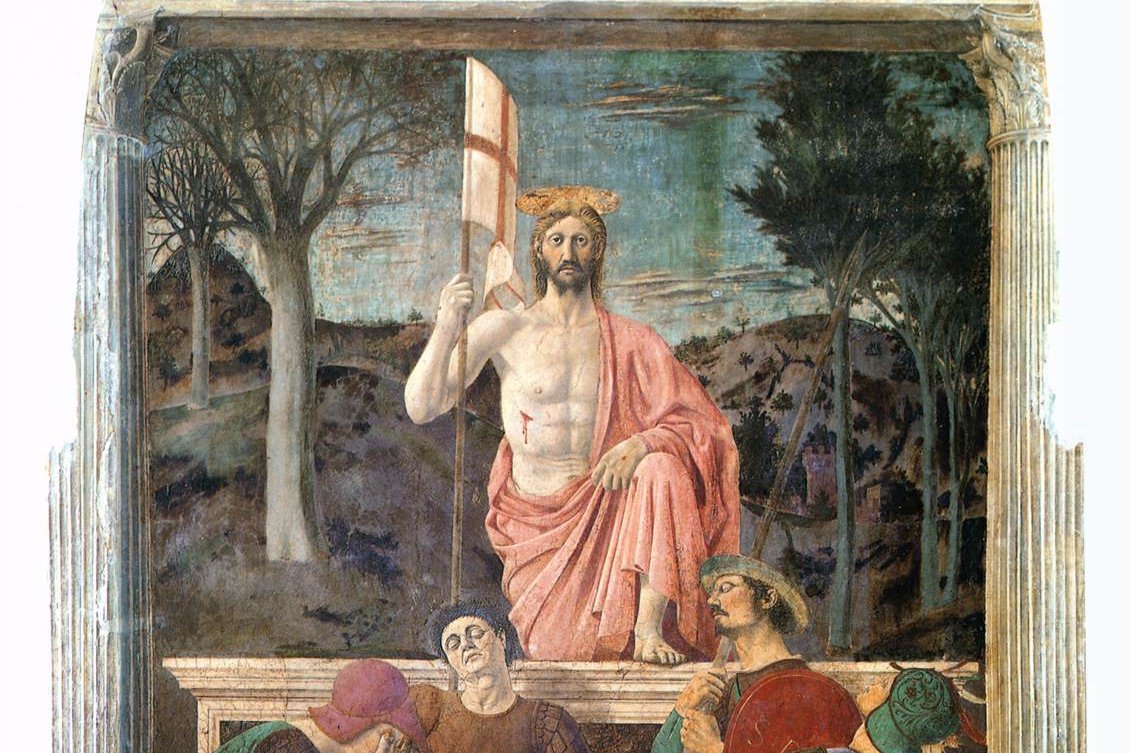
Piero della Francesca, The Resurrection, c. 1463–65, Museo Civico, Sansepolcro — public domain.
That's also why Easter, not Christmas, has always carried the higher rank in Catholic liturgical life, even though Christmas gets more cultural airtime. The Nativity announces who Christ is; the Resurrection is the event the Church treats as proof — the moment that either validates or empties everything claimed about him.
Real, not merely remembered
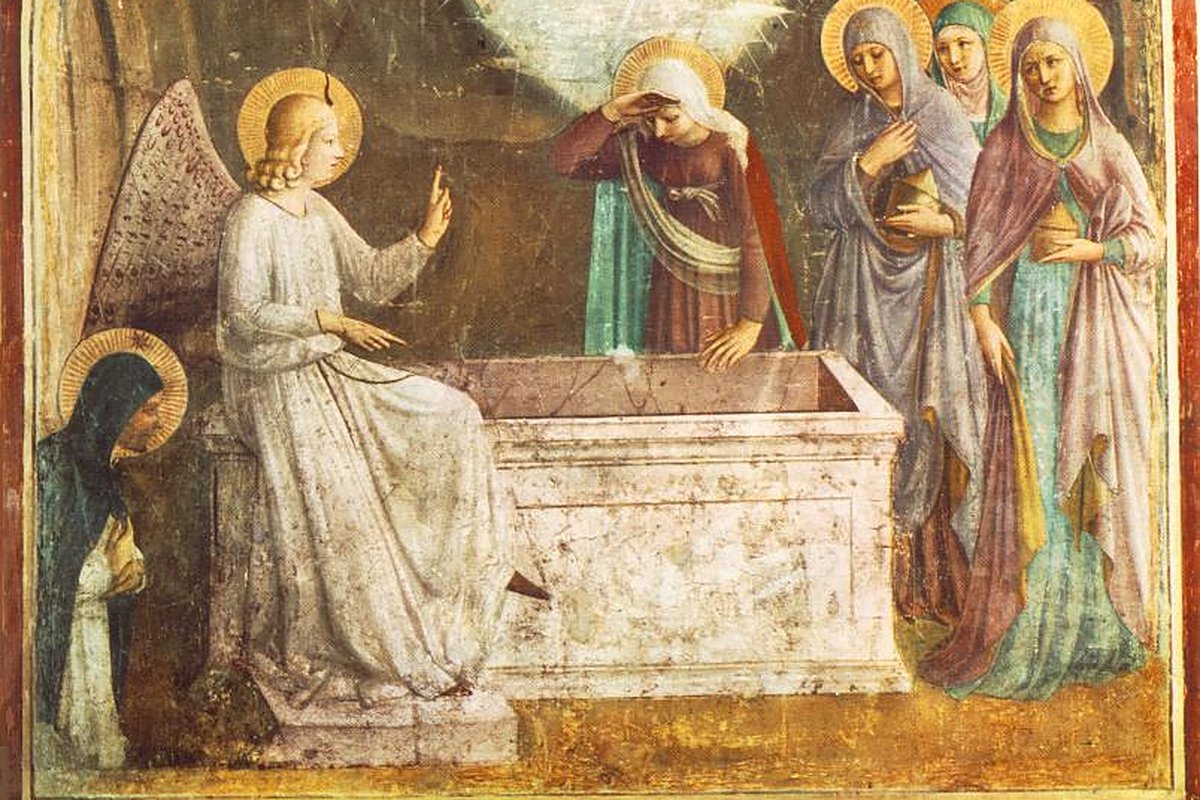
Catholic teaching is specific about what kind of event the Resurrection was, and it pushes back against two easy misreadings at once. It wasn't a metaphor for the disciples' grief resolving into renewed conviction, nor was it simply Jesus's soul or spirit surviving death in some disembodied sense while his body stayed in the tomb. The Catechism insists the Resurrection was bodily and historical — the same Jesus who died, genuinely alive again, with an empty tomb as the first, negative sign of that fact (CCC 639-640). At the same time, it was not a return to ordinary earthly life of the kind experienced by Lazarus, who would eventually die again. Christ's risen body carries what the Catechism describes as the properties of a glorified body, no longer bound by the usual limits of space and time, which is part of why the Gospel accounts describe him appearing and vanishing, walking through locked doors, and sometimes not being immediately recognized by people who knew him well (CCC 645-646). The Church holds both halves together deliberately: real enough to be witnessed and touched, transformed enough that it opens onto something genuinely new.
Holy Thursday through Easter Vigil: one continuous act, not four
The days building up to Easter Sunday are structured with unusual care. The Triduum — literally "three days" — begins with the Mass of the Lord's Supper on Holy Thursday evening, which commemorates the institution of the Eucharist and the priesthood at the Last Supper and typically includes the washing of feet, recalling Christ's example of service to his disciples. That Mass doesn't formally end in the usual way; instead the congregation processes with the Eucharist to a place of reposition for adoration, and the liturgy simply pauses.
Good Friday continues from there with no Mass at all — the only day of the year the Church deliberately omits it. In its place is a service built around the Passion narrative (traditionally from John's Gospel), solemn intercessions for the whole world, and the Veneration of the Cross, followed by Communion distributed from hosts consecrated the previous evening. The absence of a new Eucharistic consecration is itself a statement: the day centers on Christ's actual death, not on the Mass's re-presentation of his sacrifice.
The sequence culminates at the Easter Vigil, held after nightfall on Holy Saturday and still regarded, even amid the joy of Easter Sunday morning, as the Church's principal liturgical celebration of the entire year. It opens in darkness with the blessing of new fire and the lighting of the Paschal candle — Christ, the Catechism calls him, as the light that darkness has not overcome — before moving through an extended cycle of Old Testament readings that trace the whole arc of salvation history from creation through the prophets. Then, at last, the Gloria returns after weeks of Lenten silence, the Gospel of the Resurrection is proclaimed, and, in many parishes, new Christians are baptized and received into full communion with the Church at the same service — a deliberate pairing, since Baptism is understood theologically as dying and rising with Christ (Romans 6:3-4). Easter Sunday morning Mass, for most Catholics the only part of this sequence they attend, is in fact the tail end of a single four-day liturgical arc that began two evenings earlier.
Why the shape matters, not just the ending
None of this structure is decorative. The Triduum is built to walk through the events in something like real time — supper, death, silence, dawn — so that Easter morning doesn't arrive as an isolated celebration but as the resolution of something the whole preceding season, Lent included, had been pointing toward. Paul's blunt either/or from Corinth sits underneath all of it: either the tomb was empty and Christ is risen, in which case the Church's entire calendar, its sacraments, and its hope for the dead all make sense together, or it wasn't, and none of it does. Catholic teaching has never treated that as a rhetorical flourish. It's the claim the whole year is built around.
Trivia
What does the Catholic Church actually teach happened at the Resurrection?
What is the Easter Triduum and when does it start?
Why is Good Friday the only day of the year with no Mass?
Why does the Easter Vigil begin after dark?
Does the Catholic Church teach that Easter is more important than Christmas?
You May Also Like
Related Reading