The Five First Saturdays Devotion Explained

A second apparition, years after Fatima
The events at Fatima, Portugal, in 1917 — a series of reported Marian apparitions to three shepherd children — are among the best known in modern Catholic devotional history. Less widely known is that the apparitions, according to Catholic tradition, didn't end there. In December 1925, one of the three original visionaries, Sister Lucia dos Santos, by then a nun at a Dorothean convent in Pontevedra, Spain, reported a further apparition: Mary appearing with the Infant Jesus, specifically requesting a new devotion centered on reparation to her Immaculate Heart. This 1925 apparition is the direct origin of what's become known as the Five First Saturdays devotion.
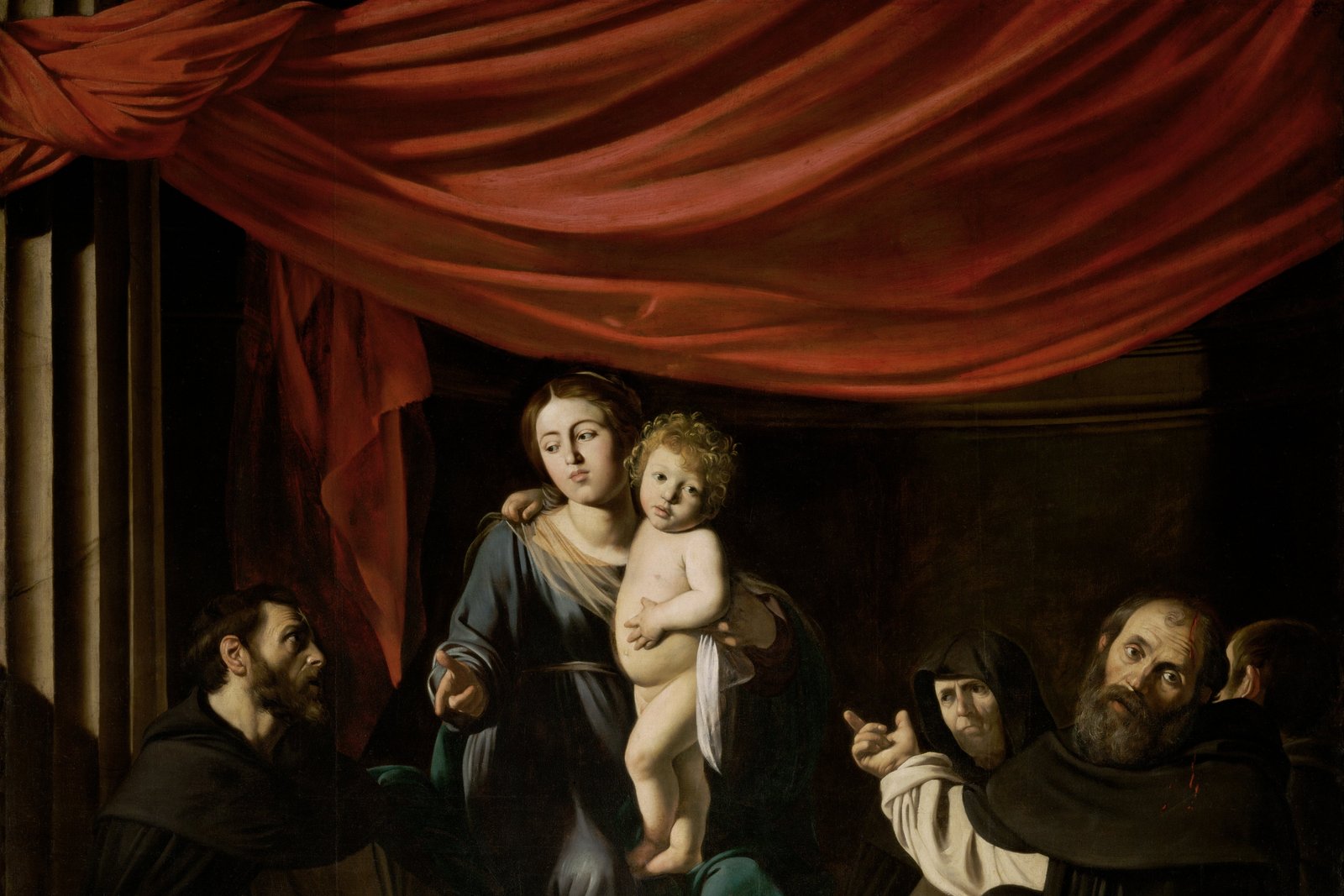
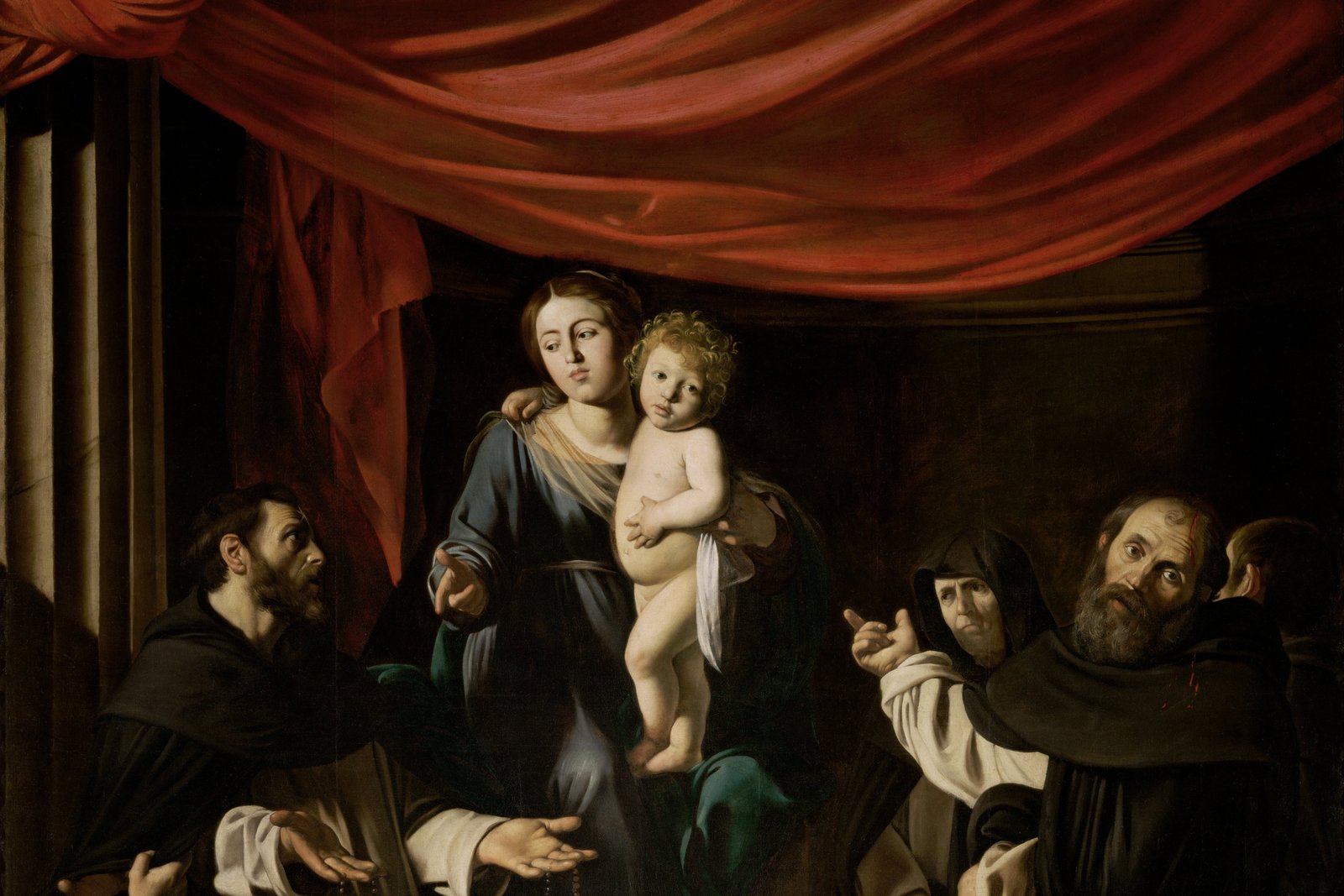
Caravaggio, Madonna of the Rosary (c. 1607), Kunsthistorisches Museum Vienna -- public domain
What the devotion actually asks for
The practice itself has a clear, specific structure: on the first Saturday of five consecutive months, a person is asked to go to Confession, receive Holy Communion, recite five decades of the Rosary, and spend fifteen minutes in meditation on one or more of the Rosary's mysteries — all undertaken with the specific intention of making reparation for offenses against Mary's Immaculate Heart. Confession doesn't need to fall on the same day as the other elements in every interpretation of the devotion, but the Communion, Rosary, and meditation are meant to be done together, on the first Saturday itself, for five months running without a month skipped.
The promise attached to it
As with the reported Sacred Heart revelations to Saint Margaret Mary Alacoque generations earlier, this Marian apparition came with a specific promise attached. According to the account of the 1925 apparition, Mary promised to assist, at the hour of death, with all the graces necessary for salvation, anyone who completed the devotion as she requested. The promise concerns the same ultimate concern as the Sacred Heart's Great Promise — final perseverance and a peaceful death in God's grace — even though the two devotions trace to entirely separate reported revelations, separated by roughly two and a half centuries and directed toward different, though related, objects of devotion: the Sacred Heart of Jesus in one case, the Immaculate Heart of Mary in the other.
Reparation for offenses against Mary's Heart
Where the Nine First Fridays devotion responds broadly to reparation for sin in general, the First Saturdays devotion is presented, within Fatima tradition, as addressing something more specific: sins understood as directly wounding devotion to Mary — among them, blasphemies against her Immaculate Conception, against her perpetual virginity, against her divine motherhood, attacks on devotion to her, and the deliberate indifference of those who scorn her with contempt. The devotion's five elements — Confession, Communion, Rosary, meditation, all repeated across five months — are framed within this tradition as a direct, structured response matched to these categories, echoing the same offense-matched-with-deliberate-honor logic found in other Catholic reparative devotions.
Approved, but not a required article of faith
The Catholic Church has formally recognized the Fatima apparitions as "worthy of belief," a designation given after Church investigation, and multiple twentieth- and twenty-first-century popes engaged directly and publicly with the Fatima message, including performing acts of consecration of the world, and specifically Russia, to the Immaculate Heart of Mary in response to the apparitions' reported requests. That level of engagement is significant — but it's still worth being precise about what it means. As with other approved private revelations, no Catholic is required as a matter of doctrine to believe every specific detail of what Lucia reported, including the First Saturdays request itself, in the way that defined dogmas of the faith must be believed. Millions of Catholics practice the devotion anyway, out of the same trust in Mary's intercession that shapes so much of the Church's broader devotional life — a personal choice rather than a binding obligation.
The wider story the devotion grew out of
The 1925 apparition to Sister Lucia didn't come out of nowhere; it followed directly from the far better-known events of 1917, when Lucia dos Santos and her two younger cousins, Francisco and Jacinta Marto, reported a series of Marian apparitions near Fátima, Portugal, between May and October of that year. The final apparition, on October 13, 1917, drew a large crowd of onlookers who reported witnessing an unusual solar phenomenon, an event that came to be known as the Miracle of the Sun. Jacinta and Francisco both died young, within a few years of the apparitions, and were later canonized; Lucia lived on as a religious sister for decades afterward, which is why it fell to her alone, in 1925, to report this further request tied specifically to the First Saturdays.
Popes who responded directly to the request
The Fatima apparitions included a reported request for the Pope to consecrate Russia specifically to the Immaculate Heart of Mary, a request that took decades to be fulfilled in a form Lucia herself later indicated she considered satisfactory. Pope Pius XII consecrated the world to the Immaculate Heart in 1942; Pope John Paul II performed a further act of consecration of the world, with specific mention of the peoples of Russia, in 1984, an act that came only a few years after he survived an assassination attempt on May 13, 1981 — the same calendar date as the first 1917 apparition, a connection John Paul II himself referenced publicly. In March 2022, Pope Francis consecrated Russia and Ukraine specifically to the Immaculate Heart of Mary amid the outbreak of war between the two countries, continuing a pattern of popes treating the Fatima requests as worth responding to directly, even while never elevating the specific details of the apparitions to binding dogma.
A practical note on timing
Catholic theologians and spiritual writers have traditionally allowed some flexibility in how strictly the devotion's elements must align: Confession is commonly understood to be valid for the purposes of the devotion if received within roughly eight days before or after the first Saturday, rather than requiring it fall on the exact same day as Communion and the Rosary. The core requirement that doesn't bend is the five consecutive months with no gap — missing a first Saturday, in most traditional guidance, means beginning the sequence over again from the start, a detail that keeps the devotion's practice close to the unbroken, consistent character also found in the Nine First Fridays.
Trivia
What is the Five First Saturdays devotion?
Where does the devotion come from?
What was Mary reported to have promised in return?
Why five Saturdays specifically, rather than nine like the First Friday devotion?
Is the Fatima message, including the First Saturdays request, an official Church teaching?
Related Reading