The Seven Sorrows of Mary — A Devotion in Seven Wounds


A sword promised in the Temple
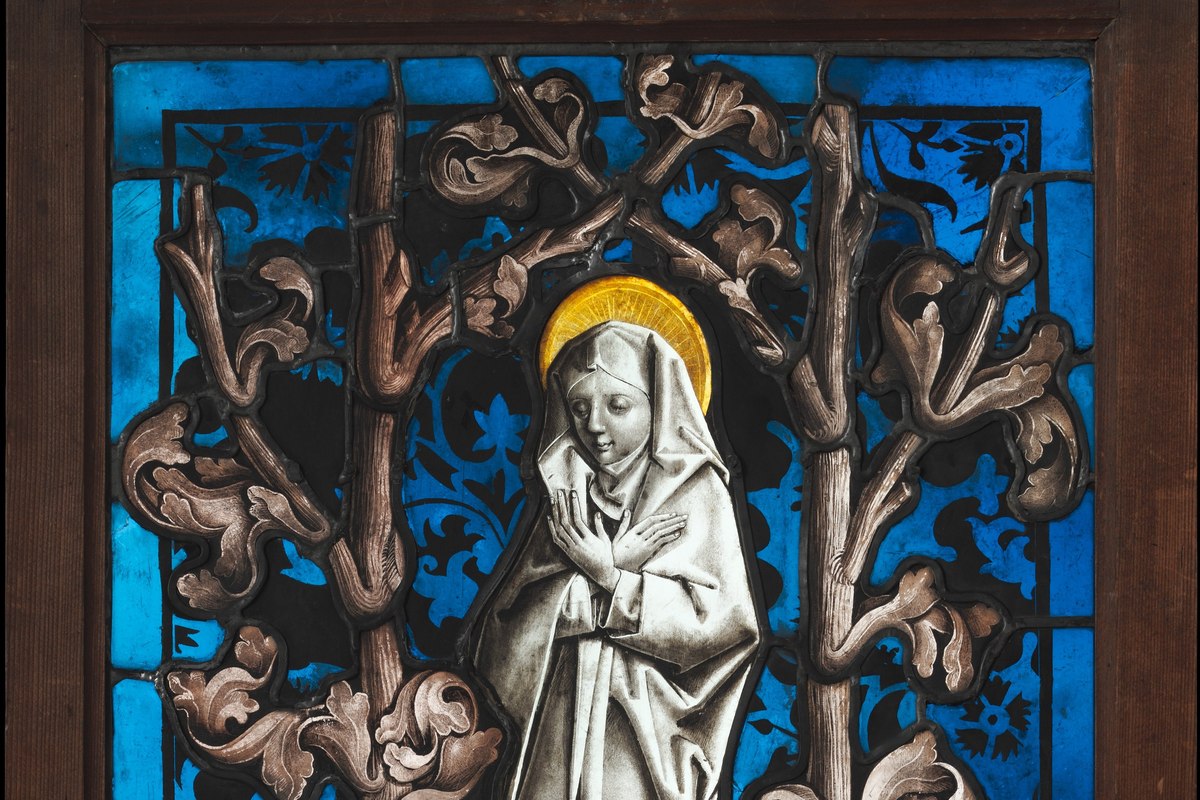
The devotion's origin point sits in one of the earliest scenes of Christ's life. When Mary and Joseph bring the infant Jesus to the Temple, an elderly man named Simeon, described in Luke's Gospel as righteous and devout, takes the child in his arms and, after blessing God, turns to Mary with a warning rather than a blessing, telling her "and you yourself a sword will pierce" (Luke 2:35). The line is brief, almost an aside in the larger Presentation narrative, but it planted the image — Mary's heart, pierced by grief — that would come to organize an entire devotional tradition centuries later.
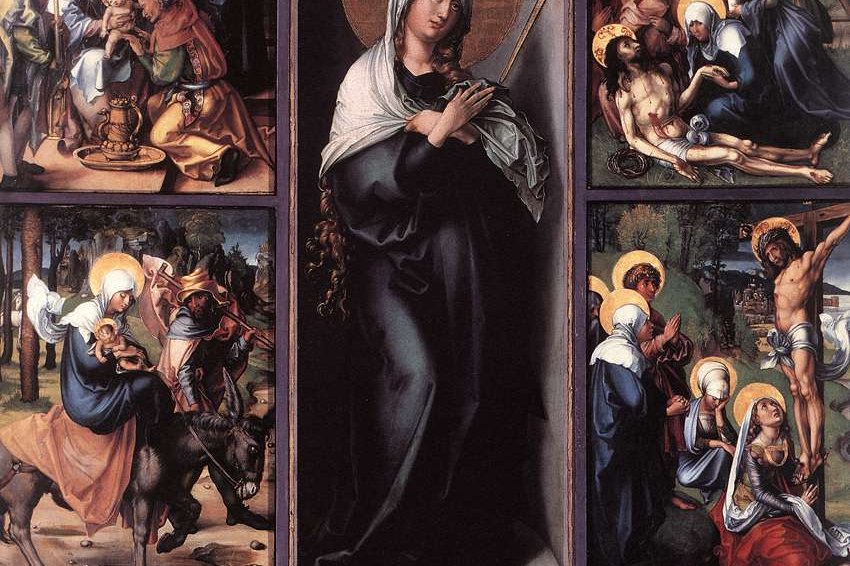
Albrecht Dürer, The Seven Sorrows Polyptych, c. 1496, Alte Pinakothek, Munich — public domain, Wikimedia Commons.
That single prophecy is counted as the first of the Seven Sorrows, and the six that follow trace forward through Mary's life to its most painful point: the flight into Egypt to escape Herod's massacre of the infants, the loss of the twelve-year-old Jesus in Jerusalem for three anguished days, Mary meeting her son as he carries the cross to Calvary, her presence at the foot of the cross during the crucifixion itself, receiving his body after death, and finally his burial.
From private meditation to organized devotion
Meditation on Mary's suffering existed in Christian spirituality well before it crystallized into the specific list of seven sorrows now recognized. The devotion gained real structure and momentum in the Middle Ages, and the Servite Order — founded in the 13th century by seven Florentine laymen who would go on to be recognized as saints — became its principal promoters, building meditation on Mary's sorrows into the core of their own spiritual identity in a way similar to how Franciscans became closely tied to the Stations of the Cross.
The specific list of seven sorrows, more or less as it's known today, took its settled form by the late Middle Ages and spread widely through preaching, art, and devotional literature. Albrecht Dürer's Seven Sorrows Polyptych, painted around 1496, gave the devotion one of its most enduring visual treatments: a central panel of Mary as Mother of Sorrows surrounded by smaller scenes depicting each of the seven events individually, a format that let viewers move meditatively from one sorrow to the next much the way a worshiper moves along the Stations.
The Servite Rosary
Alongside the more universally familiar Dominican Rosary, the Seven Sorrows devotion developed its own distinct form of prayer: the Servite Rosary, sometimes called the Chaplet of the Seven Sorrows. Rather than the five decades of ten Hail Marys used in the standard rosary, this chaplet is structured around the number seven directly — seven sets of seven Hail Marys, one set devoted to meditating on each sorrow in turn, opened with an Our Father.
The structure reflects a broader pattern in Catholic devotional life, where numerically significant prayer forms — like the Chaplet of Divine Mercy or various novenas — are built to mirror the specific event or theme they commemorate, giving the prayer's very shape a kind of built-in meaning beyond its words alone.
A feast placed deliberately beside the cross
The Church formally marks devotion to Mary's sorrows each year on September 15, the Feast of Our Lady of Sorrows — placed, not by accident, immediately after the September 14 Feast of the Exaltation of the Holy Cross. The calendar pairing draws the two feasts into direct conversation: one day for the cross itself, the next for the grief of the woman who stood beside it. This fixed date has held its place on the Roman Calendar since the 19th century, though private devotion to Mary's sorrows had already been practiced for centuries before the feast received its formal, universal date.
The seven sorrows, one by one
Named in order, the seven moments are: Simeon's prophecy in the Temple; the flight into Egypt, when Joseph took Mary and the infant Jesus away from Herod's reach in the night; the loss of the twelve-year-old Jesus in Jerusalem, when his parents searched for three days before finding him in the Temple; Mary meeting Jesus as he carried the cross along the road to Calvary; her presence at the foot of the cross during the crucifixion itself; receiving her son's body after he was taken down from the cross; and finally his burial. Taken together, the seven sorrows don't simply repeat the same grief seven times — they trace a full arc, from the earliest warning of suffering still to come, through years of ordinary parental anxiety, to the direct, physical experience of watching her son die and being buried.
The sorrow without its own Gospel scene
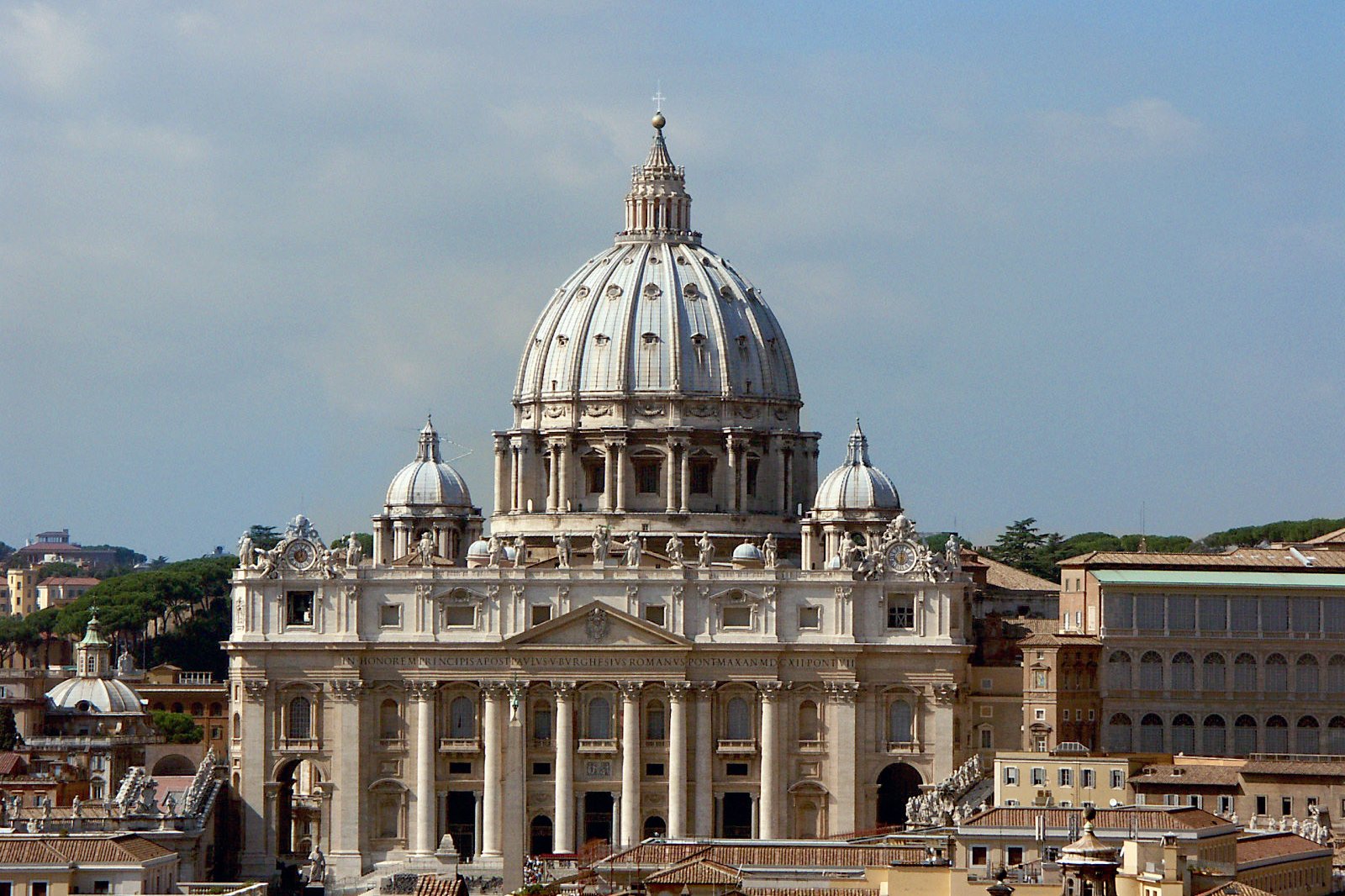
Of the seven, the moment of Mary receiving Christ's body — often called the Pietà, after the Italian word for "pity" or "compassion" — is the one most clearly built by devotional tradition rather than stated outright in any single Gospel verse. The Gospels describe Joseph of Arimathea and others taking Christ's body down and preparing it for burial, but none of the four Gospel accounts explicitly places Mary holding her son's body in her arms the way centuries of Christian art, most famously Michelangelo's marble Pietà in St. Peter's Basilica, has depicted it. That doesn't make the moment baseless — Mary's presence nearby throughout the crucifixion and burial accounts makes the scene a reasonable devotional inference — but it's a useful example of how the Seven Sorrows tradition sometimes fills a gap the Gospel text leaves open, shaped by faith and artistic memory rather than drawn from an explicit narrated detail.
Grief without despair
What distinguishes the Seven Sorrows devotion from simply dwelling on tragedy is its underlying theological framing: Mary's grief is presented not as an endpoint but as grief carried in union with her son's own suffering and, ultimately, his resurrection. The devotion asks those who pray it to sit with sorrow honestly rather than rush past it, which is part of why it has remained a meaningful practice for anyone walking through their own grief — a devotion built, quite literally, around a mother who understood loss from the inside, one sword-thrust of prophecy at a time.
Trivia
What are the Seven Sorrows of Mary?
Where does the Seven Sorrows devotion come from?
Is there a special rosary for the Seven Sorrows?
What is the Feast of Our Lady of Sorrows?
Are all seven sorrows described directly in the Gospels?
Related Reading