Cologne Cathedral

A shrine that needed a bigger building
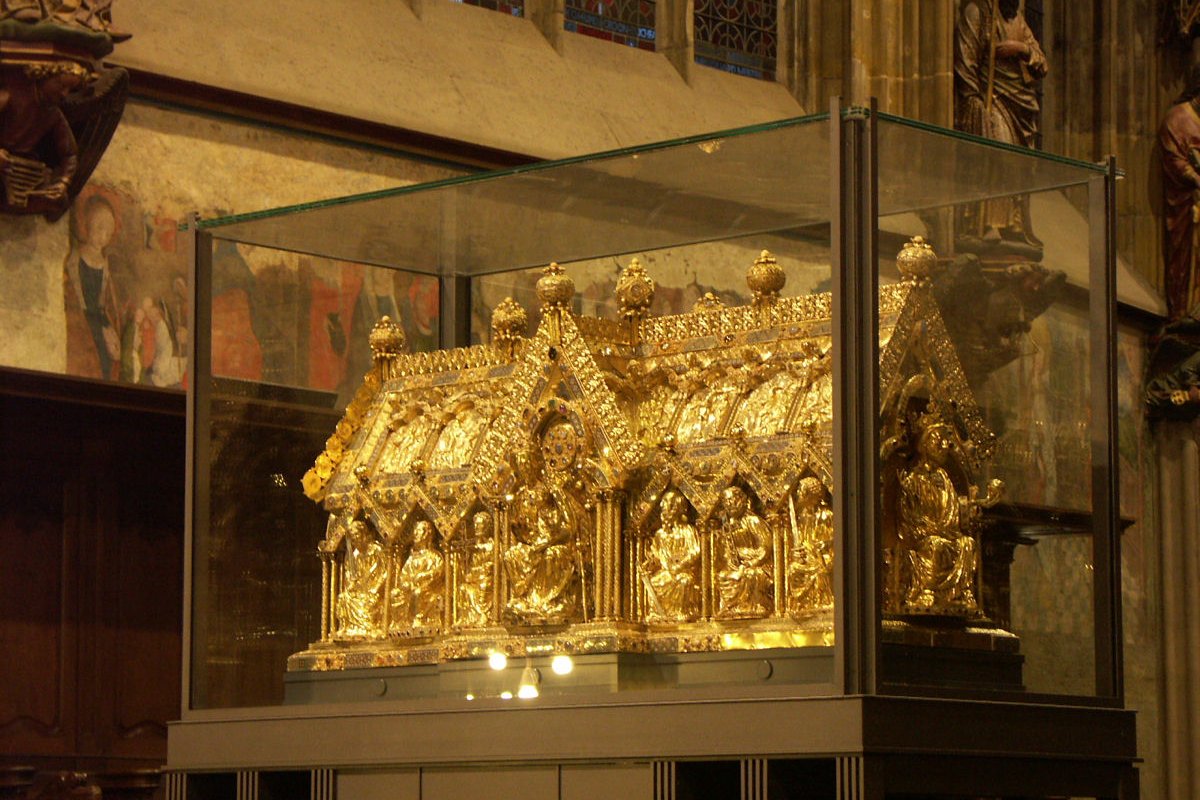
The story of Cologne Cathedral doesn't begin with an architect — it begins with a relic. In 1164, Archbishop Rainald von Dassel brought a set of bones to Cologne, said to be the remains of the Magi, the Three Kings who traveled from the East to worship the infant Jesus in the Gospel of Matthew. The relics were placed in what became one of the most magnificent reliquaries ever constructed: the Shrine of the Three Kings, a gilded sarcophagus so large and so richly worked in gold and jewels that it's still considered the largest reliquary in the Western world.
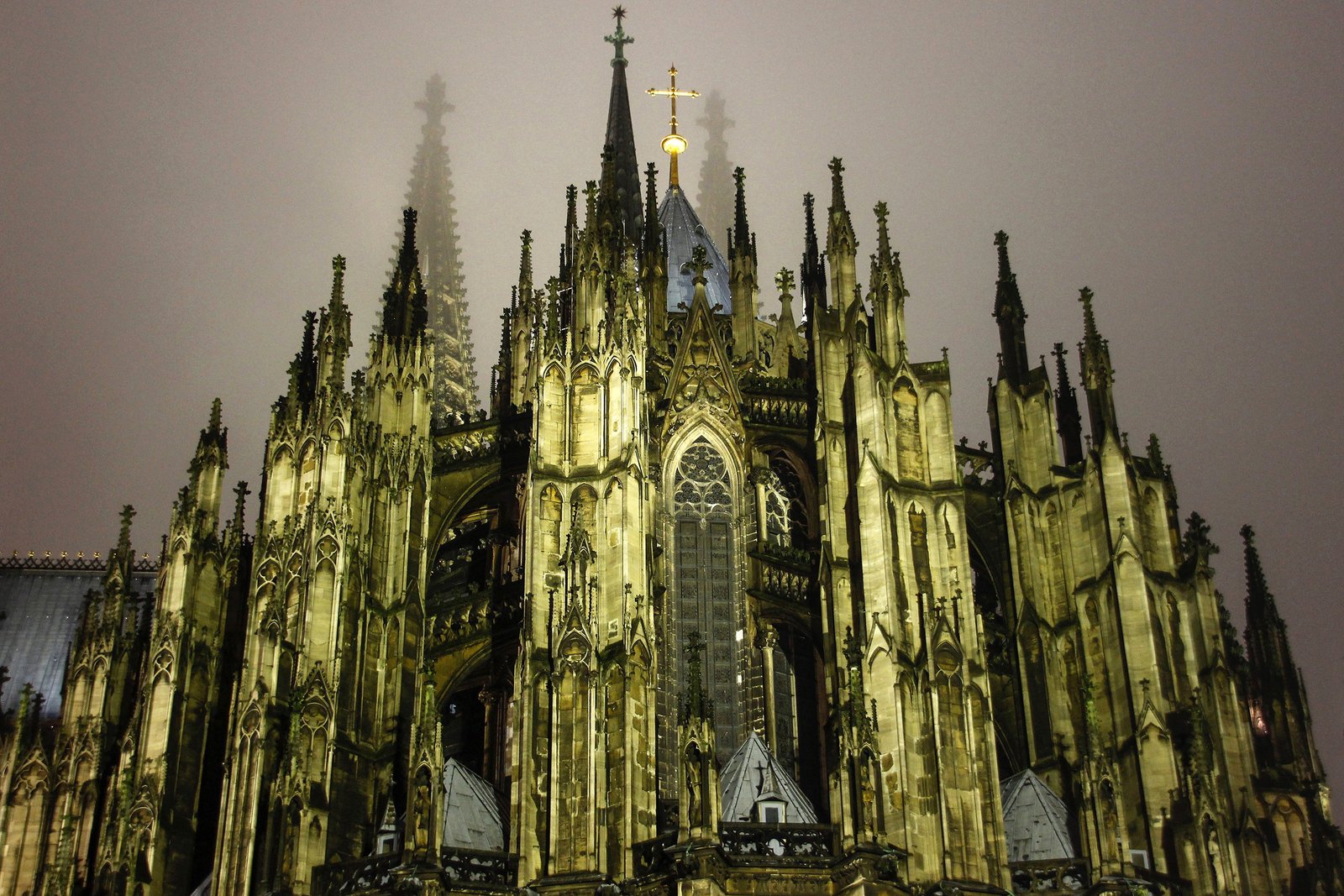
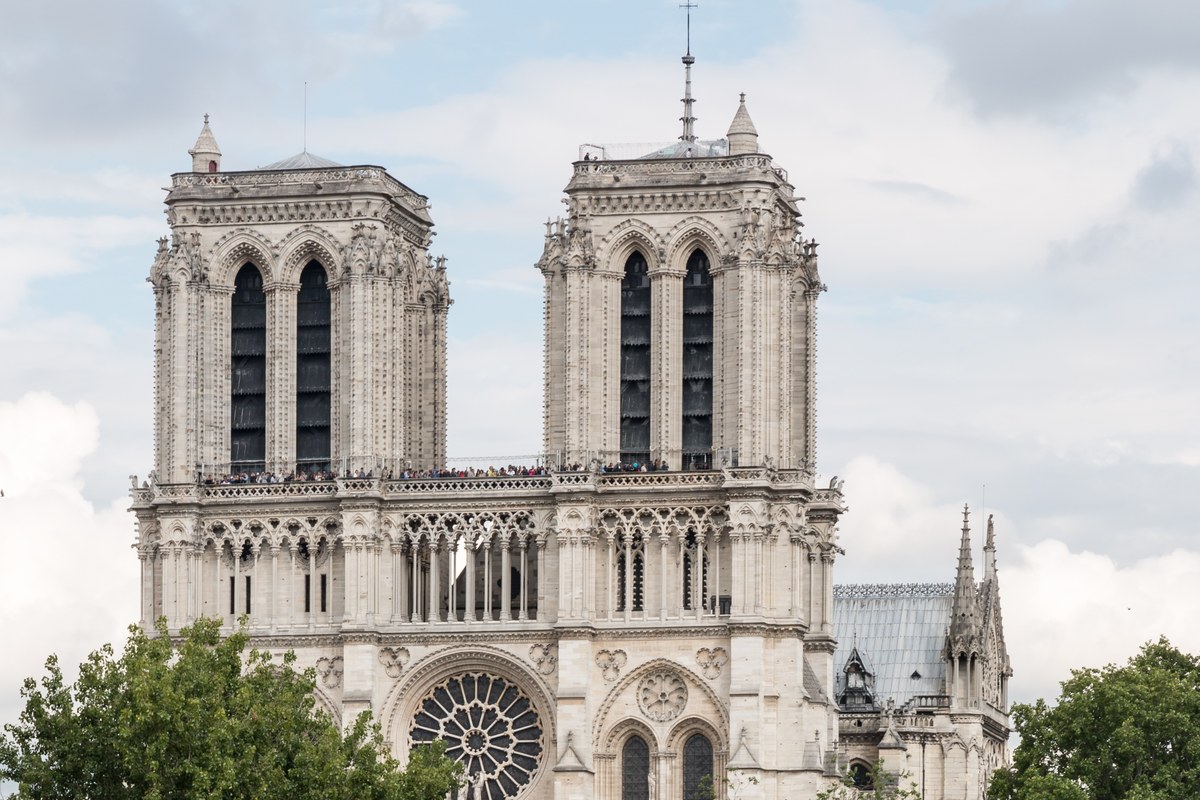
Marco Otaola, "Cologne Cathedral (back view)," 2017 — public domain.
Word of the relics spread quickly across medieval Christendom, and pilgrims began arriving in numbers the existing church on the site simply couldn't handle. The decision to build an entirely new cathedral — one grand enough to properly display the shrine and accommodate the crowds it drew — followed naturally. Construction began on the feast of the Assumption, August 15, 1248.
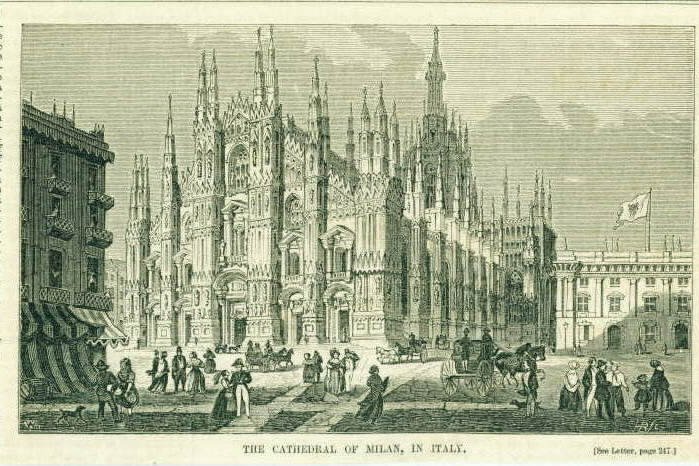
Rainald von Dassel hadn't acquired the relics through any ordinary channel. He'd taken them from Milan in 1164 as a spoil of war, after Emperor Frederick Barbarossa's forces sacked the city — a detail modern readers might find uncomfortable set against the reverence the relics went on to receive, but not unusual for the period, when relics were treated as prizes worth fighting over precisely because of the prestige and pilgrim traffic they brought to whichever city held them. Cologne's archbishops, already among the most powerful political and religious figures in the Holy Roman Empire, understood exactly what they now possessed.
Six centuries, one long pause
Medieval Cologne Cathedral rose slowly, as most Gothic cathedrals did, funded and built in stages over generations. The choir, the eastern portion housing the altar, was completed and consecrated in 1322. But the rest of the building — the vast nave and the twin west towers that now define the Cologne skyline — proceeded much more slowly, and by the 1560s work had essentially stopped. For close to three hundred years, an enormous wooden crane sat perched atop the unfinished south tower, a strange, half-built landmark that became a fixture of the city's own identity for generations who never saw it as anything but incomplete.
Interest in finishing the cathedral revived in the nineteenth century, fueled partly by a renewed Romantic fascination with the Gothic and partly by German nationalism, which seized on the project as a symbol of unified national ambition. The rediscovery of a medieval facade plan for the west towers — a large original architectural drawing that had somehow survived the centuries and turned up in Paris and Darmstadt in two separate pieces during the 1810s and 1840s — gave the revival project something concrete to build toward rather than a modern architect's guess at medieval intentions. Using that plan, workers resumed construction in 1842 and finally completed the building in 1880 — 632 years after the first stone was laid. Its completion was marked with a major national celebration attended by Kaiser Wilhelm I, just nine years after German unification, and for a few years afterward, Cologne Cathedral held the title of the tallest building in the world, a record it kept only briefly before the Washington Monument, and later the Eiffel Tower, surpassed it.
Standing through the bombing of a city
Cologne suffered some of the heaviest Allied bombing of any German city during the Second World War, including the RAF's first "thousand-bomber raid" in 1942. By the war's end, the historic city center around the cathedral had been almost entirely destroyed. The cathedral itself did not escape — it absorbed dozens of direct hits, by some accounts around 70 firebombs and 14 high-explosive bombs across the war — yet its massive Gothic structure held. It never collapsed, and photographs from 1945 show its twin spires rising, scarred but upright, above a landscape of rubble.
The survival became, almost immediately, a symbol for the city's postwar recovery — proof that something of Cologne's identity had outlasted the destruction. Structural repairs continued for over a decade after the war, finishing in 1956, and further restoration work has continued in the decades since, as it does at most cathedrals of this age and scale. Even now, one of the cathedral's towers is typically shrouded in some degree of scaffolding at any given time — a joke among locals holds that a fully scaffolding-free cathedral would itself be a bad omen, since ongoing maintenance is what has kept the sandstone structure sound against pollution damage, weathering, and the aftereffects of wartime bomb damage that took decades to fully address.
A working Gothic cathedral today
Cologne Cathedral was inscribed as a UNESCO World Heritage Site in 1996, recognized for its scale, its structural daring, and its status as one of the most complete and influential examples of High Gothic architecture anywhere in the world. Its twin spires, at just over 157 meters, remain among the tallest of any church in the world, and the Shrine of the Three Kings remains on display behind the high altar, drawing both pilgrims and tourists in numbers not unlike those medieval crowds who first justified building a cathedral this size in the first place.
The building is still, first and foremost, a working cathedral rather than a museum. It seats the Archbishop of Cologne, hosts daily Mass and regular liturgical celebrations, and remains the spiritual center of one of Germany's largest Catholic dioceses even as millions of visitors pass through its nave each year purely as tourists. That dual identity — active place of worship and major tourist landmark simultaneously — is common among Europe's great Gothic cathedrals, from Notre-Dame de Paris to Sagrada Familia, but Cologne wears it with a particular intensity, since the same shrine that drew the original medieval pilgrims is still the object most visitors come to see.
For readers interested in another cathedral defined by an equally long and interrupted construction history, this blog's article on Sagrada Familia in Barcelona tells a strikingly similar story, more than a century removed.
Trivia
How long did Cologne Cathedral take to build?
Why was Cologne Cathedral built in the first place?
Did Cologne Cathedral survive World War II?
What is the Shrine of the Three Kings?
Is Cologne Cathedral a UNESCO World Heritage Site?
Related Reading