The Basilica of Saint John, Ephesus

A grave on a hill outside Ephesus
Christian tradition dating to the earliest centuries of the Church holds that the Apostle John, the disciple the Gospel that bears his name describes as present at the foot of the cross and among the first witnesses of the empty tomb, spent the final decades of his long life in and around the great Roman city of Ephesus, on the western coast of what is now Turkey. According to this tradition, John died and was buried on a hill just outside the city, a site that early Christian communities in the region continued to mark and venerate long after his death, even as the surrounding Roman and later Byzantine city grew and changed around it.
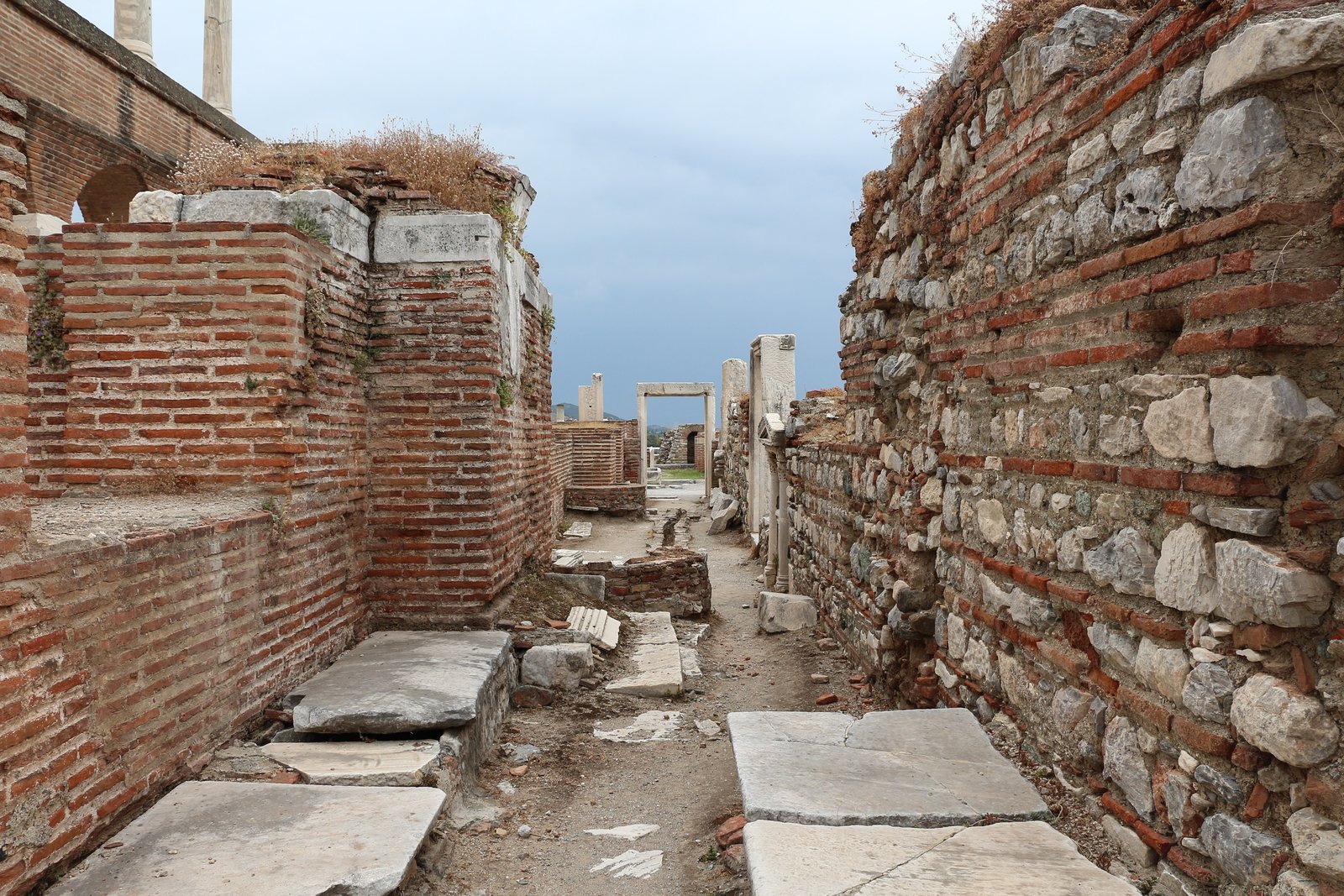
Photograph by Bernard Gagnon, Basilica of St. John in Ephesus, 2014 — CC BY-SA 3.0, Wikimedia Commons.
By the fourth century, a modest memorial church already stood over the traditional tomb site, reflecting the site's established status as a place of Christian veneration well before any of the grand imperial building projects that would later transform it. This earlier structure set the precedent that Emperor Justinian I would dramatically expand upon two centuries later, transforming a local shrine into one of the great churches of the Byzantine world.
Justinian's imperial basilica
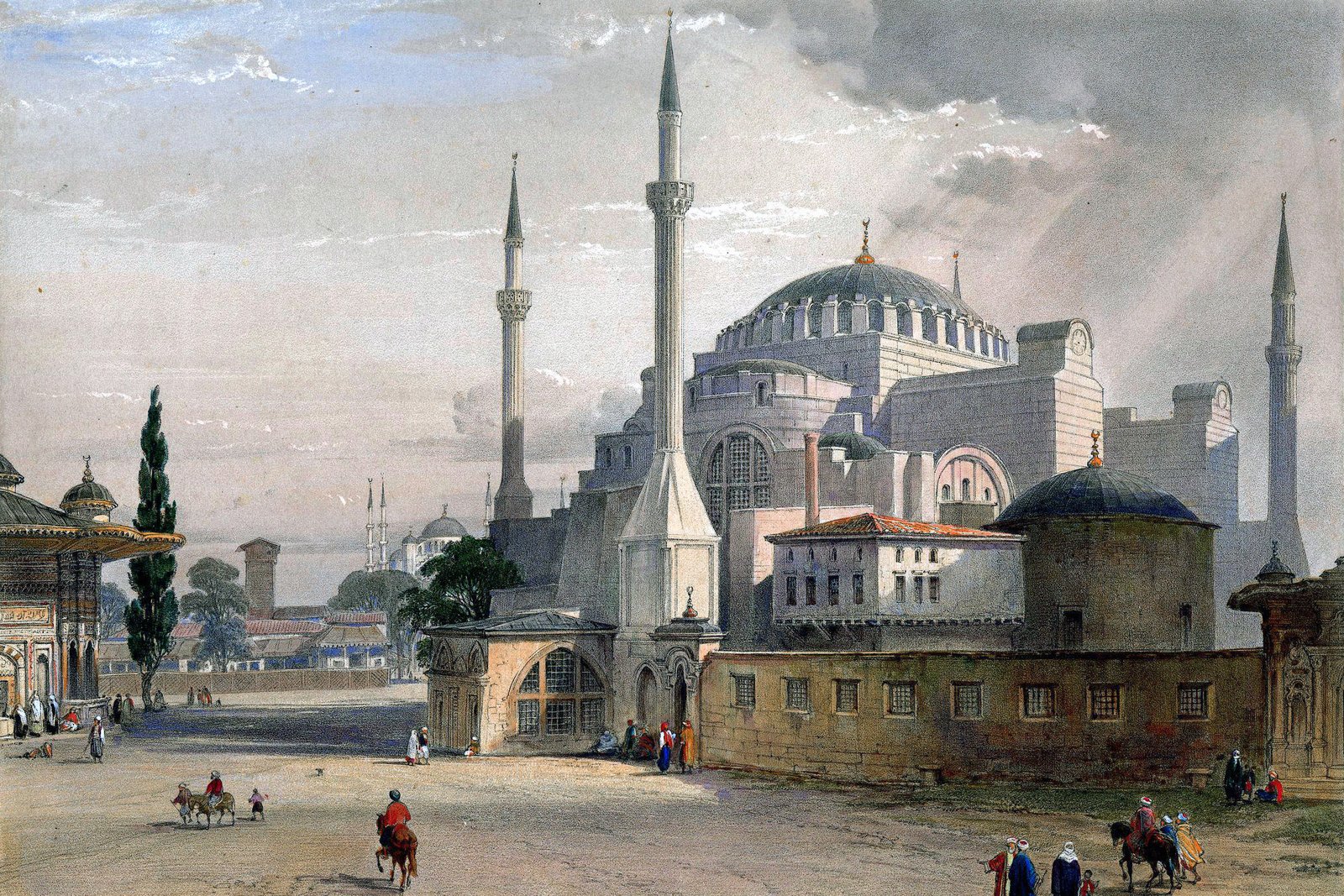
In the 540s, Justinian I — the Byzantine emperor best remembered for his ambitious building program across the empire, including the construction of Hagia Sophia in Constantinople — commissioned a vast new basilica at the traditional tomb site of John, intended to rival the grandeur of his other major church projects. The resulting building, completed by around 565, took the form of a cross when viewed from above, following a domed-cross architectural plan closely related to that of Justinian's own contemporary work on the original Church of the Holy Apostles in Constantinople, and was crowned with six substantial domes covering its nave and transepts.
At its center, directly beneath the basilica's main dome, stood a raised marble platform marking the traditional site of the apostle's tomb — positioning the grave, both physically and symbolically, at the literal heart of the entire structure. The basilica's scale reflected Ephesus's continued importance as a major city and Christian center in the Byzantine world, even as the city's ancient harbor was gradually silting up, a slow geographic change that would eventually contribute to Ephesus's decline as a major urban center in the centuries following the basilica's construction.
Decline under changing rule
The basilica's fortunes shifted with the broader political and military upheavals that reshaped Byzantine Anatolia from the seventh century onward. Arab raids into Byzantine territory during this period caused significant damage to the region, including the basilica itself, and the building was fortified at points during this era of instability, with defensive walls incorporated into its structure — an unusual adaptation for what had been built as a purely devotional space.
Following the Battle of Manzikert in 1071 and the subsequent Turkish conquest of much of Anatolia, the region around Ephesus came under Turkish rule, and the basilica's status as an actively maintained Christian center gradually diminished. Over the following centuries, as the building fell into disuse and disrepair, much of its stone and marble was progressively removed and repurposed for other construction projects in the region, including, according to some accounts, work on the nearby Isa Bey Mosque, leaving the once-grand basilica reduced largely to foundations, scattered columns, and fragments of its former arches and walls by the early modern period.
Excavation and partial restoration
Serious archaeological investigation of the basilica site did not begin until the early twentieth century, when excavations began uncovering and documenting the extent of Justinian's original structure beneath centuries of accumulated ruin and later building activity. Subsequent restoration work, continuing intermittently through the twentieth century and beyond, has re-erected a number of the basilica's columns and reconstructed sections of its arches, giving visitors today a clearer sense of the building's original scale and cross-shaped plan than the site's earlier, more completely ruined state would have allowed.
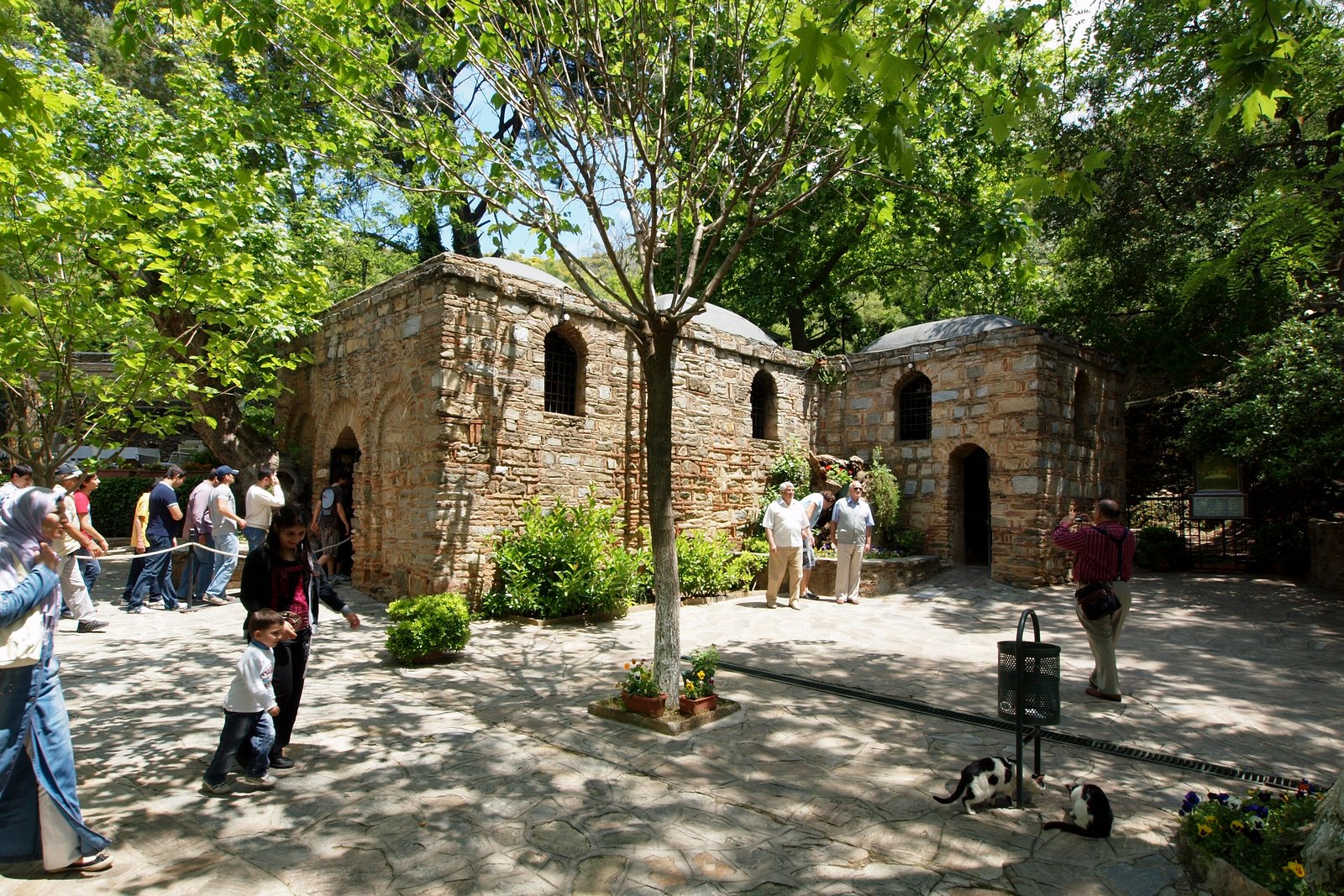
The traditional tomb site beneath the former central dome remains marked and visible to visitors, continuing to draw Christian pilgrims to the location even in its ruined state. The site's proximity to the ancient city of Ephesus itself, a major archaeological destination in its own right, along with the nearby traditional House of the Virgin Mary — another significant regional pilgrimage site associated with early Christian tradition in the area — places the Basilica of Saint John within a broader landscape of early Christian memory clustered around this particular corner of western Anatolia, one that continues to draw visitors interested in the earliest centuries of the Christian Church.
The hilltop location, chosen deliberately for its visibility across the surrounding plain, also afforded the original Byzantine builders a commanding view toward the harbor that once made ancient Ephesus one of the Mediterranean's great trading cities before its slow decline as the coastline silted up over the following centuries — a reminder that the basilica's setting was shaped as much by the fortunes of the city it once overlooked as by the tradition it was built to honor.
Trivia
What is the Basilica of Saint John in Ephesus?
Why was the basilica built at this location?
Is the Apostle John's tomb still visible at the site?
What happened to the basilica after the Byzantine era?
How does the Basilica of Saint John relate to nearby Ephesus?
Related Reading