Ephesus and the House of the Virgin Mary

A great city, and a quiet hillside above it
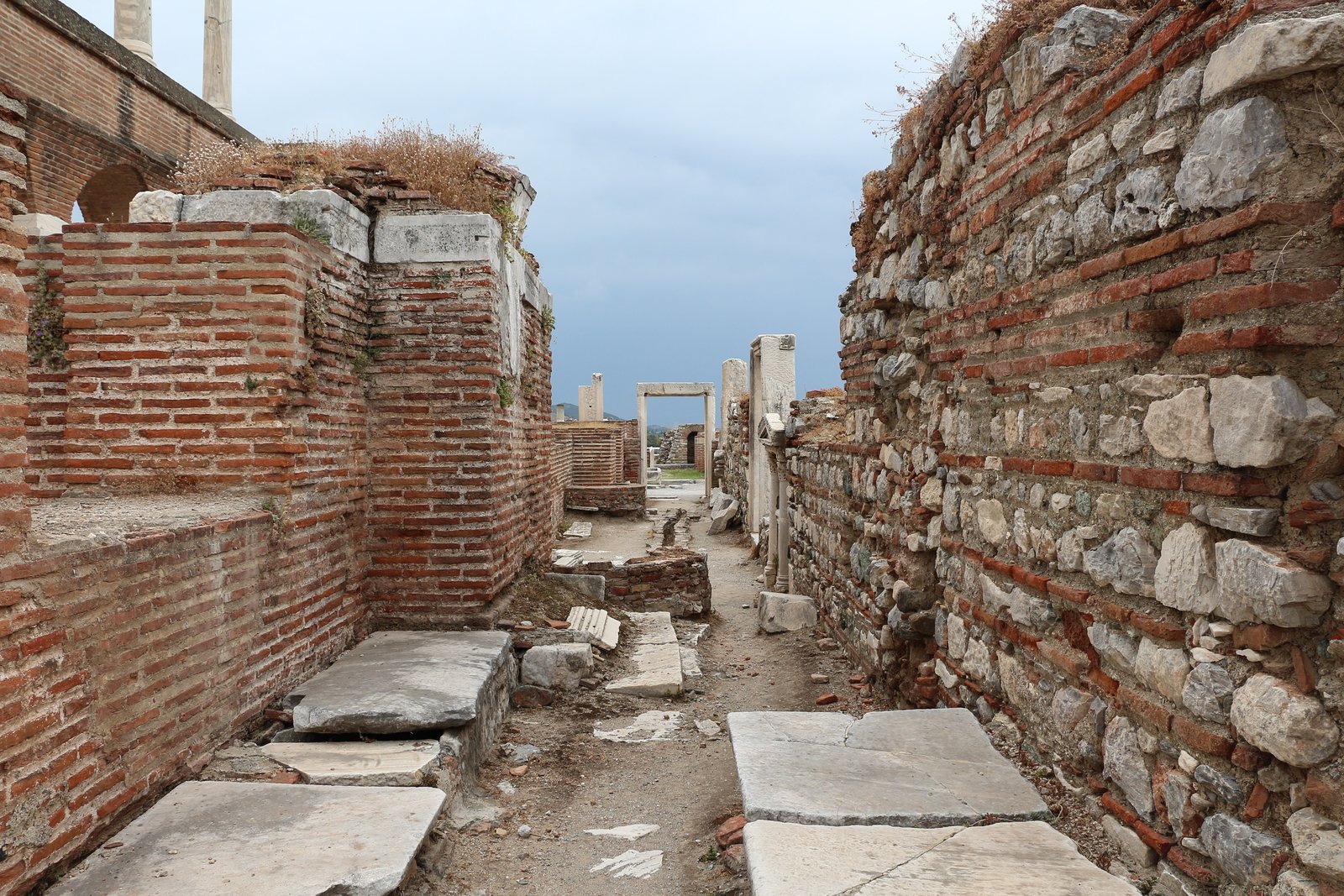
Ephesus, on Turkey's Aegean coast, was in antiquity one of the largest and most important cities in the eastern Mediterranean world — a major port, a center of trade, and home to the Temple of Artemis, one of the Seven Wonders of the Ancient World. It appears repeatedly in the New Testament: the Apostle Paul spent an extended period ministering there, sparking a notable riot among silversmiths whose livelihood depended on the cult of Artemis (Acts 19), and the city later received one of the seven letters addressed in the Book of Revelation.
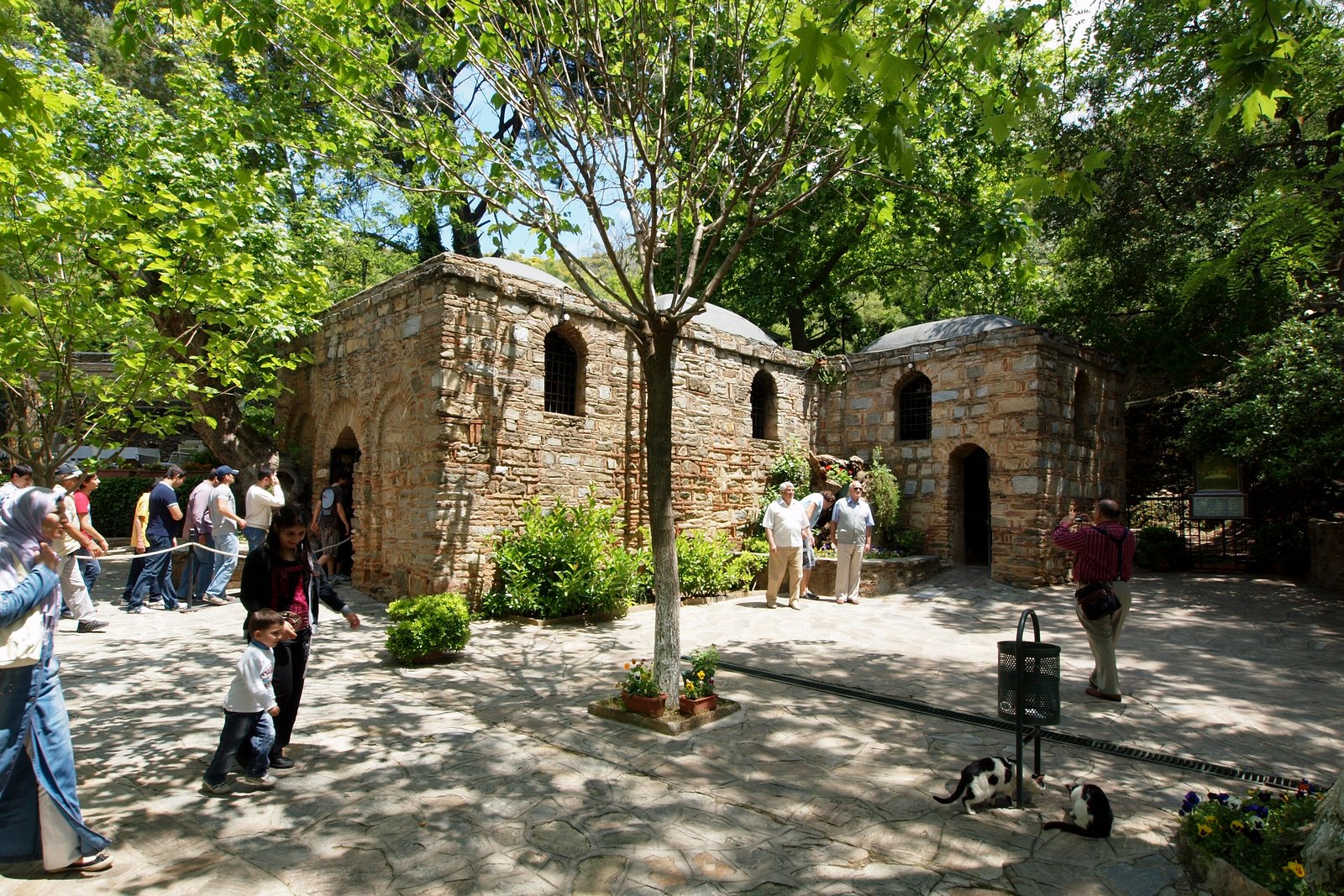
Photograph by Peter C, House of the Virgin Mary in Ephesus, 2012 — CC BY 2.0, Wikimedia Commons.
A few miles from the ancient city's ruins, on a wooded hillside overlooking the coast, stands a small, simple stone house that has, since the nineteenth century, drawn millions of pilgrims as the traditional final earthly home of Mary, the mother of Jesus.
From the cross to a new household
The scriptural foundation for the tradition connecting Mary to Ephesus begins not there, but at the crucifixion in Jerusalem. John's Gospel records a striking moment in which Jesus, from the cross, entrusts his mother's care to the beloved disciple: "When Jesus saw his mother and the disciple there whom he loved, he said to his mother, 'Woman, behold, your son.' Then he said to the disciple, 'Behold, your mother.' And from that hour the disciple took her into his home" (RSV-CE, John 19:26-27).
Early Christian tradition widely identifies this disciple as John, and a separate, ancient strand of tradition holds that John eventually traveled to Ephesus, where he ministered for a significant period — a tradition connected to the region's early and historically well-attested importance as a center of Christian activity in the first centuries after Christ. Some early Christian writers, including figures associated with the Council of Ephesus in 431, referred to Mary's presence in Ephesus, though the evidence from this period remains fragmentary rather than conclusive, and a separate ancient tradition, associated more with Jerusalem, holds that Mary's life instead ended there, at the site now marked by the Tomb of the Virgin near the Garden of Gethsemane. Historians today generally treat both traditions as reflecting genuinely early but not fully reconcilable strands of testimony, rather than treating one as definitively established over the other.
A visionary's description, and an unlikely discovery
The specific house near Ephesus now venerated by pilgrims owes its modern rediscovery to an unusual and genuinely remarkable set of circumstances. In the early nineteenth century, a German Augustinian nun named Anne Catherine Emmerich, bedridden for years and reportedly bearing the stigmata, described in extensive visionary detail a small stone house on a hillside near a city she associated with the end of Mary's life — despite, by all historical accounts, never having traveled to the region or possessed any known geographical knowledge of it. Her accounts were later transcribed and published by the writer Clemens Brentano.
Decades after Emmerich's death, in 1881, a French priest named Abbé Julien Gouyet, working from her published descriptions, searched the hills above Ephesus and identified a ruined structure that appeared to match several specific details from her visions. Further exploration in subsequent years, including investigation by local Lazarist priests, reinforced the identification, and the site was gradually restored and developed as a chapel through the late nineteenth and twentieth centuries. Archaeological assessment of the structure's foundations has suggested elements consistent with first-century construction, though, as with several sites tied to visionary or apparition-based traditions, the connection between the physical building and any specific first-century resident cannot be established with archaeological certainty.
A tradition the Church permits without formally declaring
It's important to describe the Church's actual position on the House of the Virgin Mary accurately: the Vatican has never dogmatically defined the house's authenticity as Mary's literal residence, and it treats the site's identification as a matter of pious tradition rather than settled doctrine. What the Church has done is permit and, at points, actively encourage pilgrimage and devotion there — Pope Leo XIII granted indulgences connected to the site in the late nineteenth century, and several twentieth and twenty-first century popes, including Paul VI, John Paul II, Benedict XVI, and Francis, have visited in person, lending the site considerable pastoral, if not doctrinal, endorsement.
A shared site of pilgrimage today
The House of the Virgin Mary remains an active pilgrimage destination today, drawing large numbers of visitors each year — Catholic and Orthodox Christians for whom the site connects directly to Marian devotion, and notably also many Muslim visitors, since Mary (Maryam) holds a highly honored place in Islamic tradition and scripture as well, making the site an unusually shared point of reverence across religious lines. A dedicated feast celebrating the site is held each August, drawing especially large crowds, and a nearby spring, associated by local tradition with healing properties, remains a popular stop for visitors alongside the small chapel itself — a place that, whatever the final historical verdict on its precise authenticity, has clearly become a genuine and lasting focus of devotion in its own right.
Trivia
Why is Ephesus associated with the Virgin Mary?
Where does the scriptural basis for John caring for Mary come from?
How was the House of the Virgin Mary rediscovered?
Has the Catholic Church officially confirmed the house's authenticity?
Is the House of the Virgin Mary still a pilgrimage site today?
Related Reading