St. Mark's Basilica

A theft that built a city's identity
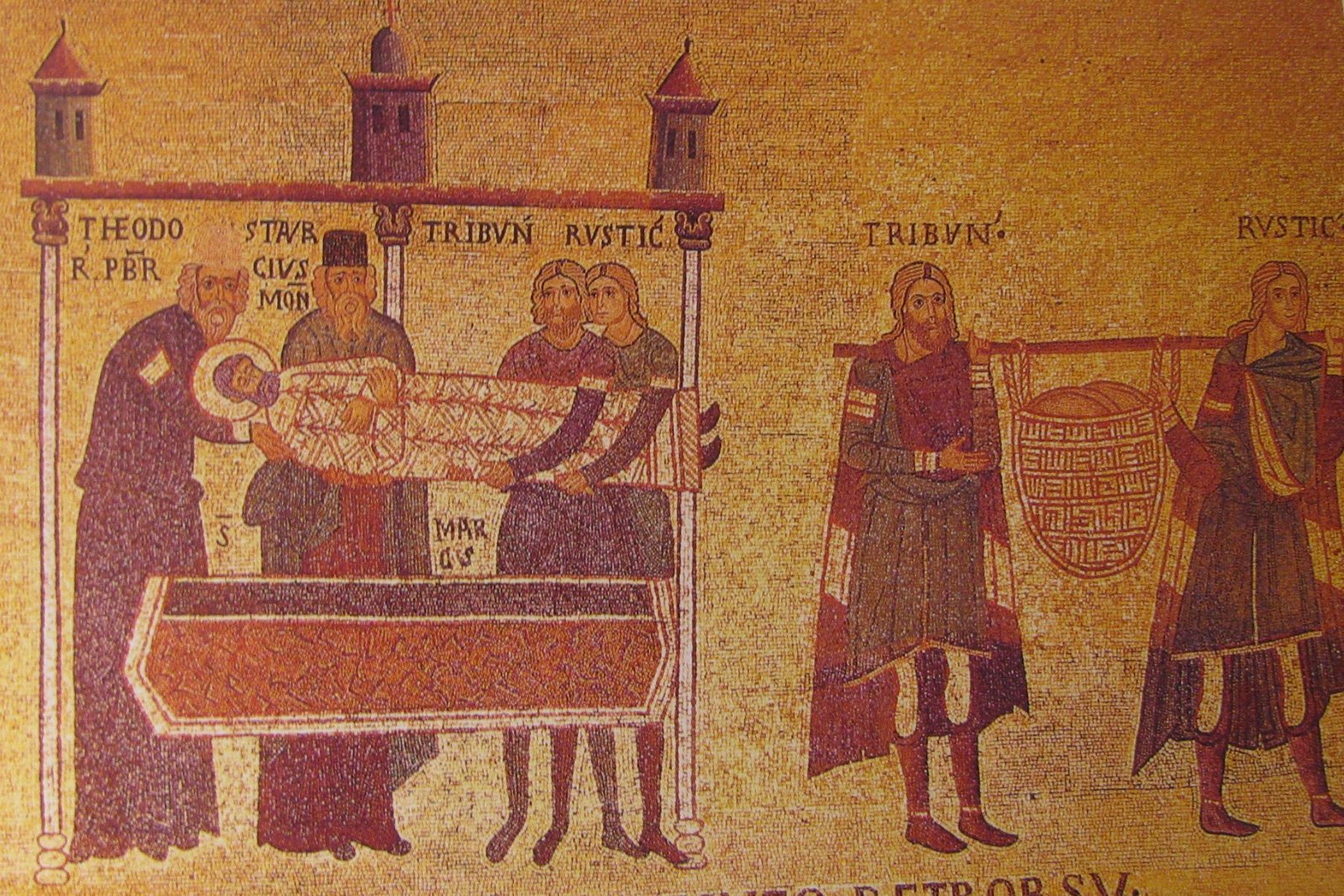
Before 828, Venice's patron saint was Theodore, a fairly minor military saint whose statue still stands atop one of the two great columns in the Piazzetta. That changed abruptly when two Venetian merchants, Buono da Malamocco and Rustico da Torcello, returned from a trading voyage to Alexandria with an unexpected cargo. According to the story recorded centuries later and repeated in the basilica's own mosaics, local Coptic Christian custodians of Mark the Evangelist's tomb — worried that Muslim authorities in Egypt were planning to strip the church of building materials, endangering the relics in the process — agreed to let the merchants remove Mark's body and take it somewhere safer. Getting the relics past customs meant hiding them beneath layers of pork and cabbage, foods that Muslim inspectors, so the story goes, declined to search thoroughly.
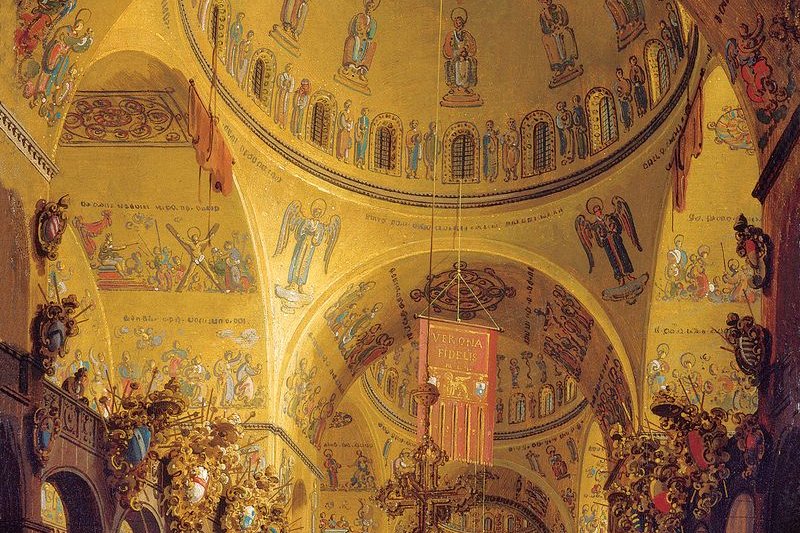
Canaletto, Interior of St. Mark's Basilica, Venice, c. 1755-1765 — public domain.
Whatever the precise truth behind the legend, the effect on Venice was immediate and lasting. The city dropped Theodore as its patron in favor of Mark, adopted his traditional symbol — a winged lion, one of the four living creatures described in Ezekiel and later in Revelation — as its own civic emblem, and set about building a church grand enough to house so significant a relic. That winged lion still appears on Venetian flags, on the facade of the Doge's Palace, and atop a tall granite column overlooking the lagoon, arguably the single most recognizable symbol of the city.
Built, rebuilt, and covered in gold
The first church built to house Mark's relics burned in a political uprising in 976. Venice rebuilt it, then rebuilt it again far more ambitiously starting in 1063, modeling the new basilica's design — a Greek-cross floor plan crowned by five domes — closely on the Church of the Holy Apostles in Constantinople, itself since destroyed. This is the structure, much expanded and decorated over the following centuries, that still stands today.
What sets St. Mark's apart from almost any other church in the West is the sheer accumulated wealth of its interior decoration. Starting in the 11th century and continuing for hundreds of years afterward, Venetian and Byzantine craftsmen covered essentially every interior surface — domes, walls, arches — in gold-ground mosaic, an estimated 8,000 square meters of it by the time later additions were finished. Combined with polychrome marble floors, sourced from across the Mediterranean trade routes Venice controlled, the effect is a church that looks less like a building than an enormous, glowing reliquary in its own right — which, functionally, is exactly what it was designed to be.
Much of that wealth came from a less flattering source: the Fourth Crusade of 1204, when Venetian and crusader forces sacked Constantinople rather than reaching the Holy Land, and Venice brought home an enormous haul of Byzantine treasures. The four bronze Horses of Saint Mark displayed above the main portal — likely ancient Greek or Roman work originally — are the most visible trophies of that campaign, along with countless columns, capitals, and decorative panels worked into the basilica's fabric. It's a church built, quite literally in places, from the spoils of another city's cathedral.
Significance beyond Venice
St. Mark's occupies an unusual position in Christian architectural history as one of the clearest surviving examples of Byzantine architectural influence transplanted wholesale into Western Europe, built by a maritime republic that straddled both worlds — nominally part of the Latin Christian West, but culturally, commercially, and artistically bound tightly to Constantinople for centuries. That dual identity shows in nearly every part of the building, from its Greek-cross plan to its mosaic technique to the Eastern relics and treasures worked into its very walls.
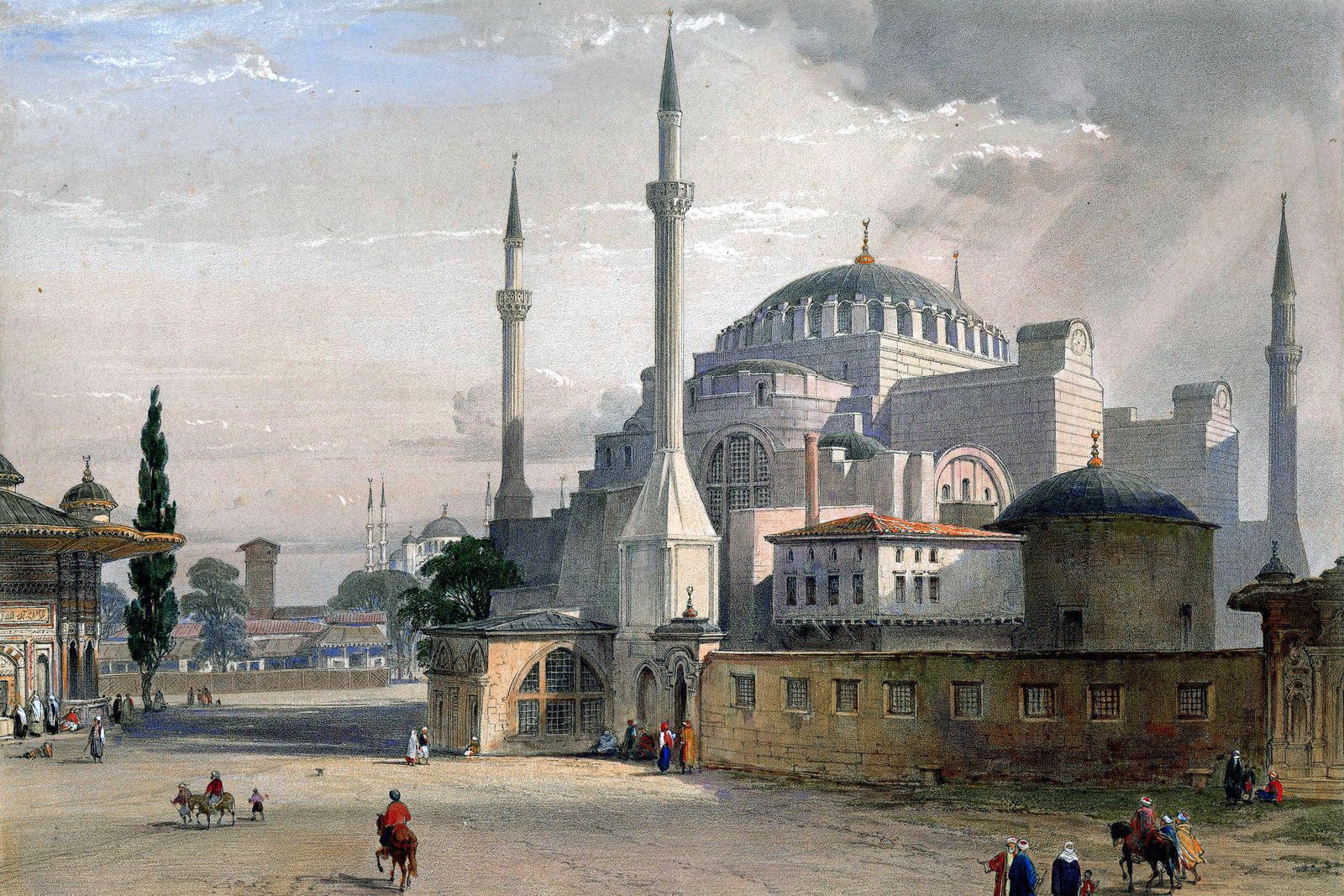
For readers exploring similar East-meets-West sacred sites, our article on Hagia Sophia — the Constantinople church St. Mark's Byzantine predecessor was itself modeled after in spirit — makes a natural companion read, and our broader guide to notable Catholic churches covers many more landmark sites across the Christian world.
Visiting today
St. Mark's Basilica remains the cathedral church of the Patriarchate of Venice, a status it has held since 1807, when it was elevated from its earlier role as the private chapel of the Doges of Venice. Before that elevation, it functioned for centuries specifically as the Doge's own chapel, physically connected to the Doge's Palace next door rather than serving as the city's main public cathedral — that role belonged instead to San Pietro di Castello, a fact that surprises many visitors who assume so grand a church must always have been Venice's official seat of worship.
The basilica sits at the heart of the Piazza San Marco, arguably the most famous public square in Italy, and continues to draw enormous crowds — both for its religious significance and for an interior that, more than a thousand years after the first mosaics went up, still stops visitors in their tracks the moment they step through the doors into all that gold. Its lower-level Treasury, built partly from Byzantine loot brought back after 1204, still displays reliquaries, chalices, and other precious objects gathered across the church's long history, while the adjoining Pala d'Oro — a jewel-encrusted gold altarpiece begun in the 10th century and enlarged repeatedly over the following four hundred years — is often singled out as the single richest object inside a building that is, in nearly every direction you look, already extraordinarily rich.
Trivia
How did Saint Mark's relics end up in Venice?
Why does Venice's symbol come from Saint Mark?
Why is St. Mark's Basilica called 'the Church of Gold'?
What are the famous bronze horses on St. Mark's facade?
Is St. Mark's Basilica still an active church?
Related Reading