Chartres Cathedral

Rebuilt in a hurry, and better for it
Most of Europe's great Gothic cathedrals grew slowly, patched together over centuries by successive generations of builders working in shifting styles. Chartres is the exception. In 1194, a catastrophic fire tore through the earlier Romanesque church on the site, destroying nearly everything except the west facade and the crypt. According to tradition, the cathedral's most precious relic survived the blaze — a sign, to the people of Chartres, that it should be rebuilt immediately and magnificently. The result, completed in roughly a quarter-century, is a rare case of a Gothic cathedral raised largely as a single coherent vision rather than a patchwork of eras, which is part of why architectural historians still treat Chartres as a high-water mark of the style.
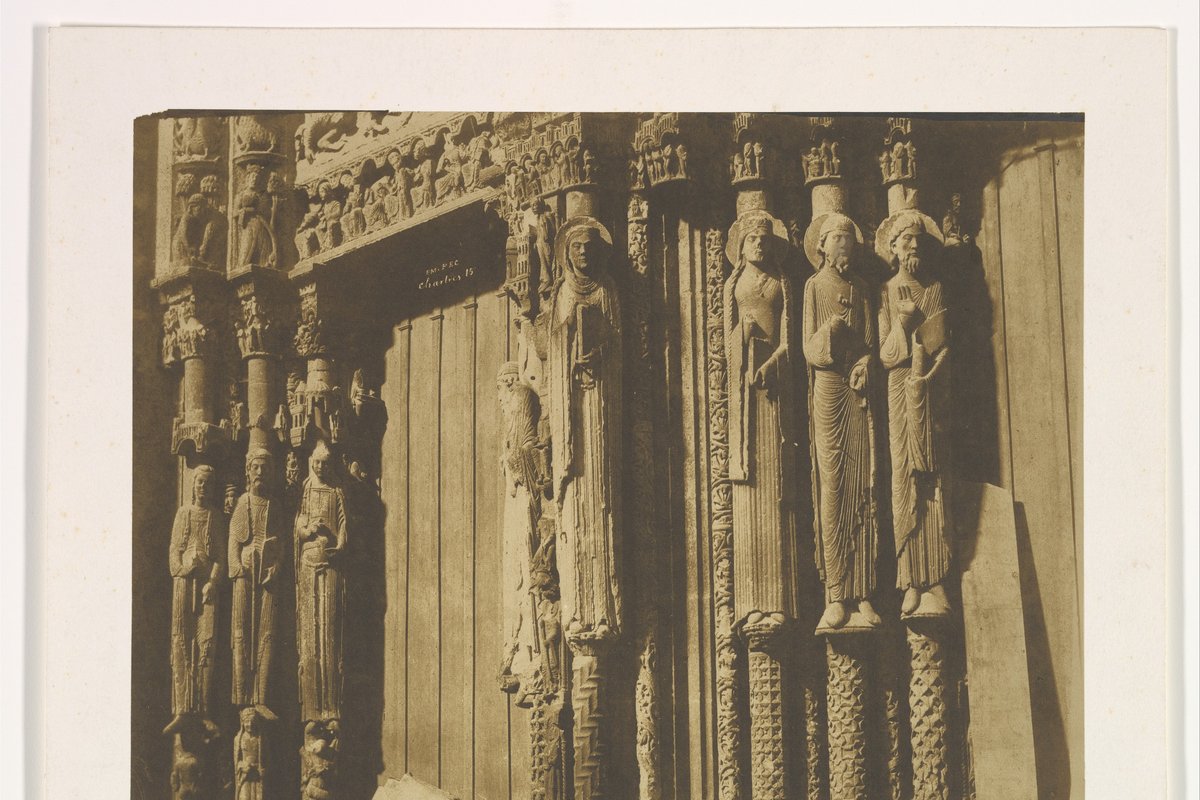
Pierre Emile Joseph Pecarrere, Chartres Cathedral Royal Portal statues, 1850-1852 - CC0 public domain.
The veil that saved a city
Chartres's central treasure is the Sancta Camisa, a length of ancient cloth venerated as the veil worn by the Virgin Mary, traditionally connected to the Annunciation or to the birth of Christ. Tradition holds it arrived at Chartres in 876, a gift from the West Frankish king Charles the Bald, whose grandfather Charlemagne had reportedly received it earlier as a gift from the Byzantine Empress Irene. Its fame as a protective relic dates to 911, when Chartres was besieged by Viking raiders under Rollo; the bishop is said to have displayed the veil from the city walls, and the attackers withdrew. Whether the siege broke because of the relic, a negotiated truce, or simple chance is impossible to verify at this historical distance — but the story cemented the veil's reputation and drew pilgrims to Chartres for the next thousand years, a devotion that continued alongside, and helped finance, the Gothic rebuilding after 1194.
A blue no one has matched since
Of the roughly 176 stained glass windows Chartres contains, most dating to the 13th century, one color has become almost synonymous with the building itself: a deep, saturated blue used throughout the windows, especially in figures of the Virgin Mary, that glassmakers and chemists have studied for generations without fully reproducing its exact luminosity. "Chartres blue" is often cited as evidence of lost medieval glassmaking techniques, though the truth is likely more mundane — a combination of specific mineral impurities, glass thickness, and centuries of weathering that happened to align in a way later craftsmen simply haven't replicated by accident or design. Whatever the explanation, the windows remain remarkably intact for their age, having survived both religious conflict and, notably, two world wars — the glass was removed and hidden piece by piece during both German occupations of the 20th century, then carefully reinstalled.
Walking, not just looking
Set into the stone floor of the nave is Chartres's labyrinth, a large circular pattern dating from the early 13th century, one of the best-preserved examples of a design that appeared in several French Gothic cathedrals of the period. Unlike a maze, a labyrinth has a single winding but unbranching path from entrance to center, meant to be walked rather than solved. Medieval pilgrims used it as a devotional exercise — some traditions describe it as a symbolic substitute pilgrimage to Jerusalem for those who couldn't make the actual journey — and visitors still walk it today, particularly on Fridays when the cathedral clears the chairs covering it for exactly that purpose.
The school that made Chartres a center of learning
Long before the current cathedral rose, Chartres was already famous for something other than stone and glass: its cathedral school, one of the most important centers of learning in 12th-century Europe. Under masters like Bernard of Chartres and Thierry of Chartres, the school built a reputation for serious study of classical Latin authors, natural philosophy, and the liberal arts, at a time when few places in Europe combined religious and secular learning so ambitiously. Bernard is remembered for a phrase that has outlived almost everything else he wrote — describing scholars of his generation as "dwarfs standing on the shoulders of giants," able to see further than the ancients not through greater vision but because earlier thinkers had lifted them up. That intellectual culture shaped the theological program carved and glazed into the cathedral itself: the sculpture and windows aren't random devotional images but a structured teaching tool, arranging biblical history, the lives of saints, the zodiac, and the liberal arts into a visual encyclopedia meant to instruct as much as inspire.
A model that shaped a generation of builders
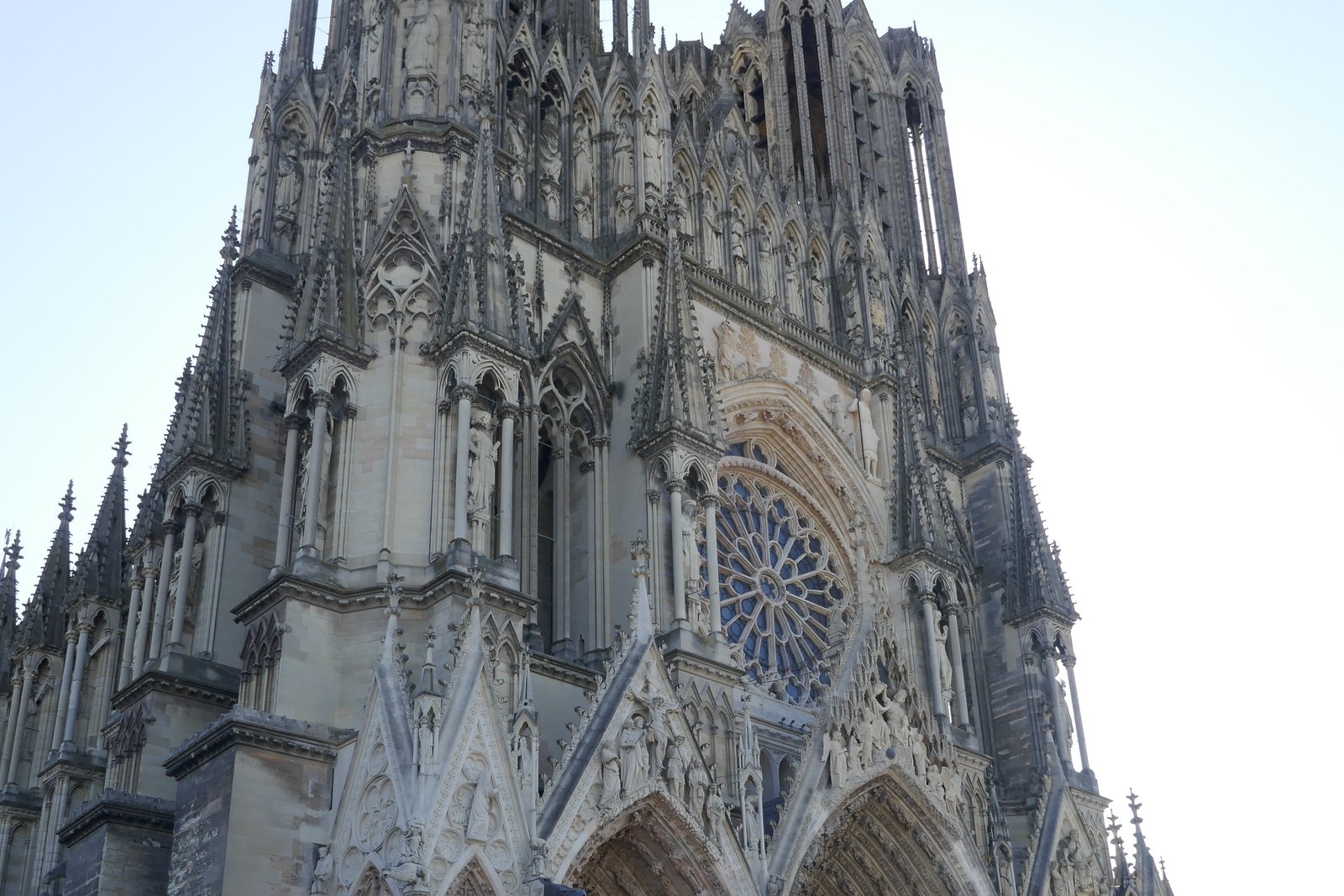
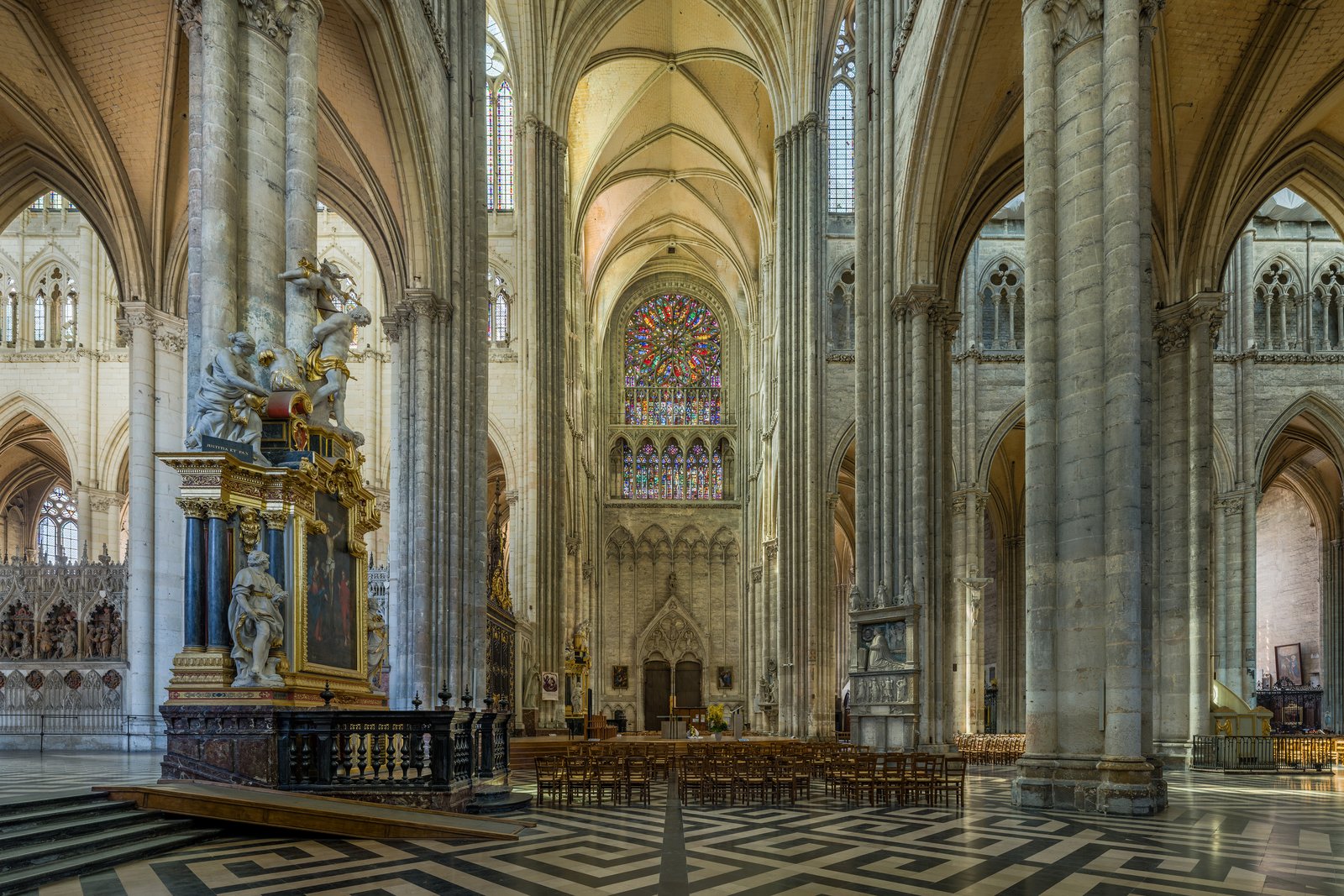
Chartres didn't just impress medieval visitors — it changed how they built. Its innovations in flying buttress design allowed the walls to carry thinner tracery and far more glass than earlier Romanesque churches could support, letting light flood the interior in a way that became the defining feature of the Gothic style. Architects and masons from across France and beyond studied its methods, and elements of its plan echo in cathedrals built in its wake, from Reims to Amiens. Art historians also prize the sculpture of its three great portals, particularly the Royal Portal on the west facade, which survived the 1194 fire intact and preserves some of the finest surviving figure carving of the mid-12th century — a rare direct link to the church that stood before the Gothic rebuilding.
Chartres remains an active parish cathedral, not simply a monument, much as Notre-Dame de Paris does farther north — a building whose windows, relic, and worn stone floor all still serve the purpose they were built for, eight centuries on.
Trivia
What is the Sancta Camisa kept at Chartres Cathedral?
Why is Chartres Cathedral's stained glass so famous?
What is the labyrinth on the floor of Chartres Cathedral?
How old is the current Chartres Cathedral?
Related Reading