Canterbury Cathedral and the Murder That Made It Sacred

A cathedral founded centuries before its most famous moment
Canterbury Cathedral's roots go back further than the event most associated with it. The see of Canterbury was established in 597 by Saint Augustine of Canterbury, a Benedictine monk sent from Rome by Pope Gregory the Great on a mission to re-evangelize England, then largely pagan under Anglo-Saxon rule. Augustine became the first Archbishop of Canterbury, and the cathedral he founded has remained the seat of that office — and by extension the symbolic mother church of English Christianity — ever since, through Viking raids, Norman conquest, and repeated rebuilding after fire and structural collapse over the centuries.
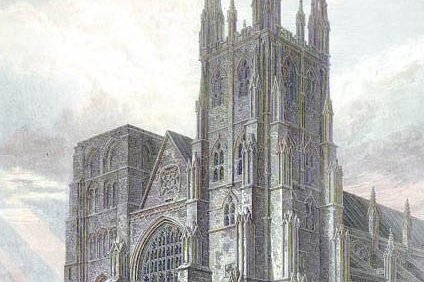
Engraved by J. Le Keux after a picture by G. Cattermole, 1821 — public domain.
By the twelfth century, Canterbury Cathedral was already an important and well-established institution. What transformed it into one of the most significant pilgrimage sites in medieval Christendom, though, was a single, brutal afternoon in December 1170.
A conflict between crown and Church
Thomas Becket had been King Henry II's close friend and chancellor before being appointed Archbishop of Canterbury in 1162 — a decision Henry reportedly hoped would give him an ally at the head of the English Church. Becket, once installed, proved to be nothing of the sort. He resigned the chancellorship and began defending the independence and legal privileges of the Church with an intensity that put him on a direct collision course with the king, particularly over the question of whether clergy accused of crimes should be tried in royal courts or Church courts — a dispute with real stakes over the balance of power between crown and Church in medieval England.
The conflict escalated for years, driving Becket into exile in France for a time before an uneasy reconciliation brought him back to Canterbury in 1170. The peace didn't hold. Henry, frustrated by continuing friction with Becket, is recorded by various chroniclers as having spoken in anger about being rid of him — the exact words are not preserved verbatim in any single reliable contemporary source, and the famous phrasing "Will no one rid me of this turbulent priest?" is a later popularization rather than a verified direct quotation. Whatever precisely was said, four knights in Henry's court took it as encouragement to act.
Murder at the altar
On December 29, 1170, the four knights arrived at Canterbury Cathedral and confronted Becket. Accounts from monks who witnessed the event describe Becket refusing to flee the cathedral or allow the doors to be barred against the knights, reportedly saying it was not fitting to turn a church into a fortress. He was struck down near a side altar inside the cathedral, in front of members of his own household and community — a killing inside sacred space that shocked Christian Europe far beyond England's borders.
Henry II, whatever his role in provoking the murder, publicly denied ordering it and later performed public penance at Becket's tomb, walking barefoot through Canterbury and submitting to ritual scourging by monks — a dramatic act of contrition that reflects how seriously the murder of an archbishop inside his own cathedral was taken across medieval Christendom.
From murder scene to Europe's great pilgrimage
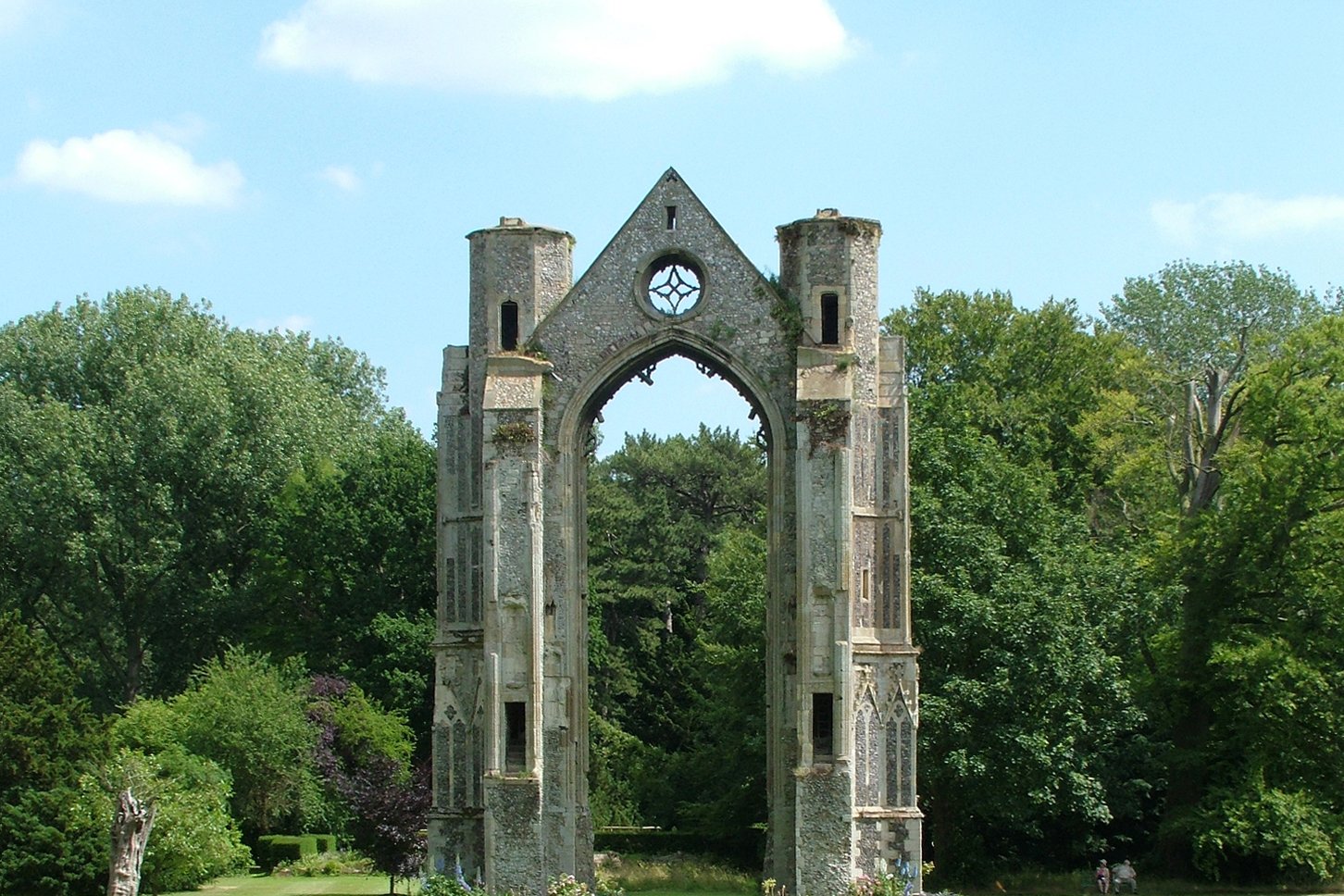
Becket was canonized remarkably quickly — just three years after his death, in 1173, by Pope Alexander III — and a shrine was built within the cathedral to house his relics. It rapidly became one of the most visited pilgrimage destinations in medieval Europe — alongside the Shrine of Our Lady of Walsingham, medieval England's other great pilgrimage draw — drawing travelers from across England and the continent seeking miracles and intercession credited to the martyred archbishop.
That pilgrimage tradition is preserved most famously in English literature through Geoffrey Chaucer's The Canterbury Tales, written in the late fourteenth century — a collection of stories framed around a diverse group of pilgrims traveling together from London to Canterbury specifically to visit Becket's shrine, a literary device that only worked because readers of the period would have immediately recognized the journey as a familiar, well-worn pilgrimage route.
Destruction and what remains
The shrine's prominence made it a target during the English Reformation. In 1538, King Henry VIII ordered Becket's shrine destroyed, his bones removed and reportedly scattered or burned, and his name struck from official religious calendars — a deliberate erasure of a saint whose story centered precisely on resisting royal overreach into Church authority, a resonance not lost on Henry VIII given his own break from Rome.
Canterbury Cathedral survived the Reformation as a building, continuing on as the mother church of the newly established Church of England, and it remains today the seat of the Archbishop of Canterbury, a position holding symbolic primacy across the worldwide Anglican Communion. The exact site of Becket's murder is still marked within the cathedral, and while the physical shrine that once drew Chaucer's pilgrims is gone, Canterbury remains, in a different form, one of the most historically significant Christian sites in England — its identity still shaped, eight and a half centuries later, by the murder of an archbishop who refused to bar his own cathedral doors.
Trivia
Who was murdered inside Canterbury Cathedral, and why?
Did King Henry II directly order Becket's murder?
What happened to Canterbury Cathedral after Becket's murder?
How is Canterbury Cathedral connected to Chaucer's Canterbury Tales?
What role does Canterbury Cathedral play in the Church of England today?
Related Reading