Sanctuary of Our Lady of Fátima

An empty field before 1917
Before May 13, 1917, the Cova da Iria had no religious significance at all — it was simply farmland, a modest hollow with a scattering of trees and rock outcrops on the edge of the parish of Fátima in central Portugal, owned in part by the family of a ten-year-old shepherdess named Lúcia dos Santos. She and her younger cousins, Francisco and Jacinta Marto, were tending sheep there when they reported the first of what became six monthly apparitions of a radiant woman, continuing through October 13 of that year. This blog's article on Our Lady of Fátima covers the apparitions themselves in detail; this piece is about what grew up on the ground afterward.
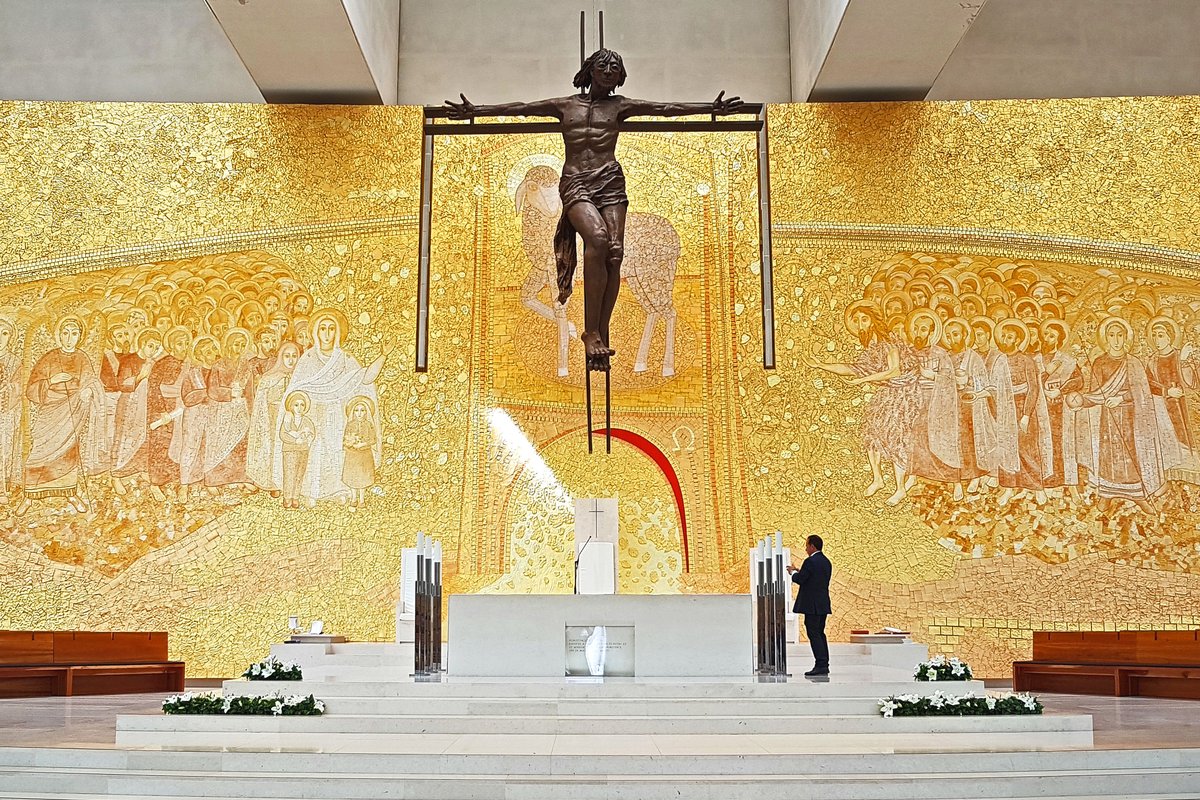
Lark Ascending, Fatima Basilica of the Holy Trinity interior, 2019 - public domain.
Building on the exact spot
According to the children's account, the Lady made a direct, concrete request during the apparitions: that a chapel be built on the site in her honor. Local devotion moved quickly once the reports spread, and construction on a small Chapel of the Apparitions ran from April 28 to June 15, 1919, placed precisely where the children said the visions occurred. The devotion wasn't universally welcomed — Portugal in this period was governed by an anticlerical republic hostile to organized religious expression — and the original chapel was destroyed by a bomb on March 6, 1922. It was rebuilt within a year and has stood, in restored form, ever since, remaining today the most intimate and specific point of pilgrimage on the grounds: the literal spot, rather than a later monument built nearby.
A basilica built across three decades
The much larger Basilica of Our Lady of the Rosary of Fátima came later and took far longer to complete. Its foundation stone was laid on May 13, 1928 — the eleventh anniversary of the first apparition — and construction continued for another twenty-six years, finishing in 1954. Designed initially by the Dutch architect Gerardus van Krieken and completed under João Antunes, the basilica's long, colonnaded facade and freestanding bell tower became the visual center of the sanctuary complex, and its interior now holds the tombs of Francisco and Jacinta Marto, both canonized in 2017, along with the tomb of their cousin Lúcia, who lived on as a Carmelite nun until her death in 2005.
As pilgrim numbers kept growing through the twentieth century — Fátima had by then become one of the largest Marian pilgrimage sites in the world — the sanctuary added a second, larger worship space, the Basilica of the Holy Trinity, consecrated in 2007 with capacity for several thousand people at once, positioned facing the older basilica across the enormous paved esplanade that now defines the site's scale. That esplanade itself is a direct architectural response to history: it was built wide and open enough to hold crowds on the order of the roughly 70,000 people who reportedly gathered at the same field for the final 1917 apparition and the event that came to be called the Miracle of the Sun. On major anniversary dates, particularly May 13 and October 13 each year, the esplanade still fills with pilgrims arriving from around the world, some completing the final stretch of their journey on their knees along a dedicated path leading up to the Chapel of the Apparitions.
The third secret, and a message the sanctuary still carries
Part of what has kept Fátima such an active destination, rather than a shrine frozen at 1917, is the ongoing story surrounding the so-called "secrets" the children reported receiving during the apparitions — messages about war, conversion, and a vision widely interpreted as foreshadowing persecution of the Church in the twentieth century. The Vatican published the text of the last of these, the so-called third secret, in the year 2000, alongside a theological commentary situating it within the Church's broader teaching on private revelation. Catholic teaching draws a firm line here worth stating plainly: reported private revelations, even ones the Church treats as worthy of belief, are never placed on the same level as the deposit of public revelation closed with the death of the last apostle; the faithful may find them spiritually helpful, but are never bound to accept them as an article of faith. That careful distinction is part of what has let the sanctuary grow into a major site of prayer for peace and conversion without ever functioning as a rival source of doctrine alongside Scripture and Tradition.
More than a monument to one event
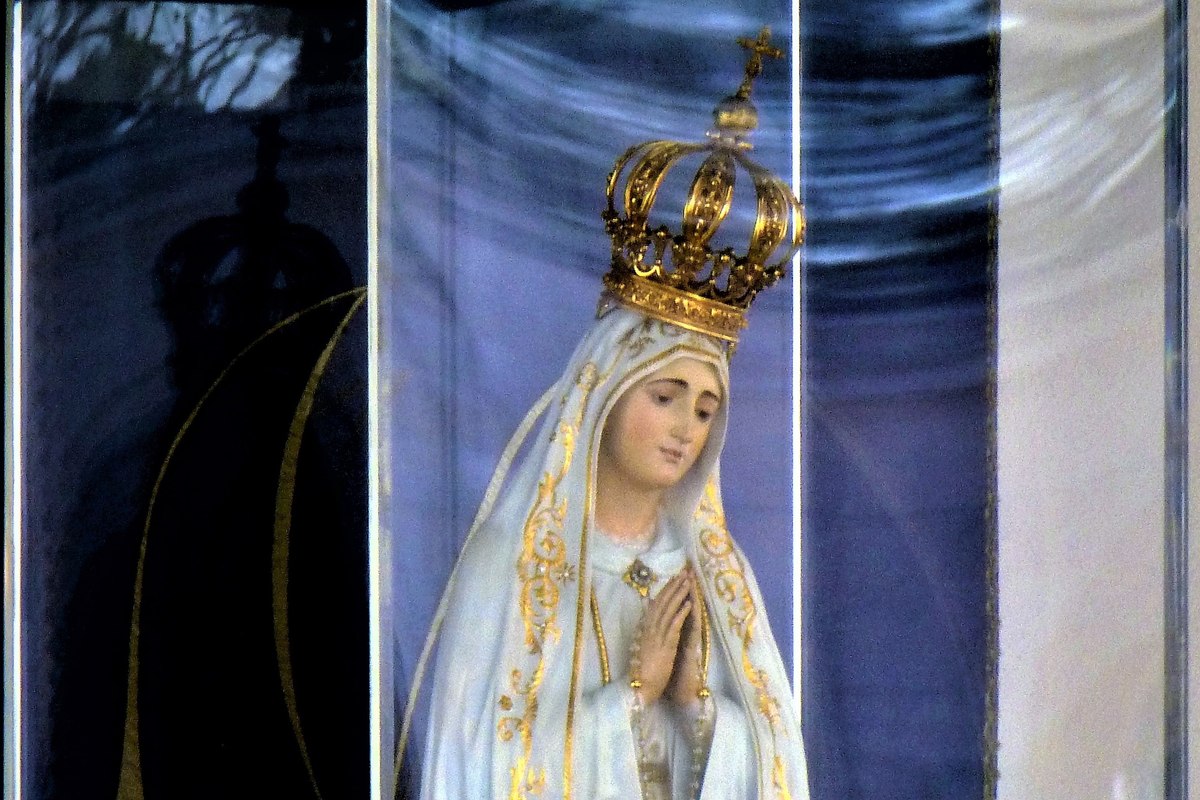
What makes the Fátima sanctuary distinctive among Marian shrines is how directly its physical layout still traces the reported apparitions themselves. Pilgrims walk the same ground the three children walked, pray at the same chapel marking the same spot, and pass the tombs of the children who first reported what they saw there — a continuity from open pasture to global pilgrimage site that spans just over a century. Pope John Paul II gave the sanctuary particular prominence within his own papacy, crediting Our Lady of Fátima with sparing his life during the 1981 assassination attempt in St. Peter's Square and later donating the bullet removed from his body to be set into the crown of the statue of Our Lady venerated at the shrine — a gesture that tied one of the twentieth century's most famous acts of violence directly back to this one field in rural Portugal.
Today the sanctuary functions as far more than a monument to a single set of events. It hosts ongoing catechesis, a rectory ministering to pilgrims in dozens of languages, and a steady calendar of Masses and devotions that continue year-round, not only on anniversary dates. For a site that began as unclaimed rock and scrub grass tended by a shepherd family, the scale of what has grown there — architecturally, spiritually, and in sheer numbers of visitors — remains one of the more striking transformations in modern Catholic history.
Trivia
Where exactly is the Sanctuary of Fátima located?
When was the first chapel built at the apparition site, and what happened to it?
What is the main basilica at the Fátima sanctuary called?
How large is the sanctuary today, and why is that scale significant?
Is a visit to Fátima considered an official Catholic pilgrimage site?
You May Also Like
Related Reading