The Sanctuary of Saint John Paul II, Kraków

A shrine to a pope built in his own city
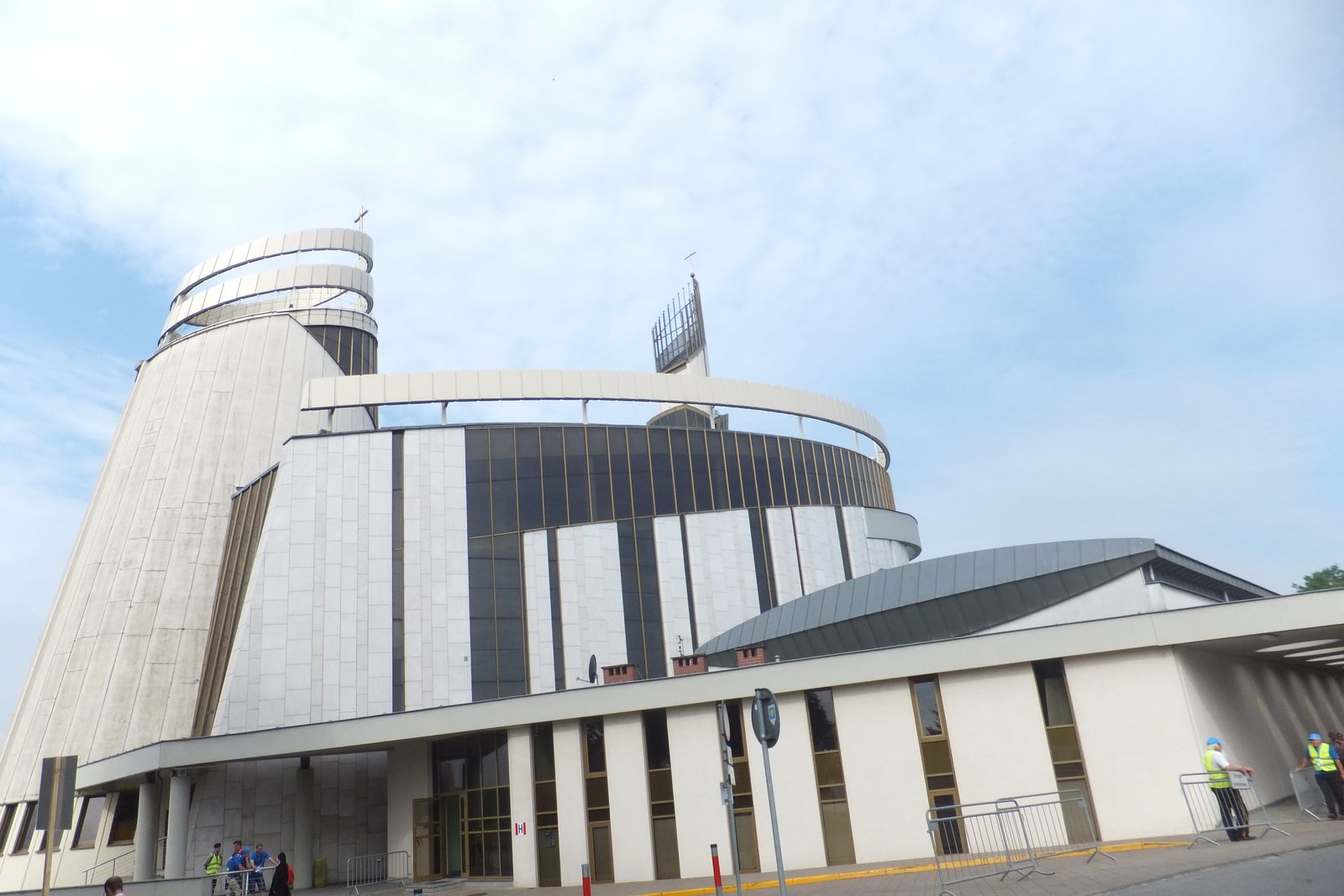
The Sanctuary of Saint John Paul II stands in the Łagiewniki district on the southern edge of Kraków, a modern complex of white stone and glass that departs sharply, by design, from the Gothic and Baroque churches that dominate the historic center of the city a few miles to the north. It was built not around an ancient relic or a miraculous apparition but around the life of a single twentieth-century figure — Karol Wojtyła, who spent decades of his life in Kraków before becoming Pope Saint John Paul II, one of the most consequential popes of the modern era and, after his death, one of the fastest-canonized in recent Church history.
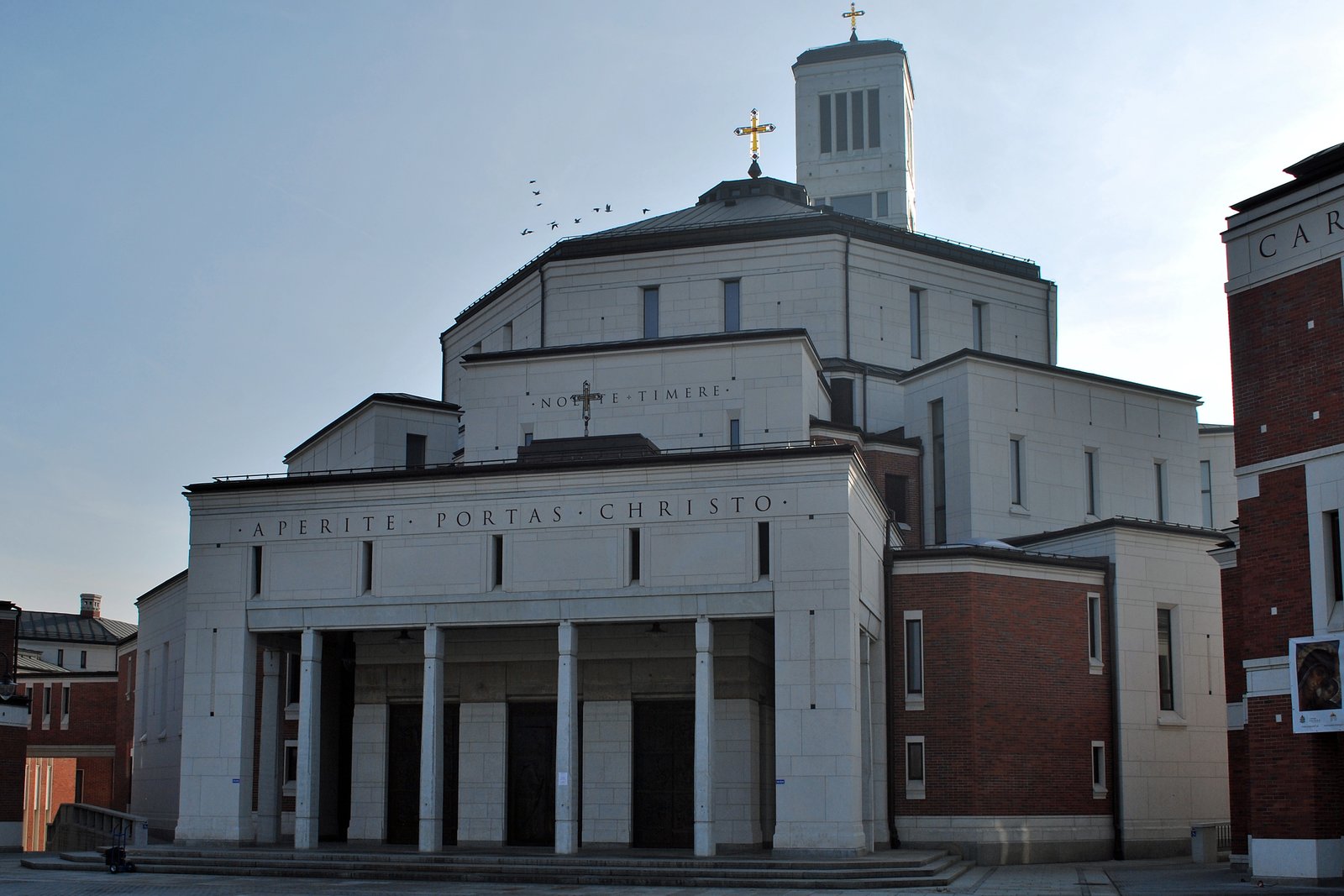
Photograph by Zygmunt Put, the completed Sanctuary of Saint John Paul II, Krakow, 2015 -- CC BY-SA 4.0, Wikimedia Commons.
Wojtyła's connection to Kraków ran deep and predated his rise to prominence by decades. He studied literature at Kraków's Jagiellonian University before the Second World War, worked in a stone quarry and later a chemical factory under Nazi occupation to avoid deportation for forced labor while secretly studying for the priesthood through an underground seminary, and was ordained a priest in Kraków in 1946. He would go on to serve the archdiocese for most of his priestly and episcopal life, eventually becoming Archbishop of Kraków in 1964, a position he held until his election to the papacy in October 1978 stunned the world by making him the first non-Italian pope in over four centuries.
Building a sanctuary around a blood relic
Following John Paul II's death in April 2005 and the subsequent process toward his canonization, which Pope Francis completed in April 2014, the Archdiocese of Kraków undertook construction of a dedicated sanctuary to house both a permanent center of devotion to the new saint and a museum documenting his life. The centerpiece relic housed within the sanctuary is unusual among Catholic shrines: a small vial of the pope's own blood, drawn during medical treatment in the final years of his life and preserved afterward as a first-class relic — a direct physical connection to the man himself rather than to an object he once owned or a place he once visited.
Construction of the modern complex proceeded through the early 2010s, and the sanctuary was formally consecrated in 2013, positioning it to become an immediate center of pilgrimage the following year when John Paul II's canonization was formally proclaimed in Rome. The building's contemporary architectural style, a deliberate departure from the historic churches elsewhere in Kraków, was intended to reflect the modern era in which its subject lived and served, rather than evoke the medieval or Baroque past associated with most Polish pilgrimage churches.
A neighborhood already marked by sanctity
The sanctuary's location in Łagiewniki was not incidental. The district was already home to the Shrine of the Divine Mercy, associated with Saint Faustina Kowalska, the Polish nun whose visions of Christ as the embodiment of divine mercy John Paul II personally championed throughout his pontificate — he canonized Faustina himself in 2000 and formally established Divine Mercy Sunday as a feast for the universal Church, giving her previously controversial private devotion full institutional standing within Catholic worship. Building the John Paul II sanctuary near the Divine Mercy shrine thus placed two closely linked centers of devotion within walking distance of one another, both rooted in the same pope's personal spiritual legacy.
The proximity draws large numbers of pilgrims who visit both sites in a single journey, tracing a devotional connection between Faustina's private revelations and the pope who elevated them to universal Church practice — a relationship the sanctuary's museum exhibits explicitly document alongside the broader narrative of John Paul II's life, from his Kraków youth through his papacy and his role in the collapse of Communist rule across Eastern Europe.
A living center of pilgrimage today
Today the Sanctuary of Saint John Paul II functions as both an active place of worship and a major museum dedicated to preserving the memory of a pope whose twenty-six-year pontificate reshaped the Church's global visibility and, many historians argue, contributed materially to the political transformations that ended Communist rule in his native Poland and across the Eastern Bloc. The complex includes a large basilica-style church, extensive exhibition space documenting Wojtyła's life from his Kraków years onward, and a garden of remembrance incorporating stones and soil gathered from significant sites associated with his life and papacy.
For Polish Catholics especially, the sanctuary represents something distinct from most saints' shrines: a place of devotion to a figure who is not a distant historical or legendary presence but a man many visitors remember personally, having lived through his papacy, his visits to Poland, or, for the oldest among them, his years as their own archbishop in Kraków before the world came to know him as pope.
Trivia
What is the Sanctuary of Saint John Paul II in Kraków?
Why was the sanctuary built in Kraków specifically?
What relic does the sanctuary hold?
When was the sanctuary built and dedicated?
Is the sanctuary connected to the nearby Divine Mercy shrine?
You May Also Like
Related Reading