The Basilica of Our Lady of Luján, Argentina

An ox cart that would not move
The story told about Luján's founding is one of the most beloved pieces of popular devotion in Argentina, and it begins with an ordinary shipment. Around 1630, a Portuguese landowner named Antonio Farías Sáa, living near what is now Buenos Aires, asked a friend in Brazil to send him a small terracotta statue of the Immaculate Conception to place in a private chapel. The statue — barely more than a foot tall, depicting Mary with hands joined in prayer — was loaded onto an ox cart along with other cargo for the overland journey. Partway across the open pampas, roughly forty miles from the city, the cart became stuck. Nothing the drivers tried could get the oxen moving again — until, as the story goes, someone thought to unload the crate containing the Marian statue. The cart then rolled forward without difficulty.
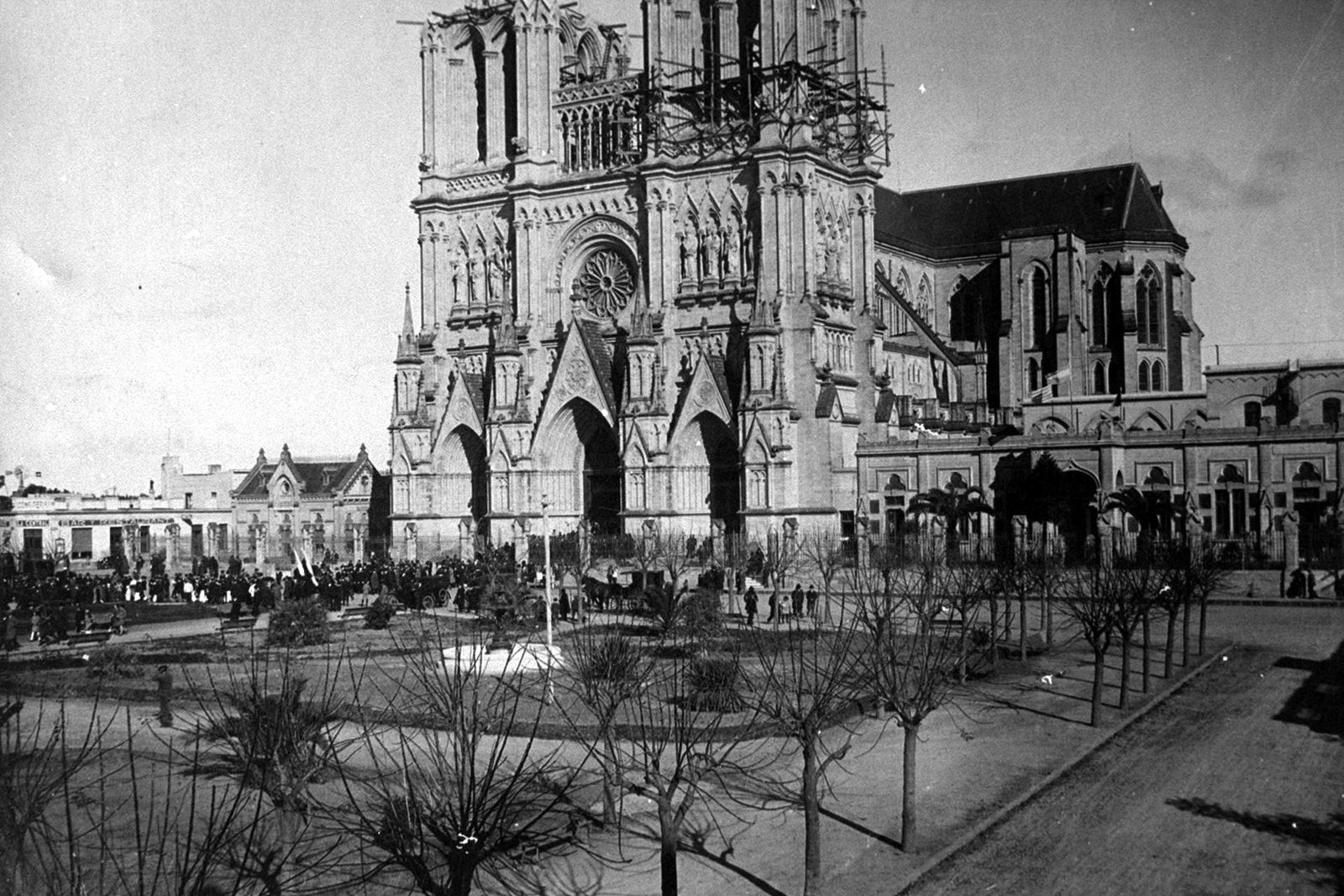
Photograph, 1925, unknown author -- public domain, Wikimedia Commons.
Local Catholics read the sign as unmistakable: Mary wished to be venerated at that exact spot, not carried on to Farías Sáa's private chapel as originally planned. A small shrine was built there instead, on the banks of the Luján River, and the surrounding settlement that grew up around it took its name from the same river — a town, and eventually a whole devotion, born from a cart that refused to go any farther.
Legend, tradition, and what the Church actually says
It's worth being precise about what kind of claim this is. The Catholic Church has never formally investigated or certified the specific mechanics of the ox-cart story the way it might investigate a reported apparition — there is no equivalent here to the Church's careful process for approving something like Fátima or Lourdes. What the Church does recognize, unambiguously, is the resulting devotion itself: the statue is treated as a genuinely ancient and venerable object of Marian piety, dating from the early colonial period of Spanish South America, and the title "Our Lady of Luján" carries full ecclesiastical approval as a legitimate expression of devotion to Mary under the mystery of the Immaculate Conception.
The distinction matters because it's a pattern that shows up across Marian devotion worldwide: a specific founding legend, passed down through popular memory rather than formal Church investigation, sits alongside an officially sanctioned devotion built around a real, physical object of veneration. Luján fits that pattern closely — a beloved story of unclear historical precision, wrapped around a genuinely ancient statue that has drawn pilgrims continuously for nearly four centuries.
From a country chapel to a national basilica
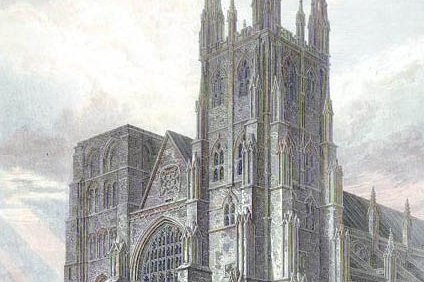
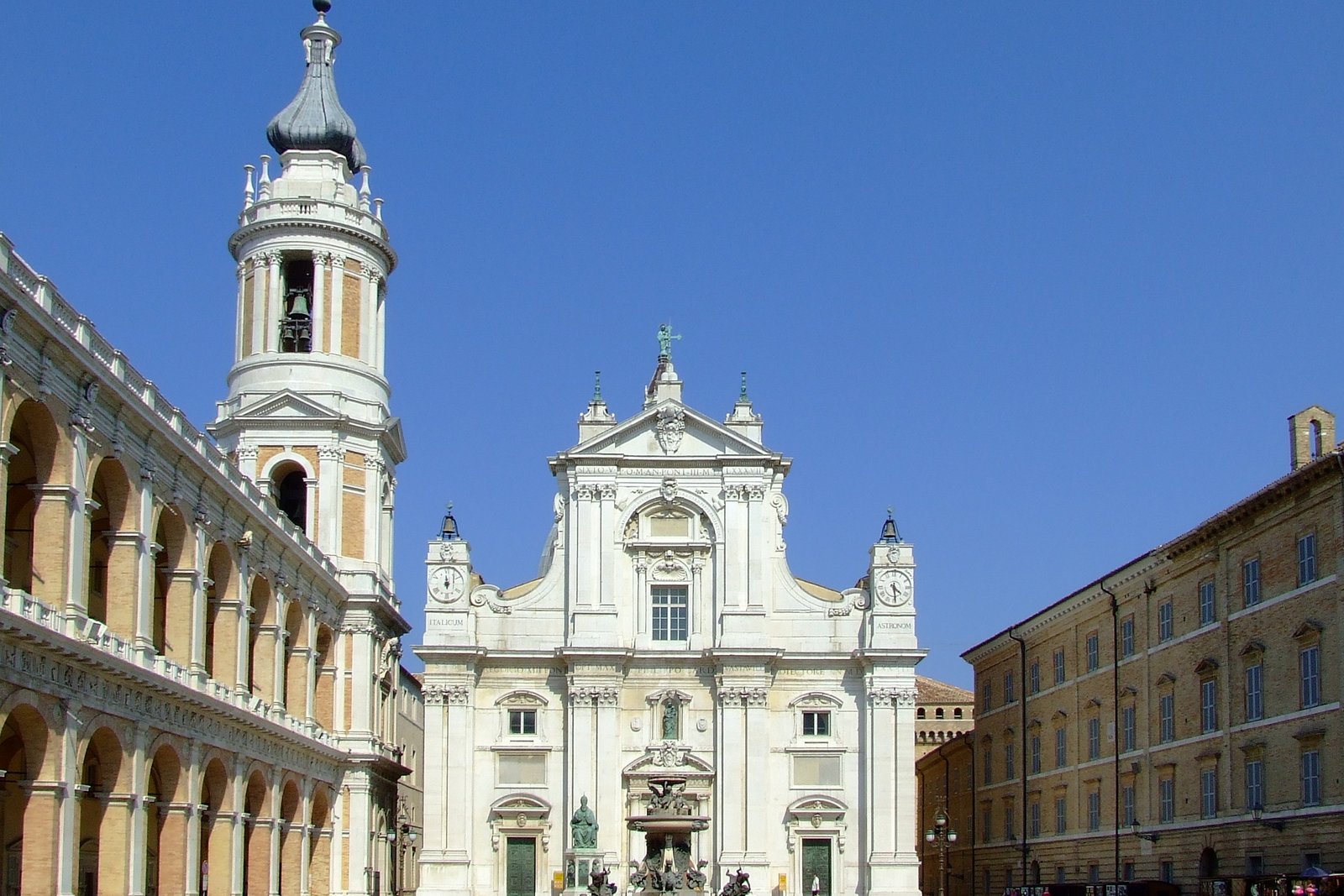
For the first two and a half centuries after the ox cart stopped, the statue was housed in a series of increasingly substantial but still relatively modest chapels near the original site. That changed in the late 19th century, when Argentine Catholics, buoyed by the country's growing wealth and national identity, began raising funds for a basilica genuinely capable of matching the devotion's scale. Construction on the current neo-Gothic building started in 1887 and continued, in stages, until 1935 — a project of similar ambition to Europe's great cathedral-building campaigns, complete with soaring twin bell towers and pointed stone arches, an unusual architectural statement to find on the flat Argentine pampas. Pope Pius XI granted the church the formal rank of minor basilica in 1930, cementing its status as Argentina's preeminent Marian shrine, and Pope Pius XII went further in 1930, formally declaring Our Lady of Luján the patroness of Argentina — a title later extended in devotional practice, if not always identical formal decree, to neighboring Uruguay and Paraguay, making her one of the most widely claimed Marian patronesses in the whole Río de la Plata region of South America.
The original 17th-century terracotta statue that reportedly stopped the ox cart still sits at the heart of the basilica today, displayed above the main altar behind protective glass, small and unassuming compared to the vast neo-Gothic structure built around it over the following three centuries.
A pilgrimage that fills the highway
Luján's most visible modern expression of devotion has nothing to do with the original legend directly and everything to do with a tradition that only began in 1975: an overnight walking pilgrimage covering roughly sixty kilometers from Buenos Aires to the basilica, undertaken every October by young Argentine Catholics. What started as a modest youth gathering has grown into one of the largest annual religious walks anywhere in South America, drawing well over a million participants in recent years, who walk through the night along the highway connecting the capital to Luján, arriving at the basilica by morning for a Mass celebrated as the sun comes up.
That contemporary pilgrimage, alongside the older tradition of individual and family visits throughout the year, keeps Luján functioning much the way Jasna Góra functions for Poland or Guadalupe for Mexico — a single Marian shrine so tightly bound to national identity that visiting it reads as an act of both faith and citizenship at once, still centered, after almost four hundred years, on the small statue that once refused to travel any farther than an ox cart on the open pampas.
Trivia
What is the legend behind the Basilica of Our Lady of Luján?
Is the ox-cart story an official Church teaching or a popular legend?
Which countries recognize Our Lady of Luján as their patroness?
What is the annual youth pilgrimage to Luján?
When was the current basilica at Luján built?
Related Reading