Grotto of Massabielle, Lourdes

An unremarkable cave with an unremarkable name
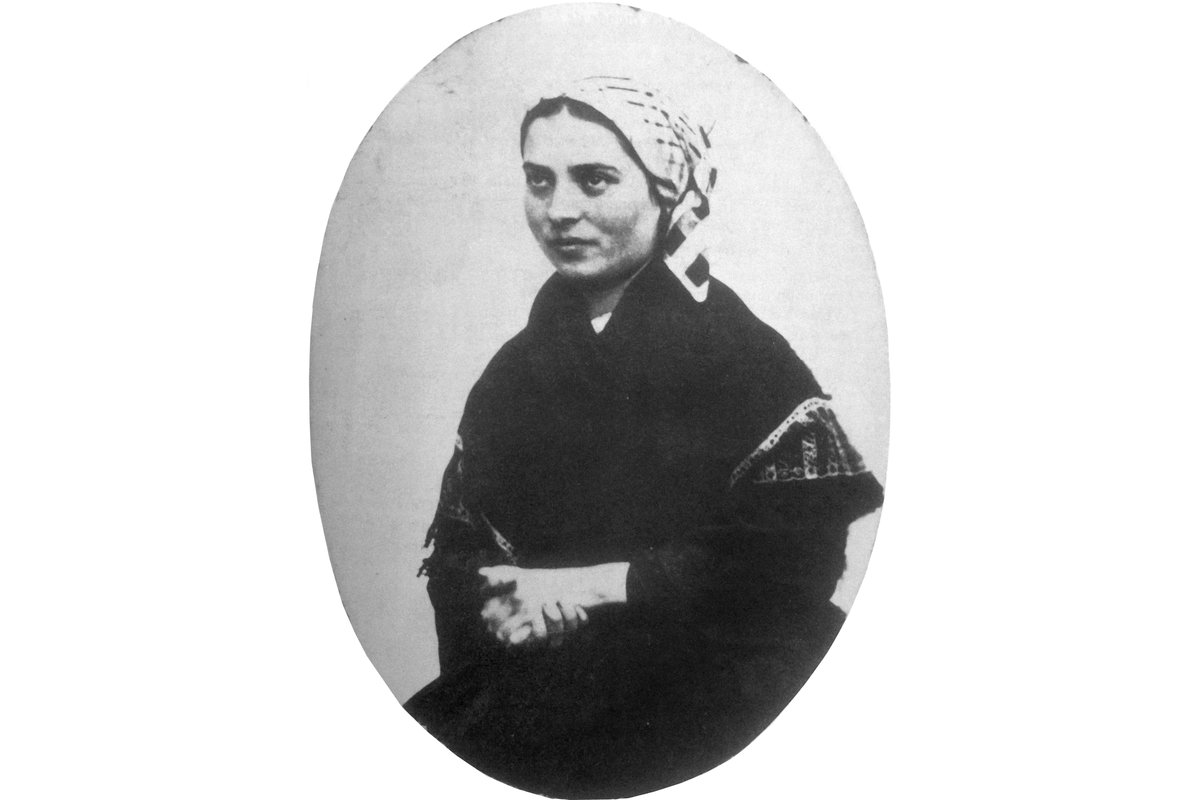
Massabielle simply means "old rock" in the local Gascon dialect — not a name given in anticipation of anything special, just a plain, functional label for a plain, functional feature of the landscape. The grotto itself is modest in scale: about 3.8 meters high, 9.5 meters deep, and just under 10 meters across, a crevice worn into a much larger rock face along the bank of the Gave de Pau river on the edge of Lourdes. It sat near ground the townspeople used for refuse and animal grazing, the kind of place people passed through on errands rather than visited on purpose. Before 1858, if it had any local reputation at all, it was as a slightly disreputable, faintly unpleasant patch of riverside no one had reason to linger near. This blog's article on Saint Bernadette Soubirous covers her life and the apparitions in full; this piece focuses on the physical site itself and what it became.
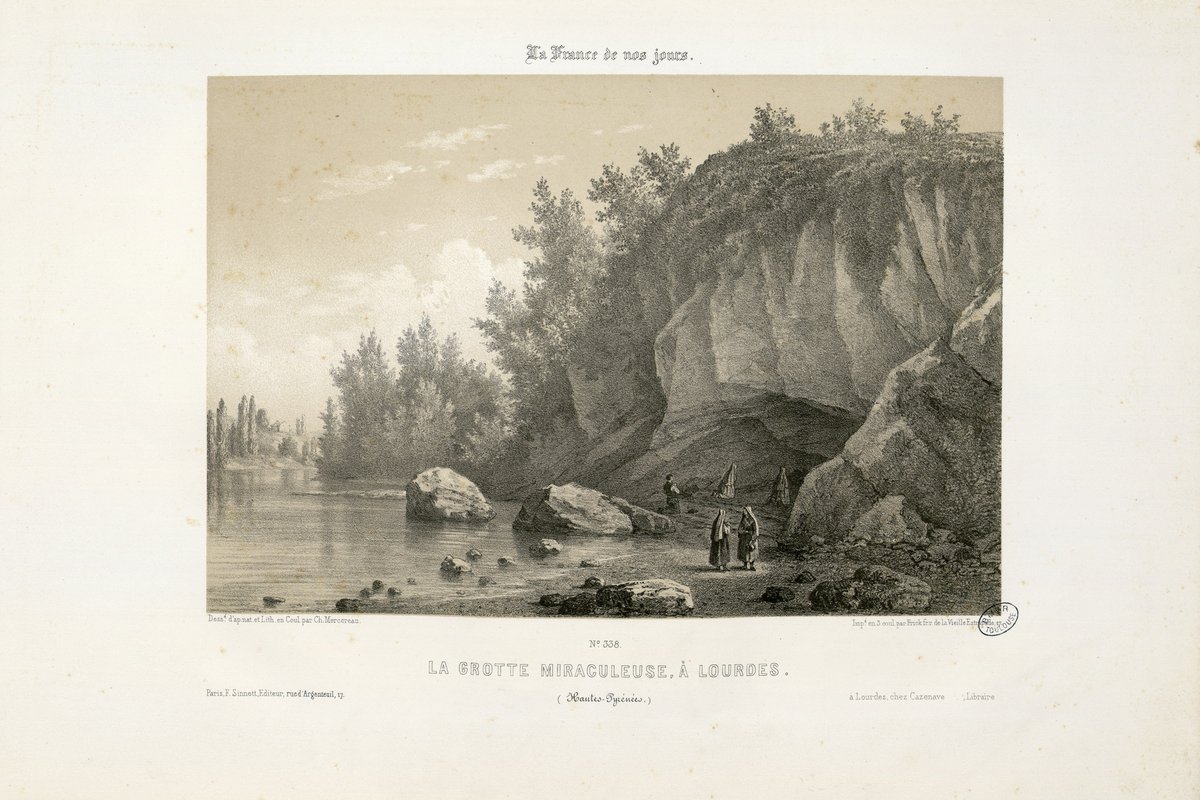
Charles Mercereau, The Miraculous Grotto at Lourdes, circa 1860 - public domain.
The spot where firewood-gathering turned into something else
On February 11, 1858, fourteen-year-old Bernadette Soubirous was sent out with her sister and a friend to gather firewood, and it was in front of this cave, at this unremarkable rock niche, that she reported seeing "something white in the shape of a woman." She returned repeatedly over the following months — eighteen reported apparitions in total, running through July 16 of that year — and each time, the location was the same specific niche in the same specific rock face, never anywhere else. That fixed, unchanging location is part of what gave the reports their internal consistency as word spread and local authorities grew increasingly uneasy about the crowds gathering at what had, until recently, been nobody's destination at all.
A spring that wasn't there before
One of the most physically striking elements of the story unfolded partway through the apparitions. During the ninth reported vision, on February 25, 1858, Bernadette said the Lady instructed her to drink from a spring and wash in it — except no spring was visible at the spot. Bernadette began digging into the muddy ground with her hands in front of a bewildered, then increasingly amazed, crowd of onlookers. Water started to flow from where she had dug, and it has continued flowing ever since, later engineered into channels and reservoirs beneath the sanctuary that today supply the taps and baths pilgrims use at Lourdes. The spring became closely tied to the site's association with healing; the Catholic Church has since investigated numerous reported medical cures connected to it, applying a deliberately rigorous, skeptical process before recognizing any of them as beyond ordinary medical explanation.
From bare rock niche to basilica
In 1864, six years after the apparitions, a statue of the Virgin Mary carved from white Carrara marble by the sculptor Joseph-Hugues Fabisch was installed in the niche above the grotto — placed at the precise spot Bernadette had described the figure occupying, and still the central image pilgrims see today standing before the cave. Above the grotto itself, the Basilica of the Immaculate Conception was constructed and consecrated in 1876, followed over the following century by additional churches on the same grounds, including a large underground basilica built to accommodate growing pilgrim numbers in the twentieth century. What had been an unnamed, unremarkable cave on the edge of a small Pyrenean town is now approached each year by millions of visitors, many carrying the same simple errand Bernadette once had — coming, however briefly, to a plain rock niche that turned out not to be so plain after all.
How the Church decides what counts as a miracle
Lourdes is unusual among Marian apparition sites for how methodically its claimed cures have been examined. Reports of physical healing connected to the spring water began almost immediately, and by 1883 the shrine had established a dedicated Bureau des Constatations Médicales (Medical Bureau) specifically to scrutinize them — a body that, notably, includes physicians of any faith or none, not only Catholic doctors. A reported cure has to clear an extraordinarily high bar before the Church will call it miraculous: the illness must be serious and medically documented before the cure, the recovery must be sudden, complete, and lasting, and it must have no plausible medical explanation according to current science, a judgment doctors revisit as medical knowledge advances. Out of many thousands of reported healings since 1858, only a small number — a few dozen — have ever received the Church's formal declaration of a miracle, a deliberately cautious ratio that reflects how seriously the process is taken rather than any effort to inflate the shrine's reputation.
The cave itself, left largely untouched
One detail pilgrims often remark on is how little the grotto's actual rock formation has changed compared to everything built around it. Unlike many shrine sites where the original location gets absorbed entirely into later architecture, the cave at Massabielle remains open to the sky and largely in its natural state, framed rather than replaced by the basilicas rising above and around it. Visitors can still touch the same rock face Bernadette knelt before, still see water running from the same spring she uncovered, and still stand in a space whose modest dimensions — smaller than many parish sanctuaries — make no attempt to compete with the scale of devotion that grew up around it. That contrast, between an unassuming cave and the enormous pilgrimage complex it anchors, is part of what continues to strike first-time visitors to Lourdes.
Trivia
Where is the Grotto of Massabielle, and how big is it?
Why was the grotto associated with the town's garbage before 1858?
What is the spring inside the grotto, and where did it come from?
Is there a statue in the grotto, and who made it?
What has been built around the grotto since 1858?
You May Also Like
Related Reading