The Sanctuary of Loyola

A soldier's family tower
The Loyola family tower house sits in the Basque Country of northern Spain, near the town of Azpeitia, and it was there, around 1491, that Íñigo López de Loyola was born — the youngest of a large noble family with a long tradition of military and courtly service to the Spanish crown. As a young man, Ignatius (the name he would later adopt) pursued exactly the path expected of him: a career as a soldier and courtier, marked by vanity about his appearance, ambition for glory, and a taste for the romantic chivalric literature popular among the Spanish nobility of the era. Nothing in his early life suggested the religious reformer he would become — a transformation traced in full in our article on Saint Ignatius of Loyola.
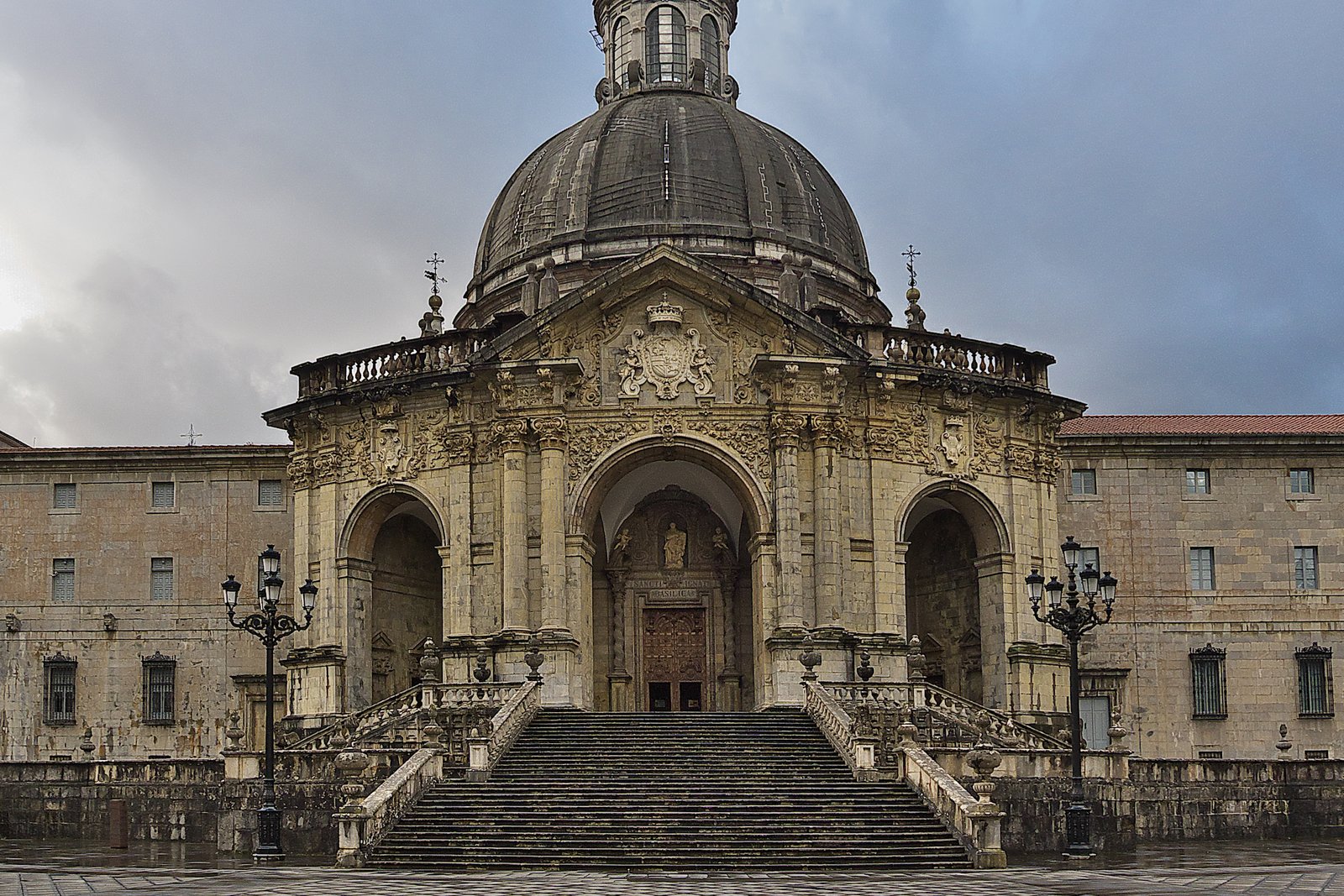
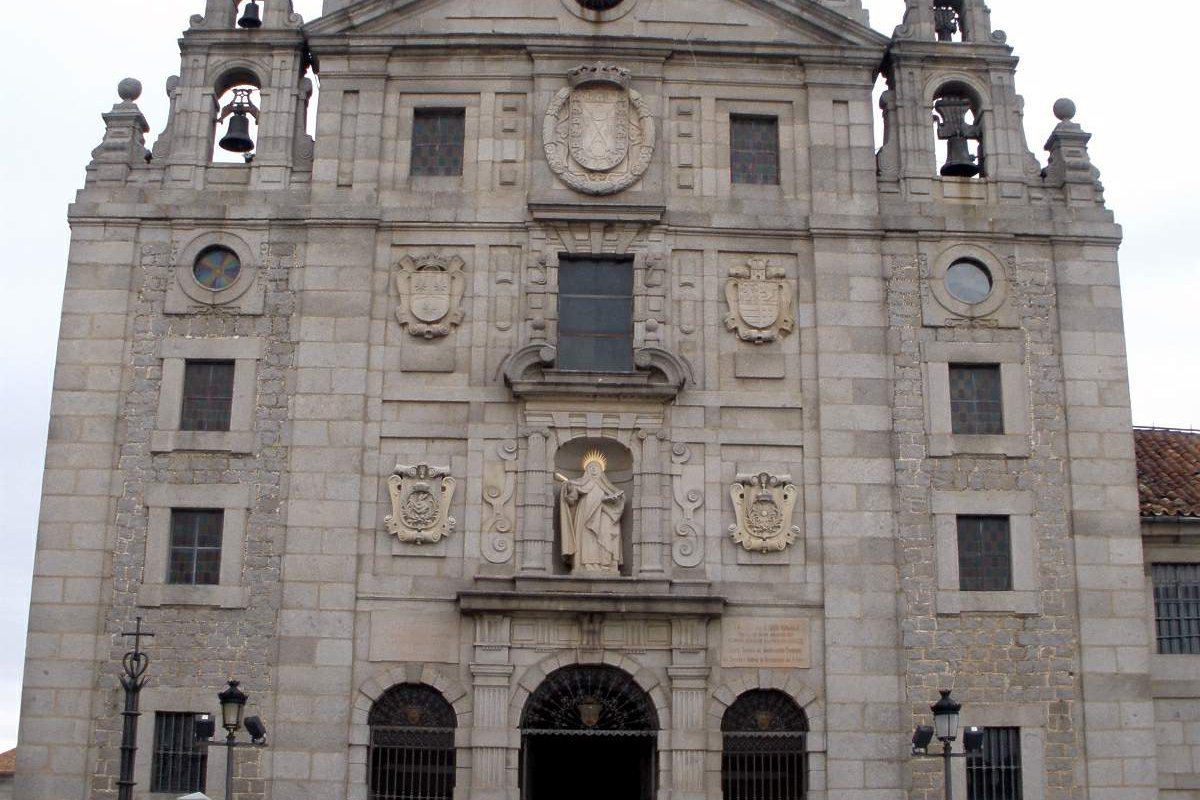
Photograph by Jose Luis Filpo Cabana, Santuario de Loyola, Basílica — CC BY 3.0, Wikimedia Commons.
That trajectory changed abruptly in 1521, when Ignatius was serving in the garrison defending the city of Pamplona against a French and Navarrese siege. A cannonball struck his legs directly, shattering one badly and injuring the other. The wound was severe enough that Ignatius underwent multiple painful surgical procedures over the following months — including, according to his own later account, a deliberate re-breaking and resetting of the bone, and a further procedure to shave down protruding bone he considered unacceptably disfiguring for a man who still hoped to cut a fashionable figure in courtly society.
Recovery, boredom, and an unexpected conversion
Ignatius was carried back to the family tower at Loyola to recover, and it was there, confined to bed for months during a long and difficult convalescence, that the pivotal transformation of his life took place. Bored and immobile, he asked for the chivalric romance novels he usually favored, but the household had none available — only two religious works happened to be on hand: a life of Christ and a collection of the lives of the saints. Reading them repeatedly out of sheer lack of alternatives, Ignatius began noticing a striking pattern in his own inner experience: fantasies of worldly glory and romantic conquest left him excited in the moment but empty afterward, while thoughts of imitating the saints' lives left him with a lasting sense of peace and purpose.
This observation — later systematized into what became known as the "discernment of spirits," a foundational concept in Ignatian spirituality — marked the beginning of Ignatius's religious conversion. He left Loyola once sufficiently recovered, choosing not to return to military life but instead undertaking a period of penance and prayer, eventually leading to his founding, alongside a small group of companions gathered during his subsequent university studies in Paris, of the Society of Jesus in 1540 — an order that would become one of the most influential in the Church's history, particularly in education and missionary work across the globe.
Building a shrine around a family home
The Loyola family tower survived long after Ignatius's death in 1556 and his canonization in 1622, remaining in family hands for generations even as devotion to the by-then-famous founder of the Jesuits grew. In the early eighteenth century, the Society of Jesus undertook an ambitious project: rather than demolishing the historic tower or leaving it as a standalone relic, they commissioned the Italian architect Carlo Fontana to design a grand basilica that would literally enclose and incorporate the original structure within a much larger baroque complex.
Construction proceeded through the 1700s, producing a sanctuary whose scale and ornamentation reflect the wealth and confidence of the Jesuit order at the height of its influence in the Spanish world — an imposing domed basilica with a richly decorated interior, built directly around and above the comparatively modest medieval tower it was designed to honor and protect. The result is architecturally unusual: visitors moving through the complex pass from soaring baroque grandeur into the much older, plainer rooms of the original Loyola residence, including the chamber traditionally identified as Ignatius's birthplace and the room associated with his convalescence and conversion.
A working shrine and retreat center
The Sanctuary of Loyola remains an active Jesuit institution today, combining its role as a pilgrimage destination with its continued function as a retreat center rooted directly in Ignatian spirituality. Visitors and retreatants can tour the preserved rooms of the original tower house, view period furnishings and religious art connected to the Loyola family and Ignatius's own life, and participate in retreats drawing on the Spiritual Exercises — the structured program of prayer and reflection Ignatius developed in the years following his time at Loyola, still used by Jesuits and lay Catholics worldwide.
The sanctuary's basilica also functions as an active parish and pilgrimage church, drawing visitors specifically interested in Jesuit history and spirituality as well as those tracing the broader network of sites connected to Ignatius's life across Spain, France, and Italy. Nearly five hundred years after a cannonball redirected the course of one soldier's ambitions, the tower where he recovered remains standing — quite literally held up, now, by the grand religious institution his convalescence there ultimately produced.
Trivia
Why is the Sanctuary of Loyola significant to Jesuit history?
What happened to Ignatius at the Battle of Pamplona?
What is preserved inside the basilica today?
Is the Sanctuary of Loyola still an active pilgrimage and Jesuit site?
Related Reading