The Basilica of Saint Rita, Cascia

A life of suffering before sanctity
Rita was born around 1381 in Roccaporena, a small village near Cascia in the mountainous Umbrian region of central Italy, and her early religious ambitions were set aside by her parents, who arranged her marriage to a local man in her teens — by most accounts a violent and unfaithful husband whose temper made Rita's married life extremely difficult for nearly two decades. According to tradition, Rita responded to this hardship with patience and prayer rather than resentment, and her husband eventually reformed his behavior before he was murdered in a local feud, an act of violence that, according to accounts of her life, Rita publicly forgave even as she grieved.
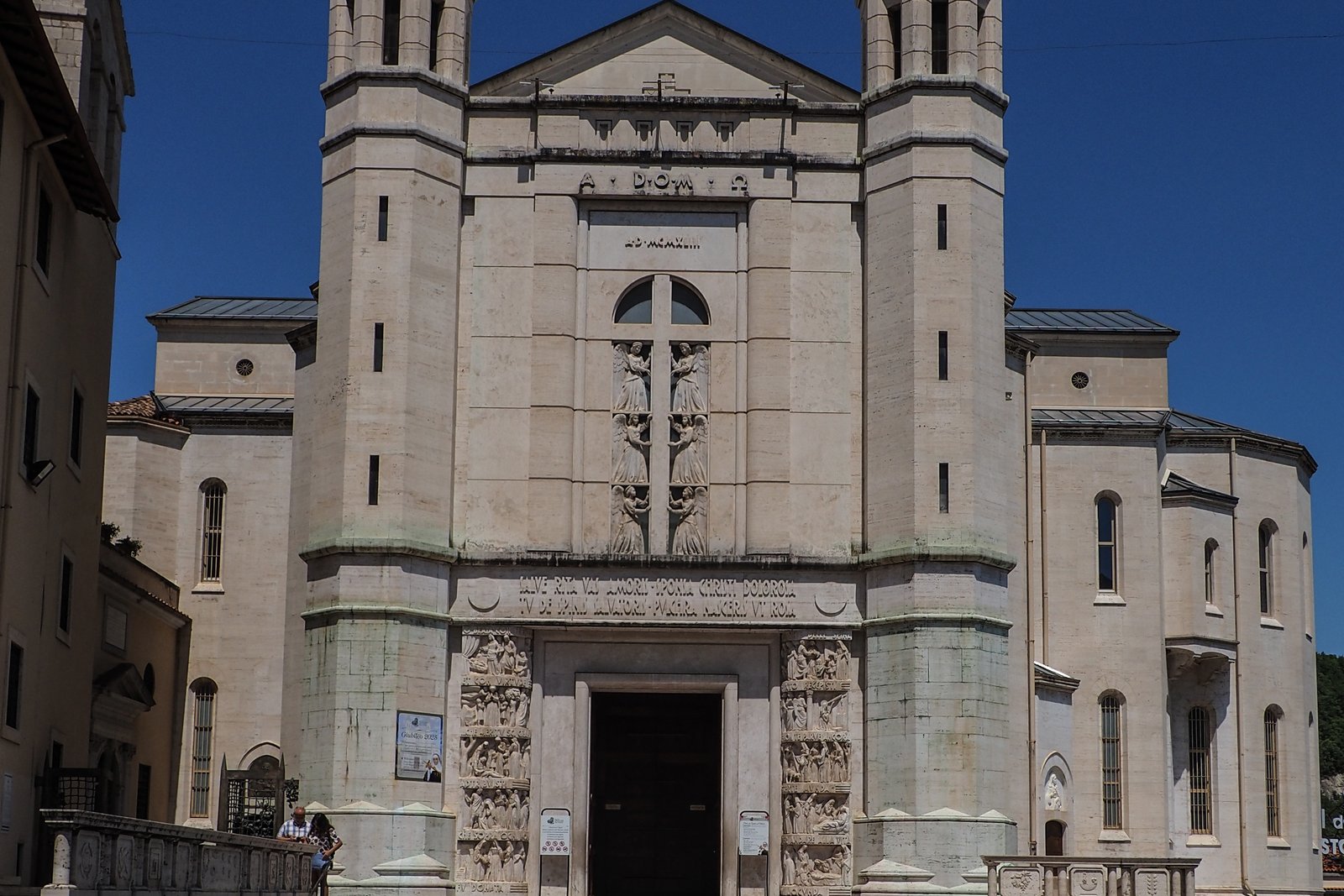
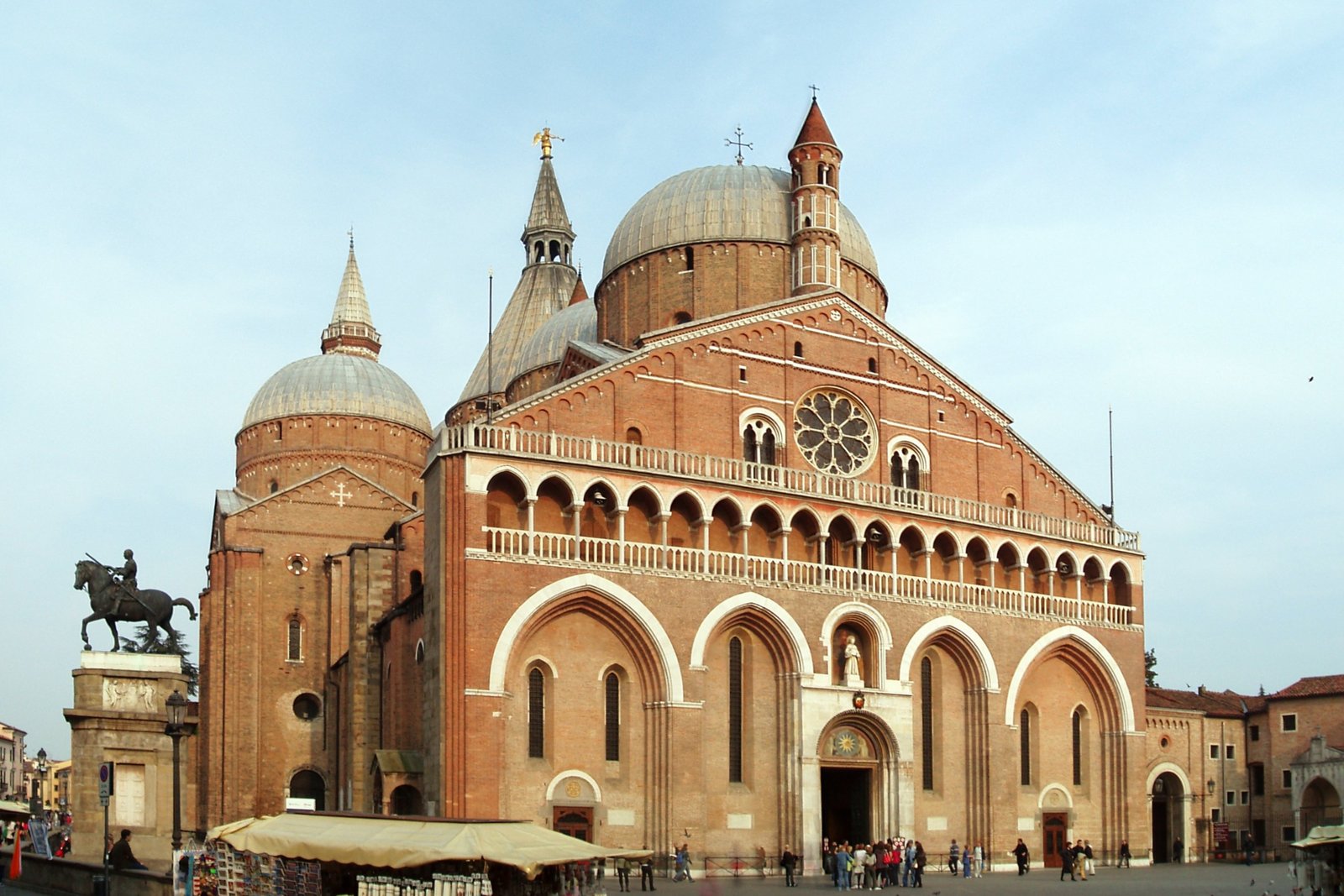
Photograph by 66colpi, Cascia - Basilica di Santa Rita da Cascia - La facciata — CC BY-SA 4.0, Wikimedia Commons.
Widowed with two sons, Rita then faced the fear that her sons intended to avenge their father's death, a path of violence she desperately wanted to prevent; according to tradition she prayed that God would take her sons rather than let them commit murder and lose their souls, and both sons died of illness before carrying out any revenge. Having lost her husband and both children, Rita sought entry into the Augustinian convent of Santa Maria Maddalena in Cascia, but was reportedly turned away multiple times, in part because the community only accepted unmarried women or widows without the complications of her particular history, before finally being admitted — traditional accounts describe her eventual entry as occurring through what was regarded as miraculous intervention.
The wound that marked her final years
Within the convent, Rita became known for extreme personal austerity and devotion, particularly her prayerful meditation on the sufferings of Christ. According to a tradition recorded in early accounts of her life, in 1441, while praying before a crucifix, Rita experienced what she and others understood as a wound to her forehead resembling injury from the crown of thorns — a wound that would remain open, painful, and reportedly foul-smelling for the final fifteen years of her life, at times severe enough that she was kept apart from the rest of the community. The Church has never required belief in the literal supernatural origin of this wound as an article of faith, treating it as part of the pious tradition surrounding her life rather than defined doctrine, but it became and remains central to her iconography and popular devotion.
Rita died in the convent in 1457, and local veneration began almost immediately, with reports of miracles attributed to her intercession accumulating over the following centuries even as her formal canonization process moved slowly, as was common for causes from this era. She was beatified in 1626 and finally canonized by Pope Leo XIII in 1900, more than four hundred years after her death — a gap that reflects both the deliberate pace of the Church's sainthood process historically and the sheer breadth of popular devotion that had already grown around her locally long before Rome formally confirmed it.
Building a basilica for a growing cult
The medieval convent church where Rita had lived and died proved increasingly inadequate for the volume of pilgrims arriving to venerate her, particularly following her 1900 canonization, which brought a surge of international attention and devotion. In 1937, construction began on a much larger basilica adjacent to the historic convent, a project that continued through the difficult years of the Second World War and was completed in 1947, consecrated the following year.
The resulting basilica, built in a style blending Romanesque and Byzantine influences with modern construction techniques, was designed specifically to accommodate large numbers of pilgrims while still incorporating and honoring the older convent structures where Rita's actual life had unfolded — including cells and spaces associated with her decades of religious life that remain part of the wider monastic complex today.
Cascia today
Rita's body remains on permanent, unburied display within the basilica in a glass reliquary, maintained by the Augustinian sisters of the community she once struggled so hard to join, and it draws pilgrims from across Italy and internationally, particularly those facing difficult personal circumstances who seek her intercession as patron of impossible and seemingly hopeless causes. The basilica complex also preserves relics connected to her life, including, according to the shrine's own tradition, items associated with the rose bush and fig tree said to have miraculously bloomed out of season near her deathbed.
Cascia itself, a small town in one of Umbria's more remote mountainous districts, has been substantially shaped by its association with Rita, its economy and identity now closely tied to the steady flow of pilgrim traffic the basilica draws year-round — a modern continuation of the same pattern seen at so many of the sites in this series, where sustained popular devotion to a single figure transformed an obscure rural settlement into an enduring destination.
Trivia
Why is Rita of Cascia known as the patron saint of impossible causes?
What was the wound on Rita's forehead?
When was the current Basilica of Saint Rita built?
Is Rita's body preserved and visible today?
Related Reading