York Minster: Northern Europe's Largest Gothic Cathedral

Two and a half centuries in the making
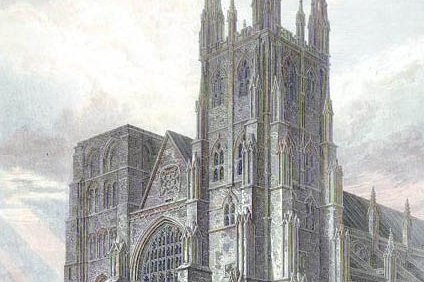
York Minster is, by most measures of floor area, the largest Gothic cathedral in Northern Europe, and its construction reflects that scale: the building took roughly 250 years to complete, from the start of the current Gothic structure around 1220 to its formal consecration in 1472. Because building continued across so many generations, York Minster displays a broader range of Gothic architectural phases within one structure than almost any other English cathedral — the transepts show the Early English Gothic style of the 13th century, with tall narrow lancet windows and restrained decoration, while the nave and chapter house reflect the more elaborate Decorated Gothic style of the early 14th century, and the great central tower and west towers were finished in the airier, more geometric Perpendicular Gothic style of the 15th century.
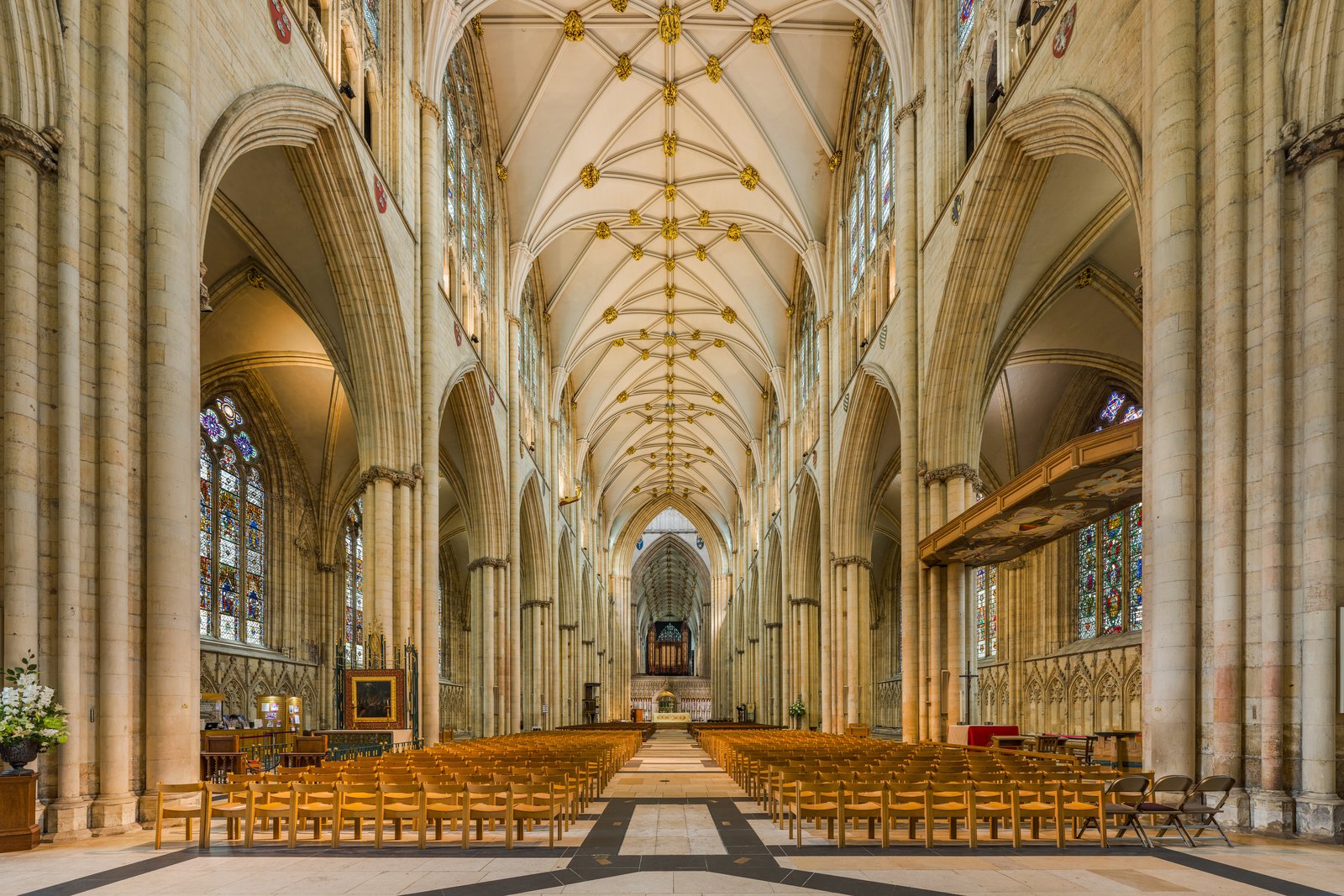
Photograph by Diliff, York Minster Nave, North Yorkshire — CC BY-SA 3.0, Wikimedia Commons.
The site itself carries a much older Christian history than the current building. Tradition holds that a small wooden church was built here in 627 for the baptism of King Edwin of Northumbria by the missionary bishop Paulinus, an event that, if accurate, would make York one of the earliest established sites of Christian worship in England. A stone church replaced the wooden one within decades, and successive Anglo-Saxon and Norman churches occupied the site before construction began on the vast Gothic cathedral that stands today — meaning the ground beneath York Minster has likely hosted continuous Christian worship for close to 1,400 years, even though almost nothing of the earlier buildings survives above ground.
The Great East Window
Among York Minster's many treasures, one stands out as a genuine world record: the Great East Window, completed around 1405 by the master glazier John Thornton of Coventry, is the largest expanse of medieval stained glass surviving anywhere in the world, roughly the size of a tennis court. Thornton was contracted to complete the enormous window — more than 300 individual painted panels depicting the biblical sweep from the Creation account in Genesis to the visions of the Apocalypse in Revelation — within just three years, an extraordinarily tight schedule for a work of that scale and complexity, and by most accounts he met it.
The window survived centuries of hazards that destroyed comparable medieval glass elsewhere in England: the wholesale destruction of religious imagery during the Reformation, cannon damage during the English Civil War siege of York in 1644, and the general decay that claimed most of England's medieval glass over the following centuries. A major conservation project completed in 2018 dismantled, cleaned, and re-leaded every panel of the window, ensuring its survival for future generations while preserving Thornton's original medieval glasswork rather than replacing it.
Fire, twice
York Minster's modern history includes two dramatic fires that each did serious damage to the fabric of the building. The first, in 1829, was deliberately set by Jonathan Martin, a man with a history of religious extremism who set fire to the choir in protest against what he saw as the clergy's corruption; the blaze destroyed the choir's medieval timber roof and much of its furnishings before being brought under control. The second fire, in 1984, was accidental — caused by a lightning strike during a storm — and destroyed the roof of the south transept, an area of the cathedral that had to be substantially rebuilt. In both cases, the Minster's community responded with extensive restoration campaigns rather than allowing the damage to stand, and visitors today would be hard-pressed to identify which sections of roof are 19th- or 20th-century reconstructions and which are medieval original.
A cathedral at the center of English religious life
York Minster remains the seat of the Archbishop of York, the second-highest office in the Church of England after the Archbishop of Canterbury, giving the cathedral an ongoing role at the center of English religious life alongside its status as a major heritage site. Its central tower offers visitors sweeping views over the city of York and the surrounding Yorkshire countryside, and its crypt preserves substantial remains of the Norman and Anglo-Saxon churches that stood on the site before the current Gothic cathedral. Like Canterbury Cathedral to the south, York Minster continues to hold daily services and major national and religious ceremonies, a working church whose sheer scale and stained glass make it one of the essential stops for anyone tracing the history of English Gothic architecture.
Beneath the transept crossing, an ongoing engineering effort called the "Undercroft" project has stabilized the central tower's medieval foundations, discovered decades ago to be dangerously inadequate for the weight above them — a slow, largely invisible campaign of reinforcement that has quietly run alongside the more visible restoration of the Great East Window and the fire-damaged roofs, together representing one of the largest sustained conservation efforts undertaken at any cathedral in England.
Trivia
Is York Minster really the largest Gothic cathedral in Northern Europe?
What is the Great East Window, and why is it significant?
Has York Minster ever been badly damaged by fire?
What does the word 'Minster' mean, and why is York's cathedral called that?
How old is the Christian site on which York Minster stands?
Related Reading