Shrine of Our Lady of Walsingham

A vision, and a house built to exact measurements
The tradition behind Walsingham's origin centers on Richeldis de Faverches, a noblewoman living in the Norfolk village around 1061. According to accounts recorded in later medieval sources — this is pious tradition rather than an event documented at the time it supposedly occurred — Mary appeared to her in a vision and led her, in spirit, to the house in Nazareth where the Annunciation was believed to have taken place, the moment described in the Gospel of Luke when the angel Gabriel told Mary she would bear a son (see the article on Saint Gabriel the Archangel for more on that episode). Richeldis was instructed to build an exact replica of that house in Walsingham, down to its dimensions, and the resulting structure became known simply as the Holy House, the devotional core around which the entire shrine grew.
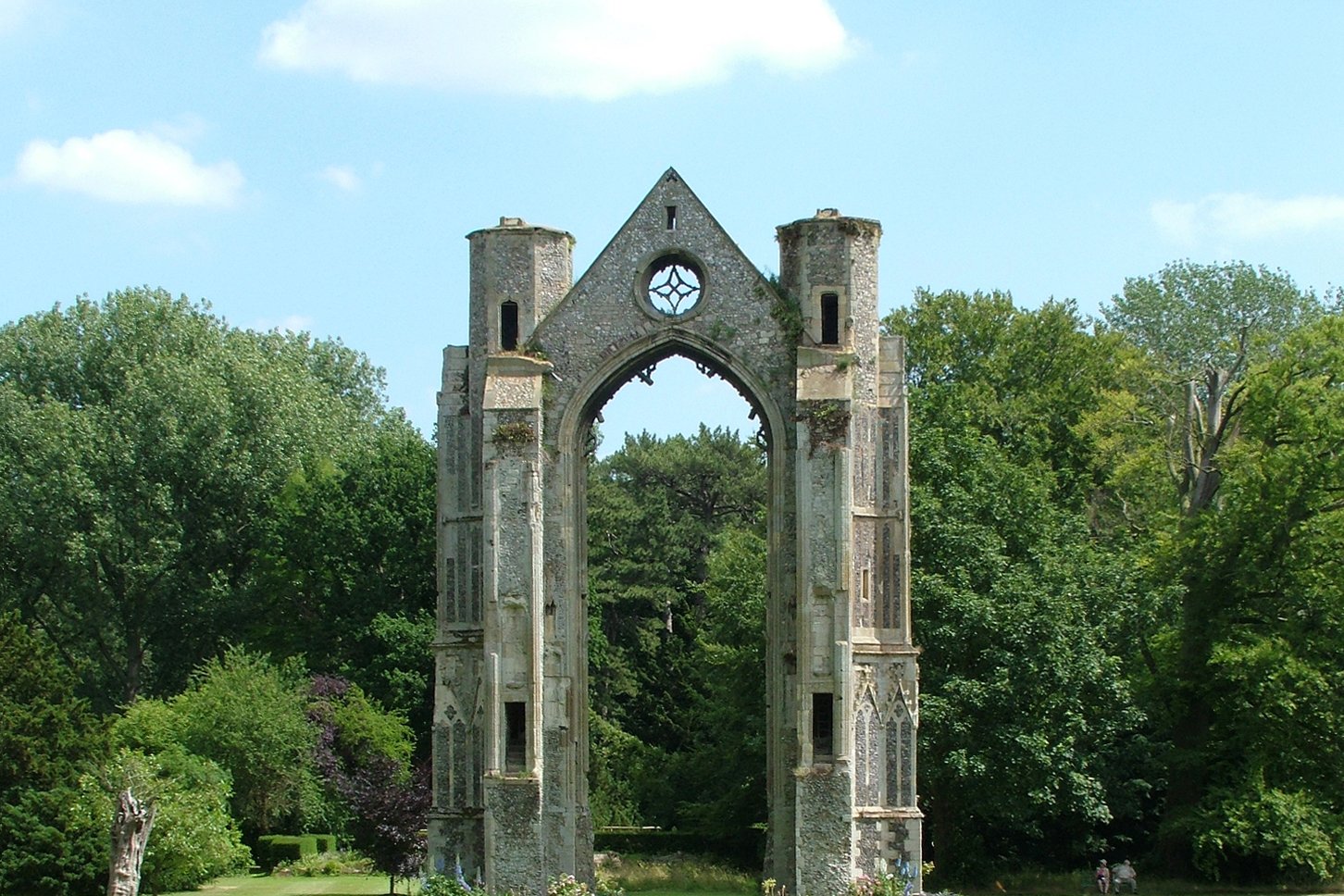
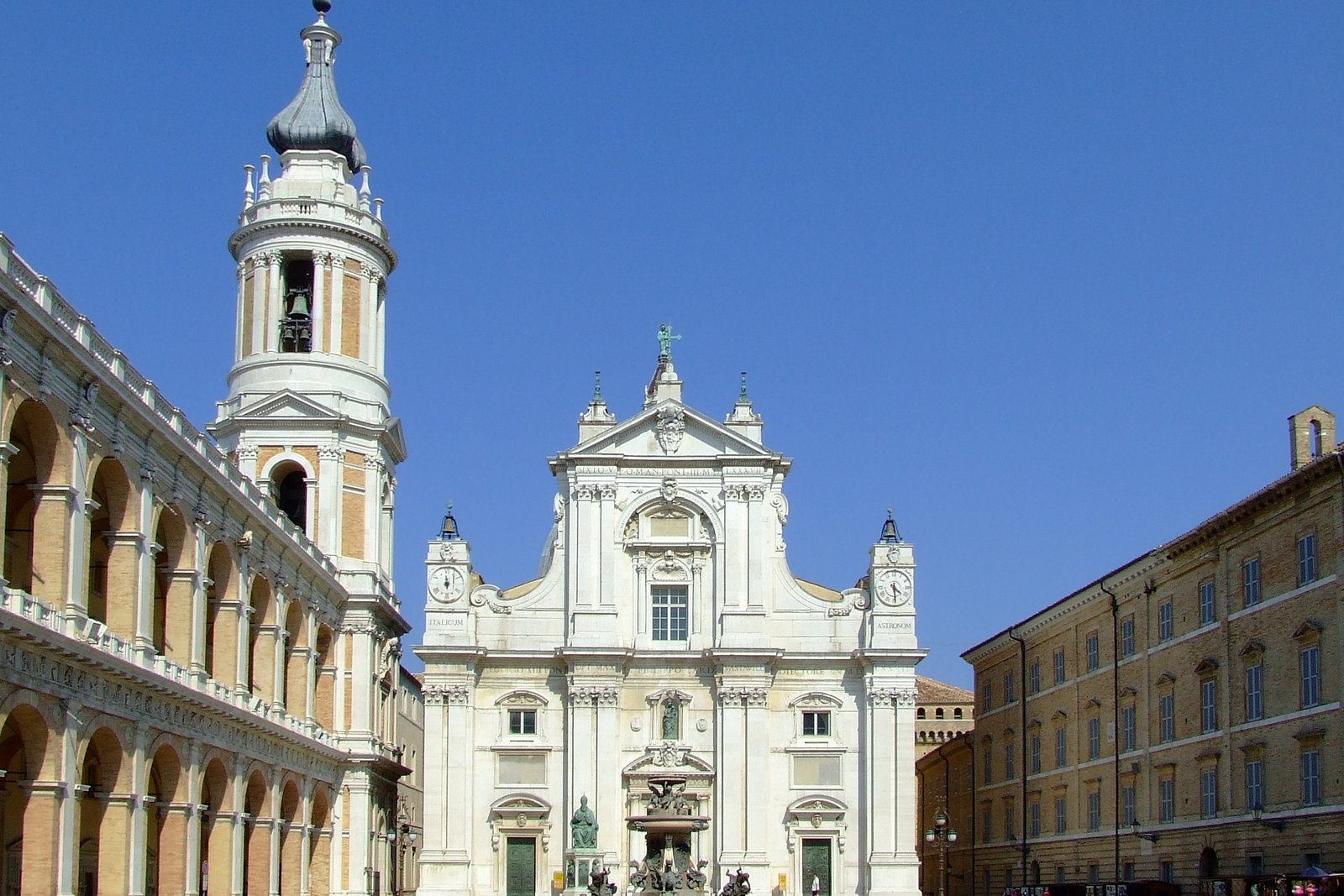
Photograph by David P. Orman, 2005 — CC BY 2.5 (no fully public-domain source of comparable quality was found after an extensive search).
The later medieval version of the story adds a detail that shrine guides still repeat: Richeldis's workmen supposedly struggled for a full night to position the timber frame correctly, until they found it finished by morning in a slightly different spot than planned, which the faithful took as a sign that angels themselves had moved and completed the building. Whatever really happened on that Norfolk hillside, an Augustinian priory grew up around the Holy House by the 12th century, and the canons who staffed it became the custodians of the shrine for the next four hundred years, managing the flow of pilgrims and the wells that were soon associated with healing.
A pilgrimage site that rivaled Canterbury
By the height of the Middle Ages, Walsingham had become one of the most significant pilgrimage destinations in England, drawing comparison to Canterbury, the shrine of Saint Thomas Becket. Its remote location in rural Norfolk didn't slow the flow of pilgrims — if anything, the journey itself became part of the devotion. Several English kings are recorded as having visited, including Henry III, Edward I, and later Henry VIII himself as a young man, long before he became the shrine's destroyer. Tradition holds that some walked the final mile to the shrine, known as the Holy Mile, barefoot as a gesture of penance, removing their shoes at a wayside chapel that came to be known, for exactly this reason, as the Slipper Chapel.
Pilgrims came not only to venerate the Holy House but to drink from two wells near the priory, believed to have healing properties, and to buy small lead pilgrim badges stamped with an image of Our Lady of Walsingham — cheap, mass-produced souvenirs that pilgrims pinned to their hats or cloaks as proof they had made the journey, much as tokens or medals are carried today. Erasmus of Rotterdam, the Renaissance humanist, visited around 1512 and left a detailed, somewhat skeptical account of the shrine's relics and the crowds they drew, giving historians one of the few outsider descriptions of what a functioning medieval English pilgrimage site actually looked and felt like.
Destroyed in a single sweep of the Reformation
Walsingham's five centuries as a major shrine ended abruptly in 1538, when commissioners acting under Henry VIII suppressed the site as part of the broader dissolution of monasteries and pilgrimage shrines across England. The statue of Our Lady of Walsingham — the devotional image at the heart of centuries of pilgrimage — was taken to London and burned, according to records from the period, along with other prominent English devotional statues targeted in the same campaign. The priory buildings were stripped of their lead roofing and valuables, and the Holy House itself was pulled down; today only a few fragments of the priory's great east window arch still stand in a private garden on the site, a skeletal reminder of what once drew kings across the country. Organized pilgrimage effectively ended for well over three centuries, and for generations Walsingham survived only as a place name and a memory kept alive in poems and ballads mourning its ruin.
A revival across two traditions
Devotion to Walsingham didn't stay buried. Beginning in the late 19th century, both Catholic and, later, Anglican communities in England worked to revive pilgrimage to the site. The Slipper Chapel — the old barefoot stopping point, which had survived in a diminished state, having been used as a barn and cattle shed for much of its post-Reformation life — was restored and established as the National Catholic Shrine in 1934. A separate Anglican shrine, complete with a new Holy House built to the medieval measurements recorded in old surveys, was also developed nearer the original village site in the 20th century. The result today is a genuinely unusual arrangement: Walsingham functions as an active pilgrimage destination for both Catholic and Anglican pilgrims, each maintaining their own shrine within a short distance of the other, a rare instance of a single medieval devotion sustaining two separate living traditions after the Reformation split them apart.
A shrine still tied to Nazareth
What makes Walsingham distinctive among England's Marian shrines is its deliberate link to a specific place on the other side of Europe. Unlike apparition sites such as Fatima or Lourdes, where Mary is said to have appeared at that particular spot, Walsingham's whole premise is architectural translation — bringing a piece of the Holy Land, or at least its remembered floor plan, into an English field. Medieval England even nicknamed it "England's Nazareth," a title local guides and pilgrim literature still use. Popes have reinforced the connection formally: several 20th- and 21st-century pontiffs sent official recognition or personal blessings to the restored shrine, and Walsingham remains one of the relatively small number of English pilgrimage sites with continuous, centuries-spanning royal and papal attention, bridging a medieval devotion and a thoroughly modern one.
Trivia
How did the shrine at Walsingham reportedly begin?
Why was Walsingham considered one of medieval England's most important pilgrimage sites?
What happened to the shrine during the English Reformation?
How was devotion to Our Lady of Walsingham restored in modern times?
Why is it called the Slipper Chapel?
Related Reading