Caravaggio's Scandalous Life and Sacred Paintings

A career that begins in poverty and rises fast
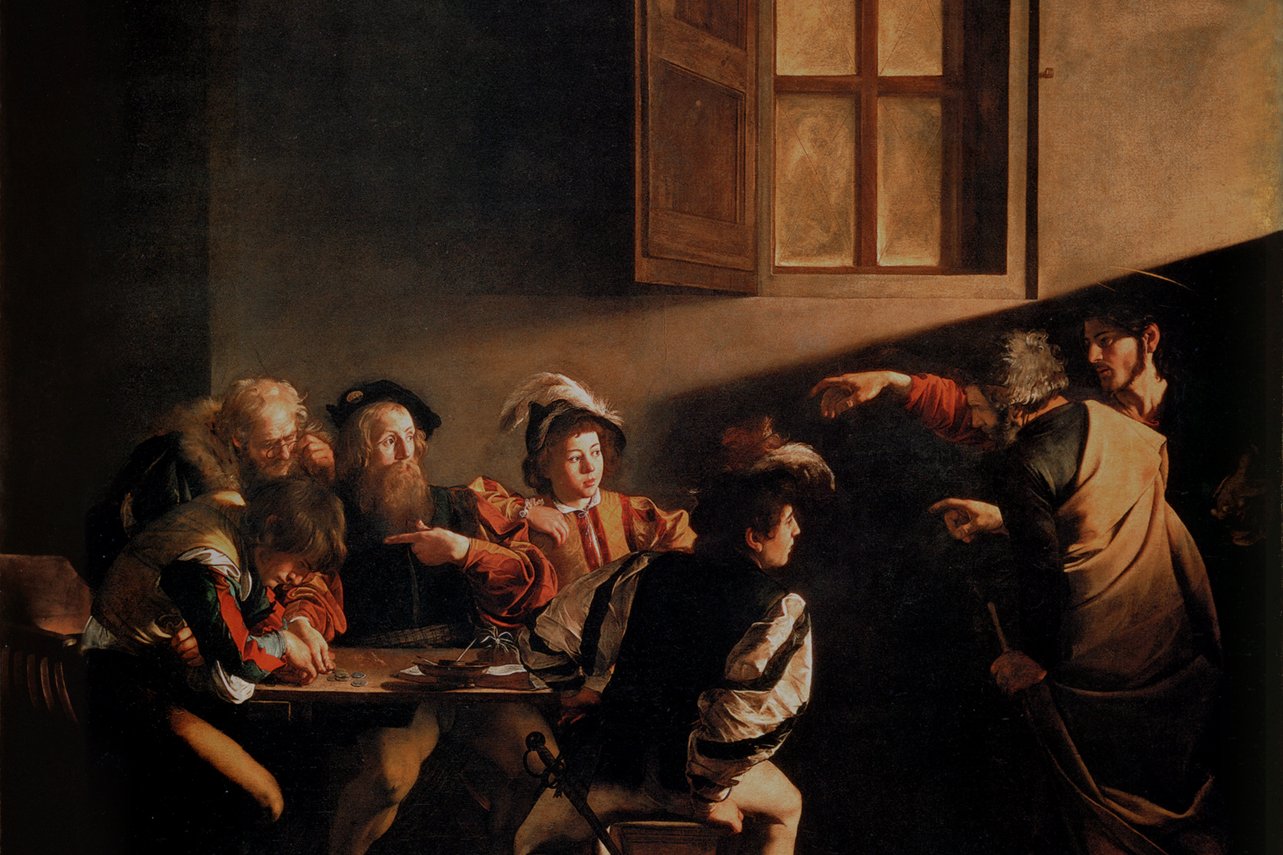
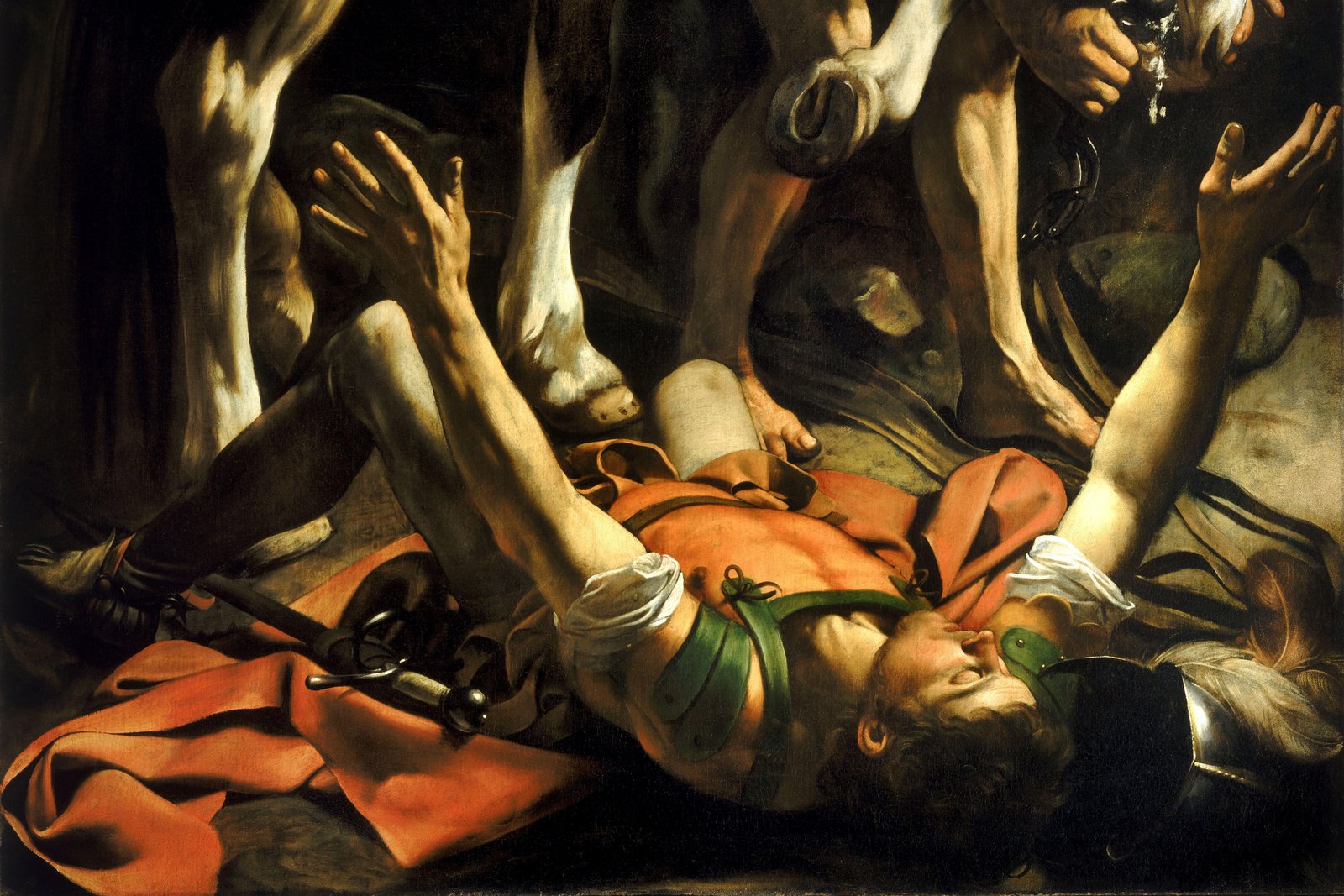
Michelangelo Merisi, later known as Caravaggio after the northern Italian town where his family had roots, was born in Milan in 1571 and orphaned in his early teens after both his father and grandfather died, likely during a plague outbreak. He trained as a painter in Milan before arriving in Rome around 1592, initially working in poverty, reportedly painting fruit and flowers for other artists' workshops before securing patronage that let him pursue his own increasingly distinctive style. Within a decade, he had become one of the most sought-after religious painters in Rome, securing major commissions including the Contarelli Chapel cycle in San Luigi dei Francesi and the Cerasi Chapel paintings in Santa Maria del Popolo — significant ecclesiastical projects that placed his dramatic, unidealized realism at the center of Roman religious life.
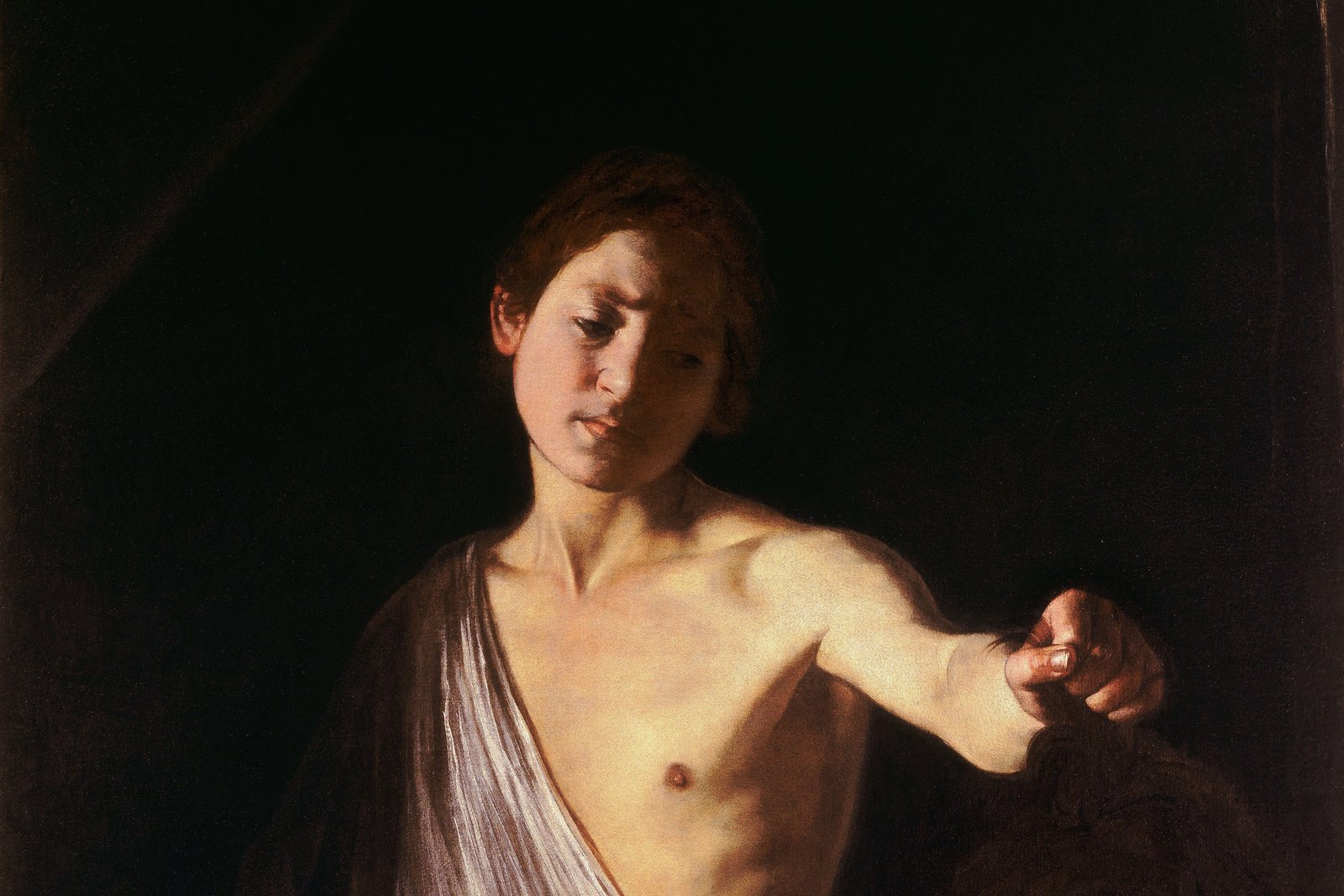
Caravaggio, "David with the Head of Goliath," c. 1610, Galleria Borghese, Rome — public domain.
A documented history of violence
Caravaggio's rise as a painter ran in constant parallel with a well-documented history of street violence, recorded in surviving Roman police and court records. He was arrested and cited multiple times through the late 1590s and early 1600s for offenses ranging from carrying an unlicensed sword to assault, and contemporary accounts describe a volatile, quick-tempered personality prone to confrontation. This pattern culminated on May 28, 1606, when Caravaggio killed a man named Ranuccio Tomassoni during a fight in Rome — the specific cause remains debated among historians, with some accounts pointing to a disputed wager over a tennis-like game and others to a personal or romantic rivalry.
Caravaggio fled Rome immediately, was formally sentenced to death in absentia, and spent the remaining four years of his life as a fugitive, moving between Naples, Malta, and Sicily, continuing to paint major religious commissions throughout — including in Malta, where he was briefly received into the Knights of Malta as a Knight of Grace before being expelled and imprisoned following another violent altercation, from which he escaped.
Religious commissions, rejected and reinstated
Caravaggio's realism repeatedly put him at odds with individual clergy overseeing his commissions, even as it won him fervent admirers elsewhere. His Death of the Virgin, painted around 1606 for a Carmelite church in Rome, was reportedly rejected by the commissioning friars, according to some contemporary accounts, partly because Caravaggio was said to have used the body of a drowned woman, possibly a prostitute, as his model for the Virgin Mary's lifeless form — a claim that circulated in his own lifetime and that modern scholars treat with some caution, since it comes chiefly from early, not entirely reliable, biographical sources. Regardless of the precise reason, the painting was removed from the church and was purchased instead by the Duke of Mantua on the advice of the painter Peter Paul Rubens, who recognized its power even where the original patrons had not.
This pattern — clerical rejection followed by immediate acquisition by another admiring patron — recurs several times across Caravaggio's career, suggesting his religious paintings' unconventional realism divided opinion sharply rather than uniformly scandalizing contemporary viewers. His work remained in continuous demand throughout, evidence that whatever discomfort individual commissions caused, Caravaggio's overall reputation as one of the most powerful religious painters working in Rome was never seriously in question.
Painting his own guilt
Perhaps the most striking intersection of Caravaggio's life and his sacred art appears in David with the Head of Goliath, painted around 1610, near the very end of his life. The painting shows the young David holding the severed head of Goliath by the hair, but rather than triumphant, David's expression is somber, almost pitying, and art historians widely agree that Caravaggio painted his own features onto Goliath's grimacing, decapitated head.
Read alongside the biographical context — a fugitive painter, formally condemned to death, seeking a pardon from Rome — the painting is frequently interpreted as an act of self-condemnation, Caravaggio depicting his own guilt and mortality with unusual directness. Some art historians connect the painting to Caravaggio's documented attempts, in his final years, to secure a papal pardon through the intervention of well-placed patrons, suggesting the image may have functioned partly as a visual plea for mercy as much as a personal confession.
Death on the road back to Rome
Caravaggio died in July 1610 near Porto Ercole on the Tuscan coast, apparently while traveling north in hopes that a pardon negotiated on his behalf, reportedly through the influence of the powerful Colonna family, might finally allow his return to Rome. Contemporary accounts attribute his death to fever; modern researchers have proposed alternative explanations including lead poisoning from his paints or an infected wound, though no definitive modern medical consensus has been reached. He was thirty-eight years old.
A legacy separated from the scandal
Caravaggio's dramatic lighting technique and unidealized realism reshaped Baroque religious painting across Europe within a generation of his death, spreading through painters who never met him but had seen his work in Rome. That his personal life was violent and, by the standards of his own time as much as ours, genuinely scandalous has never seriously diminished the Church's own historical use and admiration of his religious commissions — a reminder that artistic and devotional power, in the eyes of Caravaggio's own patrons, was never treated as simply a reflection of the painter's personal virtue.
Trivia
Did Caravaggio really kill someone?
How did Caravaggio's violent reputation affect his religious commissions?
How did Caravaggio die?
Did Caravaggio paint himself into his own religious works?
Was Caravaggio ever formally recognized by the Church despite his criminal record?
Related Reading