Velázquez's "Christ Crucified"

One Crucifixion, painted for a convent cell
Diego Velázquez spent most of his working life as court painter to King Philip IV of Spain, turning out portraits of royalty, dwarfs, and philosophers with a naturalism that still startles viewers four centuries later. Religious subjects make up a comparatively small share of his output, and among them, Christ Crucified — painted around 1632, most likely for the convent of San Plácido in Madrid — stands apart even from his own body of work. It is his only surviving treatment of the Crucifixion, and he approached it with a restraint that borders on austerity.
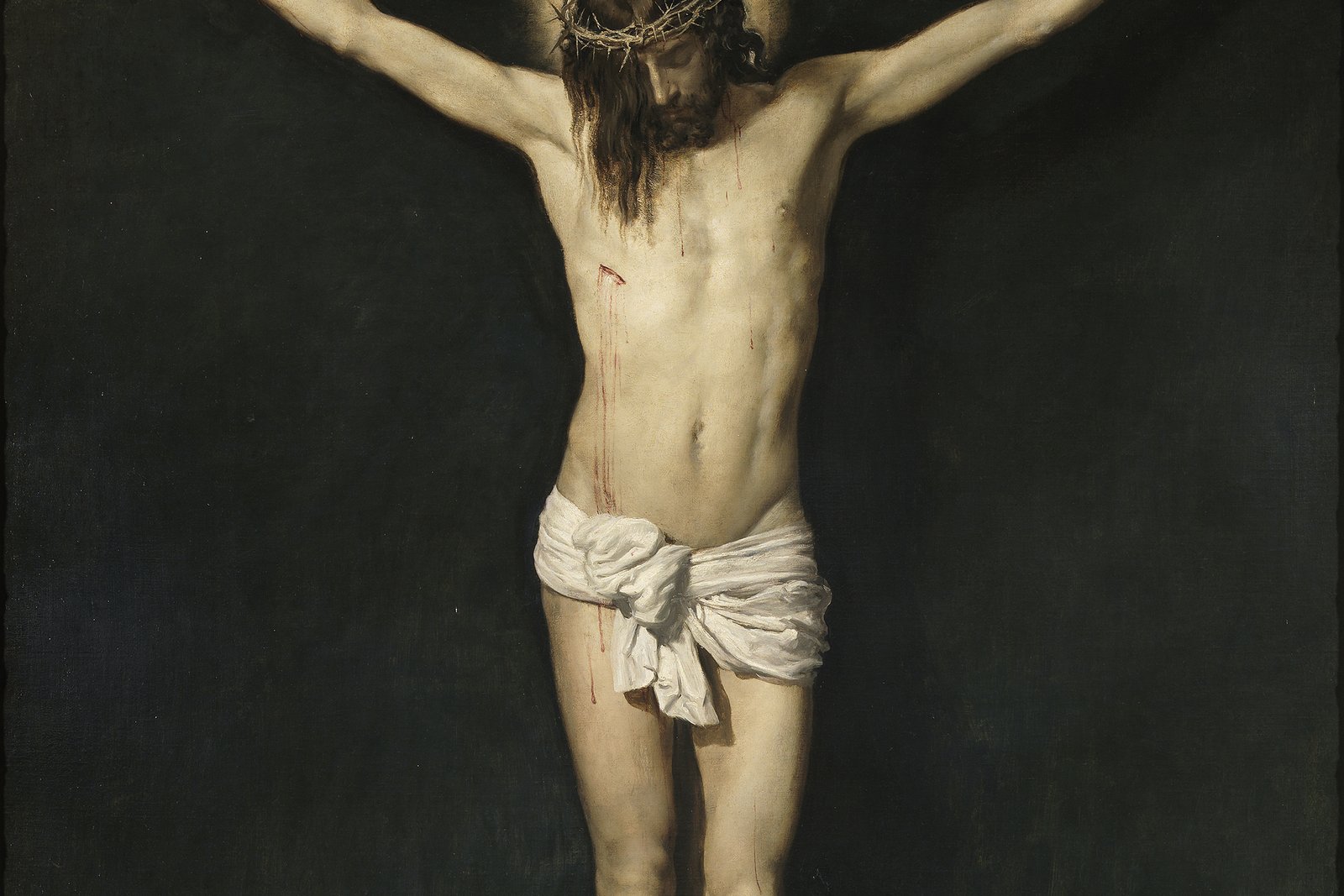
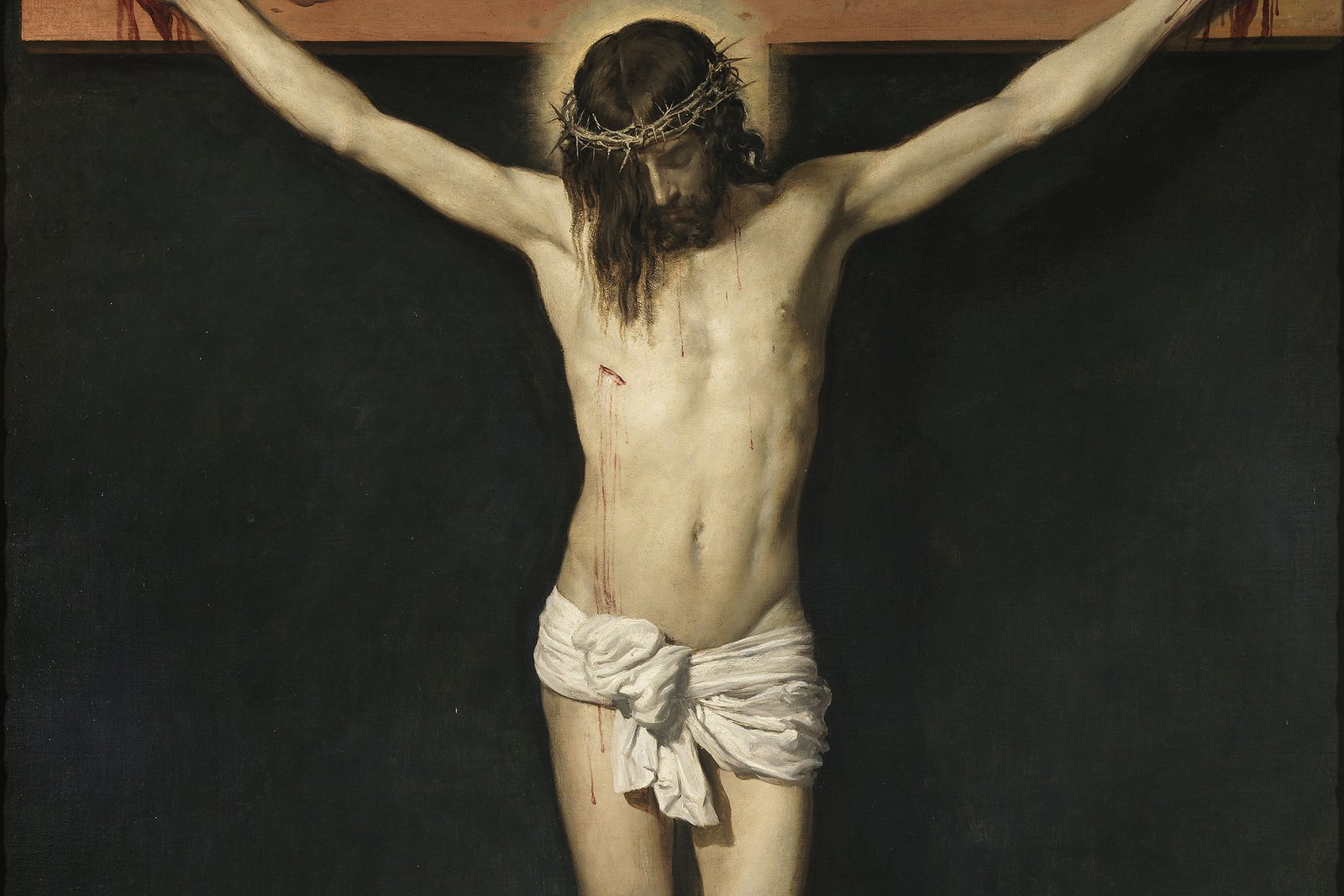
Diego Velázquez, "Christ Crucified," c. 1632, Museo del Prado, Madrid — public domain.
The painting shows Christ alone on the cross, his body turned very slightly, his head bowed and dark hair falling forward to obscure most of his face. There is no Golgotha in the background, no soldiers, no grieving figures at the foot of the cross, no other crosses bearing the two criminals mentioned in the Gospels (Luke 23:32-33). Velázquez removed everything the standard Crucifixion composition of his era relied on for emotional cueing and left a single figure suspended against a background of pure, unbroken black.
Why the darkness does so much work
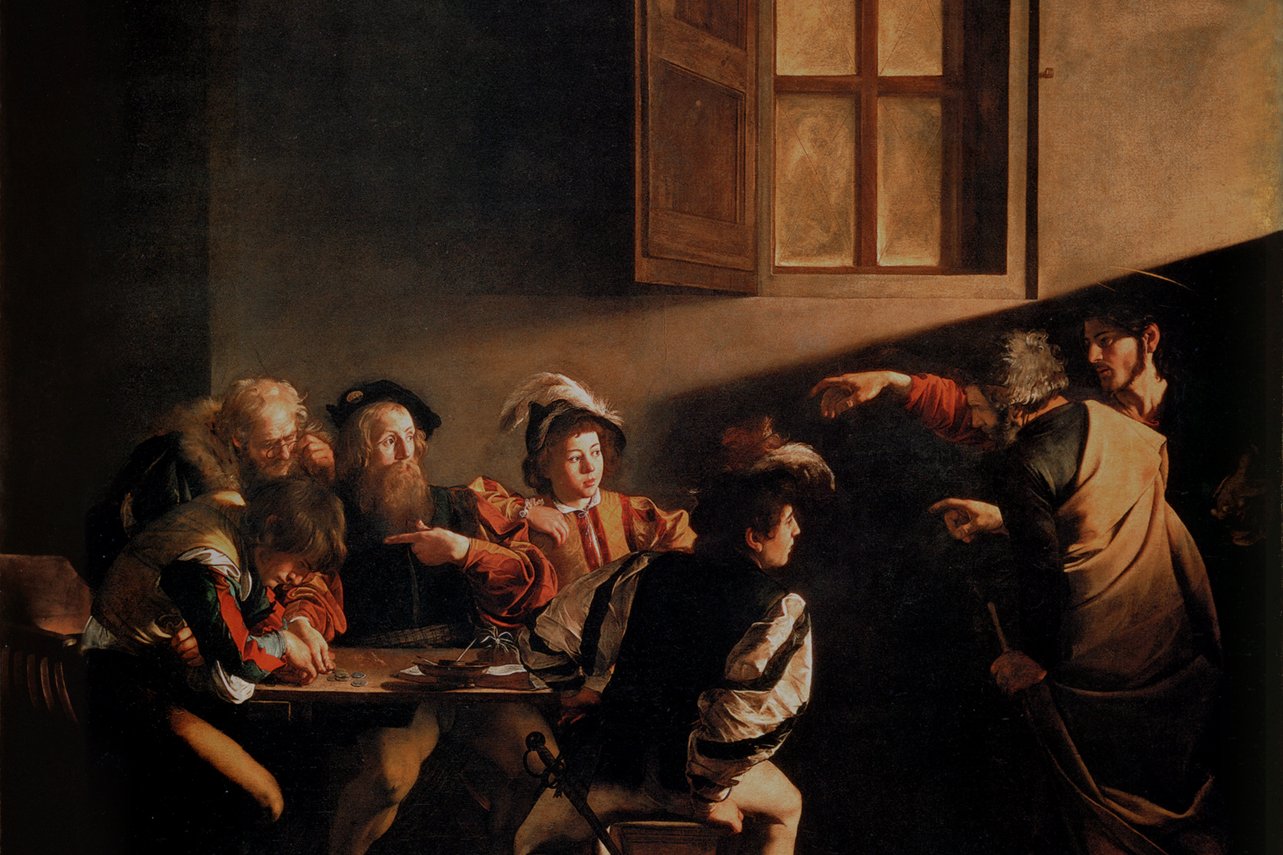
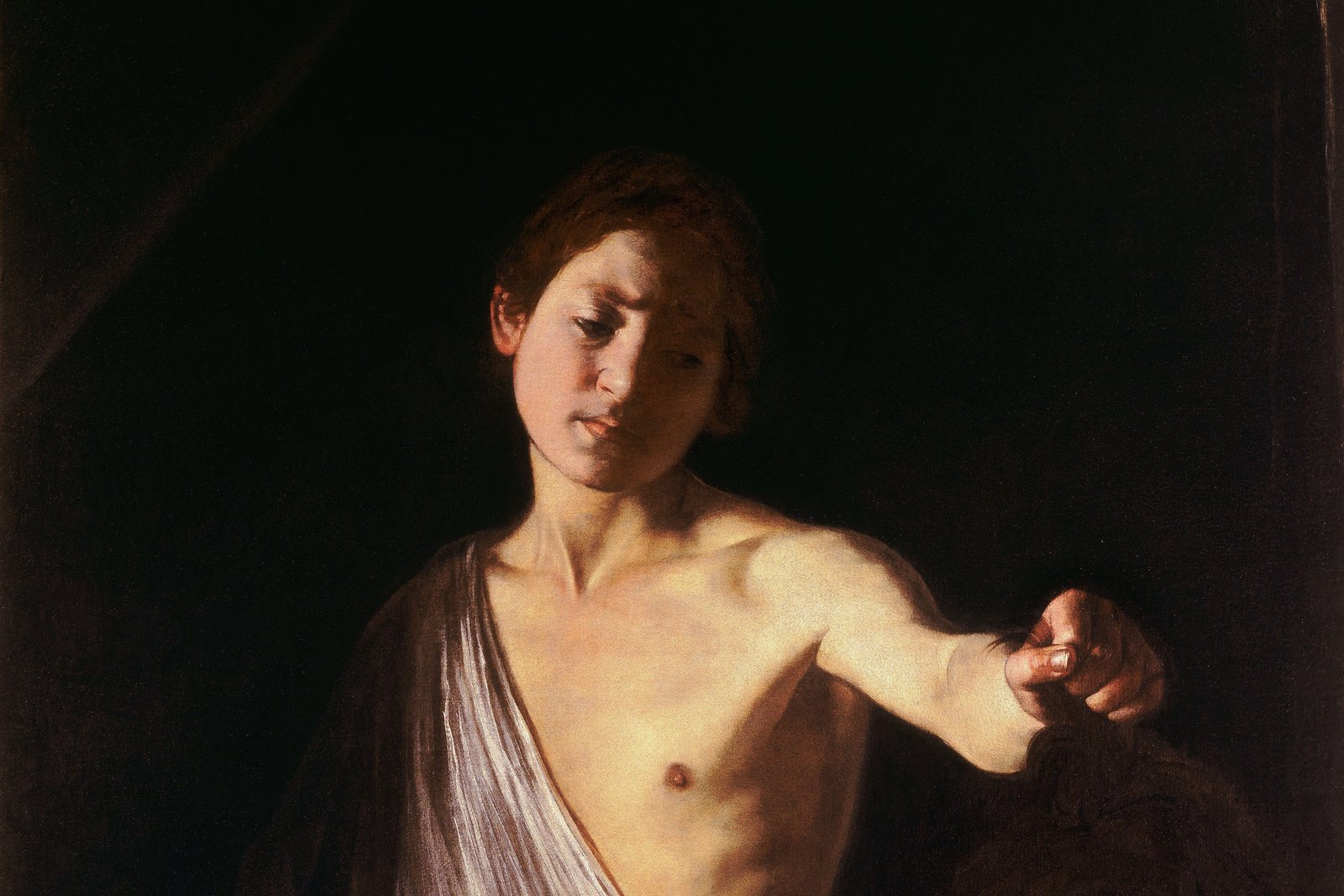
That black background is not empty space — it is a deliberate technical choice tied to a broader movement in early seventeenth-century painting sometimes called tenebrism, from the Italian tenebroso, "shadowy." Painters working in this mode, most famously Caravaggio in Rome a generation earlier, used extreme, often unexplained contrasts between light and dark to isolate a figure and heighten its psychological weight. Velázquez had likely never seen a Caravaggio in person by 1632, but the influence had already spread through Spain via painters like Jusepe de Ribera, and Velázquez absorbed the technique and made it his own — quieter, less theatrical, without Caravaggio's taste for violent, raking light.
In Christ Crucified, the effect is almost the opposite of drama in the usual sense. There's no crowd reacting, no lightning, no visible wound beyond the marks of the nails and a trickle of blood. The darkness doesn't build tension toward a climax — it simply removes every distraction, so that the body itself, rendered with extraordinary anatomical precision, becomes the entire subject. Art historians have long noted how the painting rewards slow looking rather than a single dramatic glance: the more time a viewer spends with it, the more the quiet modeling of muscle, rib, and sinew comes forward.
A four-nail Crucifixion
One especially debated detail is how Velázquez nailed Christ's feet. Since at least the thirteenth century, most Western European Crucifixion scenes had shown both feet crossed and pierced by a single nail — a convention so widespread it became almost a visual shorthand. Velázquez instead painted each foot nailed separately, side by side, with two nails rather than one, for a total of four nails across the whole figure.
This wasn't an accident or an idiosyncratic guess. Velázquez's father-in-law, the painter Francisco Pacheco, was also a theorist who wrote at length in his treatise Arte de la Pintura about how religious subjects ought to be depicted with doctrinal and historical accuracy as he understood it, arguing for the four-nail arrangement on the grounds that it better reflected early Christian and patristic tradition. Pacheco trained Velázquez and remained close to him throughout his career, and the choice in Christ Crucified is widely read as a direct application of Pacheco's argument — a reminder that even a painting this visually spare was shaped by real theological debate happening around Velázquez's studio, not simply his own private aesthetic instinct.
Not a devotional crowd scene, but a private meditation
Most Baroque Crucifixions from Catholic Spain in this period were built for public devotion — large altarpieces meant to be seen by a congregation, often crowded with mourning figures whose grief modeled the emotional response expected of the viewer. Christ Crucified was reportedly painted for a convent, intended for the private contemplation of a smaller, enclosed religious community rather than a cathedral nave.
That context helps explain its unusual quietness. Without a crowd of mourners to react on the viewer's behalf, the painting places the viewer directly and alone in front of the suffering body, with nothing mediating the encounter. This has invited comparisons to a very different kind of religious art — the small, private devotional images meant for a single person's meditation, rather than the grand public statements of most Baroque church commissions. The painting asks for stillness rather than spectacle, an approach that would have suited a monastic setting far better than a crowded parish church.
A painting that keeps finding new admirers
Christ Crucified entered the Spanish royal collection and has remained one of the most recognizable works in the Museo del Prado ever since, reproduced constantly and referenced by later artists and writers. The Spanish philosopher and novelist Miguel de Unamuno was moved enough by the canvas to write an entire book-length poem about it, El Cristo de Velázquez (1920), meditating verse by verse on the painting's stillness and darkness. Its influence can be traced in later Spanish religious painting's continued preference for restraint over crowded incident, and it remains a touchstone example of how much emotional and theological weight a single, carefully lit figure can carry without any surrounding narrative at all.
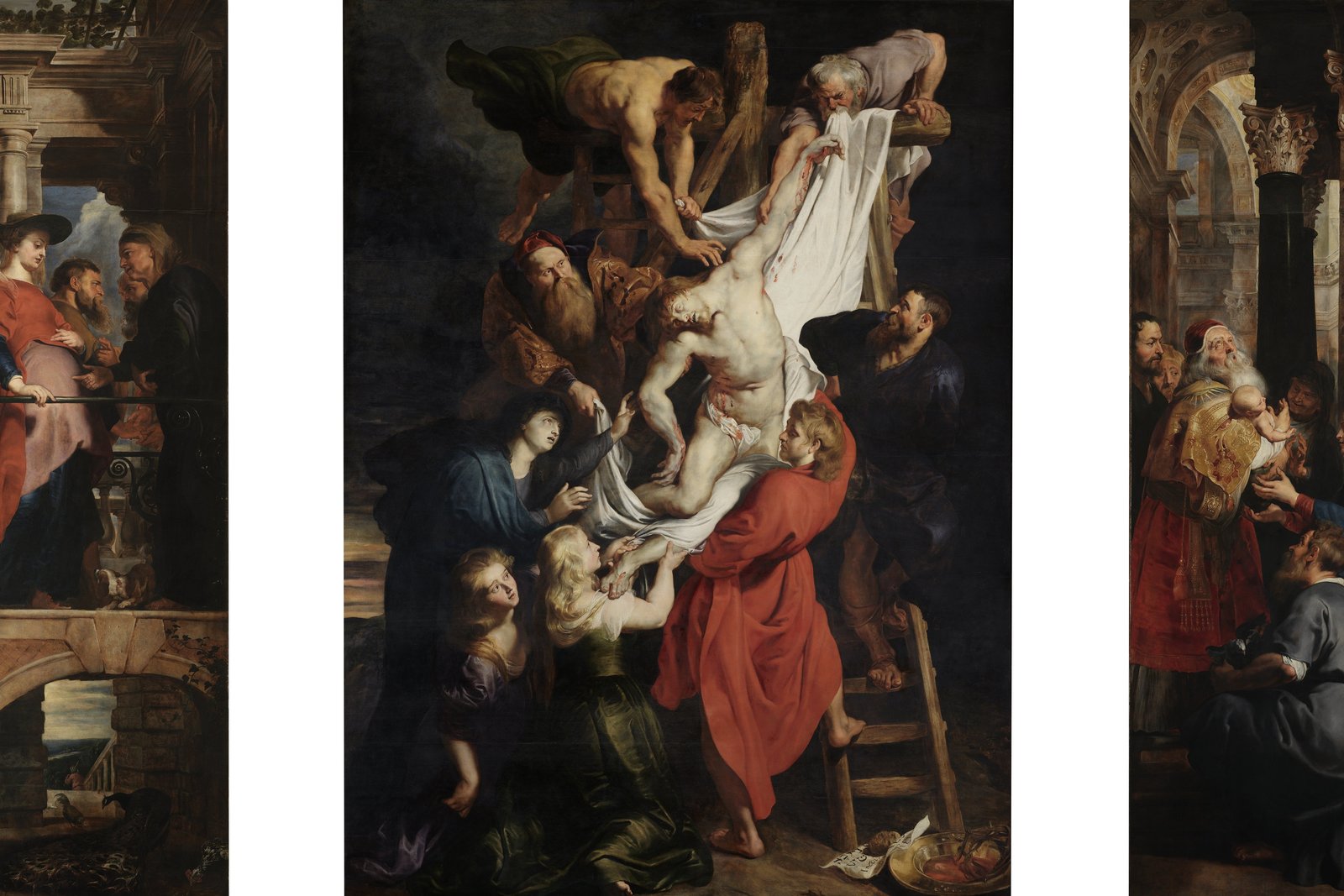
For the Gospel narrative this scene depicts — the seven last words, the darkness at noon, the centurion's confession — see The Crucifixion of Jesus, which also uses this same Velázquez painting as its hero image but focuses on the biblical event itself rather than the artist's technique. Velázquez's approach to sacred subjects can also be compared with the very different dramatic register of Caravaggio's baroque religious paintings, which favor sharper contrast and more visible incident.
Why this restraint still matters
Velázquez's Christ Crucified endures not because it overwhelms the viewer with incident, but because it refuses to. In an era when religious painting often competed for attention through scale and crowded narrative, Velázquez bet that a single figure, painted with total technical honesty and surrounded by nothing but darkness, would say more. Four centuries of viewers standing in front of the canvas in Madrid suggest he was right.
Trivia
Who painted Christ Crucified in the Prado Museum?
Why does Velázquez's Christ Crucified have four nails instead of three?
Why is the background of the painting completely black?
Is Velázquez's Christ Crucified the same painting used for other Saints Store articles?
Where can I see Christ Crucified by Velázquez today?
Related Reading