A Guide to Catholic Sacred Art

Why the Church kept commissioning the same handful of scenes
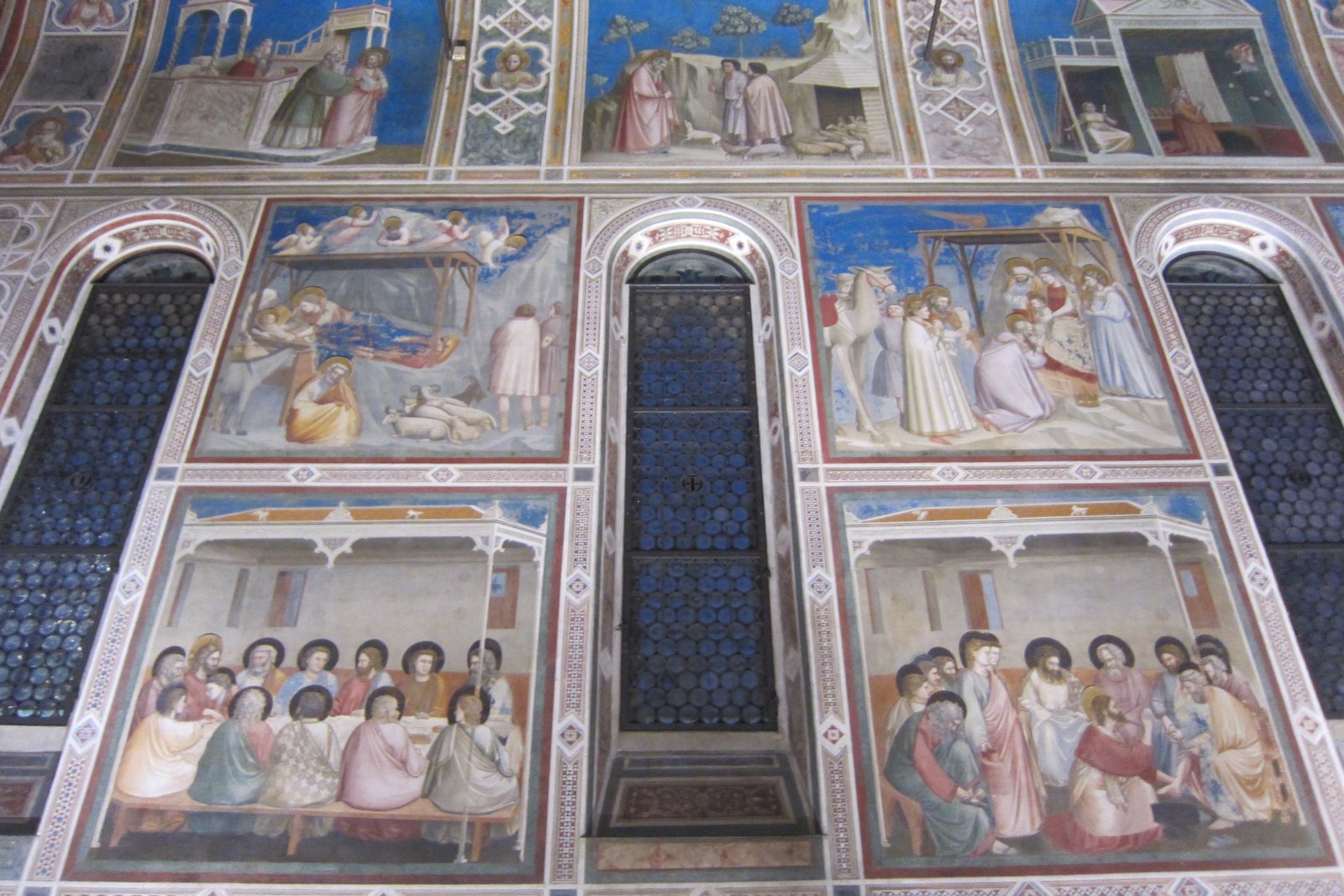
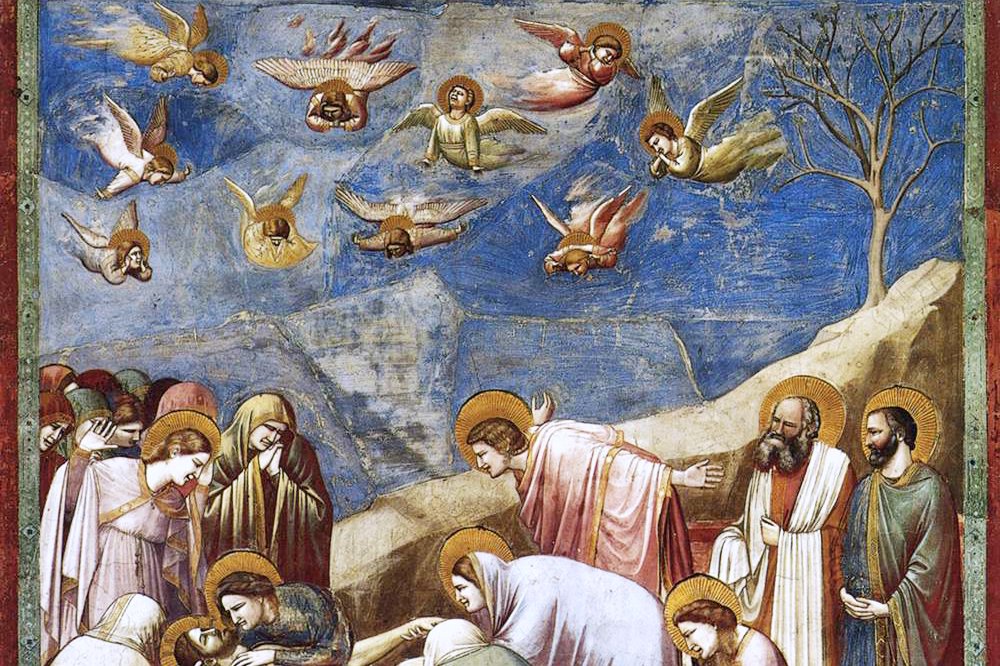
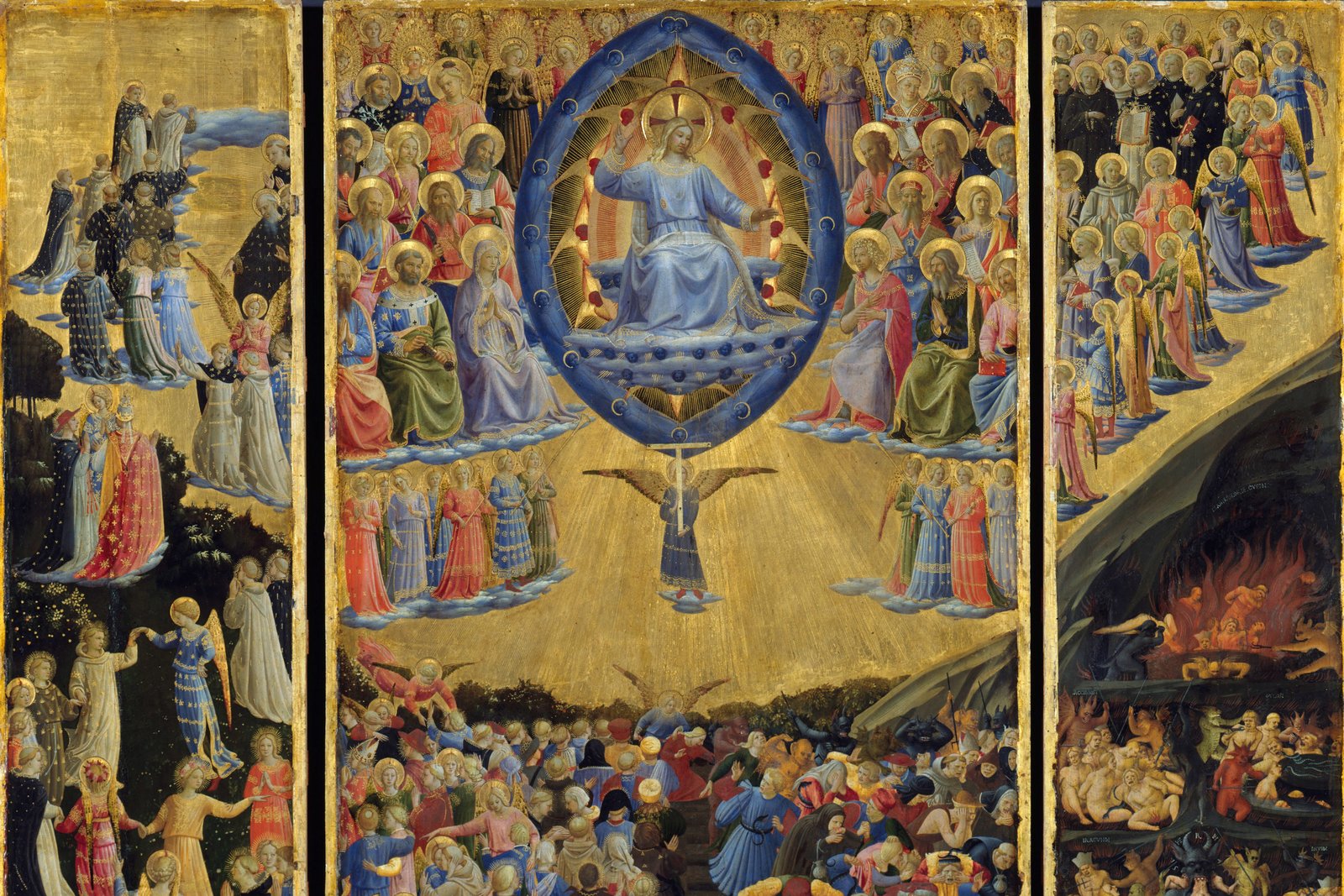
For most of Christian history, the overwhelming majority of people who walked into a church could not read. A fresco cycle running along a nave wall, a stained-glass window catching afternoon light, or a gilded altarpiece behind the high altar wasn't decoration in the modern sense — it was the primary way most worshippers ever encountered the life of Christ, the stories of the saints, and the shape of salvation history. That's why the same scenes recur across centuries and countries: the Annunciation, the Crucifixion, the Assumption. Painters weren't short on imagination; they were working inside a shared visual language that congregations already knew how to read, the way a modern viewer recognizes a stop sign without needing the word "stop" written on it.
Saints Store original illustration.
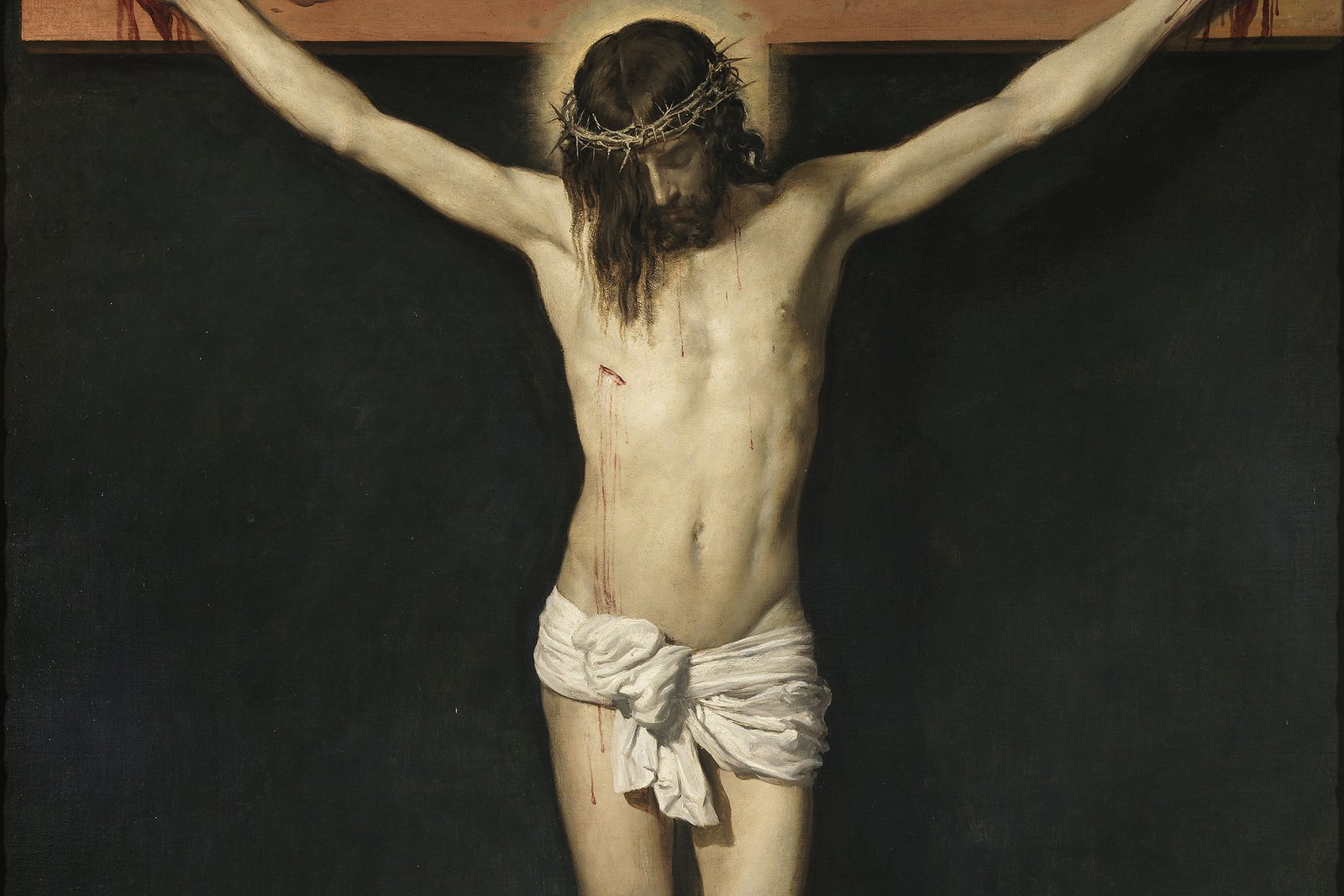
What changed, generation after generation, wasn't the subject matter so much as the how — the tools, the training, and the theology available to the artist holding the brush. A 13th-century panel painter working in egg tempera on wood had different aims and different technical limits than a 17th-century oil painter chasing candlelight across a canvas, even when both were painting the same crucifixion. If you want a broader primer on reading the visual language underneath all of this — haloes, gestures, attributes, colors — What Catholic Art Tells You is a good place to start before diving into any single artist below.
Medieval and Byzantine roots
Before linear perspective, before oil paint, sacred art already had centuries of theological weight behind it — built on gold, geometry, and a deliberate refusal of naturalism in favor of pointing straight at eternity.
- Duccio's Maestà — a monumental double-sided altarpiece for Siena Cathedral so revered on completion in 1311 that the whole city reportedly shut down and paraded it through the streets to its final home.
- Giotto's Life of Saint Francis frescoes — the Assisi cycle where figures first start to occupy real, weighted space instead of floating on flat gold, a quiet revolution that set up everything the Renaissance would later run with.
- Gothic stained glass storytelling — how cathedral windows used sequential, comic-strip-like panels of colored light to walk an illiterate congregation through an entire biblical narrative from the ground up.
- The tree of Jesse in art — a genealogical diagram turned into a living, blossoming tree, tracing Christ's royal ancestry back to a single sleeping king carved at its roots.
- IHS and Christ monograms — the compressed letter-symbols carved into altars and embroidered on vestments long before anyone thought to paint a full scene, a shorthand for Christ's name itself.
The Italian Renaissance
Once artists mastered linear perspective and anatomical study, sacred subjects got a new kind of persuasive power — figures that occupied believable space and felt like they could reach out and touch the viewer.
- Fra Angelico's Annunciation — painted by a Dominican friar directly onto a monastery cell wall, meant to be discovered in private prayer rather than admired from across a crowded gallery.
- Masaccio's Holy Trinity fresco — the first painting to use mathematically consistent linear perspective so convincingly that Santa Maria Novella's flat wall appears to open into an actual chapel.
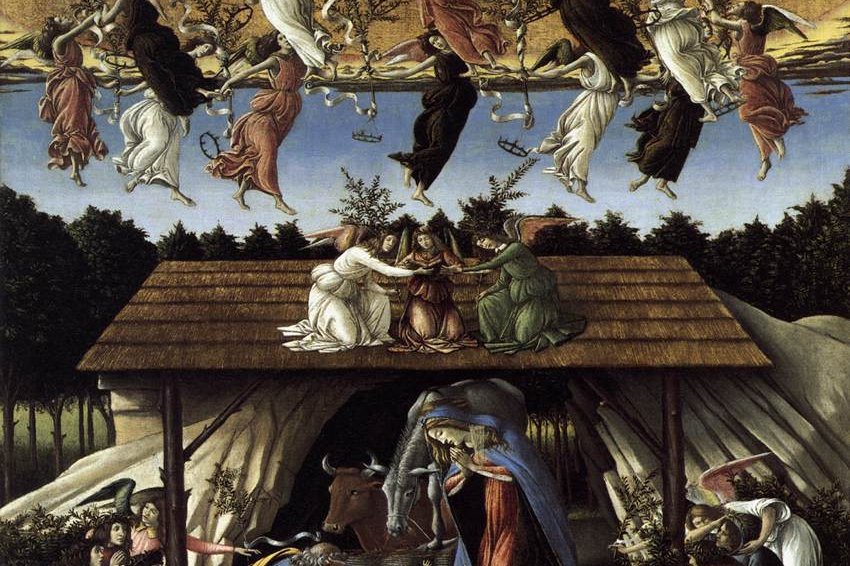
- Botticelli's Mystic Nativity — an unusually apocalyptic, handwritten-Greek-inscribed nativity scene painted during Florence's most politically turbulent years under Savonarola's influence.
- Bellini's sacred allegories — luminous, still-mysterious symbolic paintings that art historians have never fully agreed on how to decode centuries later.
- Raphael's Transfiguration — his final work, left unfinished at his death and carried in his own funeral procession, pairing Christ's radiant transformation above with chaos and suffering below.
- Michelangelo's Sistine Chapel ceiling — over 5,000 square feet of frescoed Genesis narrative, painted lying on his back on custom-built scaffolding for four grueling years.
- Michelangelo's faith and religious work — a closer look at how the sculptor-painter's own evolving personal devotion shaped the work beyond the technical achievement.
- The Sistine Madonna's two cherubs — the two bored-looking winged putti at the painting's base that became far more famous, in isolation, than the altarpiece they were originally propping up.
- Titian's Assumption of the Virgin — a soaring, twenty-two-foot altarpiece that reportedly stunned Venice into recognizing a new master the moment it was unveiled.
Baroque drama and light
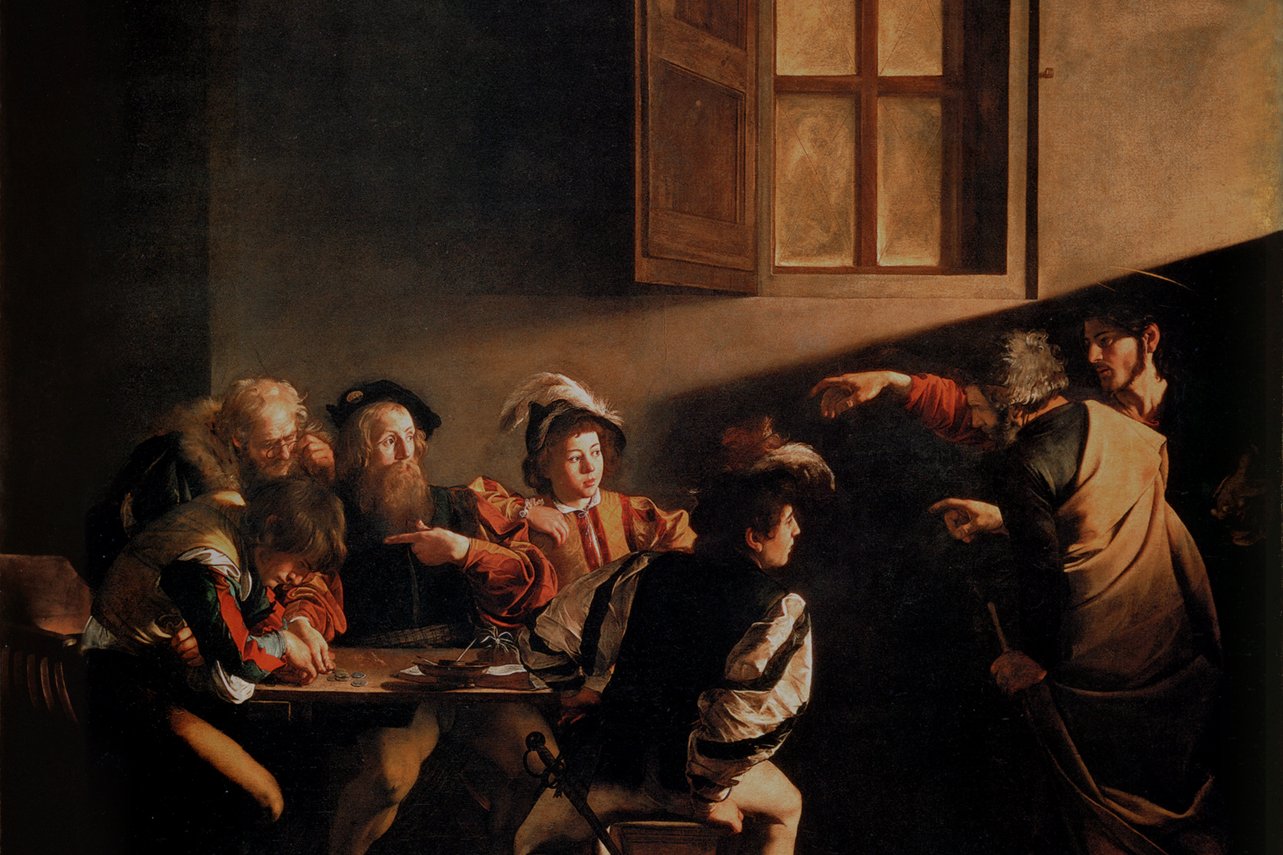
The Catholic Church's response to the Reformation demanded art that could move a viewer emotionally, not just instruct them — cue theatrical lighting, physical intensity, and scenes that pull the viewer into the action.
- Caravaggio's Conversion on the Way to Damascus — Saul knocked flat beneath his own rearing horse, lit by a single dramatic shaft of light with almost nothing else visible in the surrounding darkness.
- Caravaggio's scandalous life and sacred paintings — a documented history of brawls, a manslaughter charge, and a death on the run, sitting uneasily alongside some of the most spiritually direct religious paintings ever made.
- Rubens' Descent from the Cross — a diagonal cascade of straining bodies lowering Christ's body from the cross, choreographed so precisely the composition itself carries the emotional weight.
- El Greco's Disrobing of Christ — elongated, almost flame-like figures crowding in on Christ moments before the Crucifixion, a style so unconventional it sparked a lawsuit over the artist's fee.
- El Greco's View of Toledo — technically a landscape, not a devotional scene, yet painted with the same storm-lit, visionary intensity the artist brought to his religious commissions.
Symbols hidden in plain sight
Underneath the brushwork, sacred art runs on a coded visual vocabulary that repeats across centuries and artists — recognize the code, and paintings you've walked past a hundred times suddenly start talking back.
- The halo in religious art — traces how a ring of light borrowed from pre-Christian imagery became the standard shorthand for holiness, with its own internal rules for who gets which shape.
- The pelican as a symbol of Christ — built on a medieval legend that a mother pelican wounded her own breast to feed her starving chicks with her blood, read as a direct image of the Eucharist.
- The Ecce Homo motif in art — the recurring scene of Christ presented to the crowd in a crown of thorns, a single Latin phrase — "Behold the man" — that launched an entire genre of paintings.
If you'd rather work from a specific figure outward — spotting which saint you're looking at by their attributes and symbols, not just recognizing an era or technique — How to Identify Saints in Art covers that in detail.
Where to go from here
None of these paintings were made to hang in isolation, admired for brushwork alone and nothing else. An altarpiece was built for a specific chapel, lit by candlelight, meant to be knelt before during Mass; a fresco cycle was designed to be walked past slowly, scene by scene, the way a modern viewer scrolls through a story. Reading them now, centuries removed from that original context, means doing a little of that reconstruction work yourself — noticing not just what's depicted, but where it would have hung, who would have stood in front of it, and what it was actually for.
That's the real use of a directory like this one: not a substitute for looking closely at the paintings themselves, but a map through several hundred years of artists who were all, in their own very different ways, wrestling with how to make the invisible visible. Start wherever your curiosity actually pulls you — an artist whose name you already know, a symbol you've spotted somewhere without understanding it, or simply the era that appeals to you — and the rest of the map will still be here.
Didn't find a specific artist or symbol above? New sacred-art articles get added to this directory as they're published — check back, or browse the full Sacred Art category directly.
Trivia
What makes a painting count as 'sacred art' rather than just religious subject matter?
How can I tell what era a religious painting comes from just by looking at it?
Why do so many saints and holy figures have a glowing circle around their heads?
Why is so much of this art gold, blue, and red instead of naturalistic color?
Do I need theological training to understand a Renaissance or Baroque religious painting?
Related Reading