Carlo Acutis's Computer: A Modern Relic?

The object that keeps showing up in his story
Walk through almost any account of Carlo Acutis, the Italian teenager canonized in September 2025, and a laptop shows up somewhere in the frame — in family photos from Milan, in the bronze statue installed near his tomb ahead of his canonization, in parish youth-group presentations that use an old computer as a prop to explain who he was. Pilgrims visiting the Shrine of the Renunciation in Assisi, where Acutis's body now lies beneath glass dressed in jeans and sneakers, routinely describe the sense that the machine he once typed on belongs to the story almost as much as the body does. It is, by any ordinary measure, just a piece of consumer electronics from the early 2000s. And yet it keeps getting treated like something closer to a keepsake with weight to it — the kind of object people want to stand near.
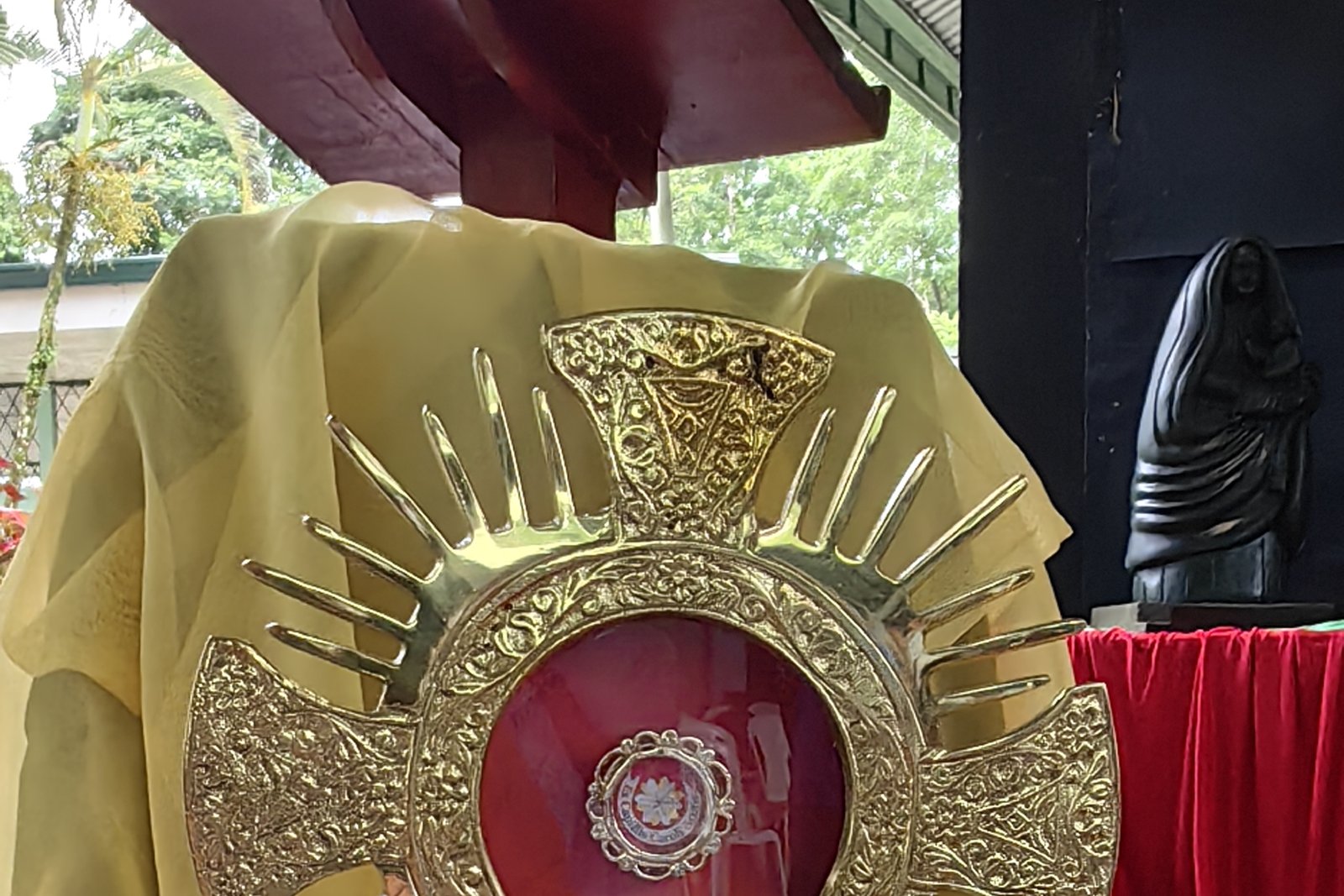
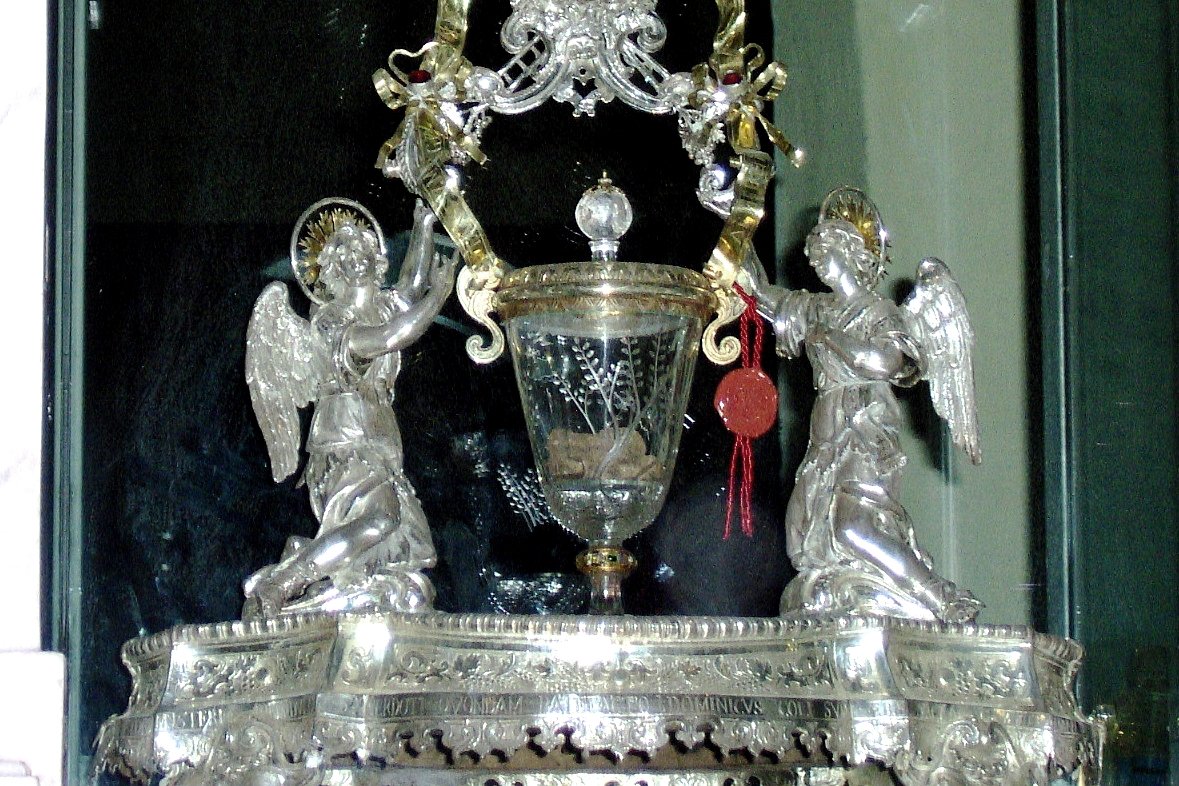
Photograph of a reliquary containing a relic of Carlo Acutis, 2024. CC BY-SA 4.0, Pasionyanhelo, via Wikimedia Commons.
That instinct is older than computers by about two thousand years, and the Church has a real, specific vocabulary for it. Whether a teenager's laptop could ever formally qualify is a genuinely interesting test case — not because anyone has declared it a relic, but because working through the actual rules shows how little the category has to do with age, holiness of appearance, or religious subject matter, and how much it has to do with one simple fact: did this particular object belong to this particular person.
What the Church actually means by "relic"
Catholic tradition and popular usage divide relics into three recognized classes, and the distinctions matter more than most casual explanations suggest.
First-class relics are the most weighty category: a saint's own bodily remains — bone, hair, blood, ash — or, in a separate but related category, an object directly connected to Christ's own Passion, such as a venerated fragment of the True Cross. These are the relics that end up in reliquaries placed on altars, the kind the Diocese of Assisi has in fact authorized for Carlo Acutis himself: fragments of his pericardium (the membrane surrounding the heart) and strands of his hair, distributed in small reliquaries to parishes and shrines well beyond Italy, including a documented visit to the Saint John Paul II Shrine in Washington, D.C.
Second-class relics are personal effects — items a saint actually wore, used, or owned during life. A rosary worn smooth by decades of use, a religious habit, a letter in a saint's own hand, a walking stick: all of these sit in this category precisely because they were touched daily by someone the Church holds up as holy, not because the object itself has any special material quality.
Third-class relics are the furthest removed from the person: small items, often tiny squares of cloth or printed cards, that have been physically touched to a first- or second-class relic, carrying a kind of transferred, lesser connection. These are the relics most commonly distributed for free at parishes and shrines, meant for personal devotion rather than public veneration.
Where a laptop would actually fall
Here is where the question gets genuinely interesting rather than merely sentimental. Nothing in the traditional definition of a second-class relic requires the object to be old, explicitly religious, or beautiful. A saint's eyeglasses, a saint's typewriter, a saint's pocketknife — all of these have historically qualified as second-class relics for exactly one reason: documented ownership and use by the person in question. If Carlo Acutis's actual personal computer — the one he is reported to have used to teach himself programming languages and to build and maintain his website cataloguing Eucharistic miracles — could be reliably identified, authenticated as genuinely his, and kept by family or Church authorities with that provenance intact, there is no theological obstacle to it eventually being treated the same way the Church has long treated a confessor's writing desk or a martyr's prison cup.
What keeps that from already being settled fact is not theology but documentation and process. Unlike his hair and his pericardium tissue, which went through the Church's own formal procedures for identifying, blessing, and distributing relics connected to an official canonization cause, no Vatican or diocesan statement describes Carlo's laptop as having gone through any comparable process. It shows up constantly in the popular, media, and devotional retelling of his life — in sculpture, in parish catechesis, in pilgrim accounts from Assisi — as a powerful symbol of who he was and how he evangelized. That is a real and significant kind of veneration in its own right. It is just not, so far as any documented source indicates, the same formal thing as an authenticated second-class relic.
Why a website about miracles mattered in the first place
The reason the computer carries this much symbolic weight traces back to what Carlo actually built with it. As a young teenager growing up in Milan, he taught himself computer programming years ahead of most of his peers, and rather than pointing that skill toward games or social platforms, he spent his early teens building and maintaining an online archive of Eucharistic miracles — reports, some centuries old, of consecrated hosts said to have shown physical or otherwise inexplicable signs pointing to the real presence of Christ. These accounts had previously been scattered across obscure parish records and regional sources, often undocumented outside their own local language. Carlo's website gathered them into one place, a project volunteers have since translated into multiple languages and turned into a traveling exhibition shown in parishes around the world.
That project is the whole reason the laptop matters to his story at all — not as a curiosity, but as the actual physical tool through which a very old devotional tradition got a very new form of distribution. It is the same reason the Miraculous Medal became an object people wanted in their hands, or fragments of the True Cross spread across Europe within a lifetime of their discovery: the devotion wants a physical anchor, something concrete to hold onto or stand near, even when the thing it's ultimately pointing toward — faith in Christ's presence in the Eucharist, in Carlo's case — has nothing to do with the object's material itself.
A pattern the Church has seen before, in different materials
It is worth remembering that every category of relic now considered ancient and venerable was, at some point, new and ordinary. A first-century Roman cross was construction-grade timber before it became the most venerated wood in Christian history. A nineteenth-century French novice's convent habit was unremarkable fabric until Catherine Labouré wore it through the apparitions that produced the Miraculous Medal. The Church's theology of relics has never rested on an object's material rarity or its age — the Second Council of Nicaea settled, centuries ago, that the honor shown to a relic passes toward the person it represents, not toward the artifact treated as something inherently sacred. A circuit board and a splinter of first-century wood are, in that sense, theologically equivalent: ordinary matter that becomes meaningful only because of whose hands it passed through, and what that person's life pointed people toward.
What makes Carlo Acutis's case feel different is simply how recent and recognizable the object is — most Catholics have personally owned or touched a laptop just like his, which collapses a distance that usually makes relics feel safely historical and remote. That collapse is probably also why his story has reached young Catholics as effectively as it has: the "gamer saint," as some media coverage has nicknamed him, didn't live behind centuries of legend. He lived behind a screen that looked a great deal like theirs.
What this case actually reveals
Carlo Acutis's computer, strictly speaking, has not been declared a relic by any Church authority — what has been formally authorized are more traditional first-class relics drawn from his body itself. But the way pilgrims, parishes, and even official Church art have already gravitated toward the laptop as a symbol of his holiness shows something true about how relic veneration actually works, independent of formal classification: Catholics have always wanted a physical point of contact with the people they admire for holiness, and they will reach for whatever object genuinely carried that person's daily life, whether it's a rosary, a writing desk, or a machine running Windows. The theology that has governed that instinct for two thousand years turns out to be remarkably well-equipped to handle a case nobody anticipated when the categories were first worked out — proof that the Church's oldest framework for honoring its saints adapts to new materials more easily than it might seem, without changing what it actually claims to be doing.
Trivia
Is Carlo Acutis's actual computer enshrined as an official relic?
What are the Church's three classes of relics?
Would a personal computer even count as a relic by Church standards?
How did Carlo Acutis actually use his computer skills for his faith?
Does the Church require a relic to be scientifically authenticated before it can be venerated?
Related Reading