Saint Anthony's Tongue: The Relic of the Preacher's Gift


A tomb opened for a bigger church
Anthony of Padua died in 1231 at thirty-five, already one of the most celebrated preachers the young Franciscan order had produced — a former Augustinian canon from Lisbon whose gift for public speaking had been discovered almost by accident, and whose sermons were said to move hardened crowds to tears. (Read the fuller story of his life in our article on Saint Anthony of Padua.) He was canonized less than a year later, and the small Paduan chapel that first held his body quickly became too modest for the pilgrims arriving at his grave. Construction began almost immediately on a much larger church to replace it — the building that would eventually grow into the Basilica of Saint Anthony, known to Paduans simply as "Il Santo."
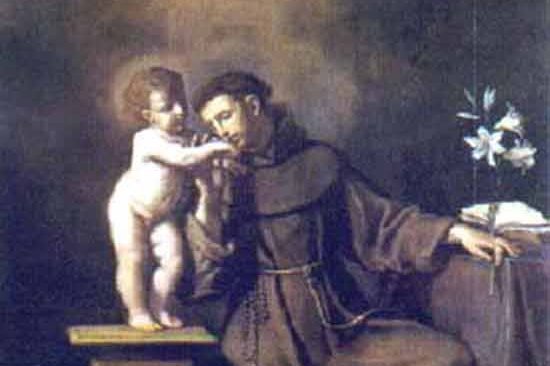
Guercino, Sant'Antonio da Padova (1659). Public domain, via Wikimedia Commons.
Moving Anthony's remains into that new, larger church meant opening his original tomb. That happened on April 8, 1263 — thirty-two years after his burial — under the direction of the Franciscan order's minister general at the time, a theologian named Bonaventure who would later be made a cardinal and, centuries afterward, declared a Doctor of the Church in his own right, alongside Anthony himself.
What they found inside
According to the tradition recorded by the friars present, Anthony's body had done what bodies normally do after three decades in the ground: it had reduced almost entirely to bone and dust. One part, however, was reported to have escaped that fate. His tongue — the organ most directly identified with his life's great work — was said to have been found still soft, reddish, and apparently untouched by decay, as though he had died only recently.
Later devotional accounts describe Bonaventure reacting to the sight with open wonder, reportedly addressing the tongue directly as proof of "how great were your merits before God." That specific wording comes down through centuries of retelling in Franciscan and Paduan devotional literature rather than from a single contemporary document that can be checked word-for-word, so it's worth holding loosely as cherished tradition rather than a verified transcript — but the core claim behind it, that the tongue alone was found unusually preserved among otherwise decomposed remains, is the detail every account agrees on.
Why the tongue, specifically
The symbolism was not lost on anyone in 1263, and it isn't lost on pilgrims today. Anthony was not primarily known, in his own lifetime, for miracles of healing or dramatic visions — though tradition credits him with both. He was known, first and foremost, as a voice: a preacher whose sermons packed churches and open squares across Italy and southern France, delivered with what contemporaries described as an unusual combination of scriptural depth and plain, urgent appeal to ordinary listeners. Francis of Assisi himself, notoriously cautious about academic learning overshadowing simple piety in his young order, nonetheless gave Anthony explicit permission to teach theology to the other friars — a rare endorsement.
Against that backdrop, a tongue reportedly surviving intact while the rest of the body did not read, to the friars who found it, as more than coincidence. It became, in the tradition's own logic, a physical echo of Anthony's gift: the instrument that had spent a lifetime speaking of God preserved in a way nothing else about him was. Whether read as literal incorruption or as a detail that grew more vivid with retelling over the centuries, the story has shaped how Anthony is remembered ever since — a saint whose most famous relic is, fittingly, the part of him that did the talking.
Enshrined in gold
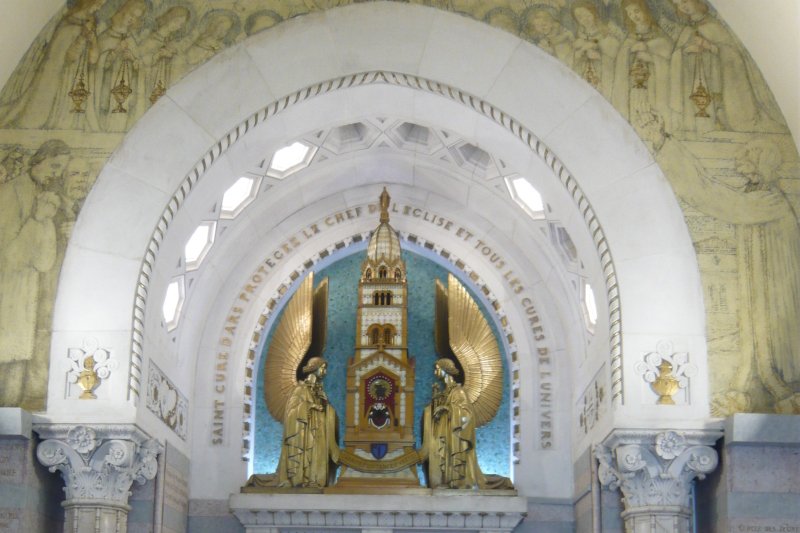
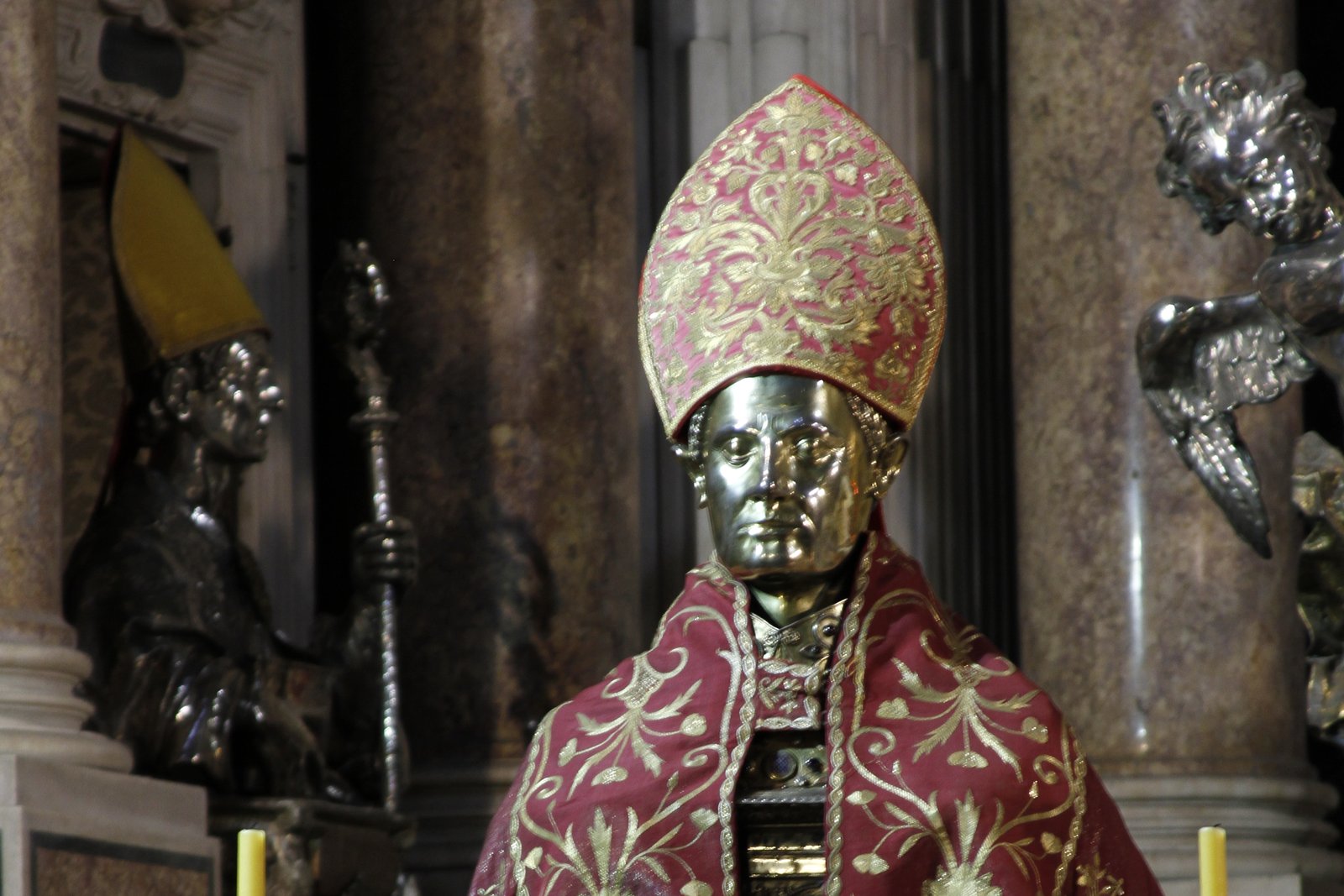
The tongue was not simply reburied with the rest of Anthony's remains. By the following century it had been given its own dedicated reliquary: a gilded silver vessel made in 1436 by the Florentine goldsmith Giuliano da Firenze, still used to display the relic today. Anthony's jawbone received a separate reliquary of its own in 1350, and both are now kept together in the Chapel of the Relics — also called the Treasury Chapel — a round, domed space added to the Basilica of Saint Anthony toward the end of the seventeenth century specifically to house the basilica's growing collection of sacred objects. Tradition also holds that Anthony's vocal cords were found in a similarly well-preserved state and are kept in the same chapel, alongside other relics connected to his life and ministry.
Visitors to the chapel today can see the tongue relic displayed through the glass of its reliquary, usually surrounded by the quiet attention of pilgrims who have traveled specifically to see it. It is not treated as a museum curiosity. Devotional tradition in Padua marks a yearly commemoration, sometimes called the "Feast of the Tongue," around mid-February — tied to the anniversary of the 1263 exhumation — in addition to the much larger crowds that gather around Anthony's principal feast day, June 13, the anniversary of his death.
What the Church actually claims — and doesn't
It's worth being precise about what's being venerated here and on what grounds. The Catholic Church has no formal, scientifically verified record establishing the tongue's exact physical state at the moment of its 1263 discovery — what survives is thirteenth-century testimony, shaped and retold through the centuries since, not a modern forensic report. The Church's own teaching on relics doesn't actually require that kind of certainty. The Catechism of the Catholic Church lists "the veneration of relics" among its encouraged forms of popular piety (no. 1674), and the broader theology behind that practice — articulated centuries earlier by the Second Council of Nicaea — holds that honor shown to a relic passes through to what it represents, not to the physical object treated as something miraculous in isolation.
In practical terms, that means a pilgrim standing before Anthony's tongue in Padua isn't required to resolve every historical question about the exhumation before the relic can mean something to them. What draws people to that chapel is less a forensic claim than a continuous thread of devotion: the same instrument that, by every account, once moved crowds to tears in thirteenth-century Italy is still, in its own quiet way, drawing people toward the same saint nearly eight hundred years later. For a preacher whose entire reputation rested on his voice, it's difficult to imagine a more fitting relic to have outlasted him.
Trivia
Why is Saint Anthony's tongue kept as a relic?
Who was present when the tongue was found?
Where is the tongue relic kept today?
Is Anthony's tongue scientifically proven to be incorrupt?
When is Anthony's tongue relic especially honored?
Related Reading