The Relics of Saint James at Santiago de Compostela

A tomb found by starlight
Somewhere around the year 813, or perhaps closer to 830 — the sources disagree on the exact date — a hermit named Pelagius was living a solitary life in the remote hills of Galicia, in what is now northwestern Spain. According to the tradition that grew up around him, he began noticing strange lights in the night sky over an overgrown field, accompanied by what he took to be celestial music. He reported it to the local bishop, Theodomir of Iria, who had the site excavated. What they found, the story says, was an ancient tomb containing three bodies: one identified as the Apostle James, the other two his disciples Athanasius and Theodore.
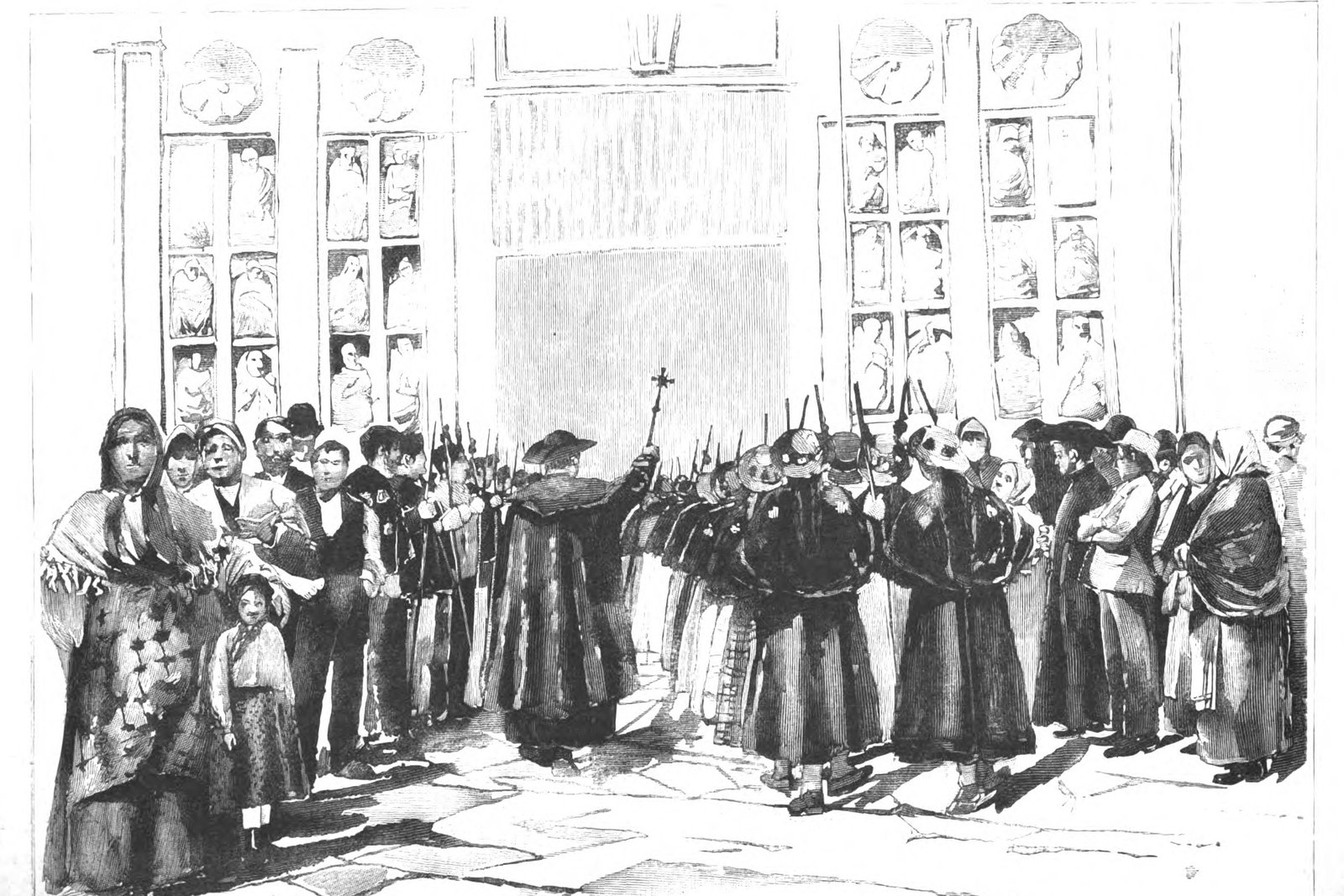
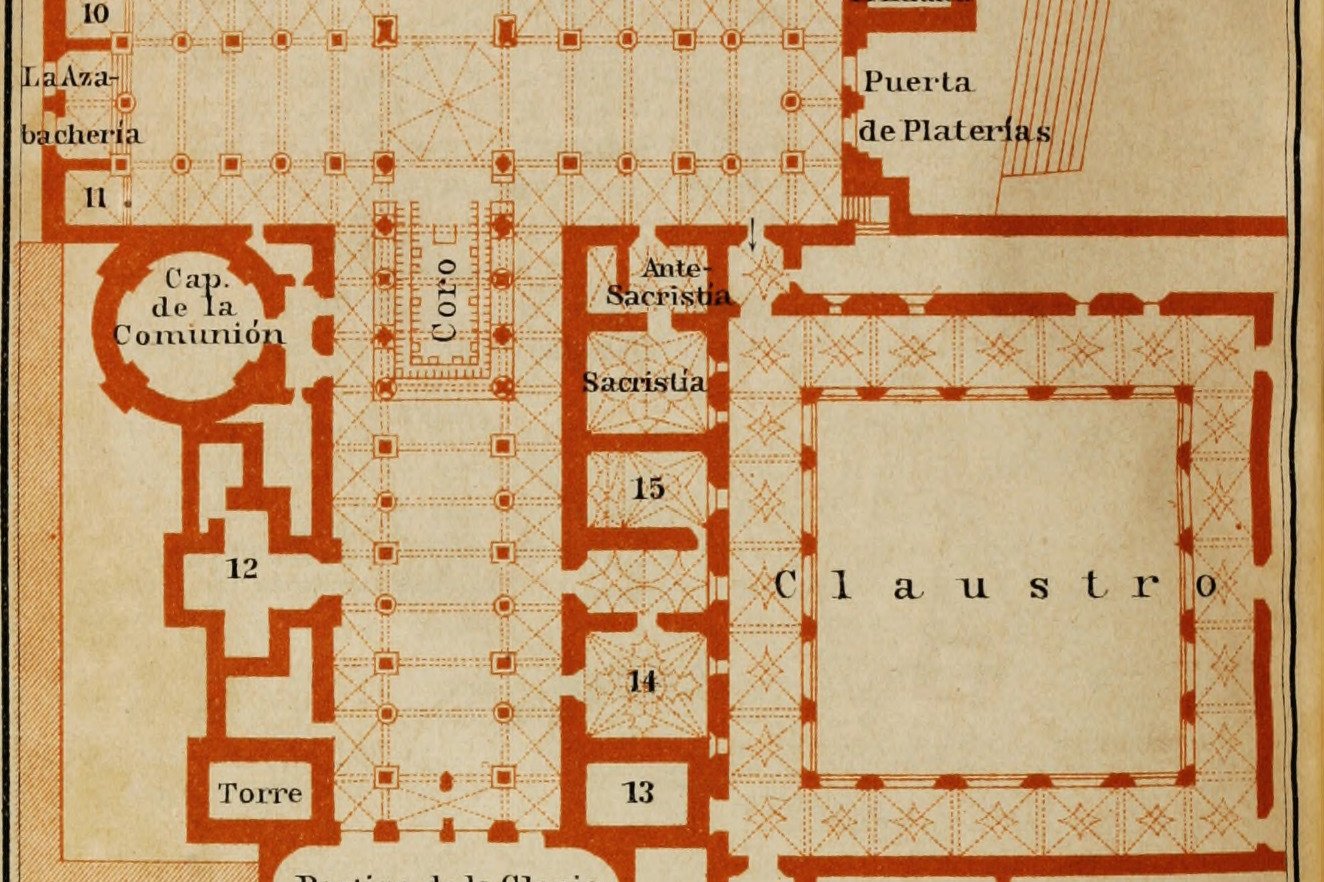
Rafael Balsa de la Vega and Tomás Carlos Capuz, engraving published in La Ilustración Española y Americana, 1885. Public domain, via Wikimedia Commons.
That discovery, legendary as its details are, launched one of the most consequential building projects and pilgrimage movements in the history of Christendom. Within a generation, a church stood over the site. Within two centuries, a vast Romanesque cathedral replaced it. And within three centuries, "Santiago" — the Spanish rendering of "Saint James" — had become shorthand across Europe for a destination almost as sacred as Rome or Jerusalem itself.
Who was the man in the tomb, biblically speaking
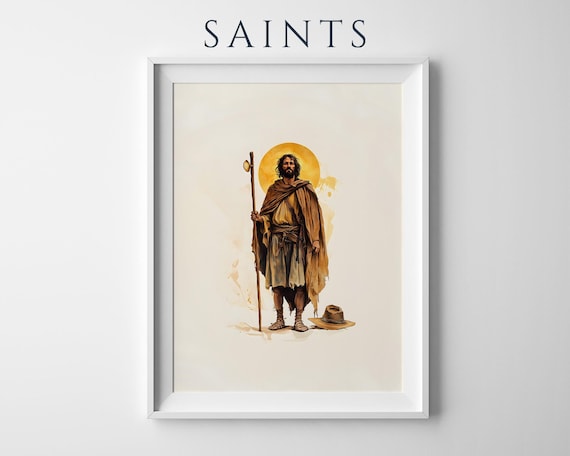
Strip away the medieval embellishments and the Gospel record about James himself is comparatively sparse but definite. He was one of the sons of Zebedee, a fisherman called alongside his brother John to follow Jesus, and one of the three apostles — with Peter and John — who formed Christ's innermost circle, present at the Transfiguration and in Gethsemane. Later Christian tradition distinguishes him as "James the Greater" to separate him from the other apostle named James, often called "the Lesser."
His death is one of the few apostolic martyrdoms the New Testament records directly rather than through later legend. The Acts of the Apostles states plainly that King Herod Agrippa I "laid hands upon some members of the church to harm them. He had James, the brother of John, killed by the sword" (NABRE, Acts 12:1-2). That execution took place in Jerusalem, sometime around 44 AD — which immediately raises the obvious question the Galician legend exists to answer: how did a man beheaded in Judea end up buried in Spain?
The legend of the stone boat
The answer, as Spanish tradition tells it, is almost as dramatic as the martyrdom itself. James, the story holds, had preached in Hispania — Roman Spain — earlier in his ministry, before returning to Jerusalem where he was killed. After his execution, his grieving disciples are said to have carried his body to the coast and placed it aboard a boat without a rudder or crew, which miraculously sailed itself across the Mediterranean and the Atlantic coastline to land in Galicia, where it was buried and then, centuries later, forgotten until Pelagius's vision uncovered it again.
Historians generally treat this account as pious legend rather than a verifiable chain of events — there is no independent historical record of James traveling to Spain at all, let alone of a miraculous sea voyage for his remains. What is certain, historically, is that by the 9th century a local cult of Saint James existed in Galicia with enough institutional backing from the Asturian monarchy and the regional church to turn a rural tomb into a royal shrine almost overnight.
From a country shrine to one of Christendom's three great pilgrimages
The timing mattered enormously. In the early medieval period, much of the Iberian Peninsula was under Muslim rule following the conquest that began in 711, and the small Christian kingdoms clinging to the north needed exactly the kind of unifying religious symbol that a resident apostle's tomb could provide. James quickly became "Santiago Matamoros" — Saint James the Moor-slayer — in later medieval legend, a battlefield patron invoked in the long Christian reconquest of Spain, even though nothing in his biblical biography supports that military role.
Religiously, the shrine's prestige grew for a simpler reason: having an apostle's body on hand was an enormously rare claim in medieval Western Europe, where most apostolic remains were understood to rest in Rome or the Holy Land. By the 12th century, the Camino de Santiago — the network of pilgrim roads converging on the cathedral from across France and the rest of Europe — had become one of medieval Christendom's three great pilgrimage routes, alongside journeys to Rome and Jerusalem, each one offering its own form of indulgence and spiritual merit to those who completed it.
Losing the bones, then finding them again
For all its medieval fame, the shrine went through a strange modern crisis of its own. In 1589, fearing an attack on Spain's Atlantic coast by the English fleet under Francis Drake, cathedral authorities hid the relics so thoroughly that their exact location within the building was lost for nearly three centuries. Generations of pilgrims continued venerating the site, but the precise resting place of the bones themselves had genuinely slipped from institutional memory.
That changed in 1879, when renovation work in the cathedral's crypt uncovered a set of bones matching the old descriptions of the hidden relics. The rediscovery prompted a formal investigation, and in 1884 Pope Leo XIII issued the bull Omnipotens Deus, affirming the authenticity of the recovered remains as those of Saint James and his two companions. It is worth being precise about what that papal act actually did: it was a declaration of confidence meant to resolve a 19th-century controversy over a specific set of bones, not a dogmatic teaching that binds the conscience of the faithful the way a doctrine of the Catechism does. Historians and scientists have no independent means of verifying, more than a thousand years after the fact, whose remains actually lie in that crypt — and the Church itself has never claimed otherwise.
Why the walk still matters
None of that historical uncertainty has slowed the Camino down — if anything, the modern era has revived it. Hundreds of thousands of people now complete some stretch of the pilgrim network every year, arriving in Santiago to embrace the statue of the saint behind the high altar and collect the Compostela, the certificate the cathedral has issued to pilgrims for centuries. Many walk for the same reasons medieval pilgrims did; many others walk for reasons that have little to do with traditional devotion at all — physical challenge, grief, transition, or simple curiosity about a thousand-year-old road.
That range of motives doesn't trouble the shrine's custodians much, and it shouldn't trouble visitors either. Catholic devotion to relics and holy places has never required certainty about every detail of their origin to hold spiritual value — a point the Church has made about other contested relics as well. Whatever one makes of the stone boat, the star, or the 19th-century bones, the cathedral at the end of the Camino has spent over a thousand years giving a destination to anyone willing to walk toward it.
Trivia
Who was Saint James, and how did he die?
How did James's relics end up in Spain if he died in Jerusalem?
What does 'Compostela' actually mean?
Did the Church ever officially confirm the relics are genuinely Saint James?
Why do people still walk the Camino de Santiago today?
Related Reading