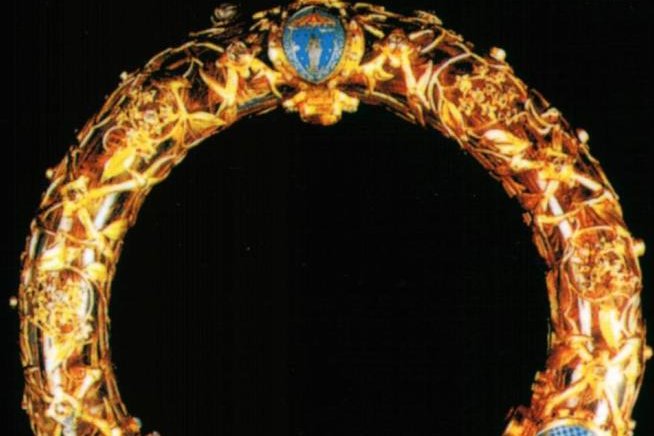
The Blood of Saint Januarius: Naples's Liquefying Relic

A vial, a crowd, and a city holding its breath
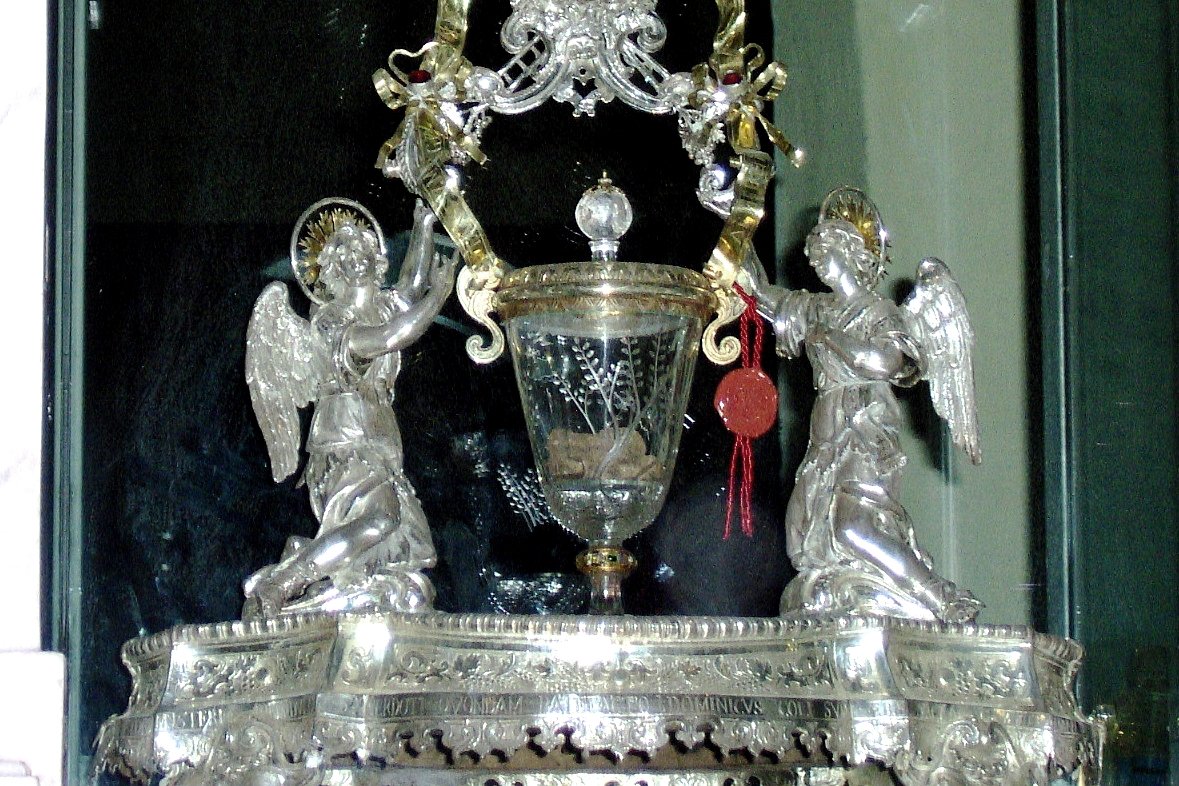
Inside a gilded chapel in Naples Cathedral, under a ceiling painted with scenes of the saint's own martyrdom, a cardinal or archbishop lifts a reliquary holding two small glass ampoules. One is larger than the other, both are sealed, and both contain a dark, congealed mass that has, by long tradition, been identified as the blood of Saint Januarius — a bishop martyred roughly seventeen centuries ago. The prelate turns the reliquary over, slowly, repeatedly, while the congregation watches and waits. If the mass inside loosens and begins to flow like fresh blood, a cry goes up, church bells ring, and word spreads through the city within minutes. If nothing happens, the mood turns somber, because in Naples, a motionless vial has never been just a disappointment — it has been read, for centuries, as a warning.
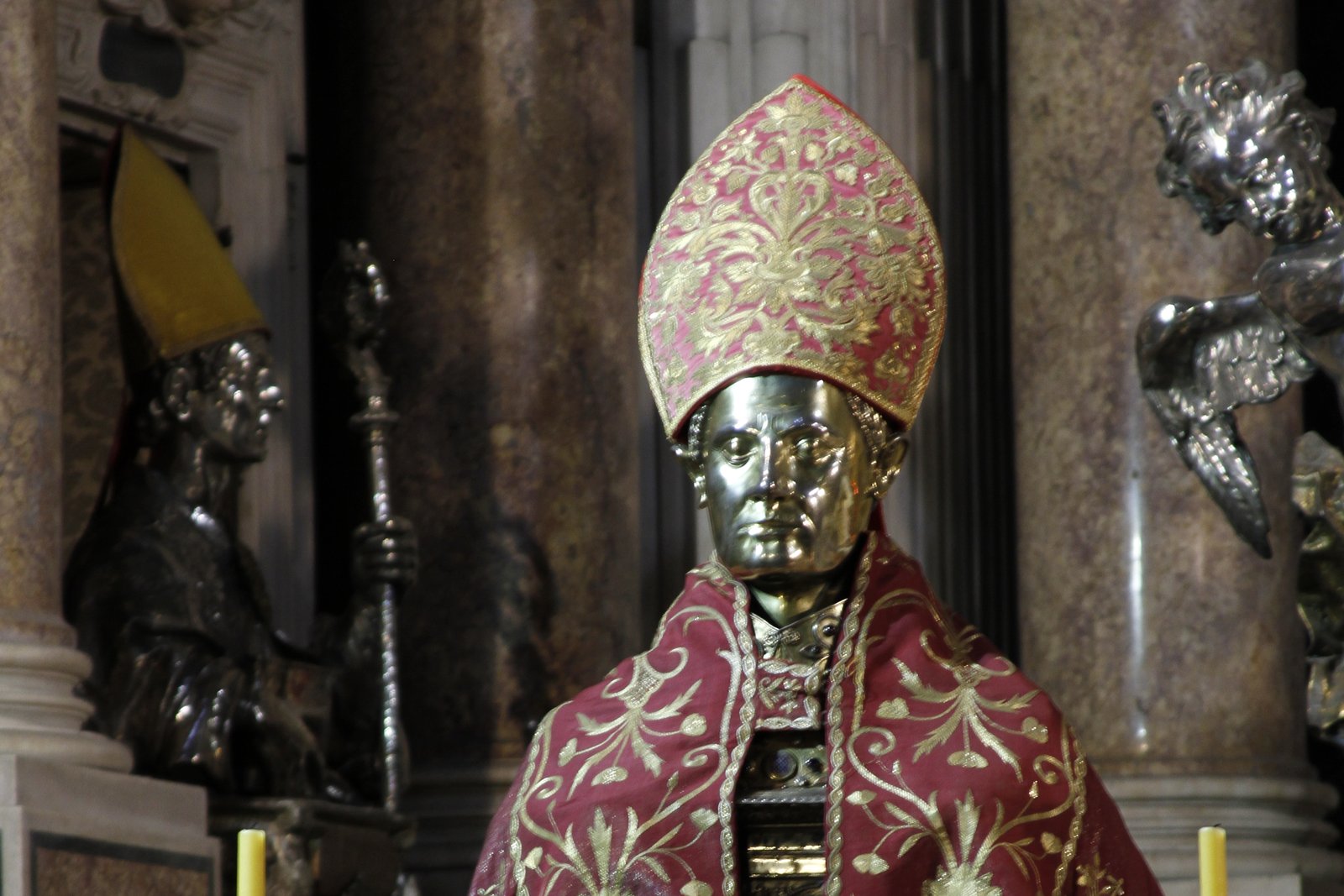
Photo by José Luiz (2015), 'Reliquaire of San Genaro - Cappella di San Gennaro - Duomo - Naples - Italy.' CC BY-SA 4.0, via Wikimedia Commons.
Who was Saint Januarius
According to Butler's Lives of the Saints, Januarius — known in Italian as San Gennaro — was bishop of Beneventum, a city in southern Italy, during the persecution of Christians under the Roman emperor Diocletian in the early 4th century. He traveled to Misenum, near Naples, to visit and encourage a deacon named Sosius who had been imprisoned for the faith. Januarius was himself soon arrested, along with members of his clergy and other companions. The group was reportedly exposed to wild beasts in an amphitheater, who left them unharmed, after which the governor of the region ordered them beheaded. Januarius is venerated today as the principal patron saint of Naples, and his relics rest in the city's cathedral, where the liquefaction of his blood is said to occur.
It's worth being honest about the limits of what's documented this far back: like many accounts of early martyrs, the precise circumstances come down to us through later hagiographical tradition rather than a contemporary court record, and some popular sources place his death around the year 305, a date that should be understood as traditional rather than archivally certain.
A relic with a documented, but not ancient, paper trail
Here is where Januarius's story differs in an important way from how it's often retold: the liquefaction itself is not something the historical record traces back to the saint's own era, or even to the centuries immediately following. According to several Catholic sources that have examined the question, the earliest surviving documented account of the blood liquefying dates to 1389 — more than a thousand years after the saint's death — when a chronicler recorded that the relic's contents were seen to turn liquid in the presence of the faithful. Whatever devotional practices surrounded the relic before that date, no contemporary written record of a liquefaction phenomenon earlier than the 14th century has survived. That gap is worth stating plainly rather than skipping over, in the same way the Shroud of Turin's own pre-14th-century history is genuinely undocumented: a long tradition of veneration is real, but it is not the same claim as an unbroken, ancient record of the specific phenomenon people travel to see today.
When the ceremony happens
Three recurring occasions draw the largest crowds. The first is September 19, the saint's liturgical feast day. The second is December 16, a date tied to local memory of the devastating eruption of nearby Mount Vesuvius in 1631, when residents credited the saint's intercession with sparing the city from the worst of the lava flow. The third is the Saturday before the first Sunday of May, commemorating the transfer of the saint's relics to Naples. On each occasion, the reliquary is brought out, examined before clergy and the public, and the ampoules are turned and watched for the characteristic change.
The ceremony does not always produce the expected result. Historical records note occasions when the blood failed to liquefy, including during the years 1939, 1940, and 1943 — years that fell during the buildup to and height of the Second World War — as well as in 1973, 1980, and as recently as December 2016. Neapolitan folk tradition has long treated a "failed" liquefaction as an ill omen for the city, associating it with misfortune, disaster, or hardship to come. This is a popular belief rooted in local custom, not a teaching the Catholic Church asks anyone to hold; the Church's own position on the relic, discussed below, is considerably more reserved than the folklore that has grown up around it.
The 1991 thixotropic hypothesis
The most substantial scientific attempt to explain the liquefaction came in 1991, when the Italian chemist Luigi Garlaschelli, together with colleagues Franco Ramaccini and Sergio Della Sala, published a short paper in the journal Nature. Their proposal centered on thixotropy, a property some gels and mixtures have of becoming liquid when shaken, stirred, or otherwise mechanically agitated, and resolidifying again once left undisturbed. The researchers argued that the repeated turning and handling of the reliquary during the public ceremony could itself supply exactly the kind of physical agitation needed to trigger such a change in a thixotropic substance, without requiring any supernatural cause. To support the idea, they reported successfully preparing a gel with similar visual behavior using materials that would have been available in 14th-century Naples — including ferric chloride, a compound associated with the volcanic geology of the Vesuvius region, along with calcium carbonate and water.
The hypothesis has real limits that even its proponents acknowledged. Naples has other reportedly liquefying blood relics associated with different saints, kept in other churches, and some of those relics are rarely if ever handled or turned in the way the Januarius ampoules are — which makes mechanical agitation a much less convincing explanation for those particular cases. More fundamentally, the hypothesis has never been tested directly on the actual relic in Naples Cathedral, because Church authorities there have not permitted the ampoules to be opened or their contents independently sampled and analyzed by outside researchers. That refusal means the thixotropic-gel theory remains a plausible, chemically demonstrated possibility rather than a confirmed explanation of what the Naples vials actually contain.
What the Church actually says
This is the point at which the story is easiest to overstate in either direction. The Catholic Church has long permitted, and in practice warmly encouraged, devotion to Saint Januarius and veneration of the relic associated with him; multiple popes have visited Naples Cathedral and prayed before it. But the Church has never issued a dogmatic ruling declaring the liquefaction to be a miracle in the formal theological sense, the way it formally investigates and approves specific miracles in canonization causes. No pope has required Catholics to believe the phenomenon is supernatural, and none has declared it fraudulent either. As with the Shroud of Turin and the Eucharistic Miracle of Lanciano, the Church's historically cautious posture here is consistent: it treats the object as worthy of devotion and reflection, while leaving the underlying scientific question open rather than settling it by decree.
That caution is, if anything, more pronounced with Januarius's relic than with some others, precisely because independent scientific examination has been declined rather than invited. Where the Shroud of Turin has undergone extensive laboratory testing (including the contested 1988 radiocarbon dating), and the Lanciano relic was examined by a pathologist in 1970-71, the Naples ampoules have largely stayed sealed and in the custody of local religious authorities, examined visually during the public ceremonies but not opened for chemical analysis. That makes Januarius's blood, in a sense, the least scientifically tested of the Catholic world's famous "living" relics, and the honest summary of its status is that the question remains genuinely unresolved — not because science has failed to explain it, but because the relic itself has rarely been made available for the kind of examination that would settle the matter either way.
Why Naples still watches
None of that uncertainty has dimmed the devotion. Neapolitans pack the cathedral three times a year, television crews stand ready to report the result within minutes, and the tradition of treating a failed liquefaction as a civic warning persists in the city's popular imagination regardless of what any laboratory might eventually conclude. For many of the faithful gathered there, the appeal isn't a courtroom-grade scientific verdict — it's the same thing that draws pilgrims to the Shroud of Turin or the flesh of Lanciano: a tangible object connecting an ancient martyr's story to the present moment, witnessed collectively, year after year, by a city that has decided to keep watching.
Saint Januarius's own story — a bishop who stood by an imprisoned deacon and ultimately paid with his life — is itself a reminder of the kind of courage the Church asks its martyrs to embody, independent of anything that happens later in a glass vial. Naples has simply never stopped wanting to mark the anniversary of that courage with its own eyes.
Trivia
What is the Blood of Saint Januarius?
When does the liquefaction happen?
Is there a scientific explanation for the liquefaction?
Does the Catholic Church teach that the liquefaction is a miracle?
Why is a failure to liquefy considered a bad omen?
Related Reading