Saint Faustina Kowalska

An unlikely background for a future saint
Faustina's early life gave little indication of what would follow. Born Helena Kowalska in 1905 in the Polish village of Głogowiec, the third of ten children in a poor farming family, she left formal schooling after only three years and went to work as a domestic servant to help support her household. She had felt a pull toward religious life since childhood but lacked her parents' permission to pursue it until she was twenty — hardly the résumé of someone who would go on to reshape global Catholic devotion.
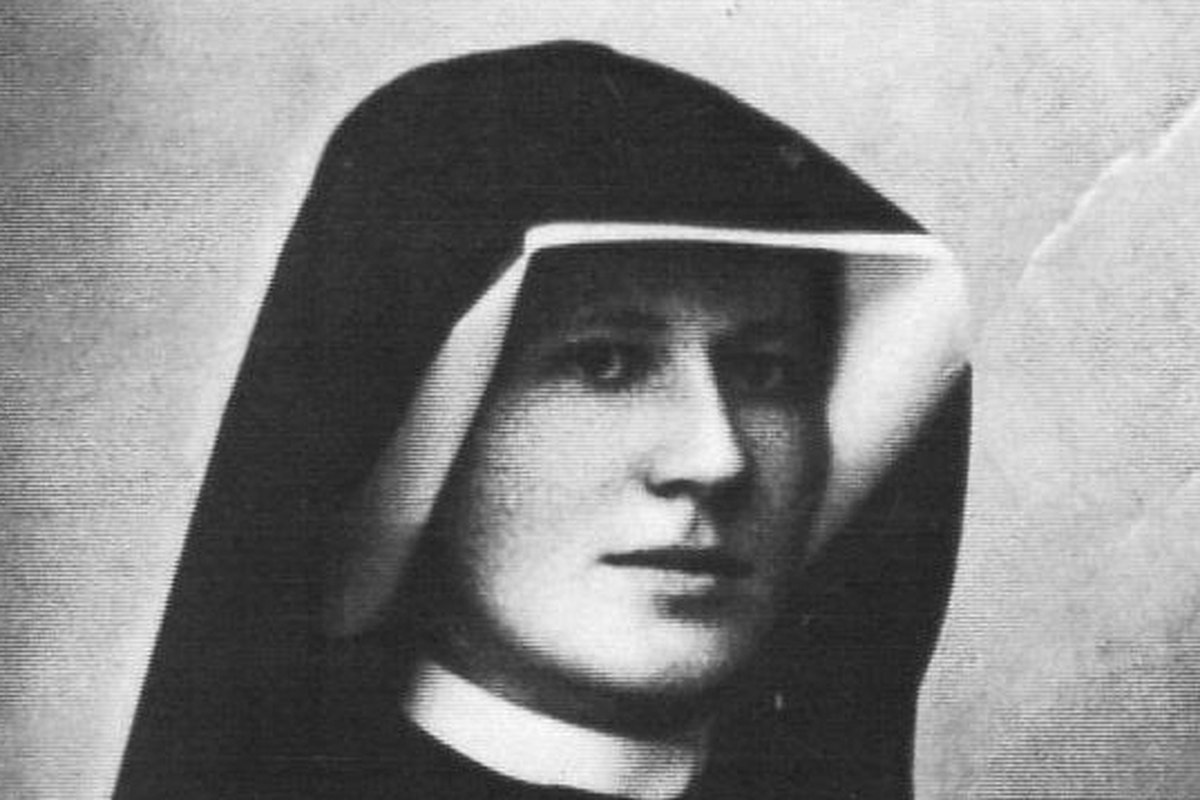
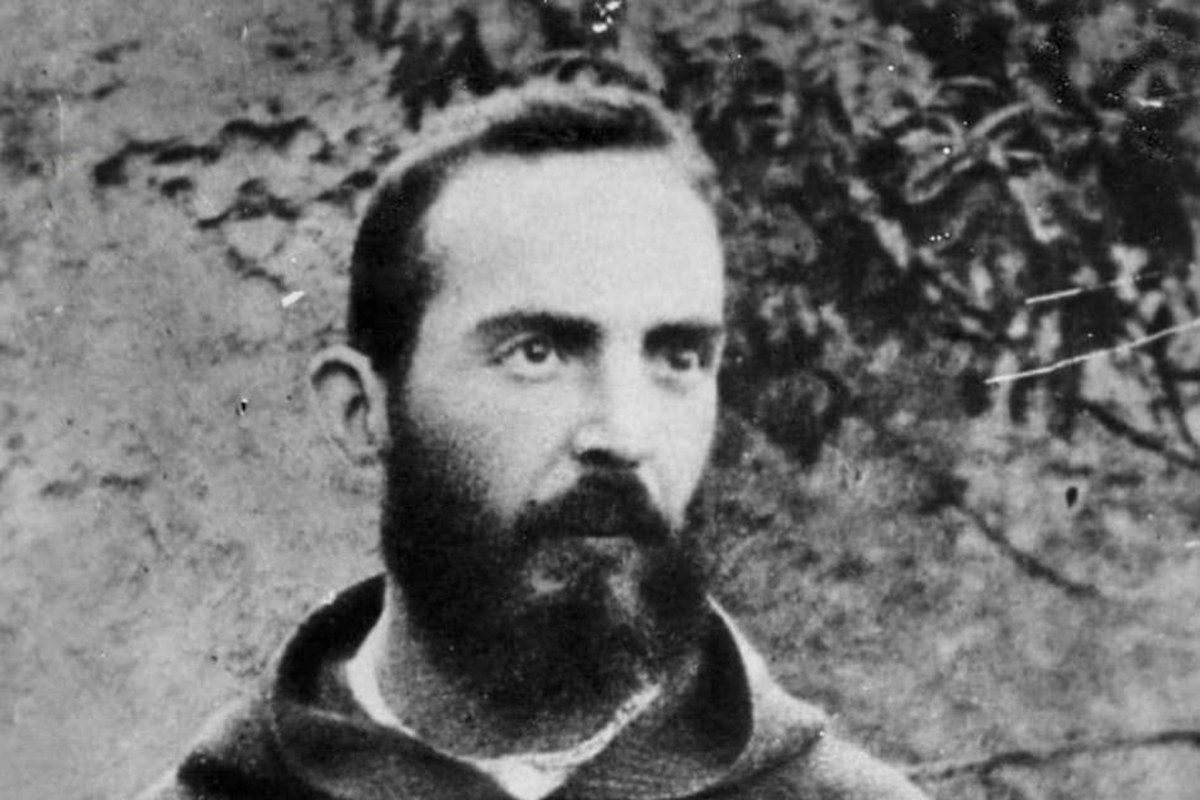
Photograph of Sister Faustina Kowalska, 1931 — public domain.
By her own account, the decisive moment came at a dance in Łódź, where she reported seeing a vision of the suffering Christ that convinced her she could delay her vocation no longer. She left for Warsaw almost immediately afterward, with no money and no concrete plan, and applied to several convents before the Congregation of the Sisters of Our Lady of Mercy accepted her in 1925, in part because the community was willing to overlook her lack of a dowry, ordinarily expected of women entering religious life at the time. Within the convent, Faustina worked mostly in humble, unglamorous roles — as a cook, gardener, and gatekeeper — a detail that stands in striking contrast to the extraordinary visions she was privately reporting during the same years.
Visions recorded at a confessor's request
After entering a convent in Warsaw and later being transferred to Płock and then Vilnius, Faustina began reporting visions and conversations with Jesus. Her confessor in Vilnius, Father Michał Sopoćko, advised her to keep a written record of these experiences — instructions that resulted in a diary running to nearly 700 printed pages, later published as Diary: Divine Mercy in My Soul. It's an unusually detailed first-person account, kept not for publication but at the specific direction of the priest guiding her spiritual life.
Faustina's superiors and confessors did not accept her reported experiences uncritically. Several priests who examined her early on suspected mental illness or delusion, and she was, for a period, examined by a physician specifically to rule out a psychological explanation for what she was reporting. Father Sopoćko himself remained cautious for some time before becoming convinced of the authenticity of her experiences, and it was largely his persistent theological and pastoral advocacy, alongside her diary itself, that eventually carried her cause forward within the Church. The diary records not only visions of Christ but detailed conversations touching on divine mercy, the nature of suffering, and the specific prayers and devotional practices Faustina said Jesus asked her to help establish — most notably the Chaplet of Divine Mercy, still prayed today using ordinary rosary beads but focused entirely on Christ's mercy toward sinners.
An image commissioned from a vision
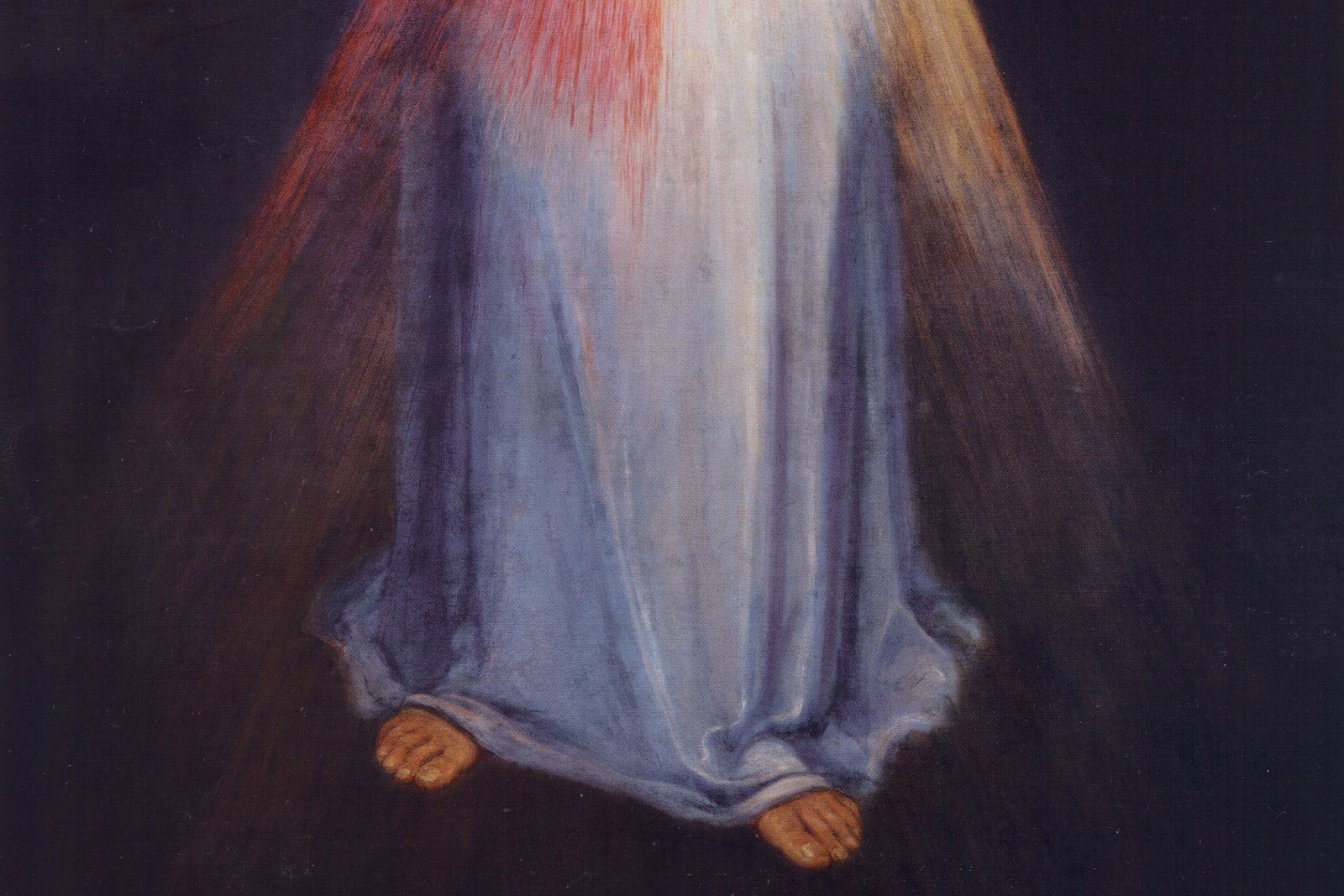
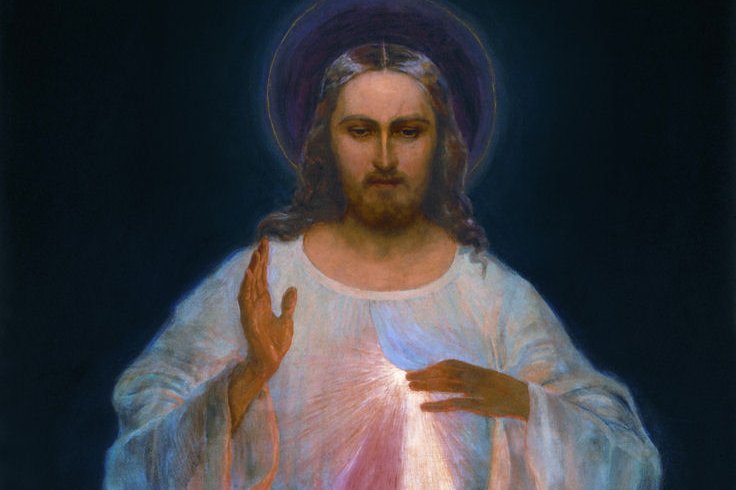
Among the most consequential results of those visions was a specific image: with Father Sopoćko's help, Faustina commissioned an artist to paint the Divine Mercy image based directly on what she described seeing — Christ with rays of light streaming from his heart, one pale and one red, representing water and blood, along with the inscription "Jesus, I trust in You." Faustina reportedly was not fully satisfied with the finished 1934 painting by artist Eugeniusz Kazimirowski, feeling it fell short of the beauty of what she had actually seen, but it became, and remains, the standard version of the image reproduced worldwide. That image, along with the prayers and devotional practices she recorded, is now recognized throughout the Catholic world, displayed in churches and homes far beyond the Polish convents where it originated.
The devotion's path to full Church approval wasn't smooth. In the years following Faustina's death, concerns about doctrinal imprecision in early, poorly translated editions of her diary led the Holy Office, the Vatican body responsible for doctrinal matters, to prohibit the spread of the Divine Mercy devotion in 1959. That ban remained formally in place for nearly two decades, until improved translations and theological review led to it being lifted in 1978 — the same year Karol Wojtyła, the Archbishop of Kraków who had long supported Faustina's cause, was elected Pope John Paul II.
The first saint of a new millennium
Faustina died of tuberculosis in 1938, at only 33 years old. Pope John Paul II beatified her in 1993 and canonized her on April 30, 2000 — deliberately timed to fall on the Church's first universal celebration of Divine Mercy Sunday, a feast John Paul II himself had established, observed on the Sunday following Easter. The pope specifically noted the significance of the moment, marking Faustina as the first saint canonized in the new millennium — an extraordinary outcome for a woman whose formal education had ended before she turned ten.
John Paul II's personal connection to Faustina's cause ran deep: as Archbishop of Kraków, he had opened her canonization process locally in 1965, decades before the Vatican's formal recognition, and later described the Divine Mercy devotion as central to his own understanding of the Church's mission for the modern world. He died in 2005 on the vigil of Divine Mercy Sunday itself, a detail widely noted by Catholics around the world as a striking echo of the devotion he had championed. Faustina's diary, once treated with official caution by the very institution that now celebrates her, has since become one of the most widely translated and read spiritual works of the 20th century, regularly placed alongside classics like the writings of Saint Thérèse of Lisieux as essential modern Catholic spiritual reading — an unlikely afterlife for a diary its author never expected anyone beyond her confessor to see.
Trivia
What was Faustina's life like before she entered the convent?
What did Faustina see in her visions of Christ?
What is the Diary of Saint Faustina?
How quickly was Faustina canonized after her death?
Related Reading