The Cherubim Who Guarded the Garden of Eden

The first angels named in the Bible
Angels appear so often across Scripture — announcing births, delivering warnings, wrestling with patriarchs — that it's easy to forget where their story in the biblical text actually begins. It isn't with a message of comfort. The very first angelic beings named in the Bible show up at the end of Genesis chapter 3, immediately after Adam and Eve's expulsion from Eden, and their job is to keep humanity out.
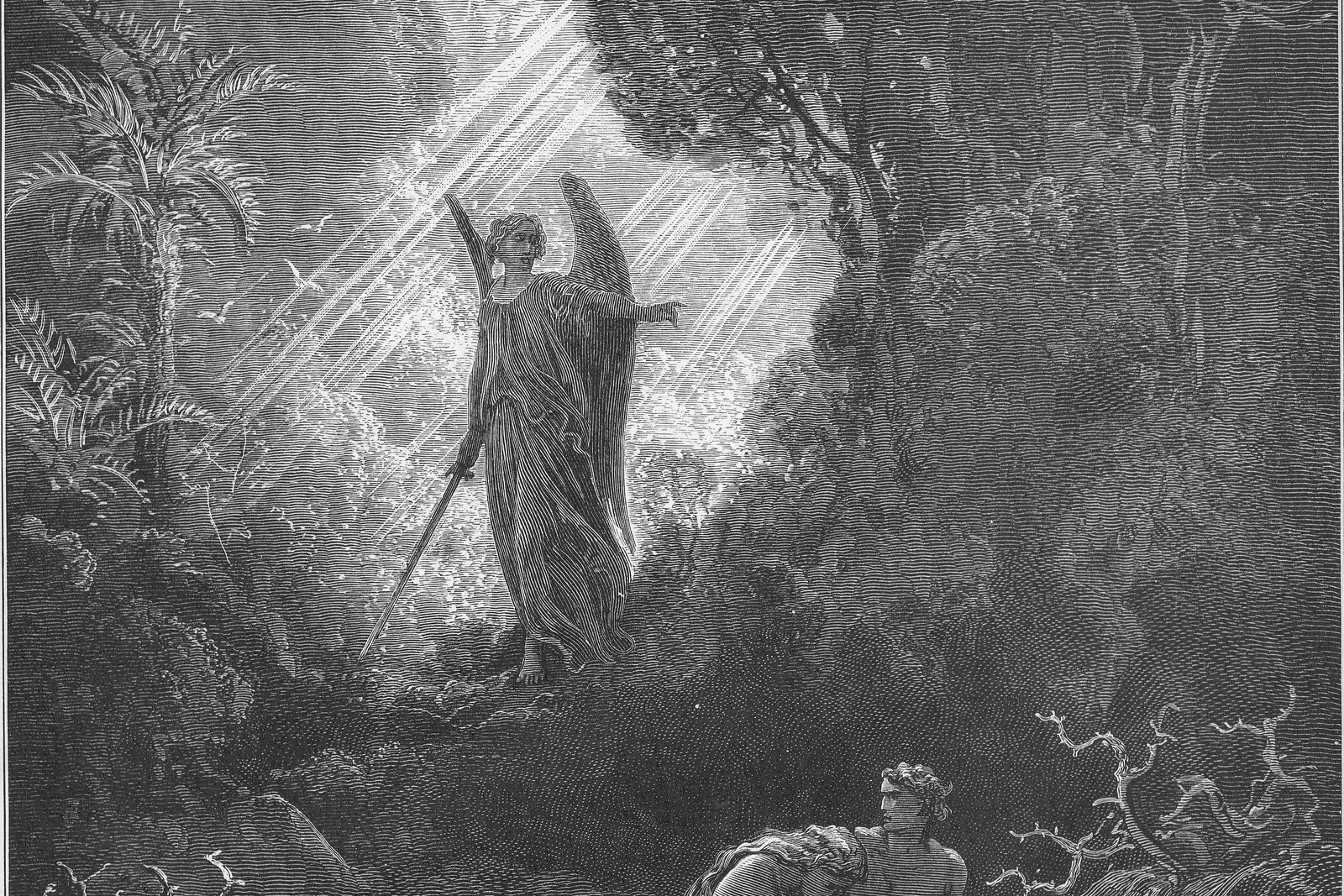
Gustave Doré, "Adam and Eve Are Driven Out of Eden," from La Sainte Bible (Doré Bible), 1866 — public domain.
"The Lord God therefore banished him from the garden of Eden, to till the ground from which he had been taken. He expelled the man, stationing the cherubim and the fiery revolving sword east of the garden of Eden, to guard the way to the tree of life" (Genesis 3:23-24, NABRE). In three brief verses, the tone for how angels function throughout much of the Old Testament is already set: they act as agents of God's will at moments of consequence, executing decisions rather than debating them, and here specifically as guardians of a boundary humanity is not permitted to cross.
Why the exile happened at all
The passage makes God's reasoning explicit, and it's worth sitting with, because it explains exactly what the cherubim were protecting. Just before the expulsion, God says, "See! The man has become like one of us, knowing good and evil! Now, what if he also reaches out his hand to take fruit from the tree of life, and eats of it and lives forever?" (Genesis 3:22, NABRE). Adam and Eve had already eaten from the tree of the knowledge of good and evil, gaining a moral awareness Genesis presents as genuinely new and genuinely consequential. What the cherubim were stationed to prevent was a second, even more drastic outcome: humanity gaining immortality while already living in a fallen, broken relationship with God.
Read this way, the guard at Eden isn't simple punishment for its own sake. It's presented as an act of protection — keeping a wounded humanity from being locked forever into its wounded state, rather than shutting a door out of anger alone. Catholic tradition has generally read the expulsion this way: severe, but not without mercy folded into its logic, even as the text doesn't dwell on that mercy explicitly.
What cherubim actually are, versus how art has portrayed them
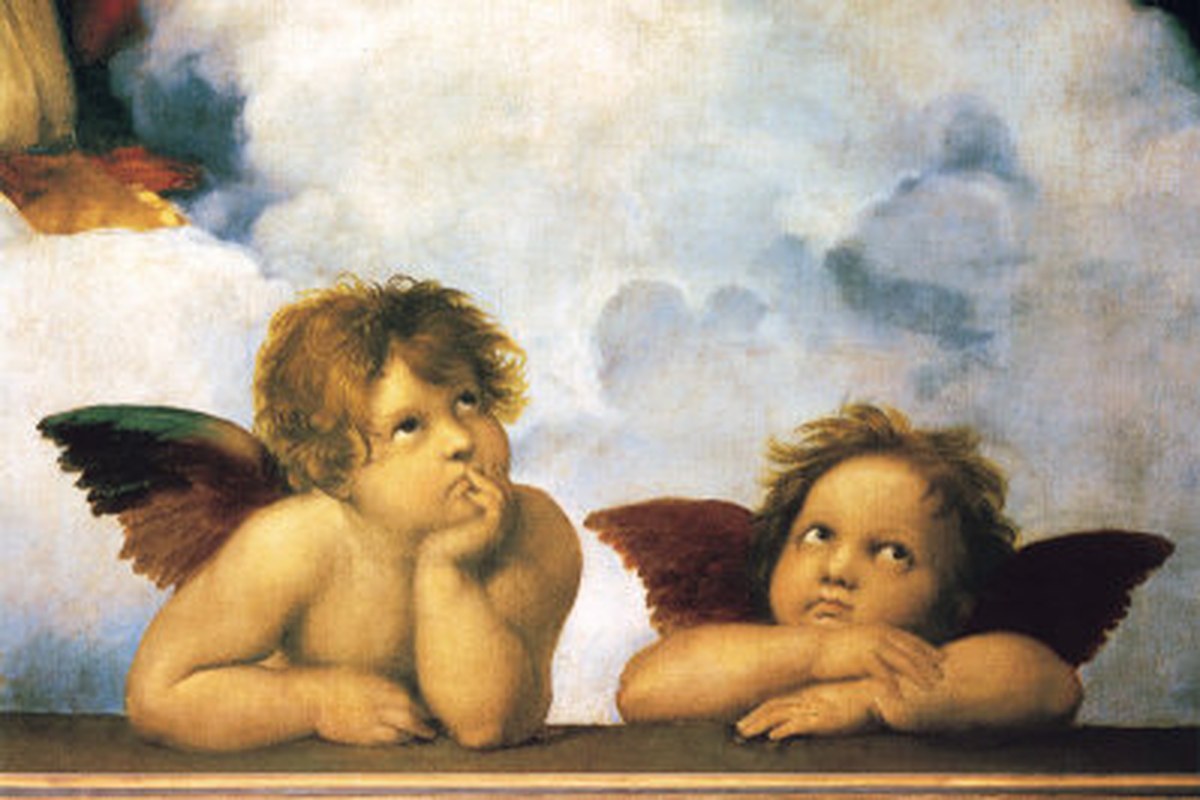
Modern popular imagination, shaped heavily by centuries of European decorative art, tends to picture "cherubs" as plump, winged infants — a figure technically called a putto in art history, developed mainly during the Renaissance for purely aesthetic purposes and having essentially nothing to do with the biblical cherubim described in Genesis or elsewhere in Scripture.
The cherubim of the Old Testament are something considerably more formidable. They reappear repeatedly in contexts tied to God's direct presence and to guarding what is sacred: golden cherubim figures overshadow the Ark of the Covenant in Exodus, cherubim are woven into the veil separating the Holy of Holies in the Temple, and the prophet Ezekiel later describes composite, multi-winged creatures identified as cherubim in one of the most elaborate visionary passages anywhere in Scripture. Across all of these appearances, a consistent pattern emerges: cherubim are guardians of sacred boundaries, not decorative or sentimental figures. Their posting at Eden is the first instance of a role Scripture returns to again and again.
A sword that turns, not merely a barrier
The description of the weapon accompanying the cherubim carries its own weight. The Hebrew text describes not simply a fiery sword but one that is also "turning" or "revolving" — traditionally understood to suggest continuous, active motion rather than a fixed obstacle standing passively in place. Whatever the precise visual the original text intended, the effect of the phrase is to underscore that the way to the tree of life was now not just marked off, but actively and thoroughly barred against any attempt to slip past unnoticed.
Later Jewish and Christian commentators have offered various readings of this detail — some emphasizing the totality of the exclusion it represents, others connecting the imagery of fire and turning motion to broader biblical patterns of divine judgment appearing in fire, such as the burning bush Moses would encounter centuries later, or the pillar of fire that led Israel through the wilderness after the Exodus. Scripture itself doesn't elaborate further, leaving the image to stand largely on its own dramatic force.
Why this scene still matters
The guarded gate of Eden closes the Genesis creation narrative on a note that is somber but not without hope embedded in it — humanity loses immediate access to paradise, but the text doesn't suggest that access is lost forever in some absolute, unqualified sense. Christian tradition has long read the arc of salvation history that follows — through the covenants, through the prophets, and ultimately through Christ — as the slow work of reopening what was closed at Eden's gate, a theological thread the Church has traced consistently since the earliest centuries of its teaching.
For anyone tracing how angels function across the Bible as a whole, this opening scene sets an important baseline. Long before angels become messengers bringing comforting news to shepherds or reassurance to frightened prophets, their first recorded role in Scripture is this: standing at a threshold humanity could no longer cross, holding a line that only grace, centuries later, would finally begin to cross back.
Trivia
What does Genesis say about angels guarding the Garden of Eden?
Why were cherubim, specifically, chosen to guard Eden?
What was the cherubim guarding against?
Are the cherubim of Genesis the same as the cute winged infants often called cherubs in art?
What does the flaming sword represent in this passage?
Related Reading