Angels in the Book of Daniel


A book written for a people under threat
The Book of Daniel is set during the Babylonian exile and its aftermath, a period when the Jewish people lived as a conquered minority inside foreign empires that expected, at various points, either their assimilation or their destruction. That setting matters for understanding why angels play such a prominent role in the book: Daniel's angels consistently arrive at moments when faithfulness looks like it will get someone killed, and they consistently intervene not by removing the danger but by standing inside it alongside the faithful. It's a very different angelic pattern from, say, the angels who announce births or deliver general messages elsewhere in Scripture — Daniel's angels are protectors under active persecution.
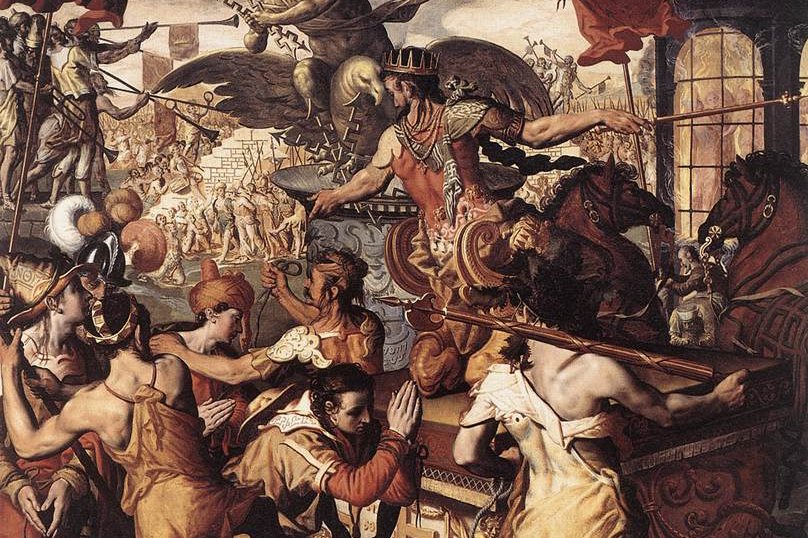
Willem Drost (attr., after Rembrandt), The Vision of Daniel, 1650 - Gemaldegalerie, Berlin (Wikimedia Commons, public domain)
The angel in the furnace
The most vivid of these moments comes in chapter 3, when King Nebuchadnezzar orders three young Jewish officials — Shadrach, Meshach, and Abednego — thrown into a furnace heated seven times hotter than usual for refusing to worship a golden statue. Looking into the flames afterward, the king is startled to see not three men but four, walking around unbound and unharmed, "the fourth looks like a son of God" (Daniel 3:92, NABRE, in the NABRE's fuller numbering, sometimes cited as 3:25 elsewhere). The deuterocanonical Greek additions to Daniel make the identification explicit: "the angel of the Lord went down into the furnace with Azariah and his companions, drove the fiery flames out of the furnace... The fire in no way touched them or caused them pain or harm" (Daniel 3:49-50, NABRE).
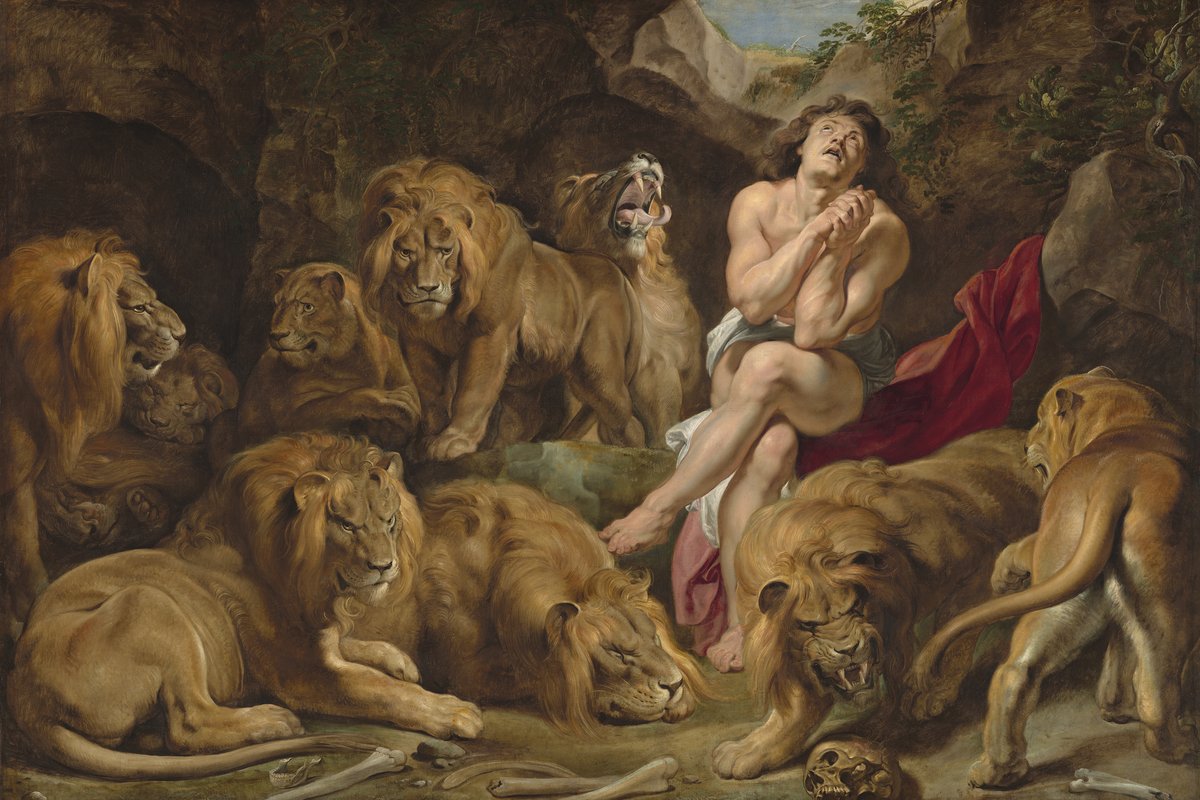
What makes this scene distinctive isn't just that the men survive — it's that the angel doesn't extinguish the furnace or pull them out. He goes in with them. That detail has made the story a recurring reference point in Christian reflection on suffering and companionship: not a promise that faithfulness prevents hardship, but a promise that it isn't endured alone. Readers interested in a related story of angelic protection under threat may enjoy The Angel Closing the Lions' Mouths, Daniel's own later brush with a very different kind of execution.
Gabriel, named for the first time
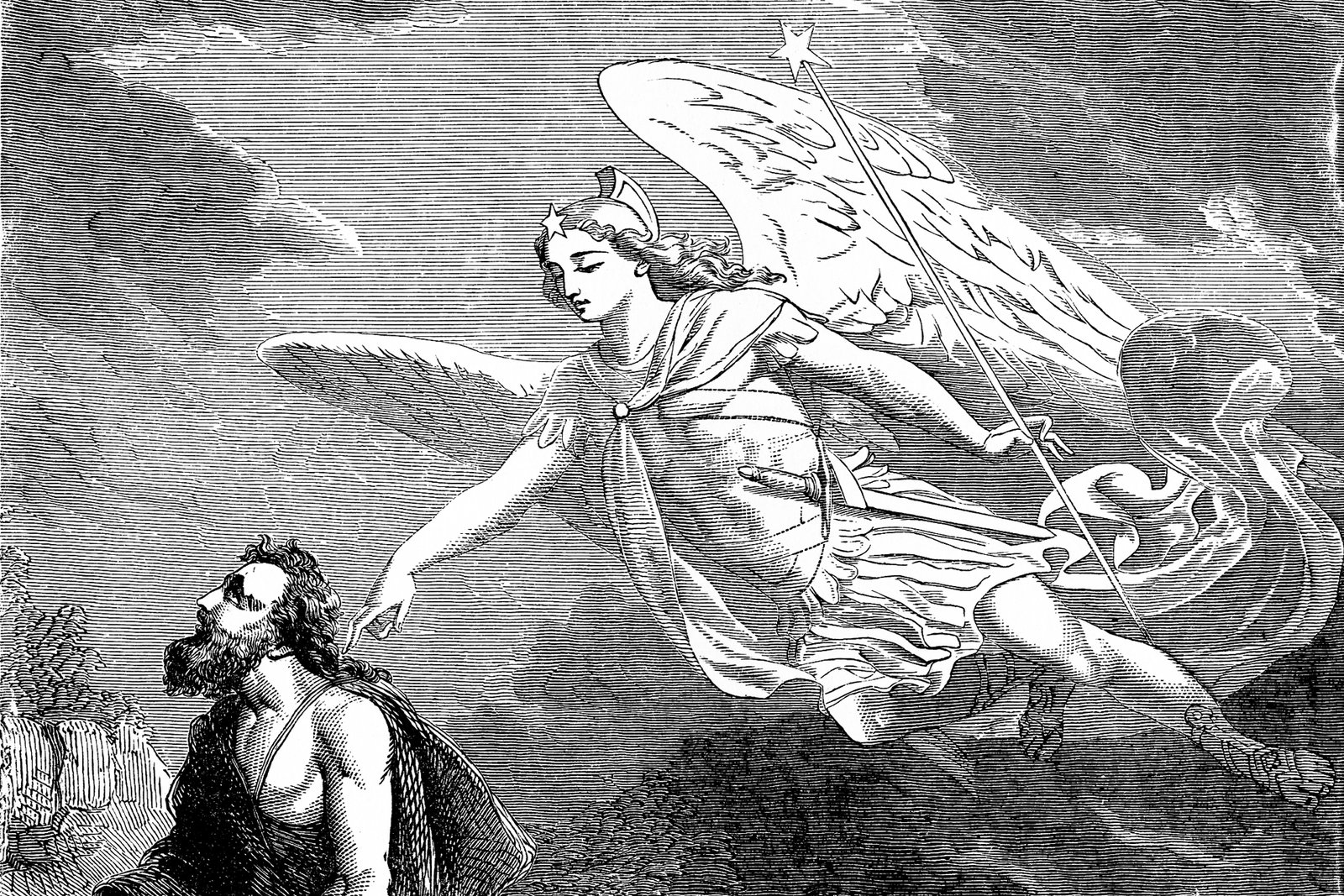
Daniel is also the first book of the Bible in which an angel identifies himself by a personal name. In chapter 8, a figure with "the appearance of a man" explains a difficult vision to Daniel, and a voice instructs, "Gabriel, explain the vision to this man" (Daniel 8:16). Later, in chapter 9, while Daniel is praying and confessing on behalf of his people, "the man, Gabriel, whom I had seen in vision before, came to me in flight at the time of the evening offering" (Daniel 9:21, NABRE), delivering the dense and much-debated prophecy of the seventy weeks.
These two appearances establish a role Gabriel keeps throughout later tradition and into the New Testament: not a warrior like Michael, but an interpreter and messenger, sent specifically to explain what God is doing at moments of real confusion or crisis. It's the same basic role he plays centuries later announcing the births of John the Baptist and Jesus — a consistency of character across a huge span of biblical narrative that ancient and medieval readers found notable in its own right. Readers curious about that later chapter of his story can find it in Saint Gabriel the Archangel.
Michael, prince and guardian
Michael's appearances in Daniel are shorter but arguably more consequential for how later Christian tradition understood him. In chapter 10, an angel tells Daniel he was delayed three weeks by opposition from "the prince of the kingdom of Persia," until "Michael, one of the chief princes, came to help me" (Daniel 10:13, NABRE) — a passage that pictures Michael not as a messenger but as a kind of heavenly military reinforcement, arriving to break a spiritual deadlock. A few verses later, Michael is called "your prince," a guardian specifically assigned to Israel among the nations (Daniel 10:21).
That role reaches its clearest statement in chapter 12, in one of the most quoted verses about Michael anywhere in Scripture: "At that time there shall arise Michael, the great prince, guardian of your people; It shall be a time unsurpassed in distress since the nation began until that time. At that time your people shall escape, everyone who is found written in the book" (Daniel 12:1, NABRE). This single verse became a foundation stone for centuries of later reflection on Michael as protector and defender — language that echoes directly into his role in the Book of Revelation and into the prayers of the Church that still invoke him as guardian in times of spiritual battle. For Michael's own full story across Scripture and tradition, see Saint Michael the Archangel.
A pattern that runs through the whole book
Taken together, Daniel's angels form a coherent picture rather than a scattered set of cameos: a protector who enters danger alongside the faithful, a messenger who explains what God is doing when events look incomprehensible, and a guardian-prince who fights on behalf of an entire people rather than a single individual. It's a notably mature and structured angelology for a relatively short Old Testament book, and it's part of why Daniel became such a heavily mined source for later Jewish and Christian thinking about the nature and roles of angels — not abstract theological speculation, but a series of very specific, very memorable scenes of angels showing up exactly when they were needed most.
Trivia
What angel appeared in the fiery furnace with Shadrach, Meshach, and Abednego?
Why does Gabriel appear in the Book of Daniel?
What does it mean that Michael is called a 'prince' in Daniel?
Who was fighting Michael in Daniel's vision?
Does the Book of Daniel describe angels appearing as ordinary men?
Related Reading