The Parable of the Wise and Foolish Builders

The closing image of a long sermon
By the time Jesus reaches this parable, he has already delivered what Matthew's Gospel presents as an extended body of teaching — the Sermon on the Mount, covering everything from the Beatitudes to prayer to how his followers should treat one another. Rather than closing with a summary or a final exhortation to remember what's been said, Jesus ends with a short, concrete story about two builders — a deliberate choice that shifts the sermon's final emphasis away from retention and toward action.
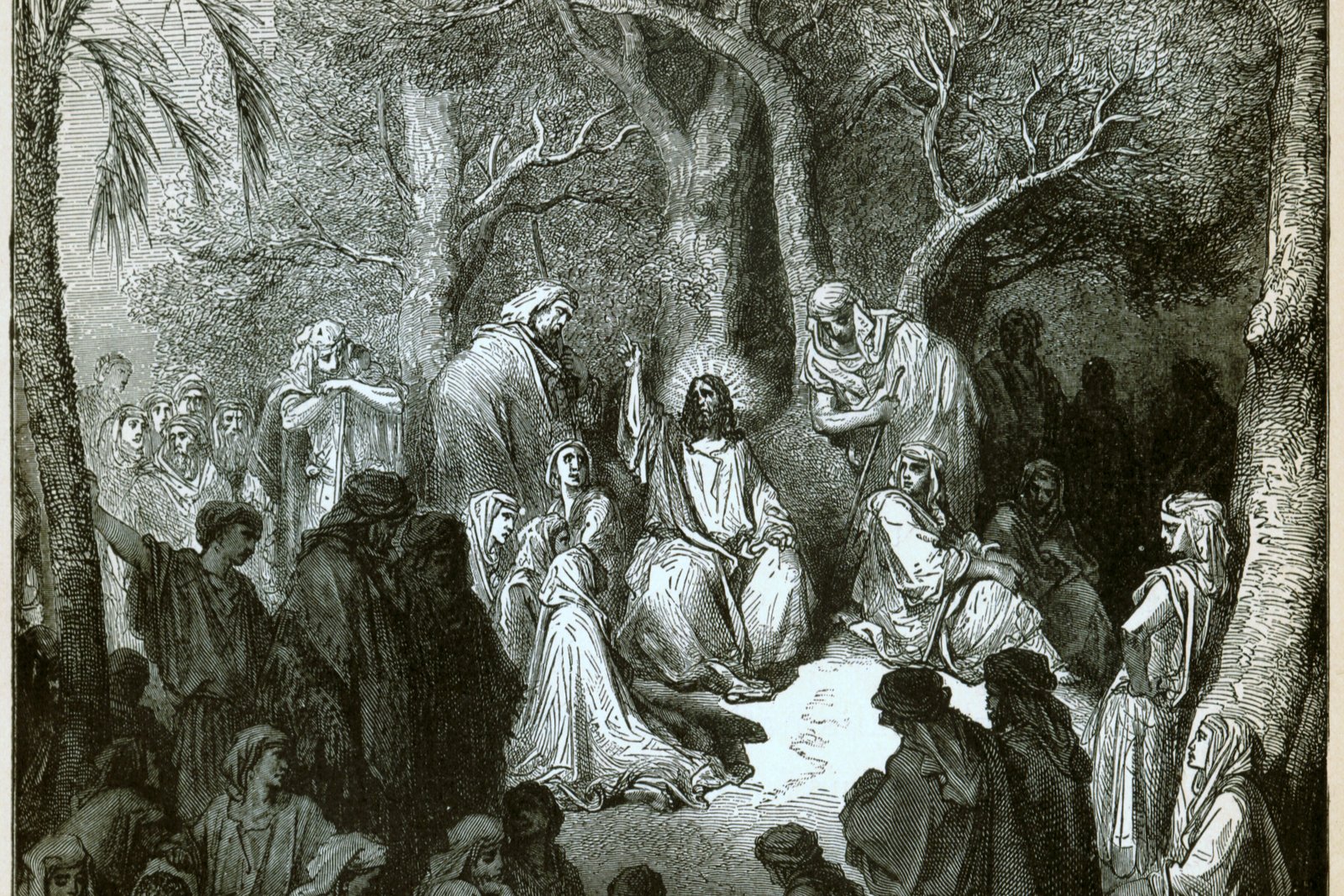
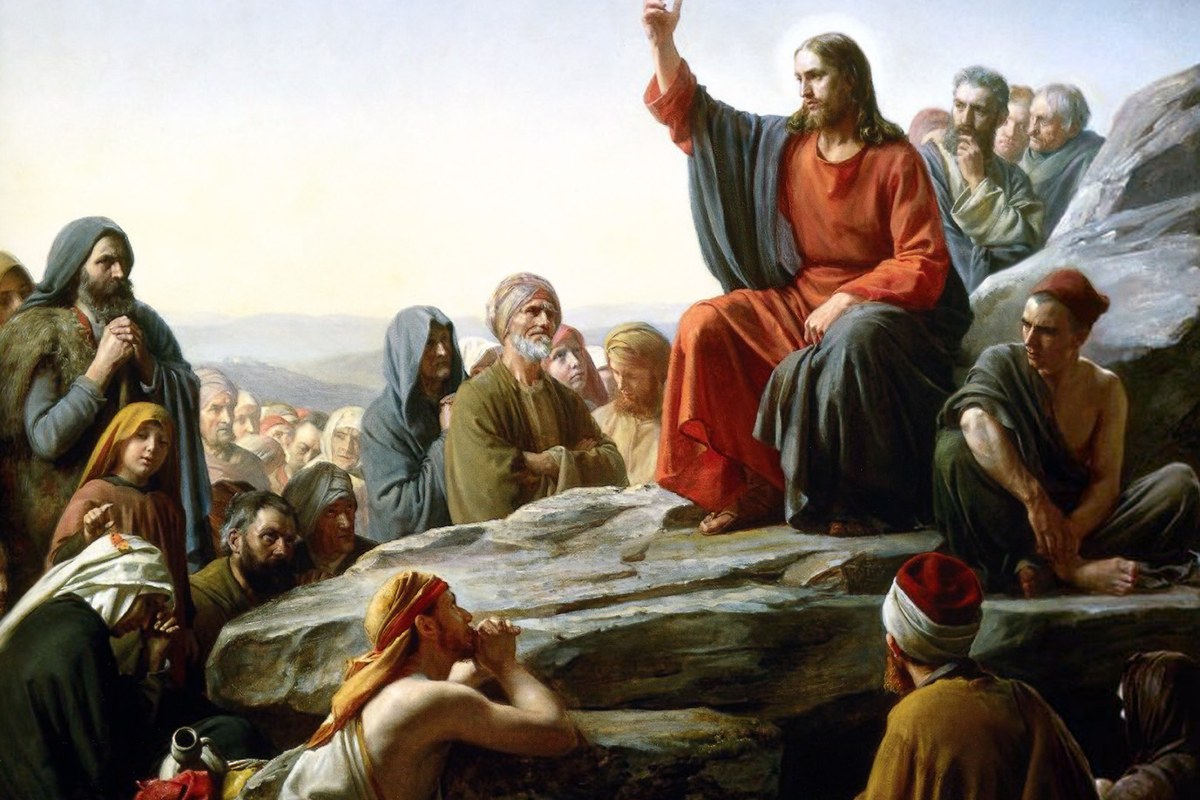
Gustave Dore, Sermon on the Mount (1866), public domain via Wikimedia Commons -- an illustration of the wider Sermon on the Mount, since no dedicated period artwork of this specific parable's two builders was found
Two men, the same words, the same materials available
What makes the parable's structure so effective is its careful symmetry. Both builders are described hearing the identical teaching — "these words of mine" applies equally to each one. Neither is described as lacking access to good building materials or sound instruction. The entire parable rests on a single point of divergence, stated as plainly as possible: one man "acts on them," and the other "does not act on them" (Matthew 7:24, 26, NABRE). Everything that follows in the story is simply the consequence of that one difference playing out.
Built on rock, and the storm that couldn't move it
The wise builder's house is described with straightforward confidence: "Everyone who listens to these words of mine and acts on them will be like a wise man who built his house on rock. The rain fell, the floods came, and the winds blew and buffeted the house. But it did not collapse; it had been set solidly on rock" (Matthew 7:24-25, NABRE). It's worth noting precisely what the passage does and doesn't claim — the wise builder's house isn't spared the storm. Rain falls on it, floods come, wind buffets it, exactly as it does the other house. The foundation doesn't prevent hardship from arriving; it determines whether the structure survives hardship once it does.
Built on sand, and a ruin the storm exposes
The foolish builder's house faces the identical conditions, described in nearly the same words: "The rain fell, the floods came, and the winds blew and buffeted the house. And it collapsed and was completely ruined" (Matthew 7:26-27, NABRE). The repetition of the storm's description across both houses is deliberate — Jesus isn't describing two different weather events, one mild and one severe. It's the identical storm, hitting both structures with identical force. The only variable that determined the outcome was decided long before the storm ever arrived, in the choice of foundation each builder had already made.
Hearing alone was never the goal
What gives this parable its lasting force as the sermon's closing image is how directly it reframes what Jesus has been asking of his listeners throughout the preceding chapters. It would be easy to walk away from an extended teaching like the Sermon on the Mount treating careful listening and mental agreement as the finish line — understanding the teaching, appreciating its wisdom, being able to repeat it back accurately. Jesus's closing parable insists that none of that determines the outcome that actually matters. Both builders heard exactly the same words. The wise one is distinguished by nothing except what he did with what he'd heard, before the storm ever tested it.
Luke's version, with one added detail
Luke's Gospel records what's widely read as the same parable in a slightly different setting, and it adds a small but telling detail about the wise builder's actual labor: he's someone who "dug deeply and laid the foundation on rock; when the flood came, the river burst against that house but could not shake it because it had been well built" (Luke 6:48, NABRE). Digging down to rock, rather than simply building on whatever ground happened to be convenient, takes real, unglamorous effort before any storm ever arrives — effort with no visible reward until the exact moment it's tested. Luke's foolish builder, by contrast, is described building "on the ground without a foundation" at all (Luke 6:49, NABRE), skipping the hidden, laborious step entirely in favor of whatever was fastest.
A crowd that noticed something different in how he taught
Matthew closes out the whole Sermon on the Mount, immediately after this parable, with a brief note about how the crowd reacted to everything they'd just heard: "the crowds were astonished at his teaching, for he taught them as one having authority, and not as their scribes" (Matthew 7:28-29, NABRE). It's a detail easy to read past, but it matters here — the parable of the two builders isn't presented as one teaching among equals; it's the closing note of a sermon the crowd recognized, even in the moment, as carrying a different kind of weight than what they were used to hearing from their own religious teachers.
An idea the New Testament returns to elsewhere
The same insistence that hearing alone isn't enough surfaces again later in the New Testament, in language that echoes this parable's basic logic even without repeating its imagery directly. The Letter of James urges its readers to "be doers of the word and not hearers only, deluding yourselves" (James 1:22, NABRE) — a warning against exactly the gap this parable dramatizes, between recognizing good teaching and actually building a life on it. Catholic teaching has long read this emphasis on acting, not merely hearing, as entirely compatible with the necessity of faith rather than opposed to it: genuine faith, in this understanding, is one that naturally produces the kind of action James and this parable both describe, not faith substituted by action instead of it.
A short story that outlasts long explanations
Few of Jesus's parables compress their point into so few, so vivid images — two houses, one storm, one variable. It's likely part of why this particular story has remained so widely remembered and referenced across centuries of Christian teaching, in ways that outlast far more elaborate explanations of the same underlying idea. The parable doesn't argue that hearing good teaching is worthless — both builders needed to hear the words first, after all. What it insists on, with unusual economy, is that hearing was only ever the beginning, and that the real test of what someone has actually built comes later, when the weather turns and the foundation underneath finally has to hold or fail on its own.
Trivia
Where does the parable of the wise and foolish builders appear?
What does Jesus say about the person who builds on rock?
What happens to the person who builds on sand?
What's the actual difference between the wise builder and the foolish one?
Why does the parable specifically mention rain, floods, and wind?
You May Also Like

Related Reading