Catholic Mourning Customs and Traditions

A structure built in three stages
Catholic funeral practice doesn't leave grieving families to invent their own sequence from scratch. The Church's rites are organized around three distinct stages, each with a specific purpose: the vigil, the funeral liturgy, and the rite of committal. Together they move a family through a recognizable arc — from the first gathering of grief in the days right after a death, through the central liturgical act of the funeral itself, to the final, concrete act of burial. The structure doesn't try to compress mourning into a single event; it spreads it across several distinct moments, each one asking something slightly different of the people present.
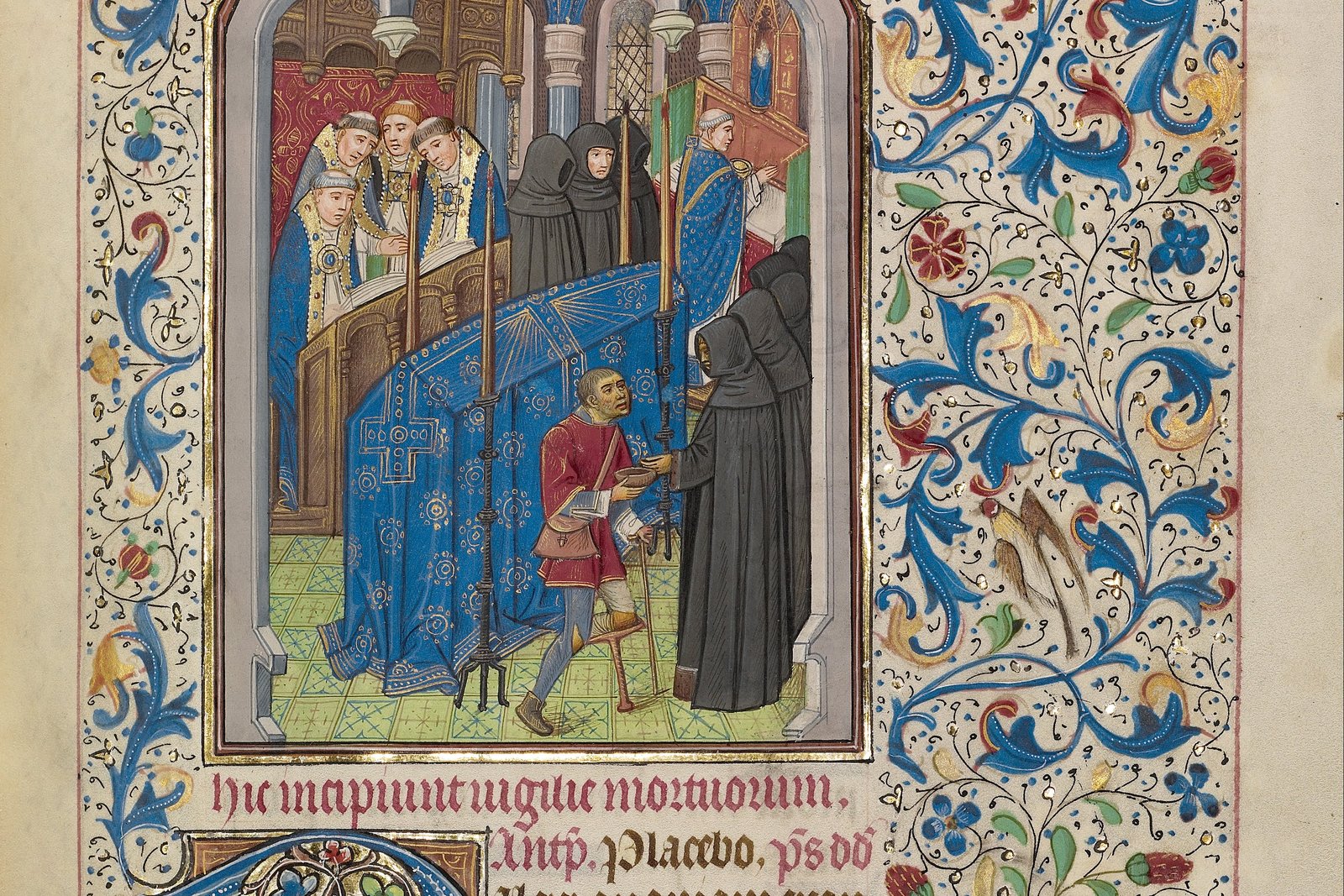
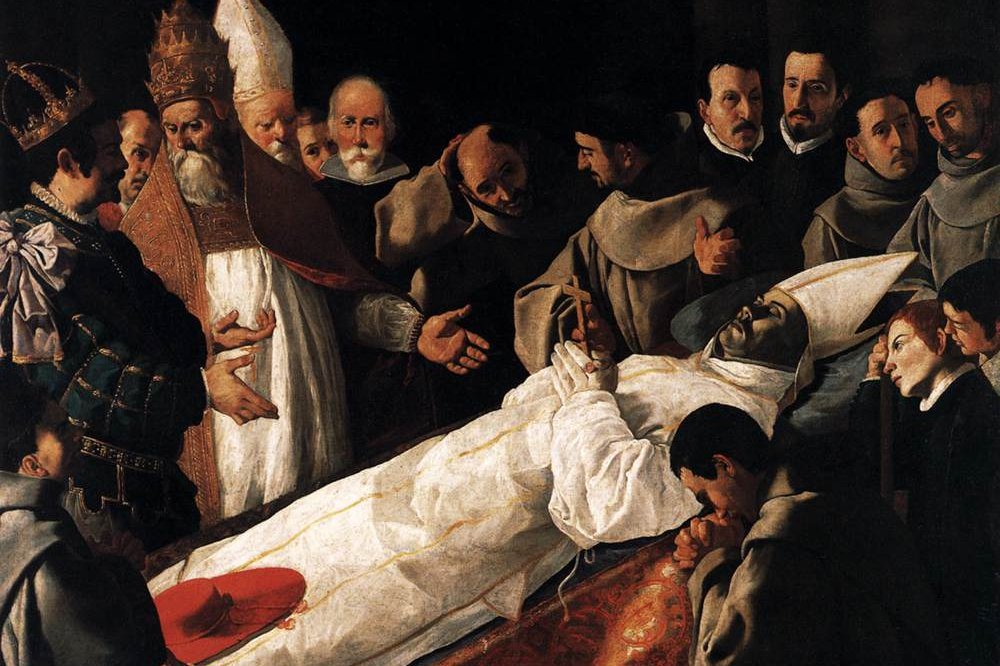
Willem Vrelant, Mass for the Dead (15th century), public domain via Wikimedia Commons
The vigil: gathering before the funeral
The vigil, often still called a wake, typically takes place the evening or day before the funeral Mass, at a funeral home, a church, or sometimes a family home. It functions as the more informal, personal stage of the three — an opportunity for family and friends to gather, offer condolences directly to those closest to the deceased, and pray together, often including Scripture readings, the Rosary, and personal remembrances or a eulogy. This is generally where more individual, informal storytelling about the deceased's life finds its place — the funeral Mass that follows tends to keep a more consistently liturgical focus.
The funeral Mass: the Church's central rite
The funeral Mass itself is the structural and theological center of the three stages, typically celebrated at a parish church. While families can personalize certain elements — choice of readings and music within the options the liturgy permits, for instance — the Mass follows the Church's own established funeral liturgy rather than a format built individually for each occasion. This isn't a limitation so much as a deliberate choice: the same rite that has accompanied countless other Catholics to burial accompanies this particular family too, situating one person's death within the Church's much larger, ongoing prayer for all the faithful departed.
Dress and other customary expectations
Dark, modest, and respectful clothing — traditionally black or other subdued tones — remains the general custom for attending a Catholic funeral, reflecting the solemnity the Church places on the occasion. That said, expectations have relaxed to varying degrees across different communities and families, and specific requests from the family (brighter colors reflecting a particular person's personality, for instance) are increasingly common and generally respected. There's no single rigid rule the Church enforces here — the custom of dark, restrained dress functions as a strong default rather than a binding requirement.
No mandated mourning period
Unlike some historical cultural traditions, which prescribed lengthy and highly structured periods of formal mourning — extended black clothing, restrictions on social activity lasting months or even years — the Catholic Church itself does not mandate any fixed period or specific ongoing set of practices for mourners following a funeral. What the Church does consistently encourage is continued prayer for the deceased, not as a time-limited obligation but as an ongoing practice, particularly through requesting Mass intentions offered specifically in the person's memory, often especially on the anniversary of their death. The Catechism frames this kind of ongoing intercession as something the Church "has [practiced] from the beginning," offering prayers "above all the Eucharistic sacrifice" on behalf of the dead (CCC 1032) — prayer that continues well past any funeral rite itself, without a formally designated end point.
Cremation, and the Church's current teaching
For much of its history the Church discouraged cremation, largely out of concern that the practice reflected a denial of the body's resurrection. That stance has shifted considerably: the Church now permits cremation, provided it isn't chosen as a statement denying Christian belief in the resurrection of the body. Current norms still express a preference for the body to be present for the funeral Mass when possible, with cremation following afterward, and they direct that cremated remains be treated with the same respect given a body — buried or entombed in a cemetery or columbarium rather than scattered, divided among family members, or kept at home indefinitely, since the remains of a baptized Christian are meant to rest in a sacred place set aside for the Christian dead.
Regional and cultural customs layered on top
The three-stage structure of vigil, Mass, and committal stays constant, but Catholic communities around the world have long layered their own cultural customs on top of it. Irish and Irish-American tradition is particularly associated with an extended wake, often lasting into the night, mixing solemn prayer with storytelling and even moments of levity in a way that can surprise outsiders unfamiliar with the custom. In the Philippines and parts of Latin America, a novena of Masses — nine consecutive days of prayer for the deceased — commonly follows the funeral itself, extending the Church's intercession well beyond the burial day. Mexican and other Latin American communities often connect ongoing remembrance of the dead to the Day of the Dead observances surrounding All Souls Day, visiting graves and offering prayers on that day each year. None of these customs replace the Church's own three-part rite — they build around it, giving local communities their own ways of carrying the same underlying prayer forward.
The committal: the final act
The rite of committal closes the three-stage structure, typically held at the cemetery or place of burial, where the body or cremated remains are formally laid to rest, accompanied by prayers entrusting the person to God's care. It's usually brief compared to the funeral Mass that precedes it, but it carries its own specific weight as the moment the family completes the physical act of burial the earlier stages have been building toward. Taken together, the vigil's gathering, the Mass's central liturgical act, and the committal's concluding burial give Catholic mourning a shape that doesn't rush grief, but doesn't leave it formless either — a structure built, ultimately, to hold both sorrow and the Church's hope in the resurrection within the same sequence of rites.
Trivia
What are the three parts of Catholic funeral rites?
What happens during the vigil, or wake?
What is customary to wear to a Catholic funeral?
Does the Catholic Church require a specific length of formal mourning, like wearing black for a set period?
What is the rite of committal?
Related Reading