Getting Married in the Church: What Catholic Marriage Preparation Looks Like

The first meeting isn't about the wedding
The initial appointment with a parish priest or deacon rarely opens with a discussion of dates or venues. It opens with questions about the relationship itself: how long the couple has known each other, whether they're free to marry (no prior undissolved marriage, no coercion, both entering freely), and what they each understand marriage to actually be. Canon law requires pastors to satisfy themselves, before agreeing to witness a marriage, that nothing stands in the way of a valid union and that both parties are properly prepared (canons 1063-1067). That's the real purpose of this first sit-down — it's a discernment conversation, not a booking call, even though it usually also produces the actual calendar date.
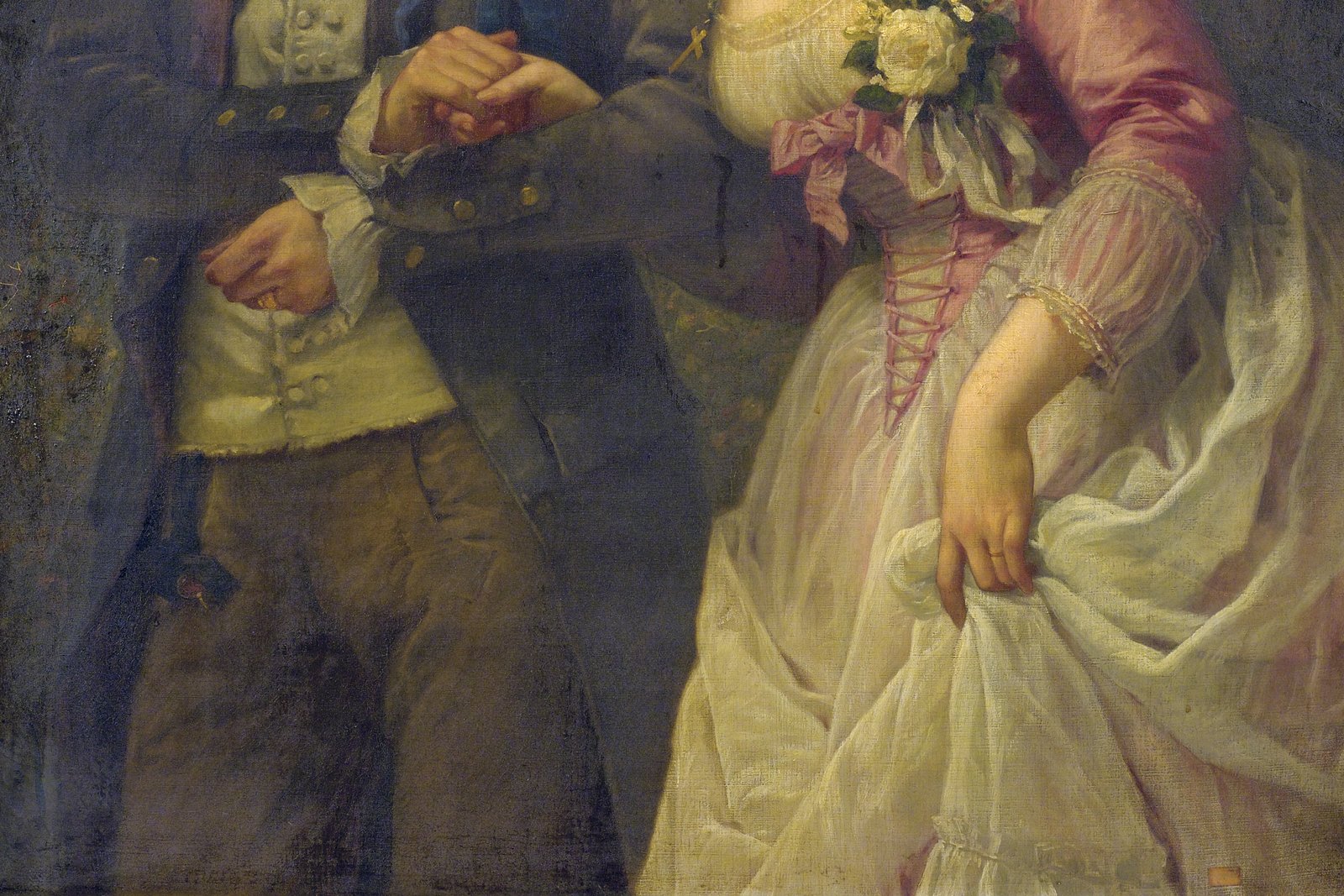
Charles Louis Muller, The Betrothed, by 1892 — public domain.
Pre-Cana: the required preparation program
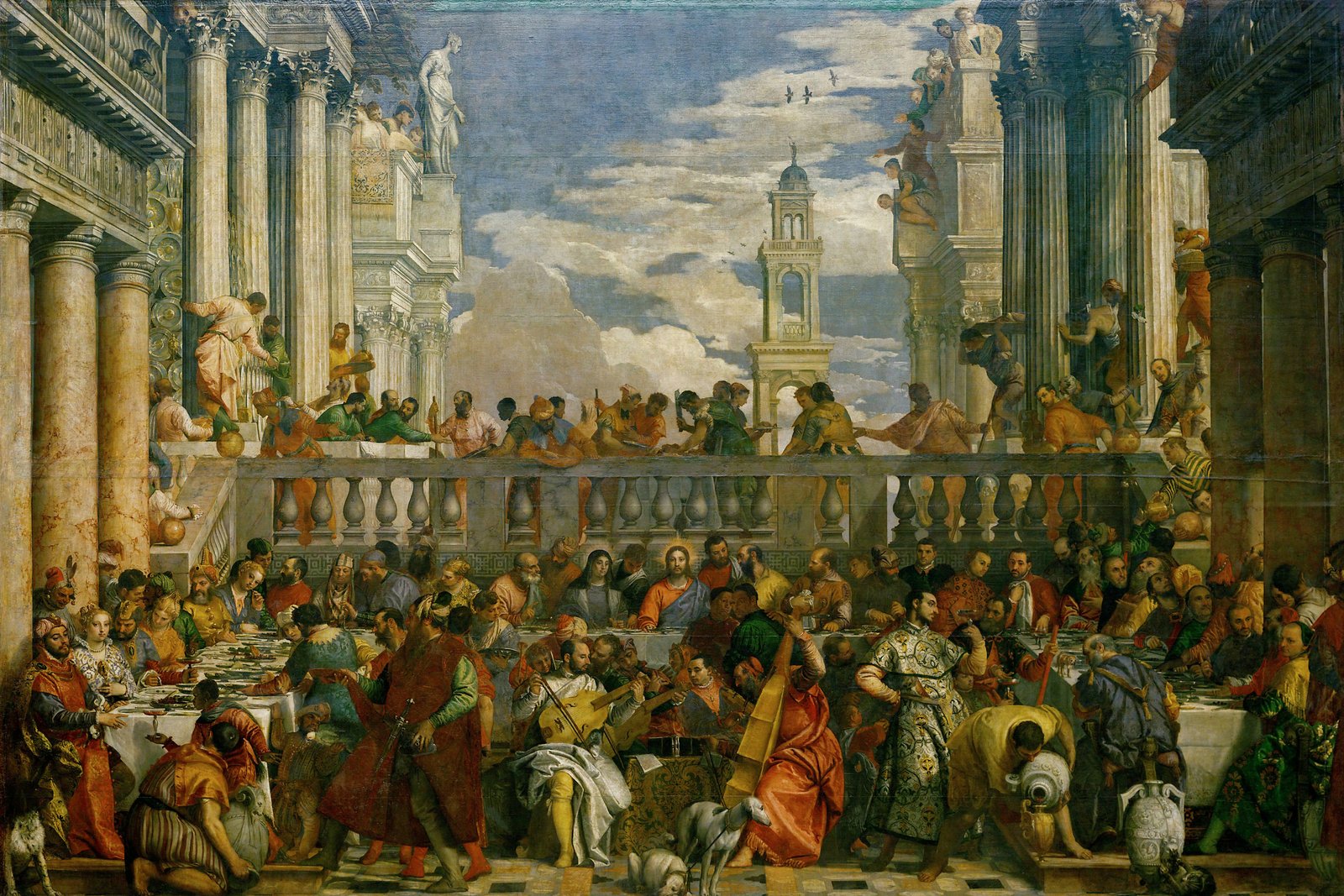
Every diocese requires some structured marriage preparation before a Catholic wedding, generally referred to under the umbrella term Pre-Cana — named for the wedding at Cana in Galilee, where the Gospel of John records Jesus performing his first public miracle. The format varies widely: some parishes run a single-day or weekend retreat, others use a series of evening sessions over several months, and many pair engaged couples with an experienced married "mentor couple" who walk through the material with them one-on-one.
The content usually covers communication and conflict resolution, financial habits and expectations, the Church's teaching on children and openness to life, sexuality within marriage, and the couple's shared vision of faith practice going forward. Many dioceses also use a structured relationship inventory — a standardized questionnaire a couple completes and then discusses with a priest, deacon, or mentor couple to surface areas of agreement and disagreement before the wedding rather than after.
The paperwork, realistically
Couples are often surprised by how much documentation a Catholic wedding requires compared to a civil one. The typical list includes:
- A recent baptismal certificate for each Catholic party, usually needed within about six months of the wedding date, since Catholic baptismal registers also note things like Confirmation and any prior marriage — the certificate has to be current enough to reflect the person's actual status.
- Confirmation documentation, since the Church, where reasonably possible, expects Catholics to be confirmed before marrying (canon 1065).
- Proof of freedom to marry — for anyone previously married, either a death certificate for a deceased former spouse or documentation that a prior marriage was annulled or otherwise recognized as invalid by the Church.
- A pre-nuptial questionnaire, an interview form the priest or deacon completes with each party separately, covering the same freedom-to-marry and intent questions canon law requires the pastor to verify.
Banns, permissions, and mixed marriages
In dioceses that still observe the practice, marriage banns are a public announcement — read at Sunday Mass or posted in the parish bulletin — naming the couple's intent to marry, so that anyone aware of a real impediment has an opportunity to raise it beforehand. This isn't universal; some dioceses have dropped the practice in favor of the paperwork review alone, so it's worth asking the parish directly rather than assuming.
For a Catholic marrying a baptized non-Catholic Christian, the local bishop grants routine permission for what's called a mixed marriage; marrying someone unbaptized requires a "dispensation from disparity of cult." Both are ordinary requests a parish priest processes as part of standard marriage prep, not obstacles that typically derail a wedding — but they do need to be requested with enough lead time.
Timeline, realistically
Most dioceses ask couples to begin the process at least six months before their intended date, and many recommend closer to a year, particularly if the couple wants a popular wedding season or a preparation program that only runs on a fixed schedule a few times a year. Rushing the paperwork and prep into the final weeks before a wedding is one of the more common sources of unnecessary stress for engaged Catholics — starting the parish conversation before booking a venue, rather than after, tends to save a lot of it.
Choosing the church and the date
A Catholic wedding is normally celebrated in the parish of the bride or groom, though many dioceses allow a couple to request permission to marry in a different parish, particularly if one party has a strong connection there. That permission is typically a formality the home parish grants in writing, but it's another step that needs lead time rather than a last-minute phone call. Some parishes also restrict weddings during certain liturgical seasons — Lent and Advent, in particular, are treated with a more subdued tone in many parishes, and some limit or discourage weddings during those weeks, though this varies by diocese and isn't a universal rule. It's worth asking early rather than assuming a preferred date is automatically available.
What happens after the paperwork clears
Once the file is complete — the questionnaires, the certificates, any needed dispensations — the parish schedules a final meeting closer to the date to review the wedding liturgy itself: choosing the readings, deciding whether the Mass will include the full Nuptial Mass with Communion or a wedding ceremony without Mass (common in mixed marriages or interfaith weddings), and confirming logistics like witnesses, music, and rehearsal timing. By the time a couple reaches this stage, the heavier lifting — the freedom-to-marry review, the required prep program, the paperwork — is already behind them, and what's left is closer to ordinary event planning.
None of this replaces the deeper theological reality of what the couple is entering into on the wedding day itself — that's a separate question from the practical steps of getting there. But the practical steps are real, they take real time, and knowing what's coming turns what can feel like bureaucratic surprise into a process a couple can walk through with some confidence.
Trivia
How far in advance does a Catholic couple need to start marriage preparation?
What is Pre-Cana and is it required?
What is a marriage banns announcement?
Can a Catholic marry someone who isn't Catholic in a Catholic wedding?
What paperwork does the Catholic Church require before a wedding?
Related Reading