The Divine Praises Prayer Explained

A response to something specific
The Divine Praises weren't composed as a general-purpose devotional prayer, written in the abstract for whoever might one day want to use it. They were written to answer a specific problem their author heard around him: casual blasphemy, holy names invoked carelessly or as curses in everyday speech. Luigi Felici, a Jesuit priest, composed the original Italian text in 1797 explicitly as an act of reparation — a way of making amends, through deliberate public blessing, for exactly the kind of irreverent speech he was responding to. The logic is direct: where a name had been dishonored, the prayer offers it honor instead, one acclamation at a time.
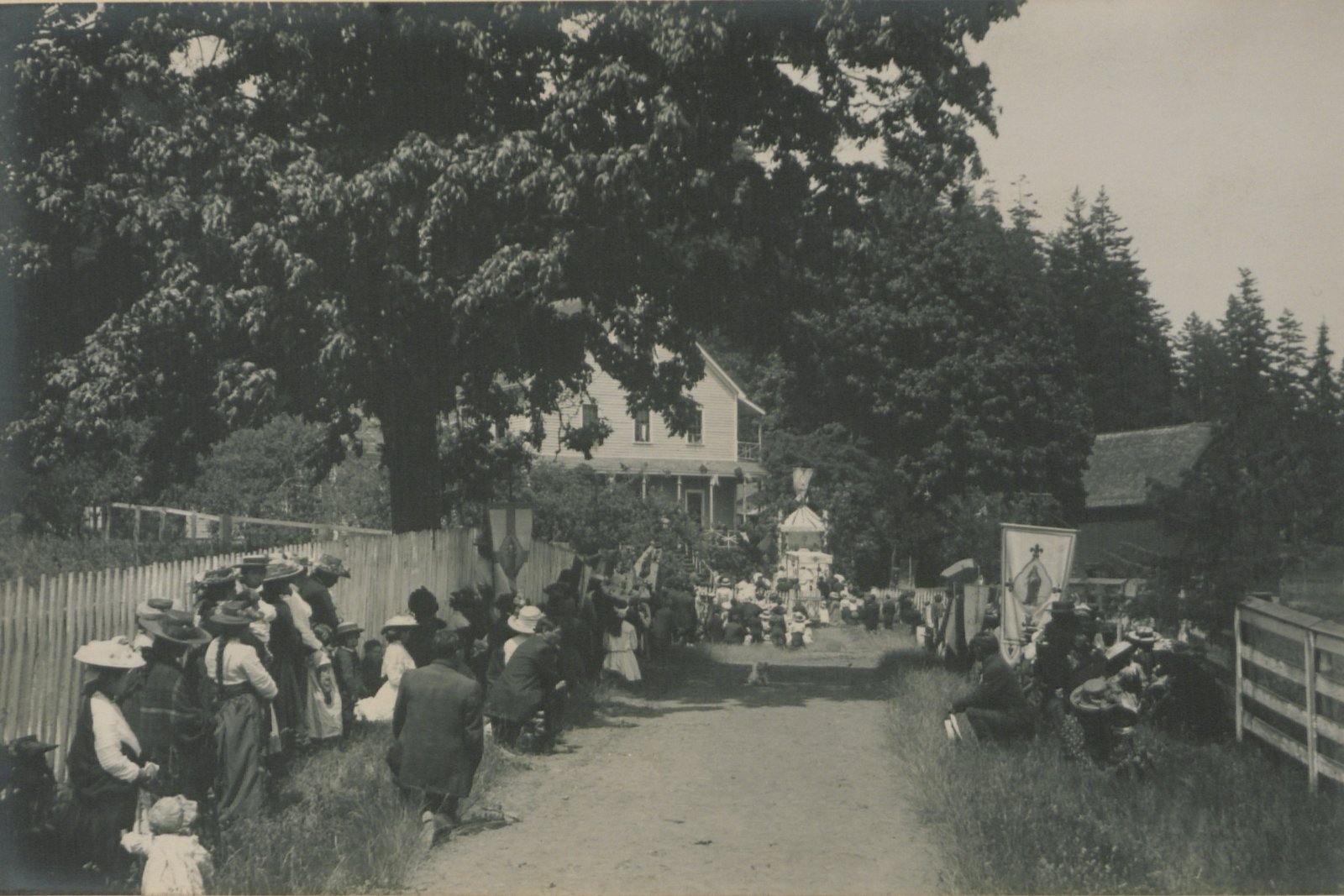
Benediction of the Blessed Sacrament, St Anne's Convent, Quamichan (1912), public domain via Wikimedia Commons
A prayer that grew, one pope at a time
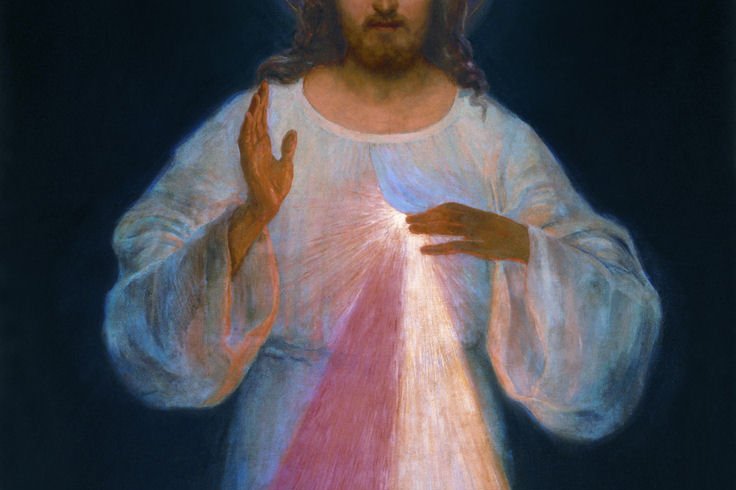
What makes the Divine Praises unusual among Catholic prayers is that their final, familiar form didn't arrive all at once with Father Felici's original composition. Instead, the list of acclamations grew steadily over more than a century and a half, with individual popes adding new lines one by one, each honoring a different aspect of Catholic faith. Pope Pius VII attached indulgences to the prayer's recitation in 1801, not long after its composition. From there, successive popes added new acclamations across nearly two centuries: Pius IX added a line honoring the Immaculate Conception in 1851; Leo XIII added one for the Sacred Heart in 1897; Benedict XV added Saint Joseph in 1920; Pius XII added the Assumption in 1952; John XXIII added the Precious Blood in 1960; and Paul VI added a line honoring the Holy Spirit as the Paraclete in 1964. Few prayers in regular Catholic use carry such a clearly documented, multi-generational history of papal additions, each one traceable to a specific pope and a specific year.
Tied to a specific liturgical moment
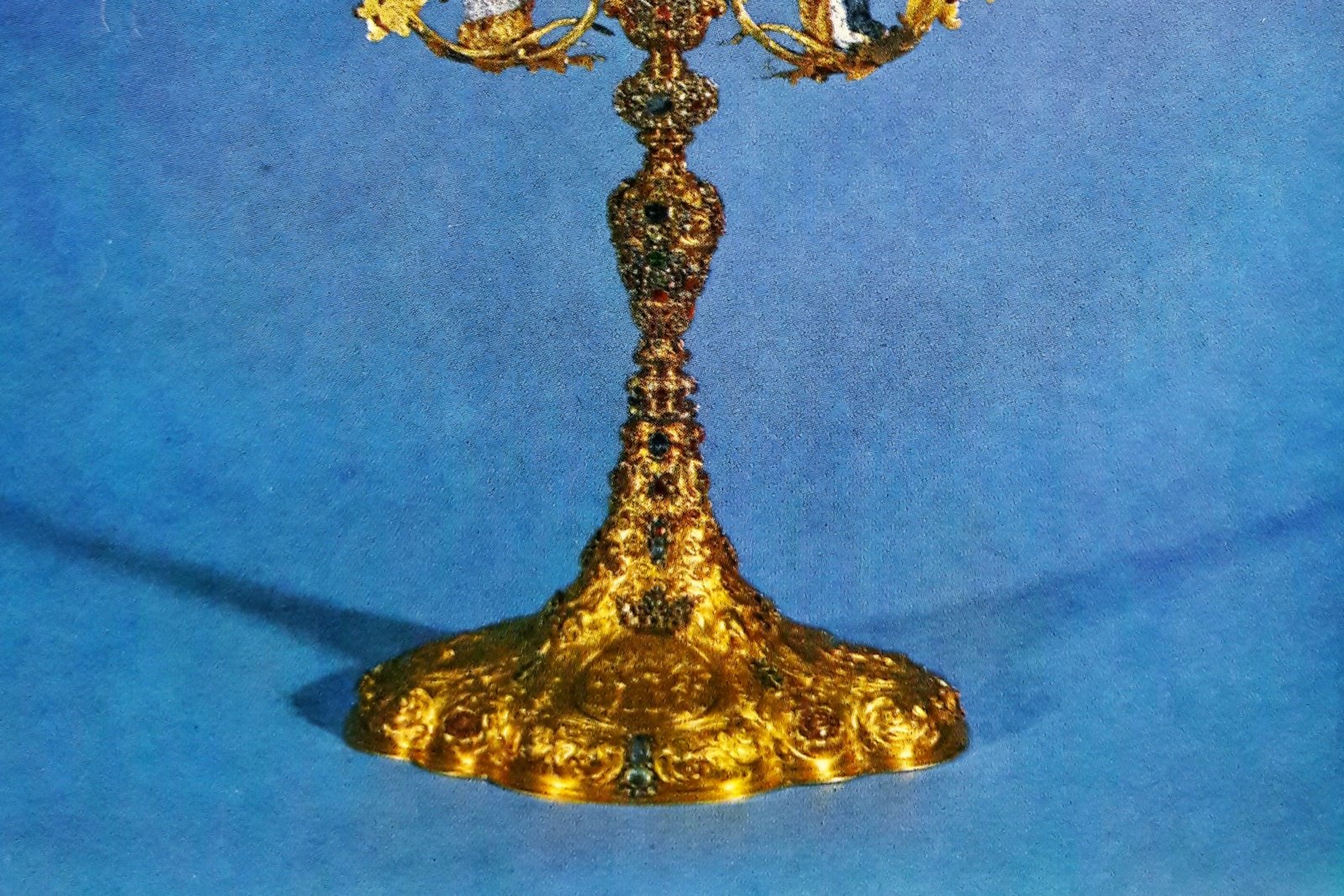
The Divine Praises are most commonly recited at one particular point in Catholic worship: the close of Benediction of the Blessed Sacrament, the rite that typically concludes a period of Eucharistic adoration. During Benediction, the consecrated Host is displayed in a monstrance and used to bless the assembled congregation; the Divine Praises are traditionally recited or sung immediately after that blessing is given, functioning as a kind of communal response — the congregation answering the blessing they've just received with a list of blessings offered back toward God, Christ, Mary, and the Church's other sacred realities in turn.
A structure built entirely on one repeated word
Read through the Divine Praises and the pattern is immediately obvious: nearly every line begins with the same word, "Blessed." Blessed be God. Blessed be his Holy Name. Blessed be Jesus Christ, true God and true man. Blessed be the name of Jesus. Blessed be his Most Sacred Heart. Blessed be his Most Precious Blood. And onward through Mary, Saint Joseph, and the other acclamations added across the centuries. Like several of the Church's other litany-style prayers, its power comes less from theological argument than from accumulation — a steady, repeated insistence on blessing, said aloud enough times that it becomes less a statement being made once and more a posture being adopted, held, and repeated.
Small words, deliberately chosen
There's something worth noticing in how modest the Divine Praises are as individual statements — each line is short, simple, almost plain. What gives the prayer its weight isn't complexity but persistence: eighteenth- century origins built specifically to answer casual disrespect, expanded deliberately by popes across nearly two hundred years, still recited today in parishes at the close of the same rite it was written to accompany. It's a prayer that has spent well over two centuries doing exactly what it set out to do from its very first Italian line in 1797 — answering carelessness with attention, one "Blessed be" at a time.
The full list of acclamations today
In its current, complete form, the Divine Praises move through a deliberate sequence: God, his Holy Name, Jesus Christ as true God and true man, the Name of Jesus, his Most Sacred Heart, his Most Precious Blood, Jesus in the Most Holy Sacrament of the Altar, the Holy Spirit the Paraclete, the great Mother of God Mary most holy, her Holy and Immaculate Conception, her Glorious Assumption, the name of Mary Virgin and Mother, Saint Joseph her most chaste spouse, and God in his angels and in his saints. Reciting the whole sequence takes well under a minute, but the order matters: it moves from the Trinity outward to Mary and then to Joseph, the angels, and the saints, mirroring the broader shape of Catholic devotion, which always honors creatures in relation to the God who made them holy rather than as independent objects of worship.
Part of a wider tradition of reparation
The Divine Praises belong to a broader devotional category in Catholic practice known as acts of reparation — prayers and practices offered specifically to make amends for sin, irreverence, or neglect shown toward God, rather than prayers of simple petition or thanksgiving. The First Friday devotion tied to the Sacred Heart of Jesus grew out of the same reparative impulse, as did many Eucharistic adoration practices more broadly. Father Felici's specific target, open blasphemy against God's name, was a common enough problem in eighteenth-century Italy that several religious orders of his era developed similar reparative prayers and confraternities dedicated to answering it, though none achieved the lasting, worldwide use the Divine Praises eventually did.
Beyond Benediction
While Benediction of the Blessed Sacrament remains the prayer's most traditional home, many Catholics also recite the Divine Praises privately, outside any formal liturgical setting — as a short act of devotion at the end of a Rosary, a personal prayer time, or a visit to a church for Eucharistic adoration outside a scheduled Benediction service. Its brevity makes it well suited to this kind of flexible use: unlike longer litanies, it can be prayed in under a minute, which is likely part of why it has remained in steady, ordinary use among Catholics worldwide even as other, longer devotional texts from the same centuries have faded from common memory.
Trivia
What are the Divine Praises?
Who wrote the Divine Praises, and why?
Has the text of the Divine Praises always been the same?
When are the Divine Praises typically recited?
Why does the prayer respond to blasphemy specifically with blessing?
Related Reading