The Christmas Novena: Nine Days of Prayer Before December 25

A custom born from shepherds walking into the city
Long before it was a printed prayer card, the Christmas Novena was a sound. In 18th-century Naples, shepherds from the hill country outside the city — the pastori and their bagpipe-playing counterparts, the zampognari — would walk into town during the nine days before Christmas and play before the household Nativity scenes, or presepi, that Neapolitan families set up every year. The music was meant to recall the shepherds of Bethlehem, summoned by angels to the manger, and the custom became so associated with the season that it eventually attached itself to a formal nine-day cycle of prayer: the Novena di Natale.
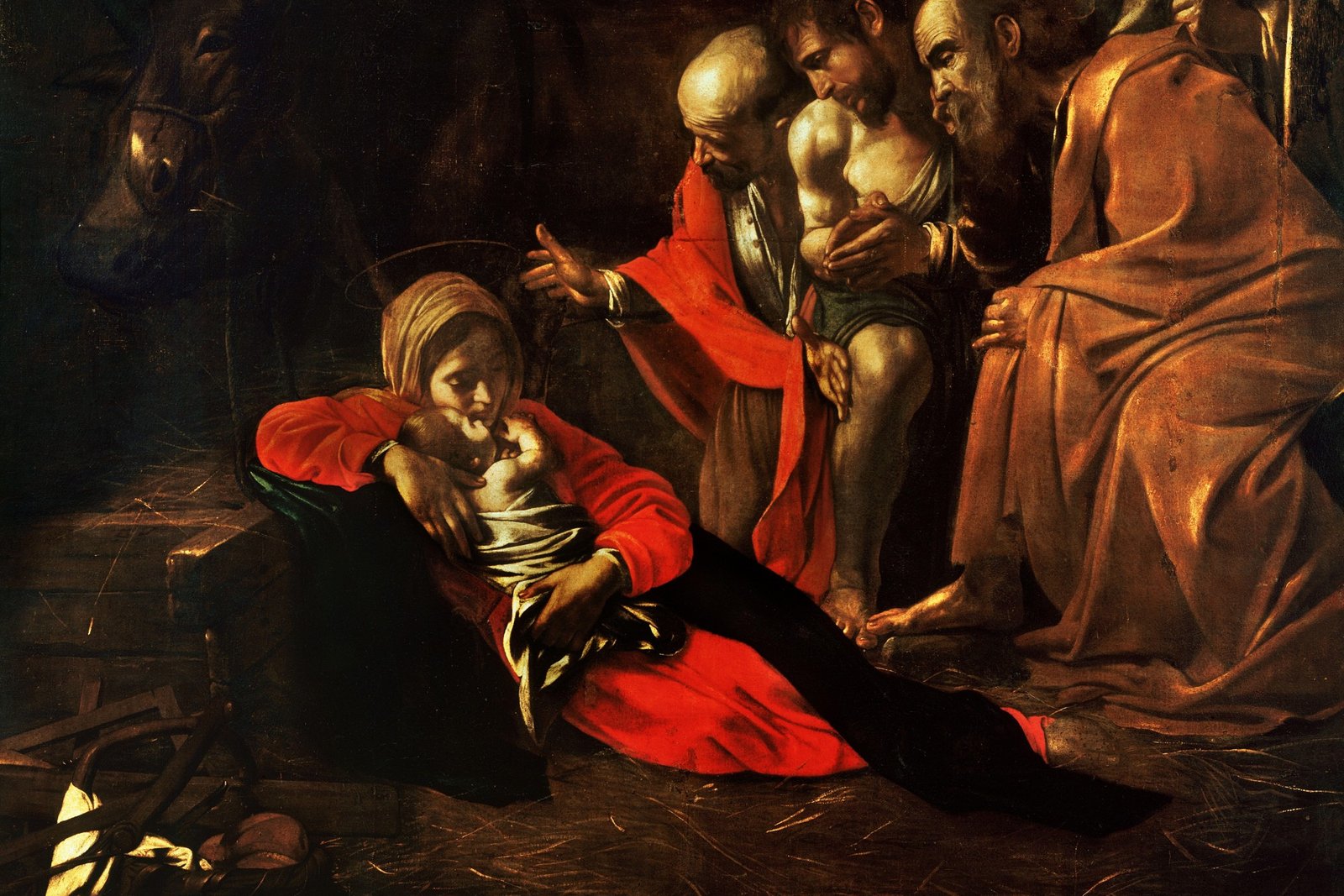
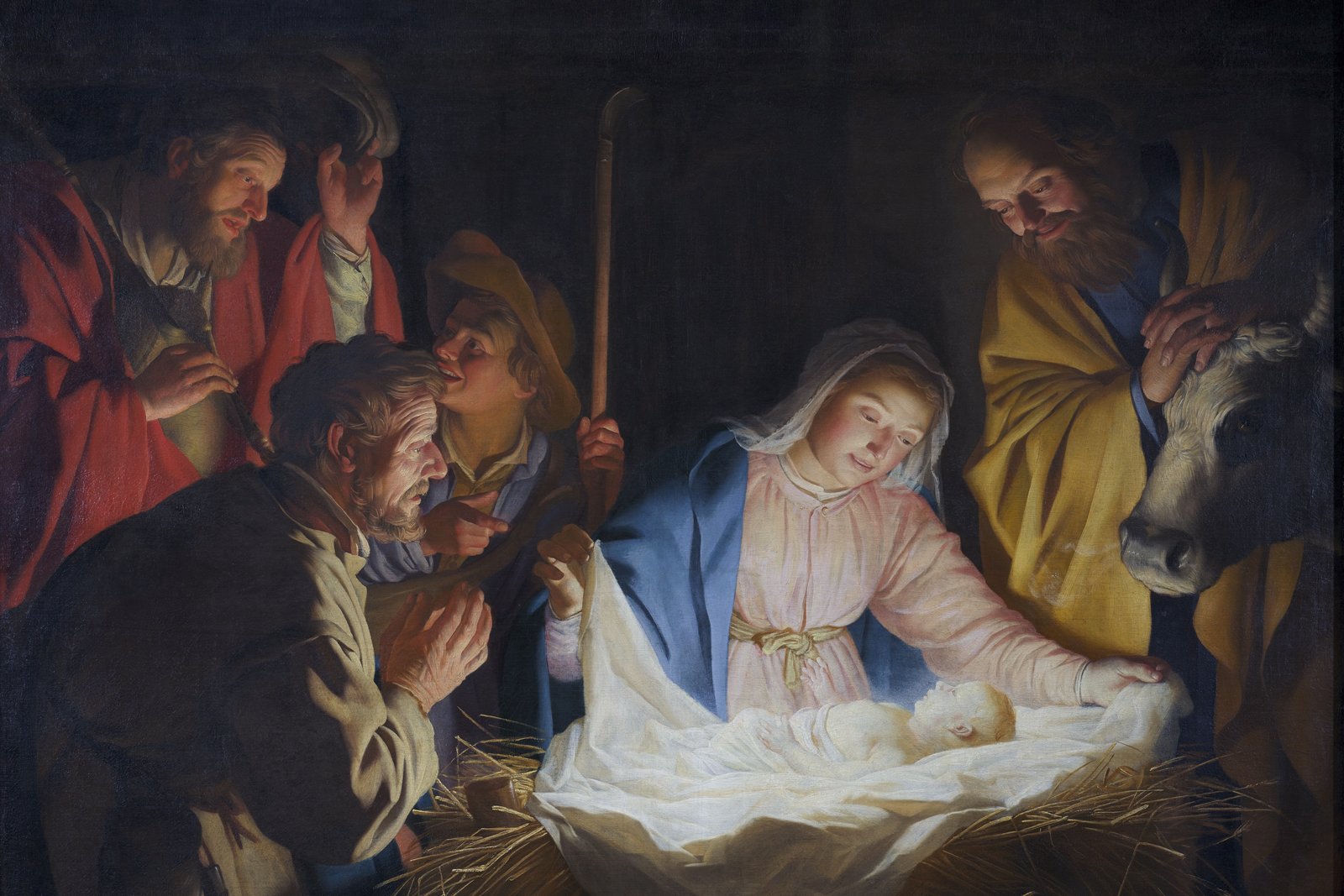
Caravaggio, Adoration of the Shepherds, 1609 — public domain.
That prayer cycle spread outward from Naples through Italy, and from there into Spain, Portugal, and eventually the Spanish- and Portuguese-speaking Catholic world, where the Christmas Novena remains especially popular today — prayed nightly in homes, sometimes with a different family member leading each night, often ending with carols sung around a Nativity scene rather than simply closed with "Amen." It is, unlike some devotions, not tied to a single saint or a single miracle. It is tied to a season, and to the specific nine days that Catholic tradition treats as a spiritual rehearsal for Bethlehem itself.
The nine days behind every novena
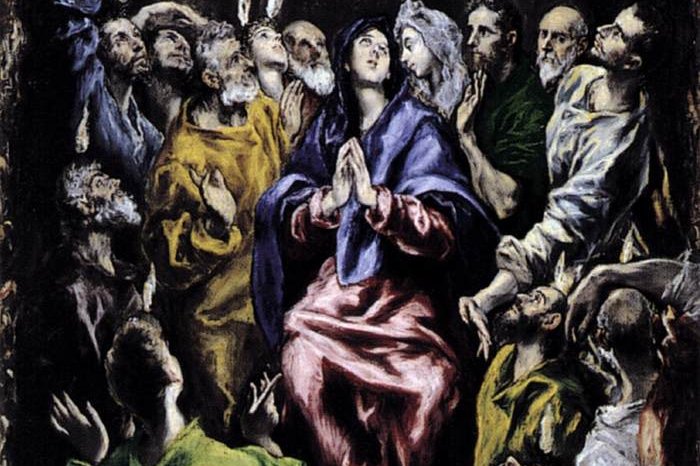
Every Catholic novena — this one included — descends from a single historical episode. After Christ's Ascension, the apostles and Mary returned to Jerusalem and, as the Acts of the Apostles records, "devoted themselves with one accord to prayer" for nine days while they waited for the Holy Spirit to descend at Pentecost (NABRE, Acts 1:14). That nine-day interval of expectant, sustained prayer became the template for every later Catholic novena, whatever the occasion. The Christmas Novena adapts that template to a different kind of waiting: not for the Spirit's descent, but for the Incarnation itself, the moment "the Word became flesh and made his dwelling among us" (NABRE, John 1:14). For the full history of how the nine-day pattern developed into the standard Catholic devotion it is today, see What Is a Novena?
Structurally, the Christmas Novena mirrors that first novena more closely than most: it, too, is a season of waiting that ends in an arrival. Where the apostles waited for the Spirit's fire, the faithful praying the Christmas Novena wait for a birth — and the nine days leading to December 25 are treated less as a countdown to a holiday and more as nine chances to walk, in prayer, alongside Mary and Joseph on the final leg of their journey to Bethlehem.
What the nine days actually cover
Traditional versions of the Christmas Novena walk through the events of the Nativity narrative roughly a day at a time, though the exact arrangement differs between printed texts. Common elements include meditations on the angel Gabriel's announcement to Mary, her visit to her cousin Elizabeth, Joseph's decision — after an angel's reassurance in a dream — not to divorce Mary quietly but to remain at her side, and finally the journey itself: "Joseph too went up from Galilee from the town of Nazareth to Judea, to the city of David called Bethlehem, because he was of the house and family of David, to be enrolled with Mary, his betrothed, who was with child" (NABRE, Luke 2:4-5).
Most versions close each day's meditation with a short prayer asking for the graces particular to the Nativity — humility, trust, simplicity, and above all a readiness to recognize God's arrival in circumstances that, on the surface, looked nothing like what anyone expected of him. The Gospel is blunt about how modest that arrival actually was: Mary "gave birth to her firstborn son. She wrapped him in swaddling clothes and laid him in a manger, because there was no room for them in the inn" (NABRE, Luke 2:7). Praying the novena is, in part, a nine-day exercise in sitting with that contrast — a king born where there was no room for him — rather than rushing past it toward the wrapped presents.
How it's prayed today
There's no single required format. Many families pray the Christmas Novena together after dinner each night from December 16 through Christmas Eve, often near their Nativity scene, reading a short daily meditation and a prayer, sometimes closing with a carol. Parishes in Latin America and the Philippines, where the devotion is especially strong, frequently build entire community traditions around it — the Philippine custom of Simbang Gabi, a series of pre-dawn Masses in the same nine-day window, developed alongside a similar devotional logic, though it is a distinct practice from the home-prayed novena itself.
Praying it alone works just as well as praying it with others; what matters, as with any novena, is the sustained daily return to the same prayer over the same nine days, rather than the size of the gathering. For a deeper look at what Advent itself asks of Catholics in this same season, including the liturgical structure the Church observes alongside popular devotions like this one, see Christmas Through Catholic Eyes.
Why the custom endures
Advent, as the Church observes it liturgically, is deliberately restrained — purple vestments, readings about watchfulness, a season built around waiting rather than celebrating. The Christmas Novena runs alongside that official season but adds something more intimate: a specific, repeatable ritual that families and individuals can shape to their own household, night after night, in the run-up to a feast that can otherwise get swallowed by errands and wrapping paper.
That may be the simplest explanation for why a devotion born among Neapolitan shepherds three centuries ago is still prayed today, in languages and countries far from where it started. It doesn't ask for elaborate ritual or theological sophistication — only nine consecutive nights of attention, aimed at the same event the whole season is actually about: a birth that, according to the Gospel of John, meant God himself had "made his dwelling among us" (John 1:14, NABRE), not distantly, but in the middle of an ordinary, overcrowded little town.
Trivia
What is the Christmas Novena, and when is it prayed?
Is the Christmas Novena the same thing as Advent?
Where did the Christmas Novena come from?
Why nine days specifically, and not some other number?
Is there an official Church text for the Christmas Novena?
Related Reading