The Divine Mercy Novena: Nine Days Before Divine Mercy Sunday

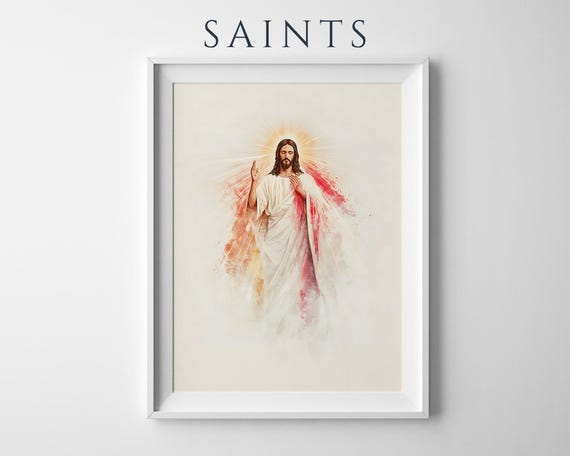
A novena Christ reportedly requested himself
Nearly every Catholic novena developed over centuries of popular devotion, gradually attached to a particular saint or feast by tradition. The Divine Mercy Novena has a different origin story. Saint Faustina Kowalska, a Polish nun with only three years of formal schooling, recorded in her diary that Christ appeared to her and dictated the novena directly, intention by intention, over nine consecutive entries — the fullest single account of the prayer's origin in the entire devotion. "I desire that during these nine days you bring souls to the fountain of My mercy, that they may draw therefrom strength and refreshment and whatever grace they have need of in the hardships of life, and especially at the hour of death," Faustina recorded Christ telling her (Diary, 1209).
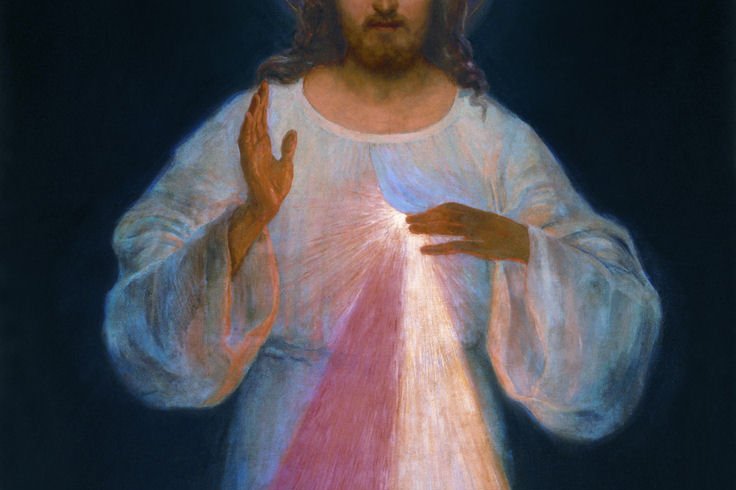
Eugeniusz Kazimirowski, Divine Mercy, 1934, Divine Mercy Sanctuary, Vilnius — public domain.
That claim belongs to the category of private revelation — a real and approved part of Catholic devotional life, but distinct from the public revelation contained in Scripture and Tradition, which the Church teaches closed with the death of the last apostle (CCC 67). No Catholic is required to believe Faustina's visions occurred exactly as she described them; the Church's approval of the Divine Mercy devotion means it found nothing in it contrary to the faith, not that it has certified every private detail as historical fact. For Faustina's full story, see Saint Faustina Kowalska, and for the image connected to the same visions, see The Divine Mercy (Jesus).
When it's prayed
The novena occupies a very specific nine days: it begins on Good Friday and runs through the Saturday before Divine Mercy Sunday, which the Church observes on the Sunday after Easter. That placement isn't incidental — it means the novena unfolds across the most solemn stretch of the entire liturgical year, spanning the Easter Triduum (the three days from Holy Thursday evening through Easter Sunday) and continuing into the early days of the Easter octave. Praying it means holding the Passion and the Resurrection in mind at the same time as the nine specific groups of souls it names each day.
Divine Mercy Sunday itself was established as a feast for the universal Church by Pope John Paul II at Faustina's canonization in 2000, though devotion to the "Hour of Great Mercy" — three o'clock in the afternoon, the hour Faustina associated with Christ's death — and to the Chaplet of Divine Mercy had already spread widely before that formal recognition.
The daily prayer: the Chaplet, with a changing intention
Each day of the novena uses the same core prayer — the Chaplet of Divine Mercy, prayed on ordinary rosary beads — but adds a specific intention that changes from day to day. The Chaplet itself opens with an Our Father, a Hail Mary, and the Apostles' Creed, then moves into its distinctive repeated prayers: "Eternal Father, I offer You the Body and Blood, Soul and Divinity of Your dearly beloved Son, our Lord Jesus Christ, in atonement for our sins and those of the whole world" on the large beads, and "For the sake of His sorrowful Passion, have mercy on us and on the whole world" on the small beads, repeated ten times per decade. It closes with the acclamation "Holy God, Holy Mighty One, Holy Immortal One, have mercy on us and on the whole world," prayed three times.
Before praying the Chaplet each day, the person praying the novena holds in mind the intention assigned to that day — praying, in effect, on behalf of a specific group of people rather than a general request. This structure sets the Divine Mercy Novena apart from most others: it isn't nine repetitions of one plea, but nine different acts of intercession building toward a single feast.
The nine intentions, day by day
According to Faustina's diary, Christ gave her these nine groups of souls, one for each day of the novena, in this order:
- All mankind, especially sinners — a request for mercy on everyone, with particular attention to those furthest from God.
- The souls of priests and religious — those consecrated to Church ministry and religious life.
- All devout and faithful souls — the ordinary faithful who practice their faith consistently.
- Those who do not believe in God, and those who do not yet know Jesus — a day explicitly framed around unbelief and unfamiliarity with Christ, not condemnation of either.
- The souls who have separated themselves from the Church — a category traditionally understood to include both lapsed Catholics and Christians of other traditions.
- The meek and humble souls, and the souls of little children — paired together in the original text, honoring both childlike simplicity and literal children.
- The souls who especially venerate and glorify God's mercy — those already devoted to this particular devotion.
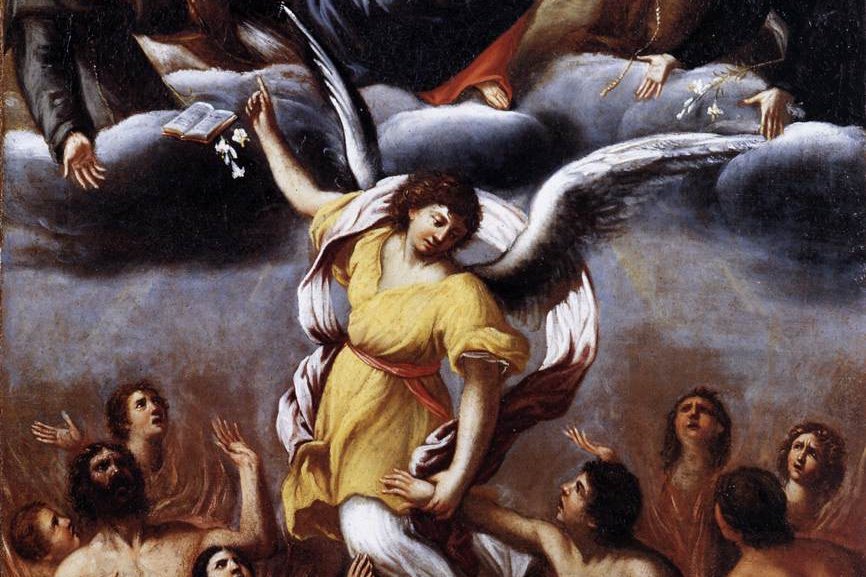
- The souls detained in purgatory — connecting the novena directly to the Church's teaching on prayer for the dead; see Novena for the Souls in Purgatory for a novena devoted entirely to that intention.
- Souls who have become lukewarm — those who still practice the faith outwardly but have lost fervor, a category Faustina's diary describes Christ as grieving over more than open unbelief.
Praying through all nine in sequence means the novena widens outward and then narrows back in: from all humanity, to specific vocations and states of soul, and finally to two categories — the dead in purgatory and the spiritually tired — that receive comparatively little dedicated prayer elsewhere in ordinary devotional life.
A prayer built for the hardest week of the year
What makes the Divine Mercy Novena distinctive isn't just its origin story but its timing. Most nine-day prayers can be started whenever a need arises; this one is anchored to Good Friday, meaning it's prayed specifically while the Church is remembering Christ's death and then celebrating his rising. Faustina's diary frames mercy not as a soft sentiment layered on top of that story, but as its whole point — nine days of praying for nine different kinds of need, ending on the Sunday the Church set aside specifically to proclaim that no one is outside the reach of it.
Trivia
When is the Divine Mercy Novena prayed?
What is the difference between the Divine Mercy Novena and the Chaplet of Divine Mercy?
Who asked Saint Faustina to pray this novena?
What are the nine daily intentions of the Divine Mercy Novena?
Can the novena be prayed at a different time of year, not just before Easter?
Related Reading