The Feast of Corpus Christi: History and the Eucharistic Procession

A vision that took decades to become a feast
Juliana of Liège first reported her recurring vision — a bright full moon marred by one dark band — around 1209, and she came to interpret it as a message that the liturgical year, for all its richness, still lacked one thing: a feast dedicated specifically to the Eucharist itself, distinct from its place within Holy Thursday and the Easter Triduum. Juliana spent years advocating quietly for such a feast, first introducing it locally in the Diocese of Liège in 1246, well before it gained any wider recognition.
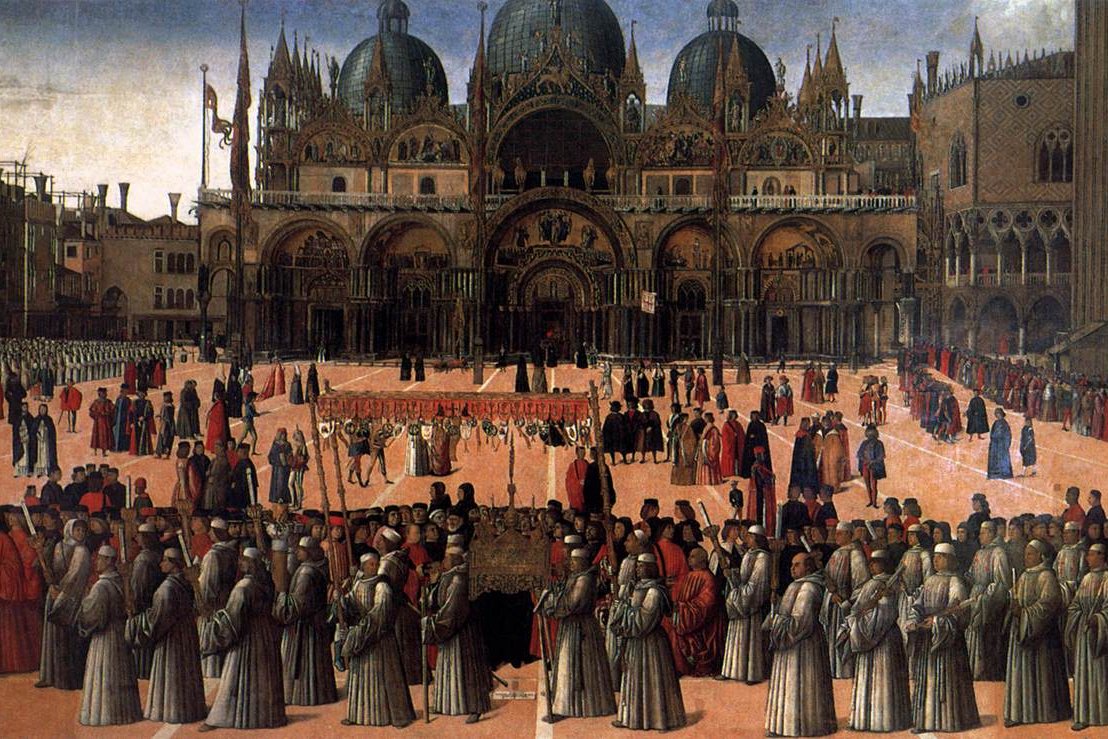
Gentile Bellini, Procession in Piazza San Marco, 1496, Gallerie dell'Accademia, Venice — public domain, Wikimedia Commons.
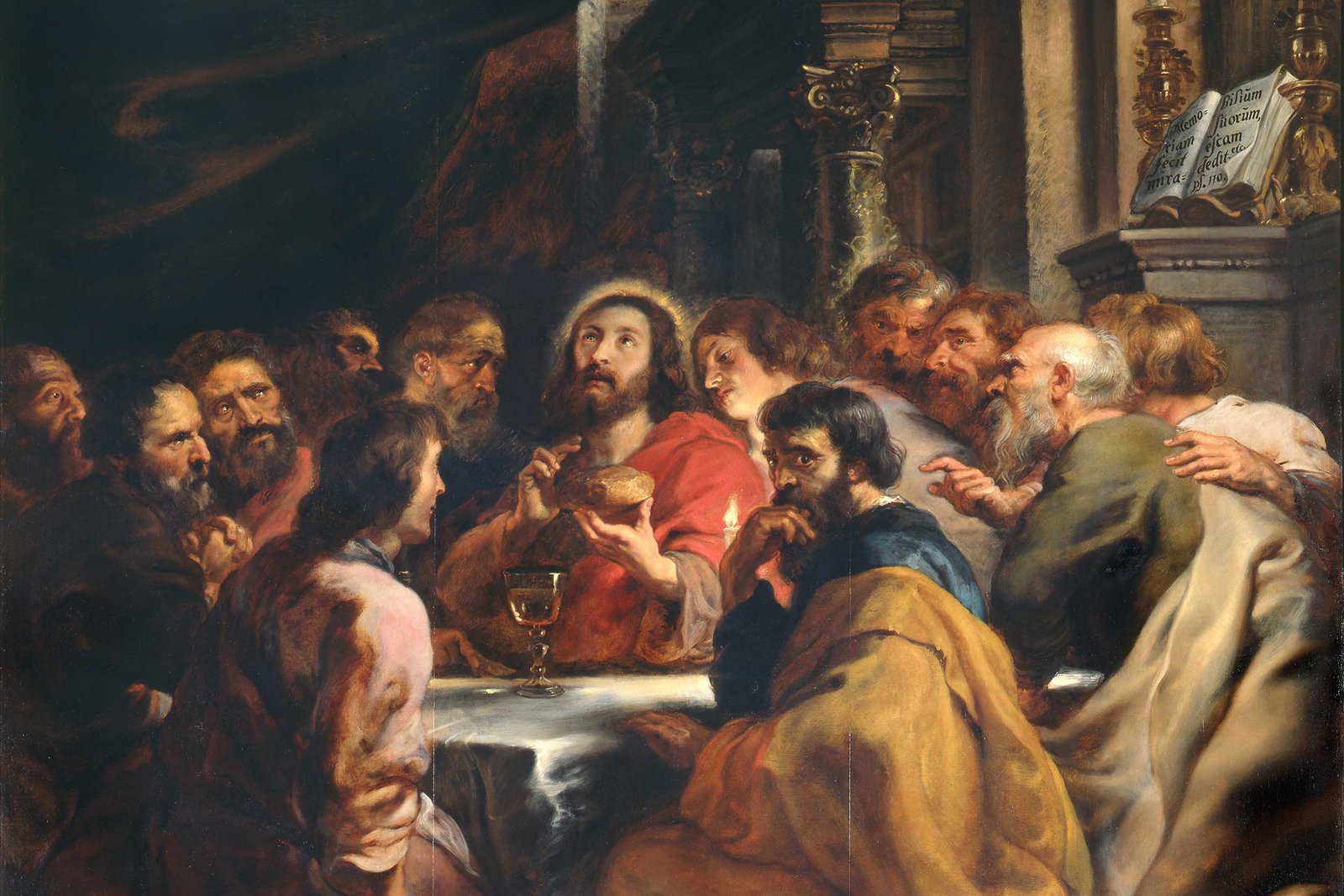
It took a separate, dramatic event to push the idea toward universal adoption. In 1263, tradition holds, a priest traveling through Bolsena, Italy, who harbored private doubts about Christ's real presence in the consecrated host, witnessed the host begin to bleed during Mass, staining the altar cloth beneath it. Pope Urban IV, reportedly moved by this reported miracle, formally established Corpus Christi as a feast for the entire Church the following year, in 1264 — decades after Juliana's original vision, but directly building on the local feast she had first championed.
Thomas Aquinas writes the liturgy
Urban IV didn't simply declare the feast into existence; he commissioned one of the era's greatest theologians, Saint Thomas Aquinas, to compose its liturgical texts. Aquinas produced an entire Office of Corpus Christi, including hymns that remain in active use across the Catholic world today: Pange Lingua Gloriosi, whose final two verses form the Tantum Ergo sung at Eucharistic adoration, along with Adoro Te Devote and Lauda Sion. These texts fused careful theological precision about the Eucharist's real presence with genuinely lyrical, singable poetry, and their survival across seven centuries of liturgical change is a testament to how well Aquinas balanced the two.
Why a procession, specifically
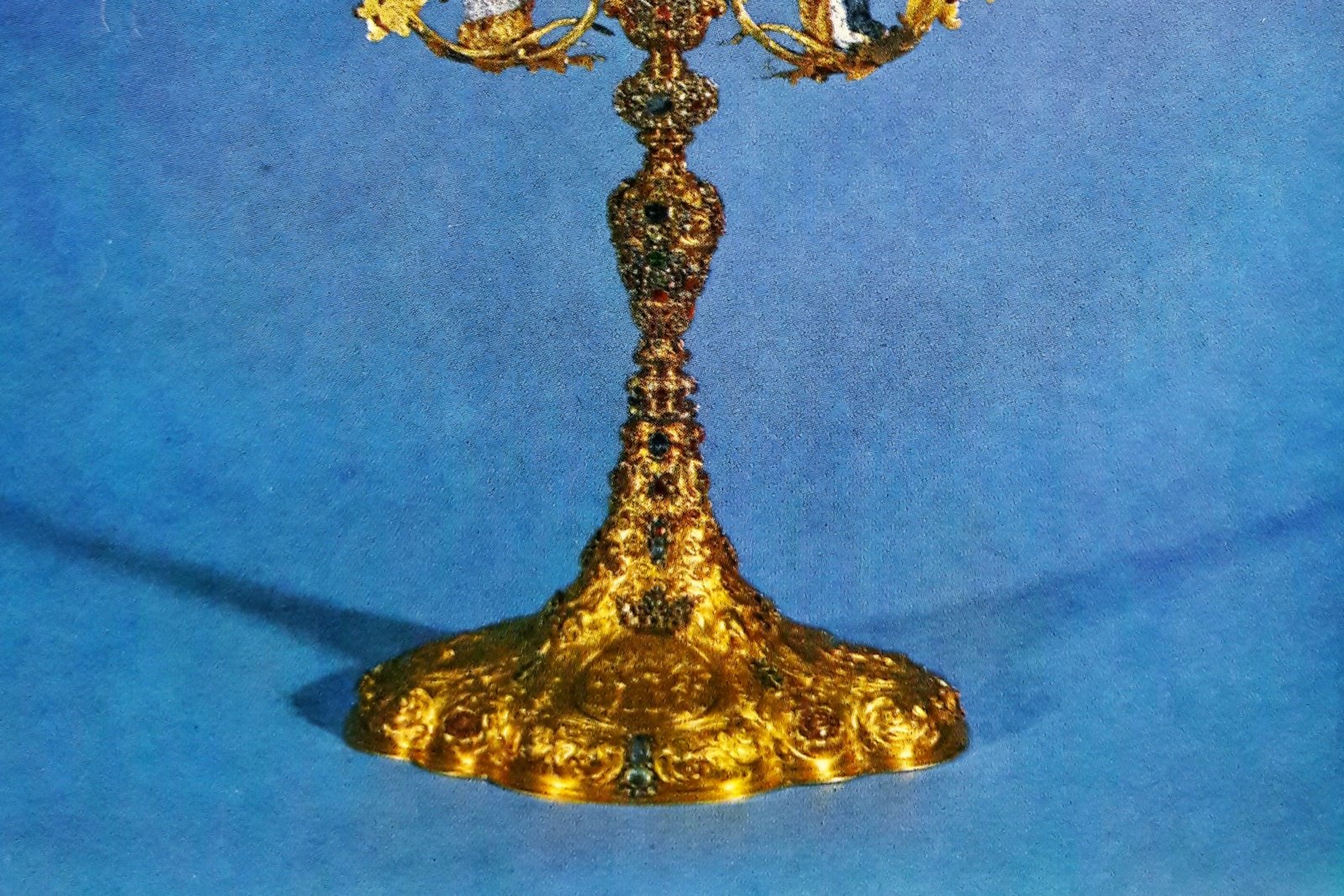
What sets Corpus Christi apart from most other feasts is its central public gesture: a formal procession in which a consecrated host, held in a vessel called a monstrance, is carried through the streets beneath a canopy, typically accompanied by clergy, altar servers, choirs, and lay faithful walking together. The practice developed because a feast built around belief in Christ's real presence called, almost naturally, for a public expression that carried that belief physically beyond the church walls and into ordinary civic space — streets, squares, and neighborhoods that otherwise saw no explicitly religious use.
Gentile Bellini's 1496 painting Procession in Piazza San Marco captures exactly this kind of scene in Venice: a vast crowd gathered in the city's main square as clergy carry a canopied procession across the pavement, watched by hundreds of onlookers from windows and balconies above. Though Bellini's painting depicts a broader civic Eucharistic procession rather than Corpus Christi specifically, it shows precisely the scale and public character these processions were meant to have — turning an ordinary piece of city into, briefly, an extension of the church itself.
A feast that still moves through the street
In many countries, especially those with strong Catholic historical traditions, Corpus Christi processions remain elaborate civic events, with flower-petal carpets laid along procession routes, temporary outdoor altars, and entire neighborhoods participating in ways that go well beyond typical Sunday Mass attendance. In places where public religious processions are less common or logistically difficult, parishes often mark the feast with a shorter procession within or immediately around the church building, followed by a period of adoration.
Either way, the underlying gesture stays the same as it was in Bellini's Venice or in the towns of Juliana of Liège's own century: taking something ordinarily reserved for the altar and carrying it, visibly and deliberately, into the middle of everyday life — which is, in the end, close to the whole point of the feast Juliana first glimpsed in a recurring dream about an incomplete moon.
The theology behind the procession
Corpus Christi exists to make visible, in public and physical form, a belief the Catechism of the Catholic Church states directly: that Christ is truly, really, and substantially present in the consecrated bread and wine, a teaching the Church calls transubstantiation (CCC 1374-1377). The feast doesn't introduce new doctrine; it gives an already-central belief its own dedicated day and its own public gesture, distinct from how that same belief is affirmed quietly at every Mass. Carrying the monstrance through the street is, in a sense, a visible argument for an invisible claim — treating the host with the same outward reverence a king or queen might once have received in a royal procession, because the Church teaches that what's held inside the monstrance is, in fact, greater.
Fixed to the calendar through Trinity Sunday
Corpus Christi's date is deliberately tied to two feasts that precede it: it falls on the Thursday after Trinity Sunday, which itself falls the Sunday after Pentecost — in most countries today, Corpus Christi is instead transferred to the following Sunday for pastoral convenience, so more of the faithful can take part in its Mass and procession. That placement, roughly two months after Easter, situates Corpus Christi near the end of the great cycle of major feasts that begins with Ash Wednesday and runs through Pentecost, functioning almost as a capstone: after moving through Christ's passion, resurrection, ascension, and the descent of the Holy Spirit, the Church turns to celebrate the sacrament that keeps Christ's presence among his people in the ordinary time that follows.
Regional names and traditions
The feast goes by different names and takes distinctive local shape across the Catholic world. In German-speaking countries it's called Fronleichnam, marked by elaborate processions through decorated town streets, often with four outdoor altars set up at the cardinal points of a town for stops along the route. In Spain, the city of Toledo holds one of the most historically significant Corpus Christi processions anywhere, centered on a massive 15th-century gold monstrance carried through streets draped in tapestries. In parts of Italy, and in some Latin American countries carrying on traditions brought by Spanish and Italian missionaries, communities create an infiorata — an elaborate carpet of flower petals, sometimes arranged into detailed religious images, laid down along the procession route only to be walked over by the very procession it was made for, a deliberate act of beauty offered up and then let go.
An octave once kept, now mostly set aside
Historically, Corpus Christi carried its own liturgical octave — eight full days of related celebration following the feast itself, a mark of unusual solemnity once shared only by a handful of occasions such as Easter and Pentecost. The 1969 reform of the liturgical calendar removed most octaves outside of Easter and Christmas, and Corpus Christi's dedicated eight-day observance faded from the ordinary calendar as a result, though the feast itself, and its procession, remain fully intact — a reminder that how a feast is celebrated can shift over centuries even while the belief it celebrates stays exactly the same.
Trivia
What is the Feast of Corpus Christi?
Who established the Feast of Corpus Christi?
What is the Eucharistic Miracle of Bolsena?
Why does Corpus Christi involve a public procession?
How is Saint Thomas Aquinas connected to Corpus Christi?
Related Reading