Preparing Spiritually Before Mass

Why the minutes before Mass matter at all
The Catechism describes the Eucharist as "the source and summit of the Christian life" (CCC 1324) — not one devotional option among many, but the center the rest of Catholic life is meant to orbit. That's a large claim for something that, on an ordinary Sunday, can pass by almost unnoticed if the mind arrives distracted and leaves the same way. The Second Vatican Council's Sacrosanctum Concilium pushed hard against exactly this drift, teaching that the faithful should take part in the liturgy "fully, consciously, and actively" rather than attending, in the document's own sharper phrase, "as strangers or silent spectators." None of that participation starts at the opening hymn. It starts, realistically, with what a person does in the twenty minutes before.
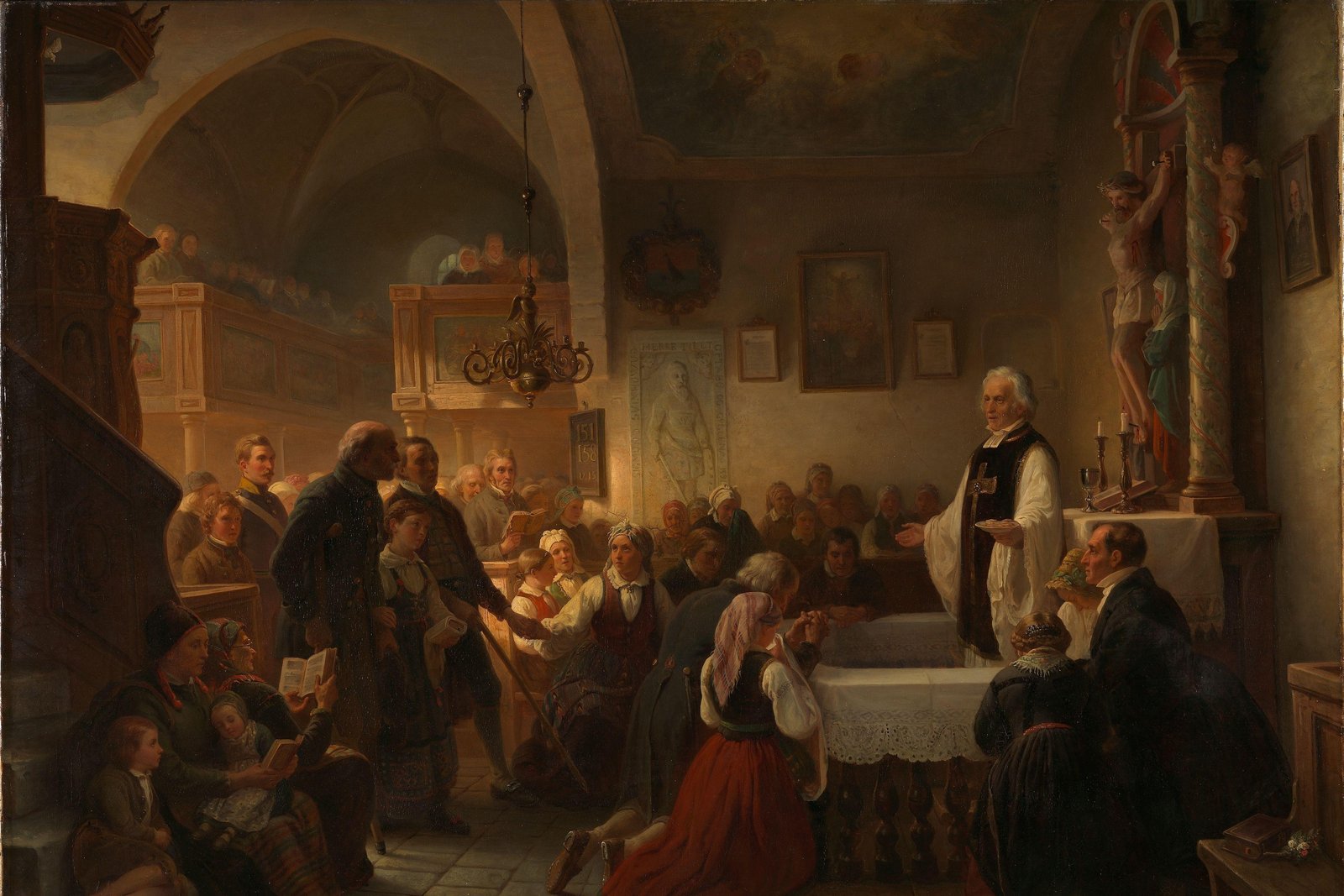
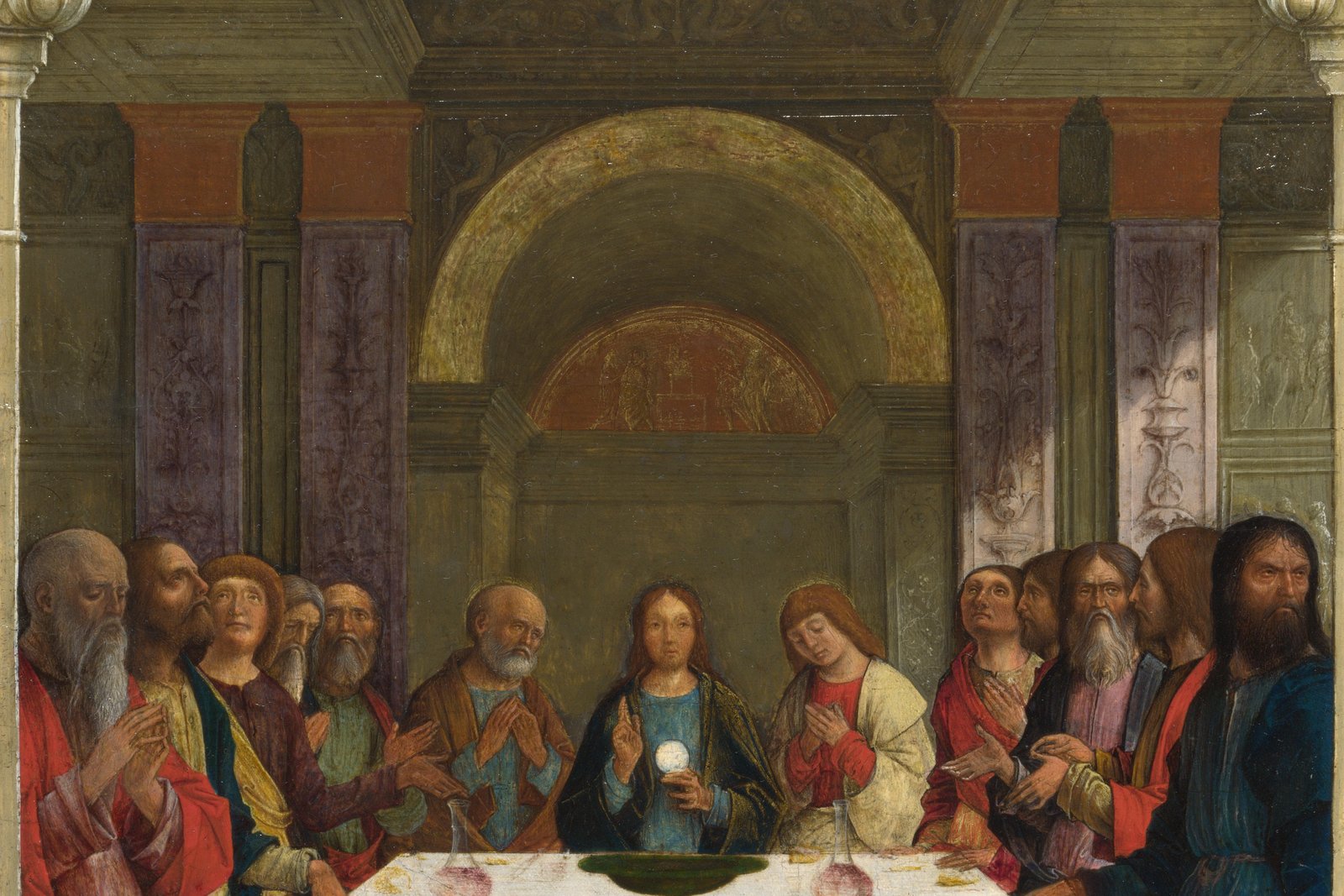
19th-century painting of a church communion service — public domain.
Arrive with time to actually arrive
Rushing in as the entrance hymn starts means spending the first several minutes of Mass still catching your breath — physically and mentally — rather than praying. Arriving ten to fifteen minutes early isn't a liturgical requirement, just a practical habit: enough time to find a seat, quiet down, and spend a few genuinely still minutes in prayer before anything begins. Many parishes have a low hum of quiet before Mass precisely because enough people have made this same choice; it's a habit that reinforces itself once several people in a pew are doing it together.
Those few early minutes are also a natural place for a short examination of conscience — not the more structured review that precedes Confession, but a brief, honest pause: where did this week go well or badly, what needs to be set down before receiving Communion. The Catechism teaches that anyone aware of having committed a mortal sin should seek Confession before receiving the Eucharist (CCC 1385, 1457), but for the ordinary, smaller faults of daily life, a genuine interior act of contrition in these quiet pre-Mass minutes is a longstanding and sufficient practice, not a shortcut around anything the Church actually requires.
Know what's coming: look up the readings
One of the simplest, most underused preparations is reading the day's Scripture passages beforehand. The USCCB publishes the full set of daily and Sunday readings, free and searchable by date, at usccb.org/bible/readings. Spending even five minutes with the Gospel passage before Mass changes the experience of hearing it read aloud — instead of processing unfamiliar text and a homily built on it simultaneously, in real time, the listener already has a foothold and can focus on what the priest is actually saying about it. For anyone who finds their mind wandering during the readings most Sundays, this single change tends to help more than almost anything else on this list.
Understanding the shape of what's about to happen
The Mass follows a consistent structure — the Introductory Rites, the Liturgy of the Word, the Liturgy of the Eucharist, and the Concluding Rites — and the Catechism walks through this movement in detail (CCC 1345-1355), tracing it back to descriptions of Christian worship as early as the second century. Knowing roughly what's coming and why — that the readings build toward the Gospel and homily, that the offertory leads into the eucharistic prayer, that the whole liturgy culminates in Communion — makes each part legible rather than a sequence of motions to imitate. This is not advanced theological study; even a basic sense of the arc, built up gradually over a few months of paying closer attention, changes how present a person can be for what's happening.
The disposition the Church actually asks for
"Full, conscious, and active participation," the phrase Vatican II used, gets misread sometimes as meaning constant external activity — always singing loudly, always volunteering for a ministry, treating stillness as a failure to participate. That's not quite what the Council meant. Sacrosanctum Concilium pairs interior engagement with the external responses and postures, not one instead of the other; understanding the prayers well enough to mean them matters as much as saying them aloud. Genuine interior attentiveness during a quiet moment of the Mass is every bit as much "active participation" as singing the entrance hymn.
Posture itself — when to sit, stand, or kneel — is set by liturgical norms that vary somewhat by country, diocese, and circumstance (for instance, someone unable to kneel standing instead), so noticing that another parish does something slightly differently isn't cause for concern; it reflects the range the Church's own rubrics allow rather than someone doing it "wrong."
A short, realistic checklist
None of this requires an elaborate spiritual program. A workable version looks like: leave early enough to arrive with ten unhurried minutes to spare; spend a moment honestly reviewing the week and setting it down; glance at the Gospel reading beforehand if there's time during the week, even the night before; and, once seated, simply let the first few quiet minutes be quiet, rather than filling them with conversation or a phone screen. None of it guarantees a perfect Mass — distraction returns for everyone, regularly, no matter how well the ten minutes before went. But it consistently tilts the odds toward actually being present for what the Church teaches is happening at the altar, rather than merely occupying a pew while it happens nearby.
For those wanting to extend this kind of preparation into a daily habit rather than a once-a-week one, see morning and evening prayer for beginners, and for a fuller walkthrough of the Sacrament many people pair with Mass preparation, see how to go to Confession.
Trivia
How early should I arrive before Mass starts?
Where can I look up the Mass readings in advance?
What does 'full, conscious, and active participation' at Mass mean?
Should I go to Confession before every Mass?
Is it wrong to sit, stand, or kneel differently than people around me at Mass?
Related Reading