Why Go to Church? The Meaning of the Mass, Explained Simply

Standing, sitting, kneeling, and not knowing why
Most Catholics could walk through a Sunday Mass on autopilot — stand for the Gospel, sit for the readings, kneel during the Eucharistic Prayer — without ever being able to say, if asked directly, what the Mass actually is. That's not a knock on anyone; the structure gets absorbed by repetition long before the meaning does. The Church's own description of what's happening is worth hearing plainly, because it's more specific, and considerably stranger, than "a religious service."
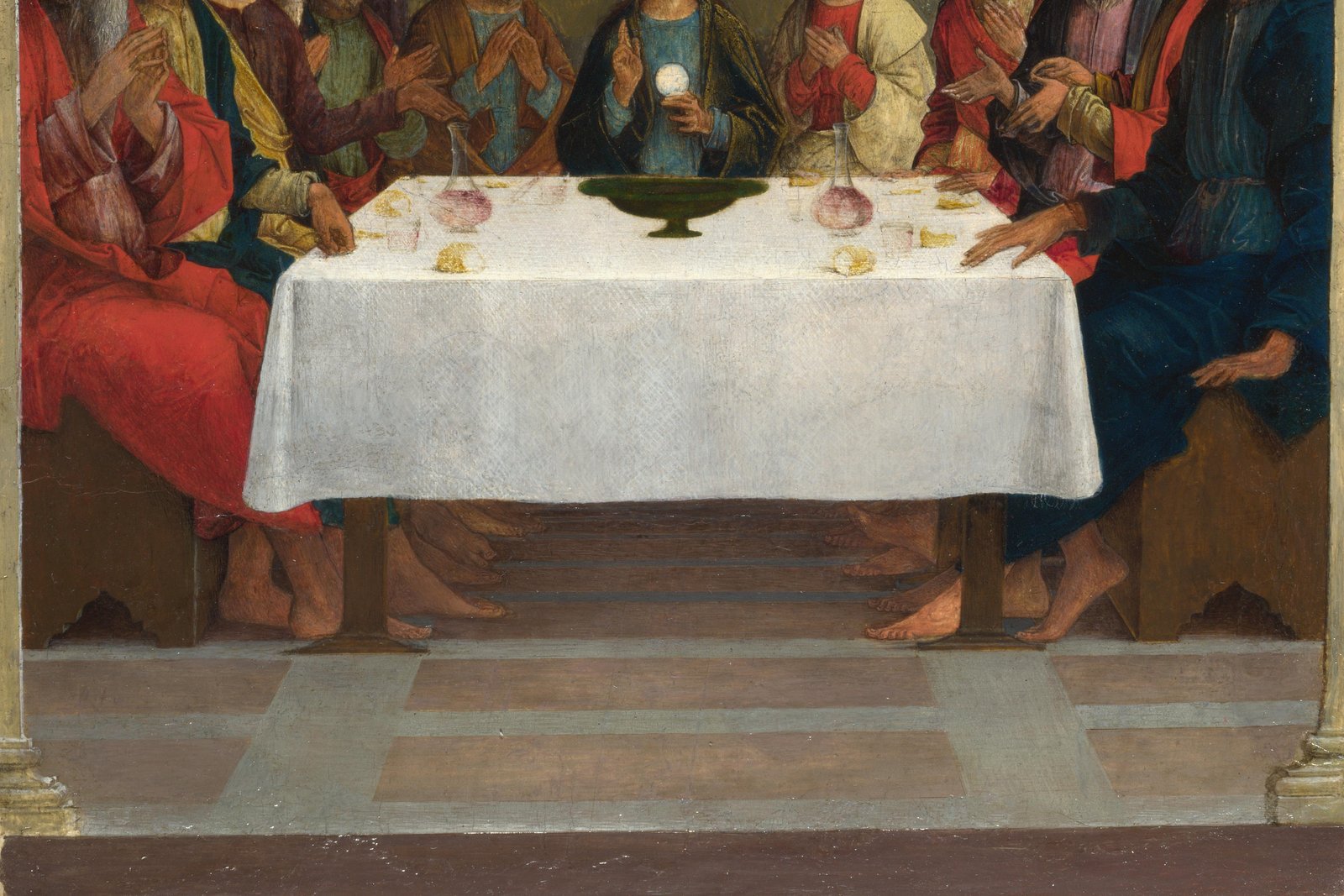
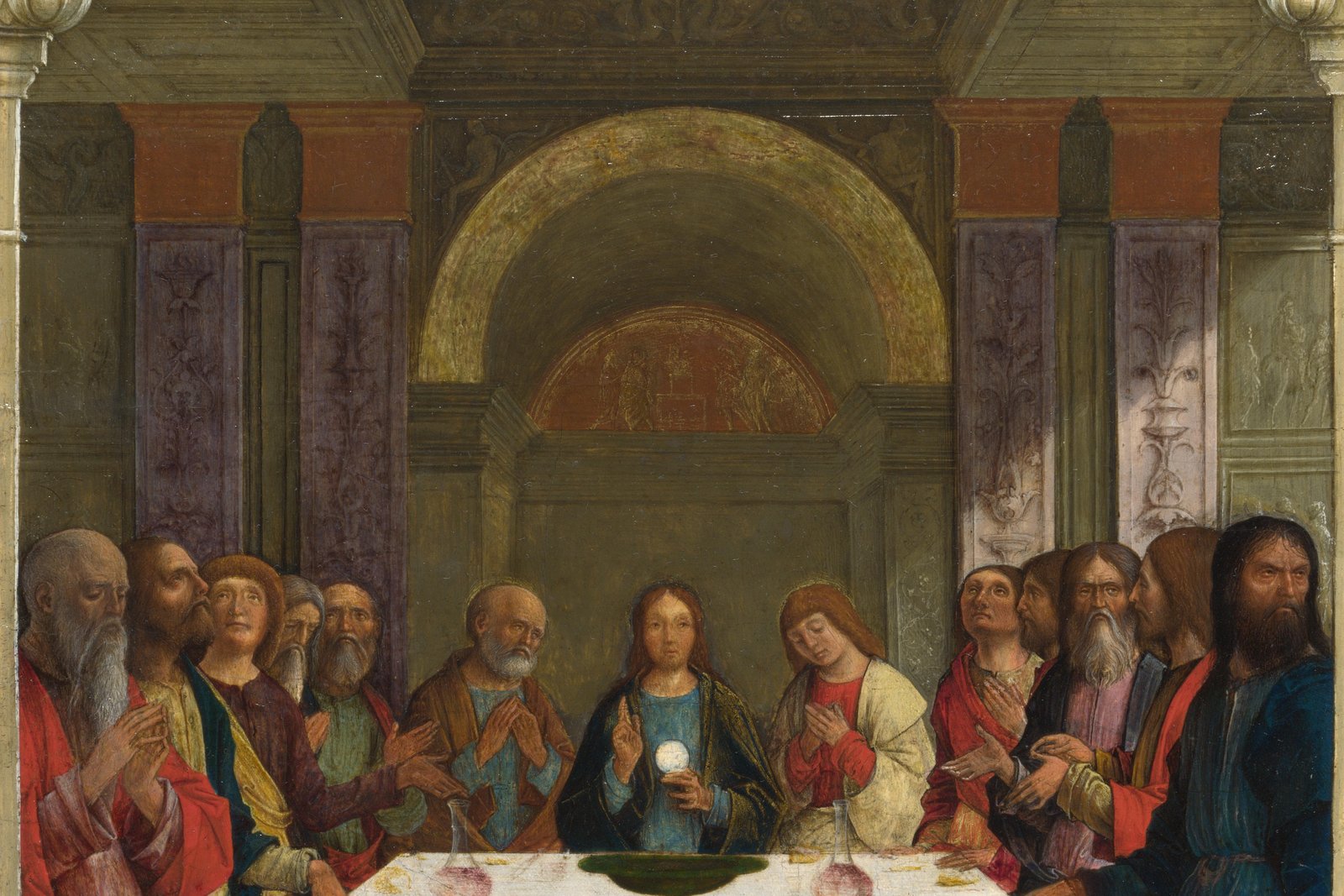
Ercole de' Roberti, The Institution of the Eucharist, 1490s, National Gallery, London — public domain.
Two liturgies, one act of worship
The Mass has two main parts, and the Second Vatican Council's constitution on the liturgy, Sacrosanctum Concilium, insists they are "so closely connected with each other that they form but one single act of worship" (no. 56) — not an opening act followed by the main event, but one continuous action told in two movements.
The Liturgy of the Word comes first: readings from the Old Testament, a Psalm, a New Testament letter, and the Gospel, followed by a homily and the prayers of the faithful. The Church treats this as a real encounter with Christ, not a preamble — Christ is understood to be present in his own word, speaking to the assembly, when Scripture is proclaimed in the liturgy (CCC 1088, 1349).
The Liturgy of the Eucharist follows: the bread and wine are brought forward and prepared, the priest prays the Eucharistic Prayer over them, and the congregation receives Communion. This is where the Mass reaches what the Church considers its center — the moment the ordinary elements of bread and wine become, in Catholic belief, something else entirely.
A sacrifice, not a symbolic reenactment
Here's the part that surprises people who've never had it explained directly: the Church teaches the Mass isn't a memorial play reenacting the Last Supper and crucifixion the way a passion play might. It teaches the Mass makes present, in a real and unbloody way, the very same sacrifice Christ offered once on Calvary — not a new sacrifice added to that one, and not a symbolic reminder of it, but that one historical sacrifice made sacramentally present again at the altar (CCC 1367). This is precisely why Catholic churches are built around an altar and not simply a stage or a lecture platform — the architecture reflects the theological claim.
And also, at the very same time, a meal
The Church holds this alongside, not instead of, the sacrificial reality: the Mass is also the meal in which the faithful are fed. It follows the pattern Christ himself set at the Last Supper, where he instituted the Eucharist the night before he died, at a meal, telling the apostles to "do this in memory of me" (CCC 1323, Luke 22:19). Receiving Communion is meant to be understood as real nourishment, not a ceremonial gesture — spiritual food, the Church teaches, that unites the recipient with Christ and with the rest of the Church.
Sacrifice and meal aren't in tension in Catholic theology; they're the same event seen from two angles. The victim offered is also the food given; the altar is also the table. A parish potluck or a family dinner can carry an echo of hospitality and belonging, but the Church claims something categorically different is happening at the altar — not a shared symbolic gesture among believers, but communion with a person the Church holds to be truly, substantially present.
The real presence
At the heart of all this is the claim the Church makes about what the bread and wine actually become. At the words of consecration, spoken by the priest in persona Christi (in the person of Christ), the Church teaches the entire substance of the bread and wine is changed into the Body and Blood of Christ, while only the outward appearances — taste, texture, color — remain unchanged (CCC 1374, 1376). This is called transubstantiation, and it's not a metaphor the Church uses loosely; it is stated as a matter of defined doctrine. This belief is also why consecrated hosts are treated with visible reverence well beyond the moment of Mass itself — reserved in a tabernacle, often marked by a lit candle nearby, brought to the sick and homebound, and made available for silent adoration outside of Mass.
Why the obligation, then
Given all this, the Church's teaching that Catholics are obliged to attend Mass on Sundays and holy days (CCC 2180-2181) reads differently than an arbitrary attendance rule. If the Mass is genuinely what the Church claims — Christ's own sacrifice made present, and Christ himself truly received in Communion — then missing it isn't skipping a routine gathering. It's declining, week after week, an encounter the Church holds to be the actual center of Christian life, not one spiritual option among many. Understood that way, the standing, sitting, and kneeling stop being empty choreography and start looking like what the Church has always insisted they are: physical postures wrapped around something it considers genuinely, objectively real.
Trivia
What are the two main parts of the Mass?
Why does the Catholic Church call the Mass a sacrifice?
What does the Catholic Church mean by the 'real presence' in the Eucharist?
Is missing Sunday Mass a serious sin?
Why do Catholics say the Mass is both a sacrifice and a meal?
Related Reading