The Real Presence Explained: What Catholics Believe

Not a symbol, according to the Church
The word Catholics use is precise on purpose: real. Not spiritual-in-a-loose-sense, not symbolic, not a reenactment of something that happened once and is now only remembered. The Catechism of the Catholic Church states it plainly: in the Eucharist, "the body and blood, together with the soul and divinity, of our Lord Jesus Christ and therefore the whole Christ is truly, really, and substantially contained" (CCC 1374). The word "substantially" is doing careful theological work there — it means the underlying reality of what the bread and wine are has changed, even though nothing about their appearance, taste, or chemical makeup has. That specific mechanism has its own name, transubstantiation, which this article touches only briefly since it deserves its own explanation elsewhere on this site.
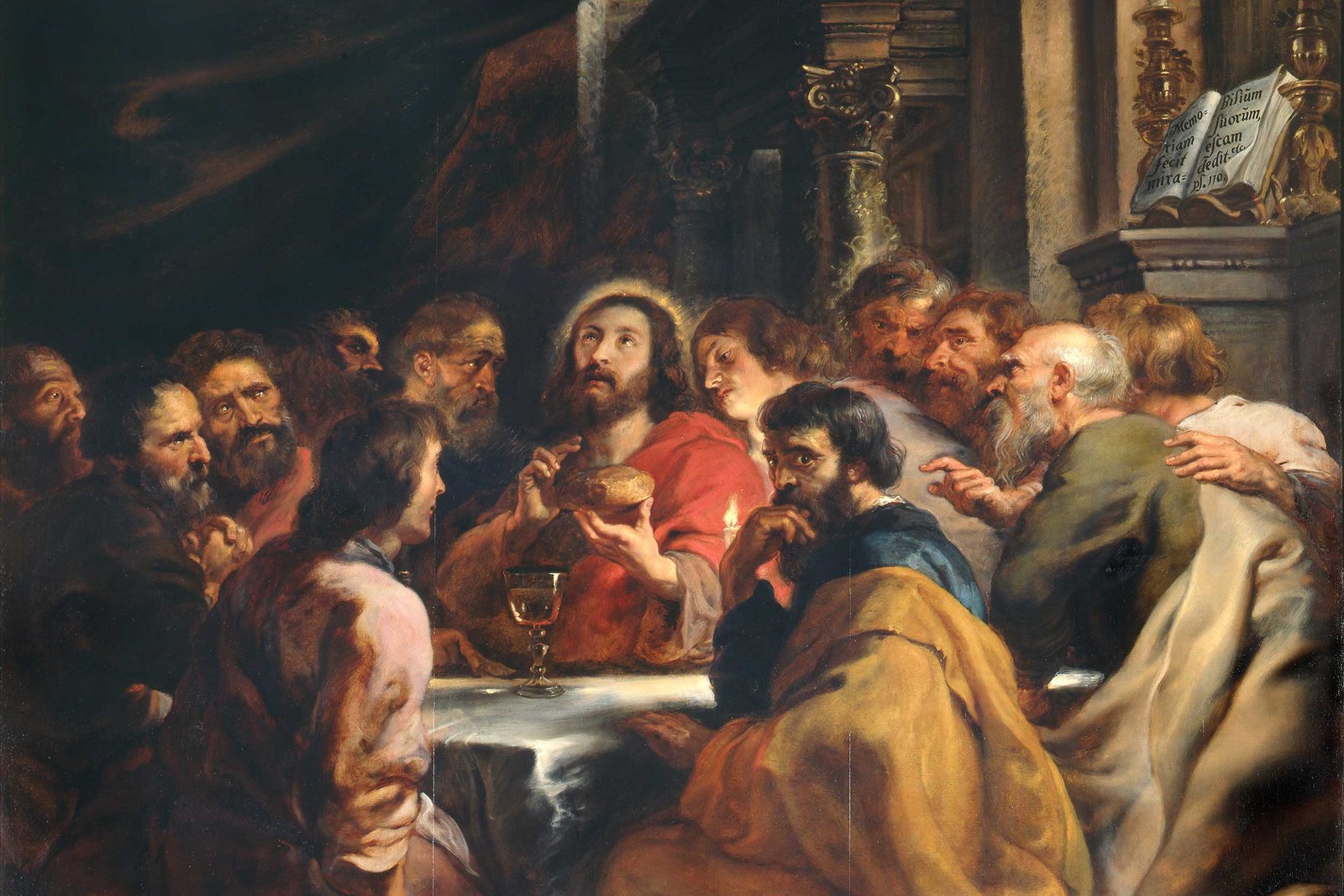
Peter Paul Rubens, The Last Supper, c. 1631-1632, Pinacoteca di Brera, Milan — public domain.
For a newcomer to Catholic teaching, this can be the single hardest idea to absorb, because nothing about the sensory experience changes. The host still looks, tastes, and behaves like bread; the chalice still holds what looks and tastes like wine. The Church has never claimed otherwise — it isn't asking anyone to deny what their senses report. What it's asking for is trust in Christ's own words, taken at face value rather than read as metaphor.
Where the belief comes from
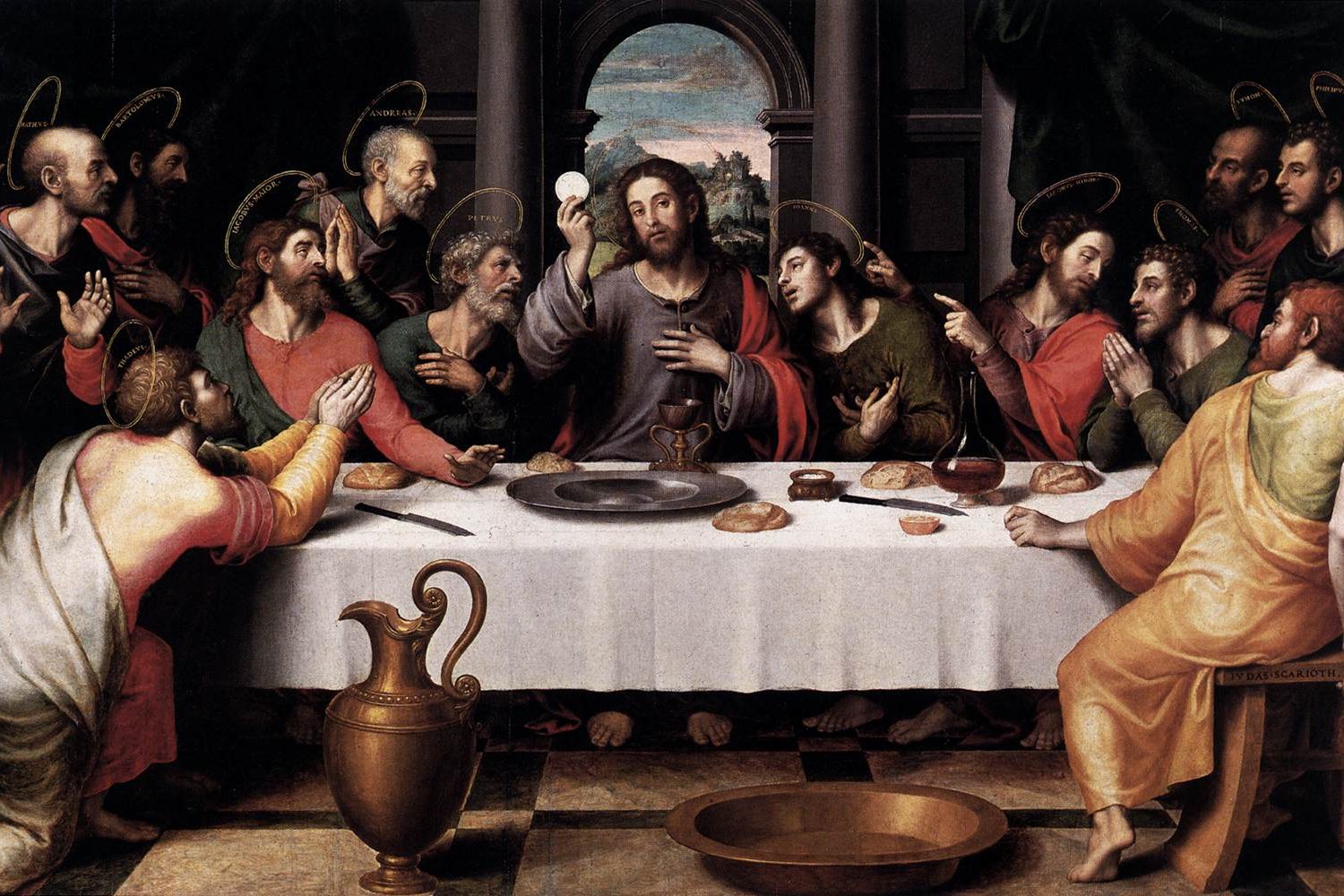
The starting point is the Last Supper itself. Each of the three Synoptic Gospels, and Saint Paul independently in his first letter to the Corinthians, records Jesus taking bread during the Passover meal with his apostles, giving thanks, and saying something startling: "This is my body that is for you. Do this in remembrance of me" — and then, over the cup, "This cup is the new covenant in my blood. Do this, as often as you drink it, in remembrance of me" (1 Corinthians 11:24-25). Catholic tradition reads those words as literal identification, not figurative language — Jesus does not say "this represents my body" but "this is my body."
That reading gets reinforced earlier in the Gospel of John, in a passage often called the Bread of Life discourse. After miraculously feeding a large crowd, Jesus tells them, "unless you eat the flesh of the Son of Man and drink his blood, you do not have life within you. Whoever eats my flesh and drinks my blood has eternal life... For my flesh is true food, and my blood is true drink" (John 6:53-55). What makes this passage significant to Catholic theologians is what happens next in the text: many of his own disciples, hearing this, say "this saying is hard; who can accept it?" and leave him over it (John 6:60, 66). Jesus does not call them back to clarify that he meant it symbolically. He lets them go — which Catholic tradition has long taken as evidence that he meant exactly what he said.
A belief the early Church took for granted
This wasn't a later medieval invention. Christian writers from the earliest centuries after the apostles wrote about the Eucharist in language that assumes real, not symbolic, presence. Saint Ignatius of Antioch, writing around the year 107 on his way to martyrdom in Rome, warned against a heretical group precisely because "they abstain from Eucharist and prayer, because they do not confess that the Eucharist is the flesh of our Savior Jesus Christ." That's a bishop, trained by the apostles' own generation, treating belief in the Real Presence as basic Christian identity — not a fringe or later development.
By the time of the early Church Fathers writing in the third and fourth centuries — Saint Cyril of Jerusalem, Saint Ambrose, Saint John Chrysostom among them — the language used to describe the Eucharist grows even more explicit and consistent across very different regions of the Christian world, which is itself a kind of evidence: it's hard to explain how geographically scattered churches with limited communication would all land independently on the same striking, counterintuitive claim unless it traced back to a shared apostolic source.
How the Church formally defined it
The doctrine didn't need much formal defining for over a thousand years, because it wasn't seriously disputed within the mainstream Christian world. That changed during the Protestant Reformation, when reformers like Ulrich Zwingli argued for a purely symbolic or memorial understanding of the Lord's Supper, while Martin Luther held a modified version of real presence and John Calvin proposed something in between. In response, the Catholic Church's Council of Trent (1545-1563) formally and precisely defined the doctrine of the Real Presence and, alongside it, transubstantiation as the Church's official explanation of the change — a definition that remains unchanged in Catholic teaching today.
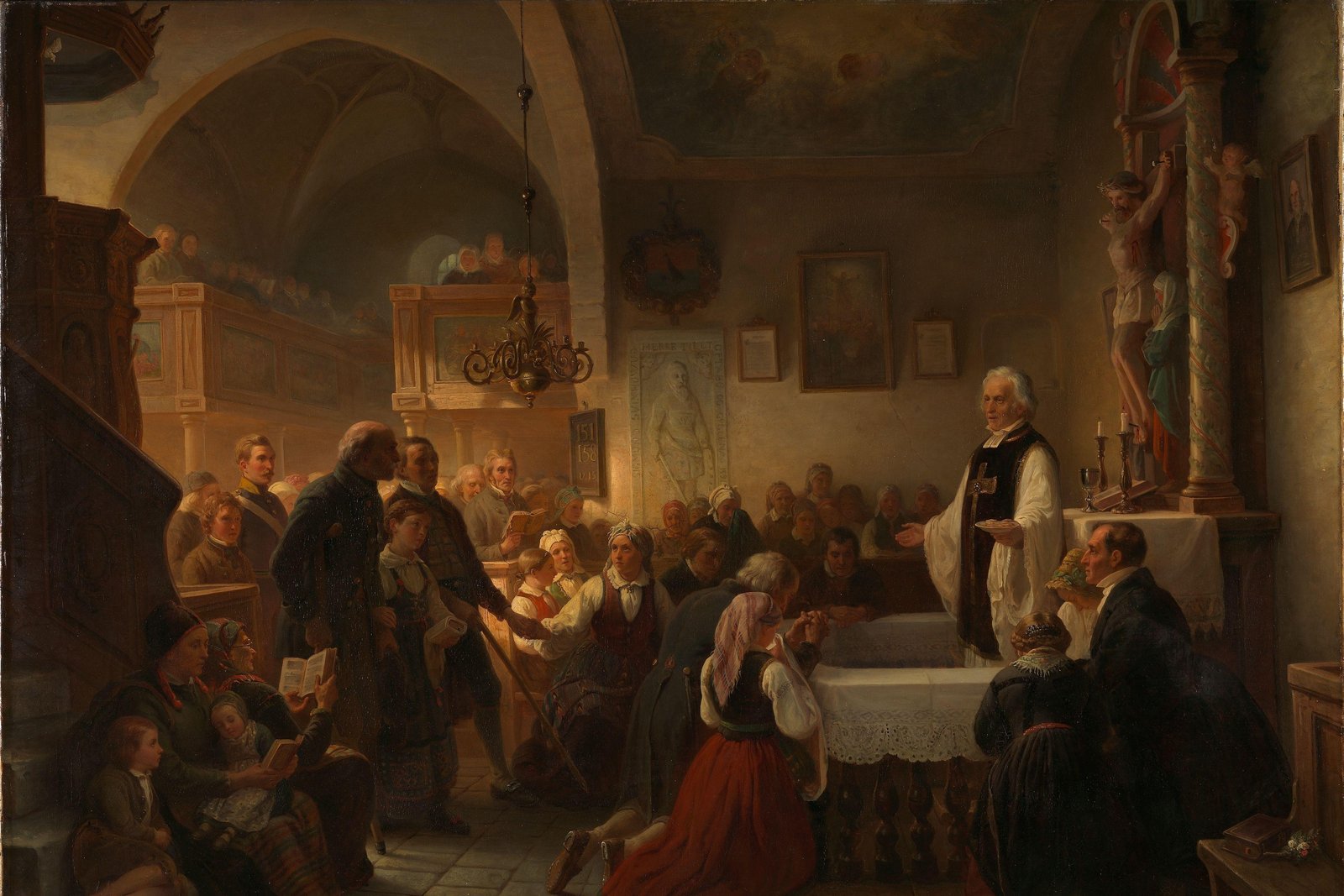
This is also the point where it's worth distinguishing dogma from devotional practice. The Real Presence itself — Christ truly present in the Eucharist — is de fide dogma, meaning it is a truth the Church holds to be divinely revealed and irreformable. Devotional practices that flow from that belief, like Eucharistic adoration — kneeling in prayer before the reserved Eucharist outside of Mass — or Corpus Christi processions carrying the Eucharist through the streets, are pious traditions built on top of the dogma, not the dogma itself. The Church requires belief in the first; it merely encourages and makes available the second.
Why it changes how Mass feels
Understanding the Real Presence explains a great deal of what can otherwise look mysterious about a Catholic church: the tabernacle at the center or side of the altar, often marked with a small lamp that stays lit whenever the Eucharist is reserved inside; the genuflection Catholics make toward that tabernacle when entering or leaving a pew; the silence and kneeling at the consecration; the requirement that Catholics fast for at least one hour before receiving Communion, out of reverence for what they believe they are about to receive. None of these customs make sense as etiquette around a symbol. They make complete sense as the natural response to believing that God himself is physically, substantially present in the room.
That belief is also why the Eucharist sits at what the Second Vatican Council called the "source and summit" of Catholic life — not one devotional practice among many, but the center that the rest of Catholic worship and moral life orients itself around.
Trivia
What does the Real Presence mean in the Catholic Church?
Is the Real Presence the same thing as transubstantiation?
Where does the Catholic Church get the teaching of the Real Presence?
Do all Christians believe in the Real Presence?
Why do Catholics genuflect or kneel toward the tabernacle?
Related Reading