The Anima Christi Prayer Explained

Older than the man it's named after
It's a common assumption that Ignatius of Loyola, the 16th-century founder of the Jesuits, wrote the Anima Christi, since it appears as the opening prayer of his Spiritual Exercises, the retreat manual he compiled in the 1520s and finalized for publication in 1548. But the prayer was already in circulation well before Ignatius was born. Manuscript copies survive from the early 14th century, and by the time Ignatius included it in his Exercises, it had already been prayed by generations of Catholics — attached to indulgences, inscribed on tombstones, and printed in personal prayer books across Europe.
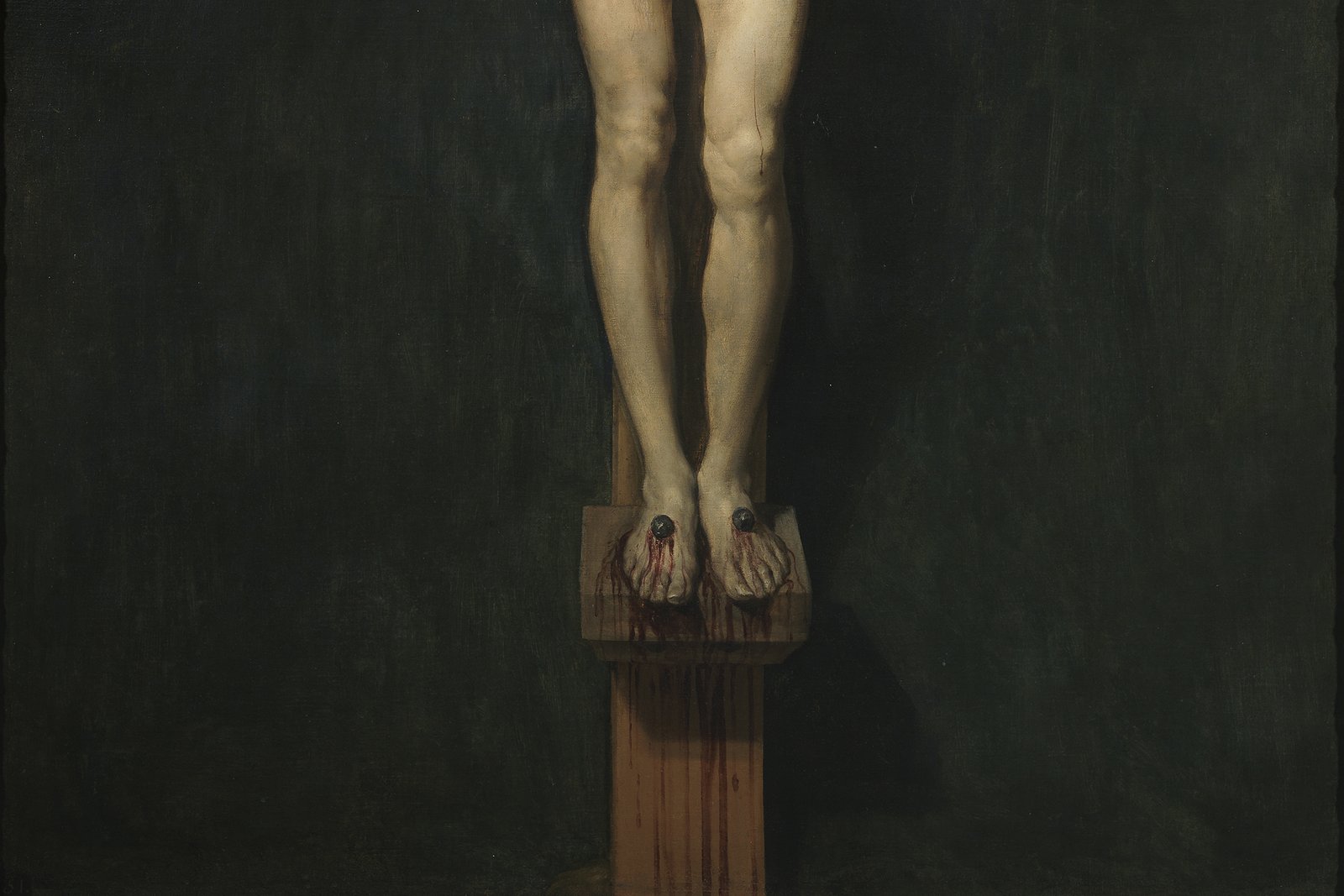
Diego Velázquez, Christ Crucified, c. 1632, Museo del Prado, Madrid — public domain.
Its actual author has never been identified. Some manuscript traditions attribute it to Pope John XXII, who reigned from 1316 to 1334 and is known to have granted an indulgence for its recitation, but modern scholarship treats this as an attribution of convenience — the pope who promoted the prayer's use, not necessarily the one who composed it — rather than settled fact.
What Ignatius did with it
What Ignatius contributed wasn't the text but the placement. He positioned the Anima Christi at the very beginning of the Spiritual Exercises — the intensive, structured program of meditations he designed to help a retreatant discern God's will — as a prayer to be said before starting each of the Exercises' major meditation periods. That placement gave the prayer new life within Jesuit spirituality and, through the Jesuits' influence on Catholic education and devotion worldwide, helped cement it as a standard part of the broader Catholic prayer repertoire, distinct from its older, narrower use as a private post-Communion devotion.
The text, phrase by phrase
The prayer most commonly prayed in English today reads:
Soul of Christ, sanctify me. Body of Christ, save me. Blood of Christ, inebriate me. Water from the side of Christ, wash me. Passion of Christ, strengthen me. O good Jesus, hear me. Within your wounds, hide me. Never let me be separated from you. From the wicked foe, defend me. At the hour of my death, call me, and bid me come to you, that with your saints I may praise you forever and ever. Amen.
Each line addresses a different aspect of Christ — his soul, body, blood, wounds, Passion — and asks it to act directly on the one praying. This structure reflects a devotional style common in medieval piety: rather than describing Christ in the third person, the prayer speaks to him directly, phrase by phrase, almost as a litany.
The line "water from the side of Christ, wash me" refers to John 19:34, where a soldier pierces the side of the crucified Christ and blood and water flow out — an image Catholic tradition has long read as symbolizing the sacraments of the Eucharist and Baptism flowing from Christ's wounded body.
An anonymous prayer in a crowded field of candidates
Besides the attribution to Pope John XXII, later tradition has floated several other possible authors over the centuries, including Saint Bernard of Clairvaux and Saint Bonaventure, both major medieval spiritual writers whose devotional styles bear some resemblance to the prayer's direct, wound-focused address to Christ. None of these attributions rests on solid manuscript evidence, and modern liturgical scholarship treats the prayer as functionally anonymous, a piece of common medieval devotional inheritance rather than the work of any single named theologian. That anonymity is itself telling: unlike prayers composed by a known author for a specific occasion, the Anima Christi seems to have grown organically out of the shared devotional vocabulary of the later Middle Ages, when meditation on Christ's wounds, blood, and Passion was a widespread and recognizable spiritual idiom across Western Europe, appearing independently in the work of many writers of the period rather than being traceable to one original source.
A prayer meant for right after Communion
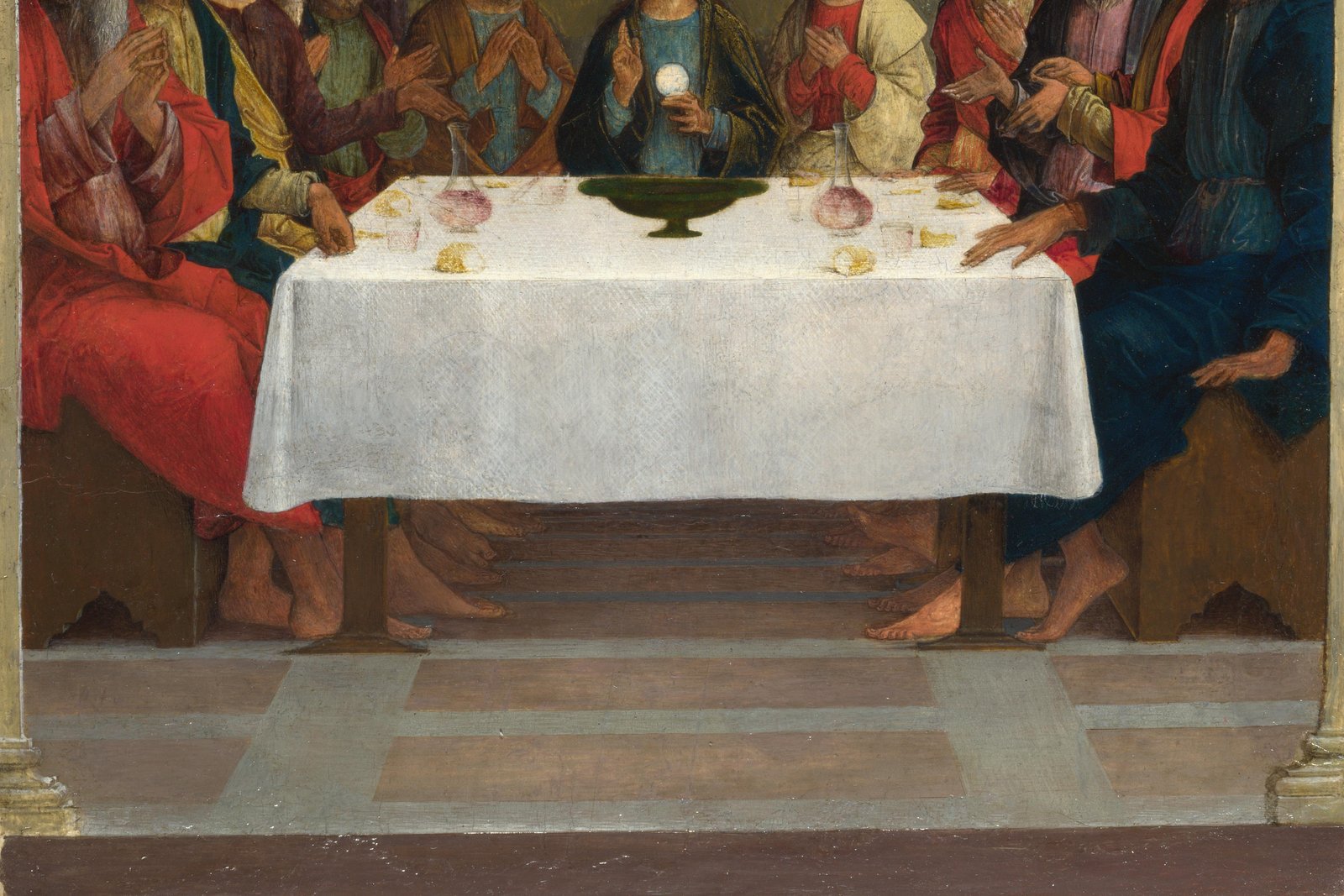
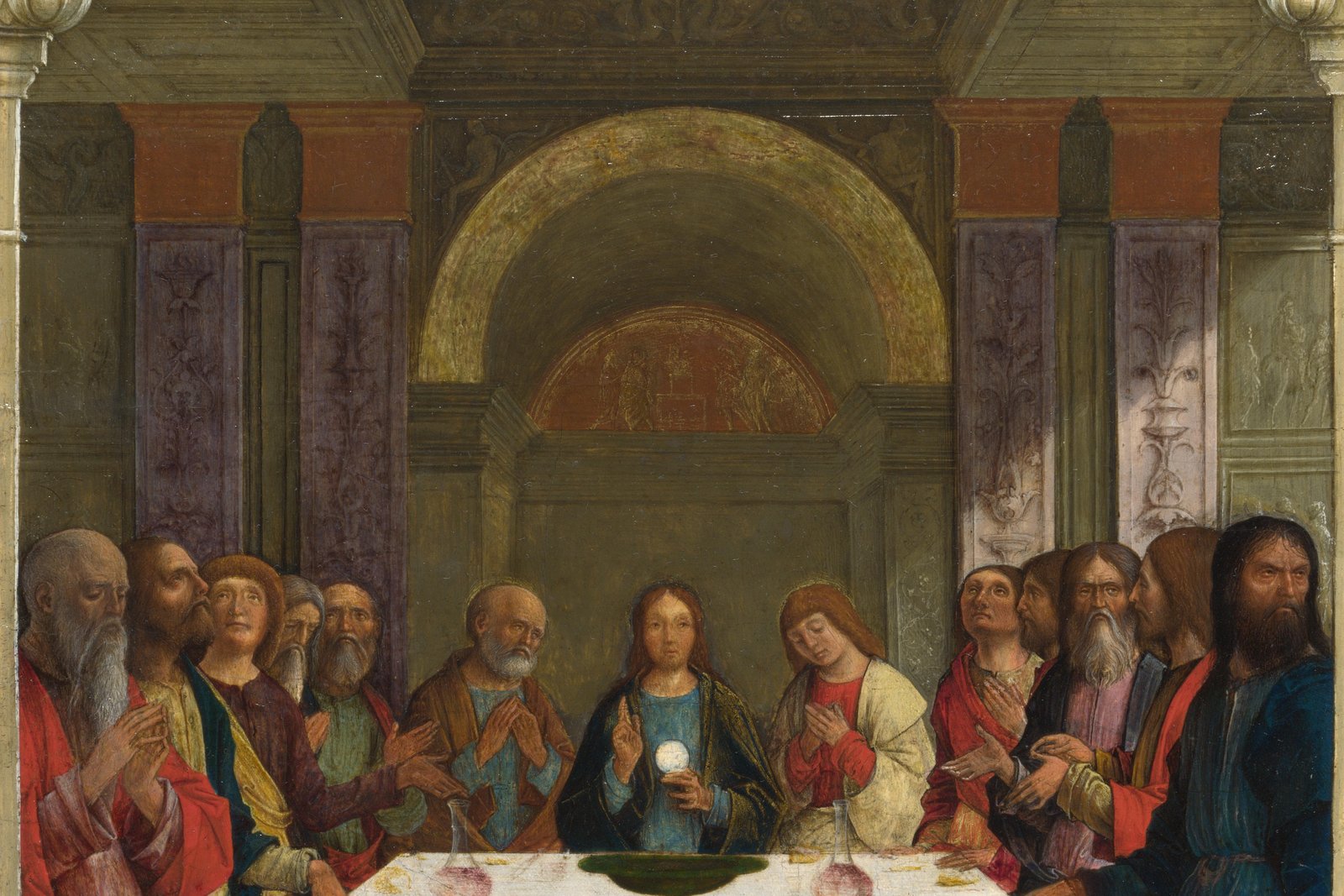
The Anima Christi's oldest and most enduring use is as a thanksgiving prayer said silently in the minutes just after receiving Holy Communion, a devotional custom already established well before Ignatius's time and still widespread today. Its language of being hidden within Christ's wounds and never separated from him fits naturally into that moment — a prayer of someone who has just received Christ under the appearance of bread and wine and wants to hold onto that closeness a little longer before the ordinary business of the day resumes.
It's also commonly prayed during Eucharistic adoration, when the consecrated host is exposed for prayer outside of Mass, and some priests still follow the older custom of praying it privately as part of their preparation before celebrating Mass.
Why "inebriate" stays in most translations
Modern English readers sometimes stumble on the line "Blood of Christ, inebriate me," since "inebriate" today almost exclusively means drunk. But the word is doing older, more deliberate work here. Christian mystical writing — going back through medieval authors and ultimately to biblical wine imagery — regularly used intoxication as a metaphor for a soul so filled with love of God that ordinary self-control gives way to something closer to holy abandon. Translators have largely kept the word rather than softening it, since alternatives like "fill me" lose the deliberate intensity the original Latin (Sanguis Christi, inebria me) was reaching for.
An indulgenced prayer
Historically, the Church has attached a partial indulgence — a reduction in the temporal punishment due for sin, distinct from the complete remission granted by a plenary indulgence — to the devout recitation of the Anima Christi, as listed in the Vatican's official Enchiridion of Indulgences. That designation reflects how seriously the Church has long regarded this short, anonymous prayer, even without ever being able to name the person who first wrote it.
Trivia
What does Anima Christi mean and what is the prayer's opening line?
Did Saint Ignatius of Loyola write the Anima Christi prayer?
When is the Anima Christi traditionally prayed?
What is the meaning of the line "Blood of Christ, inebriate me"?
Is the Anima Christi an official prayer of the Catholic Church?
Related Reading