Norcia: Birthplace of Saint Benedict

A twin birth in Roman Nursia
Benedict was born around the year 480 in Nursia, a town in the mountainous Sabine region of central Italy that today bears the modern name Norcia, at a moment when the Western Roman Empire itself was collapsing — the last Western emperor had been deposed only a few years earlier, in 476. Tradition holds that Benedict was born alongside a twin sister, Scholastica, who would go on to found her own religious community and is likewise venerated as a saint. Their family is generally understood to have been of the local Roman provincial nobility, prosperous enough to send the young Benedict to study in Rome. Read the fuller account of his life, his monastic rule, and his lasting influence in our article on Saint Benedict of Nursia.
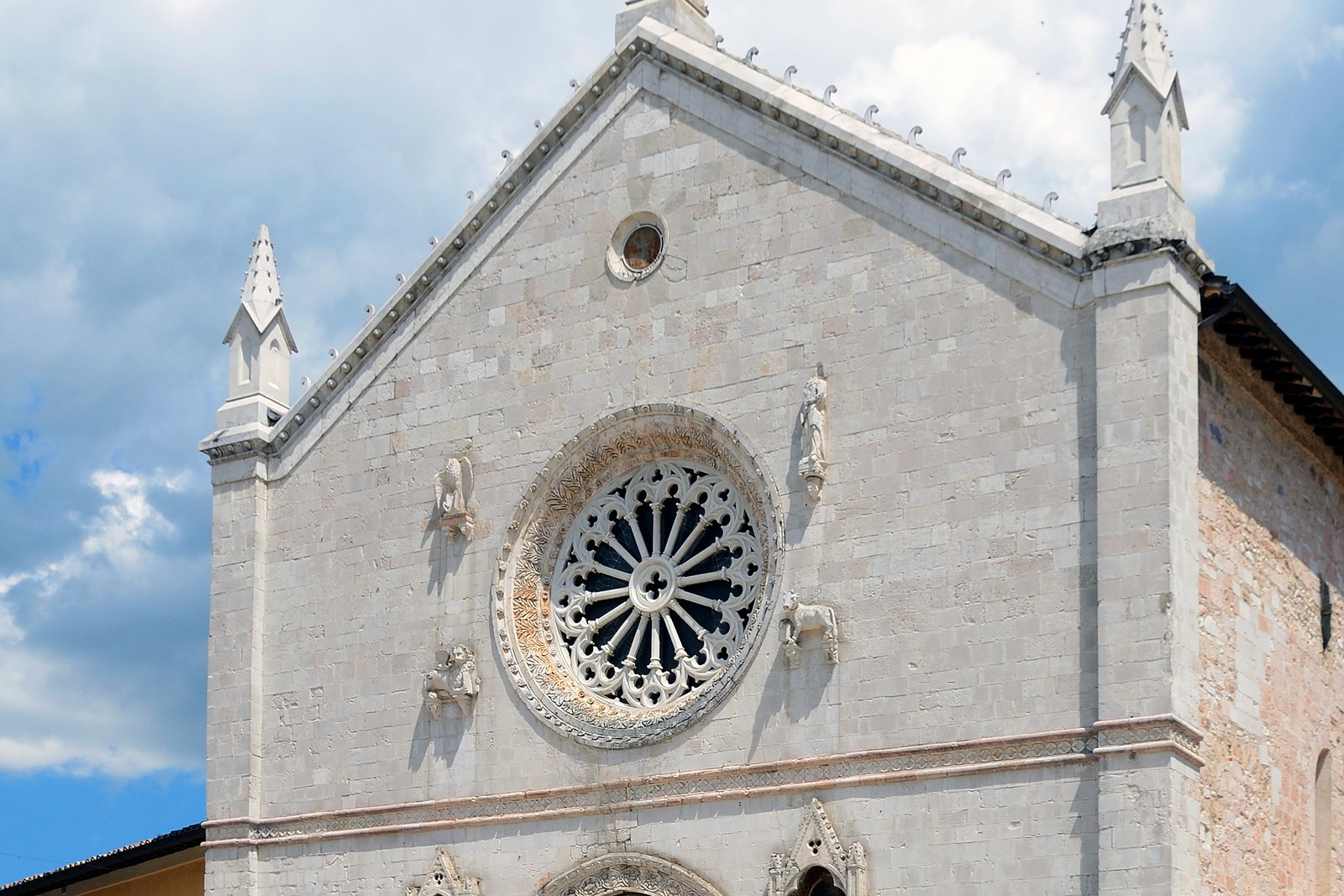
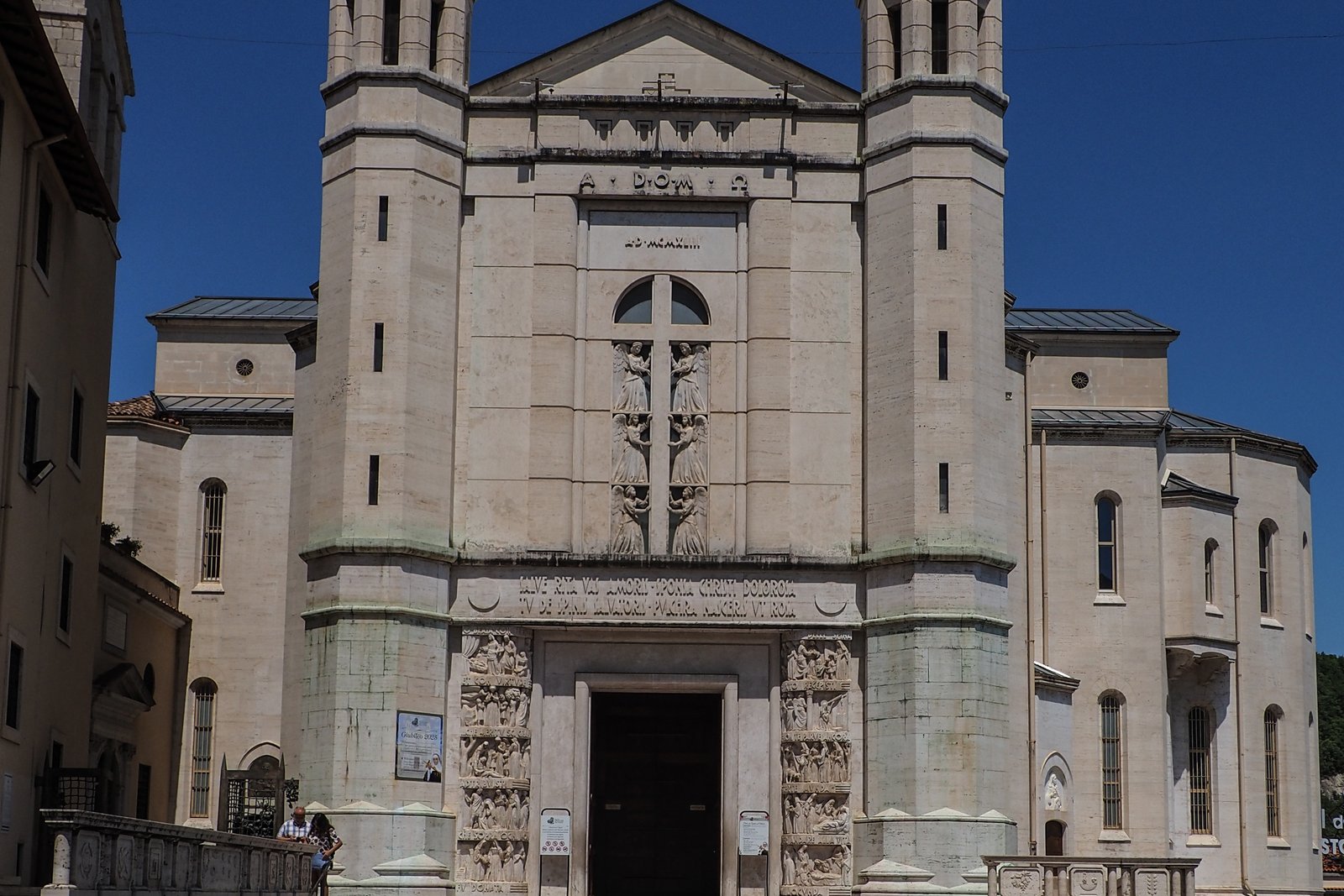
Photograph by Livioandronico2013, Front of San Benedetto (Norcia) — CC BY-SA 4.0, Wikimedia Commons.
Benedict's time studying in Rome disillusioned him with the moral state of the city, and according to his earliest biographer, Pope Gregory the Great, he withdrew from society altogether while still young, living first as a hermit before gradually attracting followers and eventually founding a series of monastic communities, most famously the abbey of Monte Cassino, southeast of Rome. There he composed the Rule of Saint Benedict, a relatively concise document balancing communal prayer, manual labor, study, and moderate discipline — a framework so practical and durable that it became the template for the vast majority of Western monasticism in the centuries that followed, earning Benedict recognition centuries later as a patron saint of Europe itself.
A basilica raised over Roman foundations
Devotion to Benedict in his hometown grew over the centuries following his death around 547, and by the medieval period a church had been built in Norcia specifically on the site local tradition identified as the location of his family's Roman-era home. Archaeological investigation beneath the church over the centuries has confirmed the presence of substantial Roman-period structures, lending real historical weight to the tradition, even if the precise identification of the site as Benedict's actual birthplace cannot be established with full documentary certainty — a distinction the Church has generally treated as a matter of longstanding local tradition rather than defined historical fact.
The basilica that stood until 2016 had been rebuilt and expanded across several centuries, incorporating a Gothic facade completed in the fourteenth century that became one of the defining architectural landmarks of Norcia's central square, the Piazza San Benedetto. Beneath the main church, a crypt preserved the traditional site of Benedict's birth, along with Roman-era remains visible to visitors — a physical, tangible link between the Roman world Benedict was born into and the medieval Christian civilization his monastic rule helped build in the centuries after Rome's collapse.
The 2016 earthquake and an uncertain future
Central Italy experienced a severe sequence of earthquakes in 2016, and the most powerful, on October 30, struck Norcia directly with a magnitude of 6.5 — the strongest earthquake to hit Italy in over three decades. The basilica's roof and much of its interior collapsed entirely in the seconds after the quake struck, reducing centuries of construction and decoration to rubble in the church's nave. Remarkably, and to the considerable relief of the town, the medieval facade remained standing, its Gothic doorway and rose window intact even as the structure behind it lay in ruins — an image that circulated internationally and became a symbol both of the earthquake's destructive force and of the town's determination to rebuild.
Reconstruction of the basilica has proceeded slowly in the years since, complicated by the scale of the damage, engineering challenges around seismic reinforcement, and the broader recovery needs of a region that suffered widespread destruction across dozens of towns in the same earthquake sequence. The crypt beneath the ruined basilica, containing the traditional birthplace site and Roman remains, survived with less damage than the church above it and has remained a focus of ongoing preservation and eventual public access as rebuilding continues.
A living monastic tradition, earthquake notwithstanding
Norcia's connection to Benedict is not purely historical or archaeological — a community of Benedictine monks reestablished monastic life in the town in the year 2000, ending a gap of roughly two centuries that followed the suppression of religious houses during the Napoleonic era. The monks became well known internationally in the years before the earthquake for their brewery, producing beer under the Birra Nursia label as a modern expression of the Benedictine tradition of monastic self-sufficiency through skilled manual labor — itself a direct continuation of the balance between prayer and work, "ora et labora," central to Benedict's original Rule.
The 2016 earthquake badly damaged the monks' own monastery as well, forcing the community into temporary quarters outside the historic town center, but they have continued both their religious life and their brewing operation in the years since, maintaining an active Benedictine presence in the saint's hometown even as reconstruction of the historic basilica continues around them. Norcia today remains, despite the visible scars of 2016, what it has been for centuries: the place where the man who gave Western monasticism its foundational rule first drew breath, in a Roman provincial town whose identity has never really separated from his.
Trivia
Why is Norcia significant to the history of Christianity?
What happened to the Basilica of Saint Benedict in Norcia?
Was the basilica built directly on Benedict's birthplace?
Is Norcia still connected to the Benedictine monastic tradition today?
Related Reading