St. Stephen's Basilica, Budapest

Neoclassical ambition on the Danube
St. Stephen's Basilica dominates central Pest with a scale and symmetry typical of the grand neoclassical church architecture fashionable across 19th-century Europe: a Greek-cross floor plan topped by a massive central dome, a portico of Corinthian columns fronting the main entrance, and an interior finished in rich marble, mosaic, and gilding intended to rival the great basilicas of Rome and Vienna. The building's scale reflects the ambitions of a rapidly modernizing Hungarian capital in the decades following the 1848 revolution, a period when Budapest — soon to be unified from the previously separate cities of Buda, Pest, and Óbuda — was investing heavily in monumental civic and religious architecture to assert its status as a major European capital.
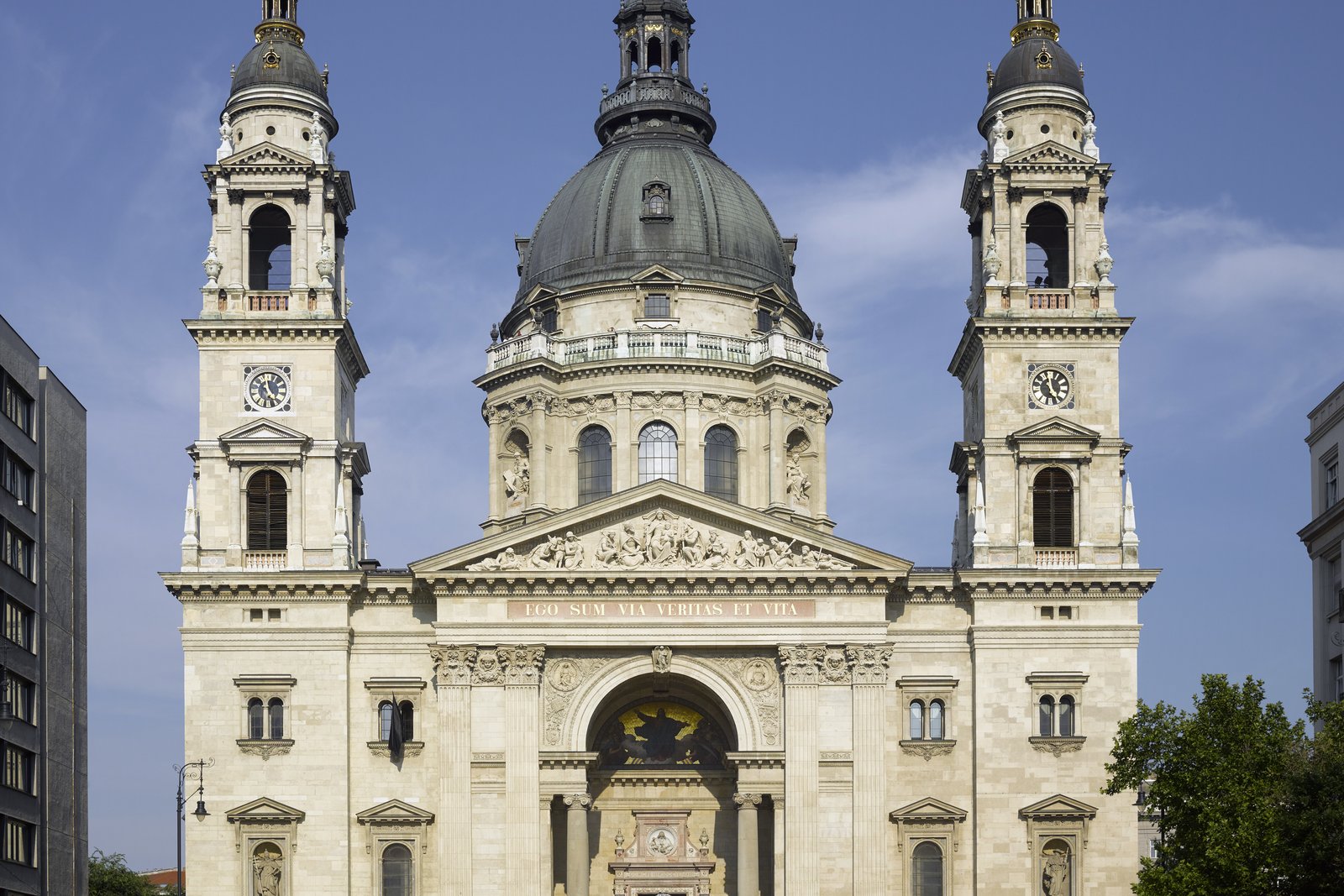
Photograph by Godot13, HUN-2015-Budapest-St. Stephen's Basilica — Attribution license (CC BY), Wikimedia Commons.
Construction began in 1851 under the architect József Hild, working in a more restrained classical style, but progress was slow, and after Hild's death the project passed to Miklós Ybl, one of 19th-century Hungary's most prominent architects, who substantially revised the design toward a heavier, more elaborate neo-Renaissance style. The building's construction suffered a serious setback in 1868, when the partially completed dome collapsed during a storm, forcing engineers to demolish much of the existing structure and effectively restart the upper portion of the building from stronger foundations — a costly delay that pushed the completion date back by decades. Ybl died in 1891 with the basilica still unfinished, and the project passed to a third architect, József Kauser, who finally brought the building to completion in 1905, more than half a century after construction had begun.
Equal in height to the Parliament, by design
One of the more distinctive facts about St. Stephen's Basilica is architectural rather than religious: it stands exactly 96 meters tall, precisely matching the height of the Hungarian Parliament Building on the opposite bank of the Danube, completed around the same period. The matching heights were not a coincidence but a deliberate symbolic statement, intended to represent a balance between worldly political authority, embodied in the Parliament, and spiritual authority, embodied in the basilica — neither institution permitted to visually dominate the other on Budapest's skyline. For much of the 20th century, Budapest maintained a building-height restriction in its central districts tied to this figure, ensuring no new structure would rise above either landmark, a rule that has shaped the low-rise character of the city's historic core to this day.
The Holy Right Hand
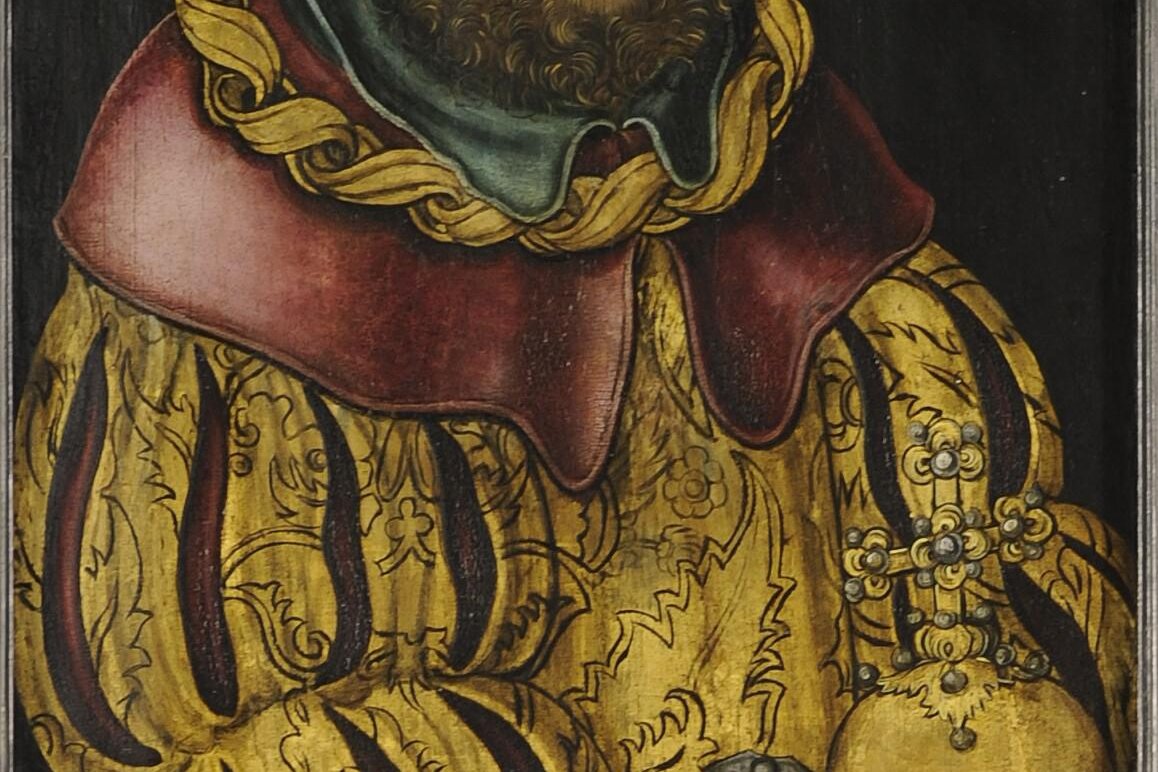
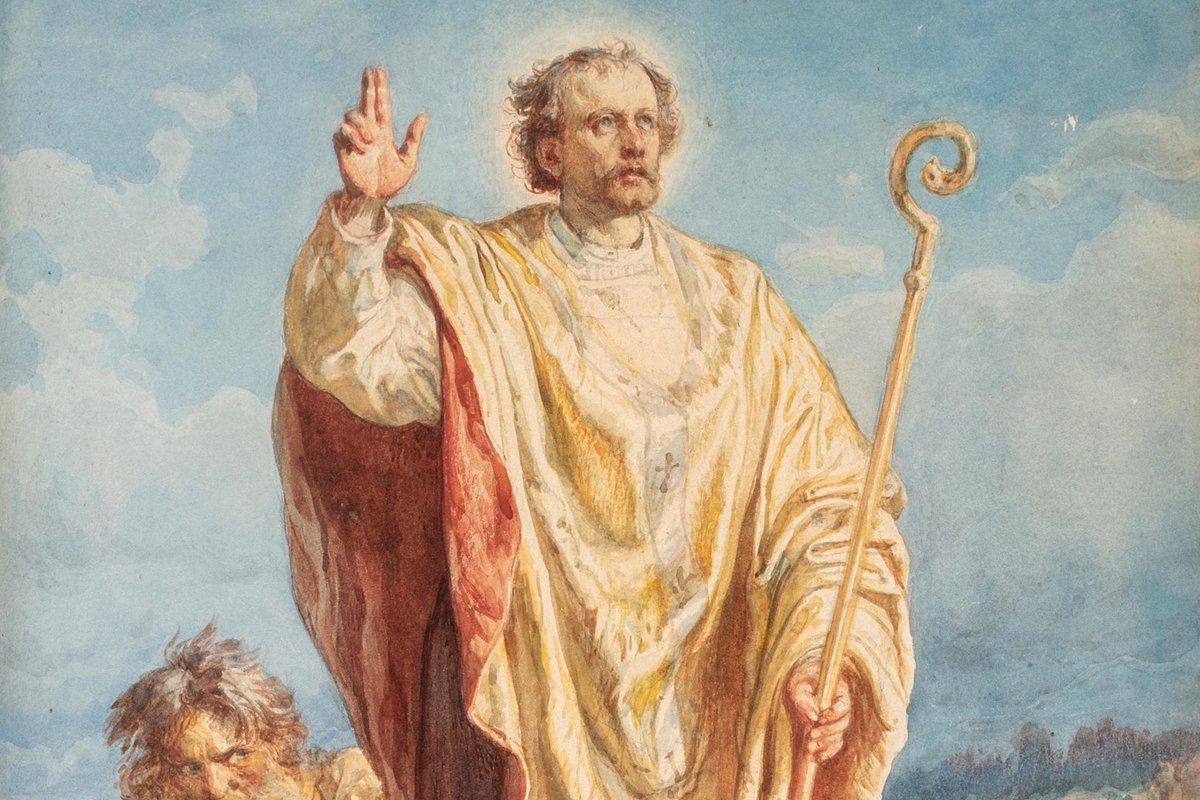
The basilica's most venerated possession is not a painting or a piece of architecture but a relic of startling directness: what tradition holds to be the mummified right hand of Saint Stephen of Hungary, the country's first Christian king, who reigned from the year 1000 until his death in 1038 and was canonized in 1083. Known in Hungarian as the Szent Jobb, or "Holy Right," the relic has a turbulent history of its own, reportedly surviving Mongol invasions, Ottoman occupation, and the upheavals of the 20th century — including a period when it was taken out of Hungary during the Second World War and later returned. It is displayed today in an ornate jeweled reliquary within a small chapel behind the basilica's high altar, and each year on August 20, Hungary's national holiday commemorating the founding of the Hungarian state and honoring its patron saint, the relic is carried in a formal procession through the streets of Budapest, one of the country's most significant annual religious and civic observances.
A working basilica and concert venue
St. Stephen's Basilica functions today as an active parish and pilgrimage church of the Roman Catholic Archdiocese of Esztergom-Budapest, holding a full schedule of regular Masses, and its status as a minor basilica reflects its historical and devotional significance within Hungarian Catholicism. Beyond its religious role, the basilica has become one of Budapest's most prominent classical music venues, its excellent acoustics and substantial pipe organ making it a regular setting for organ recitals and choral concerts that draw both religious and secular audiences. A viewing platform beneath the dome, reached by elevator and a short stair climb, offers visitors sweeping panoramic views across Budapest, making the basilica one of the city's most visited landmarks for tourists and pilgrims alike, more than a century after its long and troubled construction finally reached completion.
The basilica's grand square out front, Szent István tér, has itself become one of central Pest's principal public gathering spaces, hosting an annual Christmas market and outdoor concerts in the shadow of the dome — a reminder that, whatever setbacks slowed its nineteenth-century construction, the building has settled comfortably into the daily civic rhythm of the city it was built to serve, functioning as much as a shared public landmark as a place of worship, its illuminated dome visible from across the Danube long after most of Budapest's other monuments have gone dark for the night.
Trivia
Whose hand relic is kept at St. Stephen's Basilica?
Why did construction of St. Stephen's Basilica take so long?
How tall is St. Stephen's Basilica, and why does that height matter?
Is St. Stephen's Basilica an active Catholic church today?
Who was Saint Stephen of Hungary?
Related Reading