The Basilica of the Annunciation in Nazareth

Built over a grotto
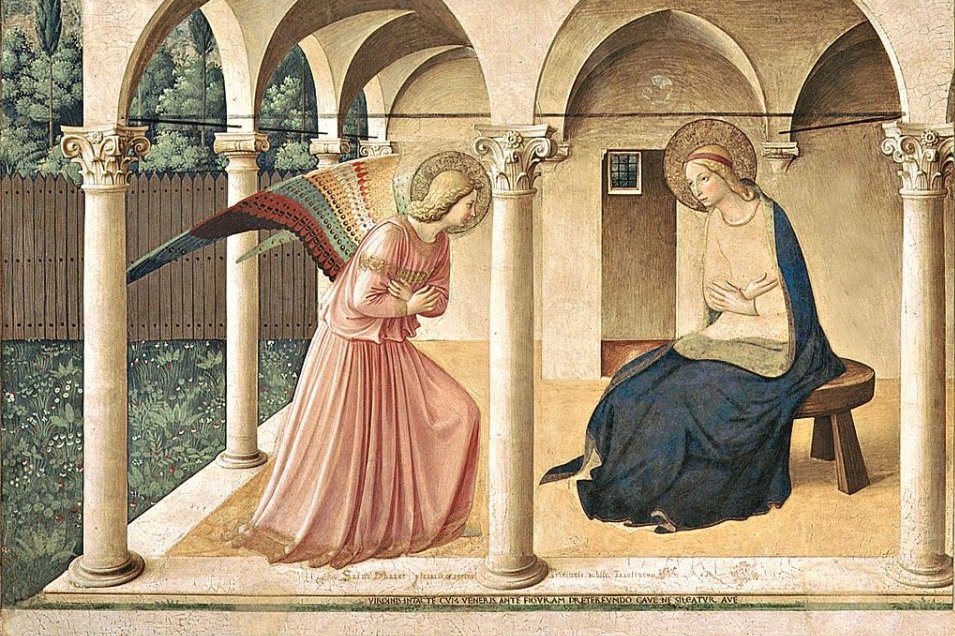
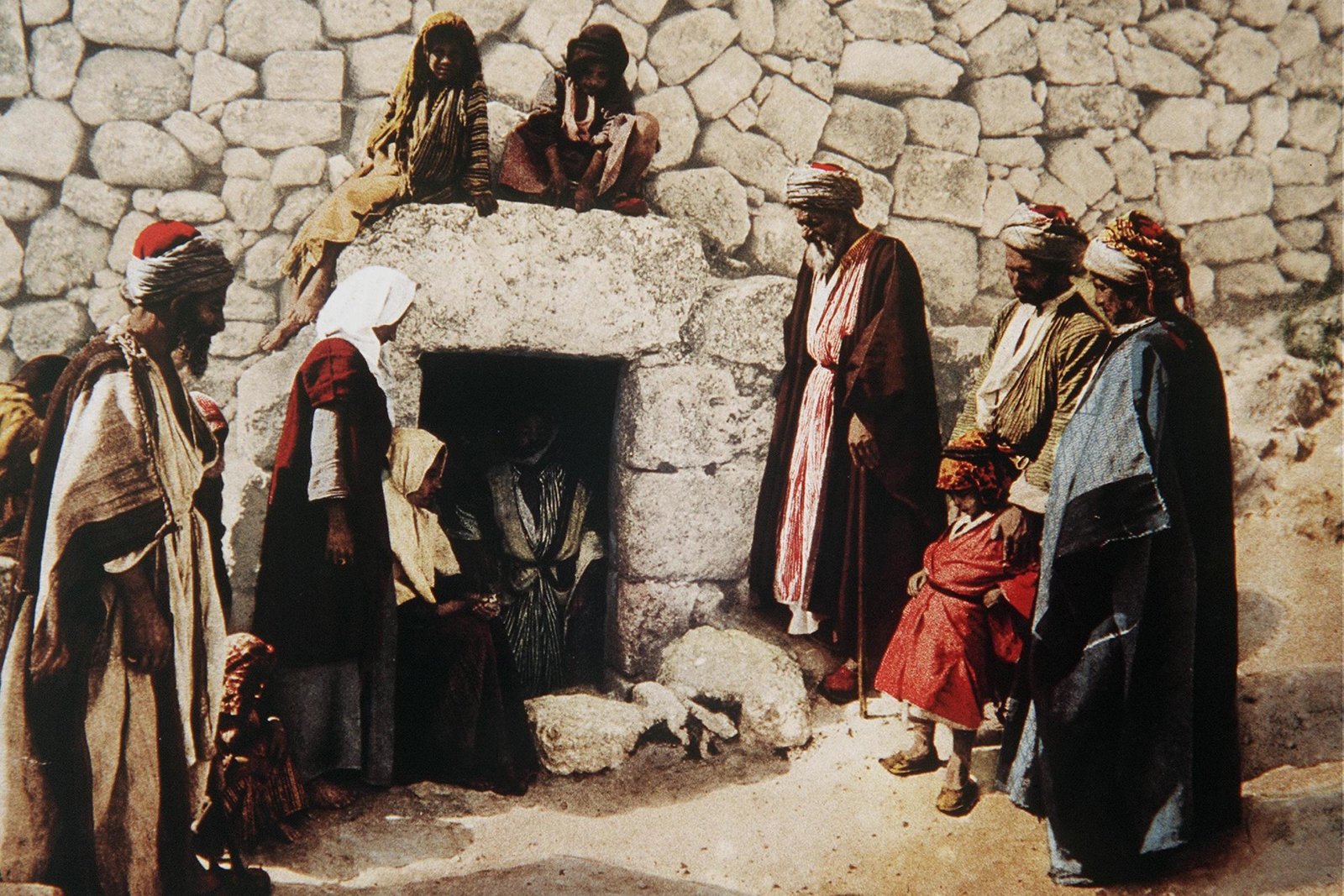
The Gospel of Luke places the Annunciation in Nazareth, a small Galilean town where a young woman named Mary received the angel Gabriel's announcement that she would conceive and bear a son, to be called Jesus (Luke 1:26-38). Tradition has located that moment, for centuries, in a specific grotto in Nazareth — a cave-like space believed to have been part of the home where Mary lived. Houses in first-century Galilee were often built partly against the natural rock of a hillside, with a carved-out cave serving as one room among several built ones, which is why the grotto reads today less like a bare cavern and more like the surviving core of an ordinary domestic dwelling. That grotto still sits at the heart of the site today, beneath the floor of the basilica now built above it.
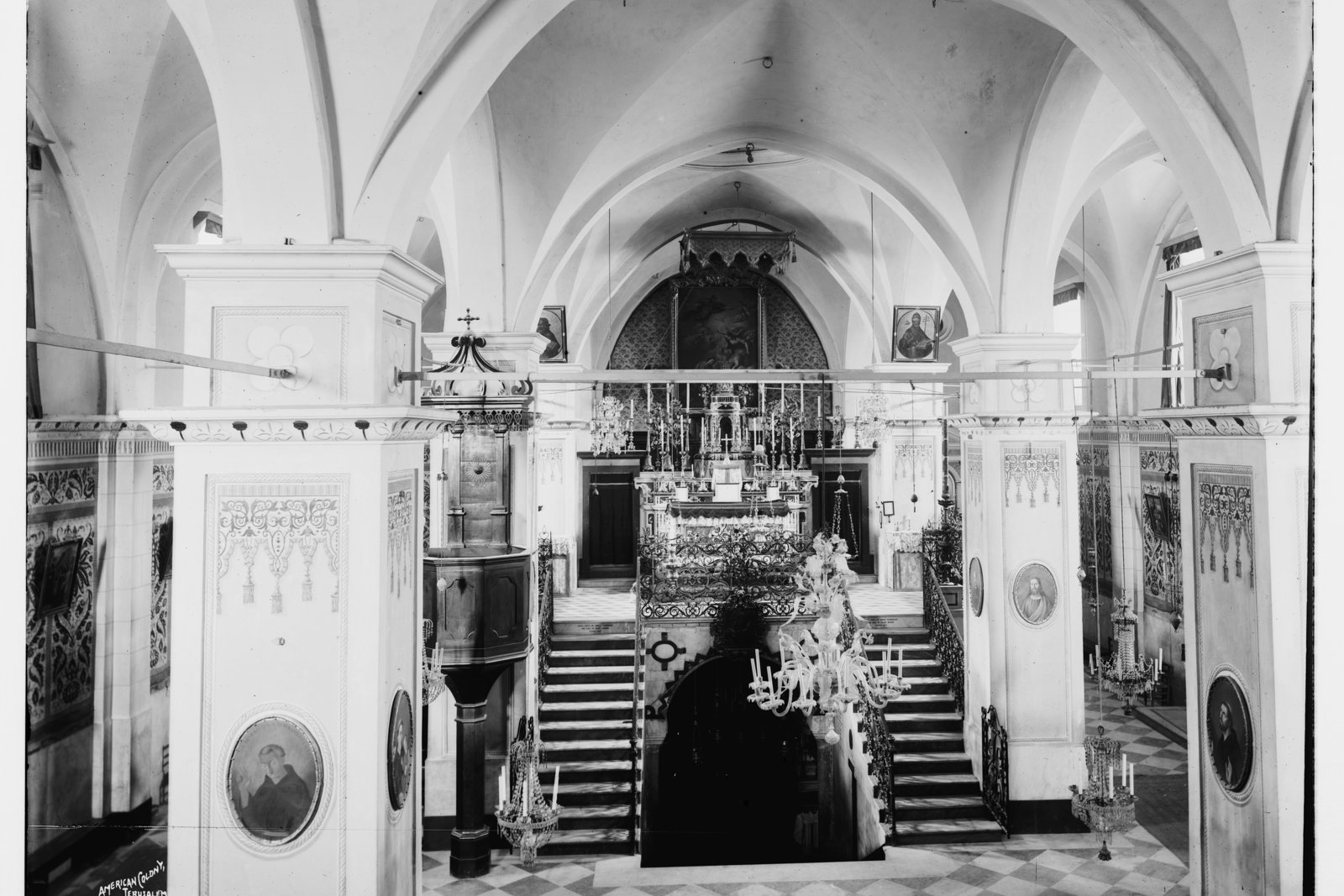
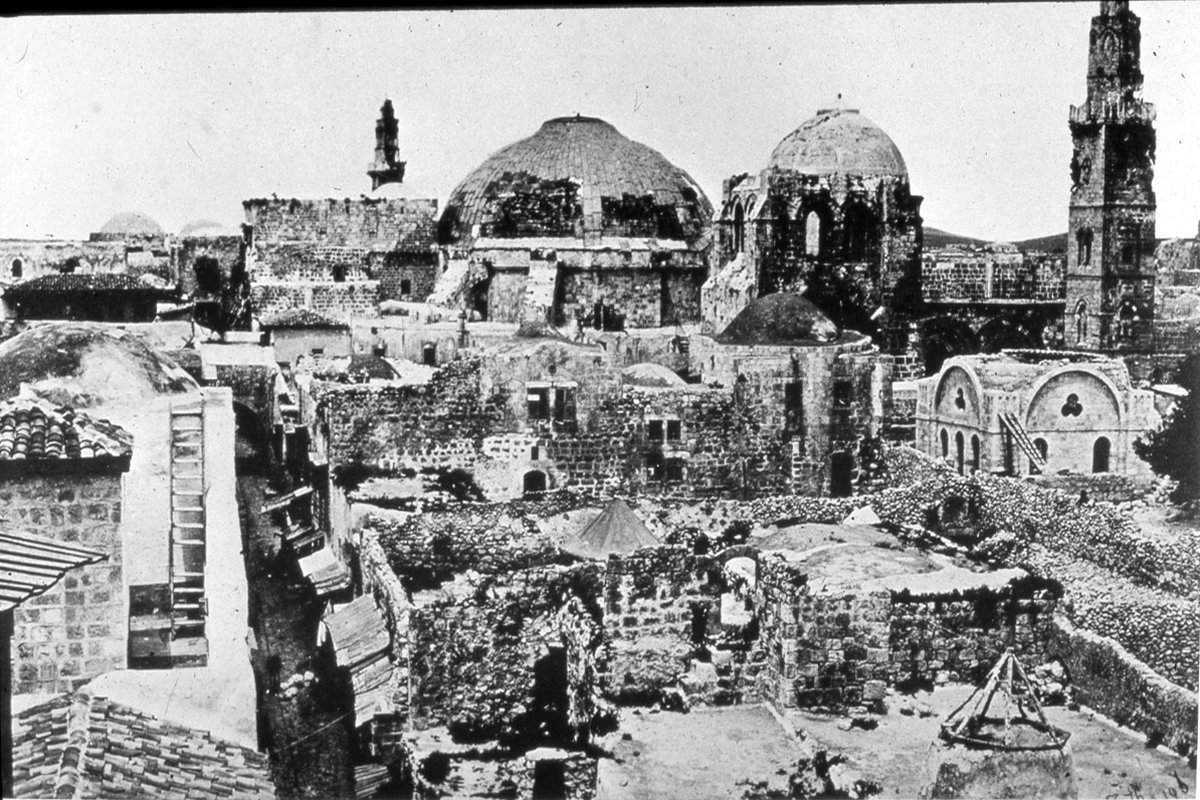
American Colony Jerusalem Photo Department, "Home of Christ, Nazareth," c. 1898-1914, Library of Congress — public domain.
Christians have marked the spot with churches since antiquity. Archaeological work beneath the current basilica has uncovered traces of what may be an even earlier Jewish-Christian house of prayer, along with inscriptions and graffiti from pilgrims that predate the formal Byzantine structure by generations, suggesting the site was venerated informally long before any church was built to mark it. A Byzantine-era church stood on the site first, followed centuries later by a Crusader church; the remains of both are still visible around the grotto level, layered beneath the modern building like architectural strata of the site's long devotional history. The Crusader-era building was never finished — construction stopped when the Crusader states in the Holy Land began collapsing in the late twelfth century — and for long stretches afterward the site was tended only modestly, under Ottoman-era restrictions on Christian building, before the Franciscans were able to construct a more substantial church there in the nineteenth century, itself eventually replaced by the basilica standing today.
A modern building on an ancient site
The basilica standing today is, by the standards of the Holy Land's other great shrines, remarkably new. It was built between 1960 and 1969, designed by the Italian architect Giovanni Muzio, and completed and dedicated on the Feast of the Annunciation in 1969. Its design is organized on two levels: a lower church, built directly around the grotto and kept close to the ancient rock, and an upper church above it for regular congregational worship, capped by a large dome shaped like an inverted lily — architectural shorthand for Mary's purity that Muzio wove directly into the building's silhouette. It's often cited as the largest Christian church building in the Middle East, a scale that reflects both Nazareth's importance to the Gospel story and the basilica's role as a major pilgrimage destination.
Mary, painted by the whole world
What sets the Basilica of the Annunciation apart from almost any other shrine in the Holy Land is its courtyard. Catholic communities from dozens of countries donated mosaic and ceramic artworks of Mary — each one rendered in the visual language of the donor nation, so that a Japanese Madonna in kimono-inspired dress hangs not far from a Mary rendered in West African textile patterns, a Latin American Mary, a Polish Mary, and dozens more. Walking the courtyard becomes its own kind of pilgrimage: the same event, retold in as many artistic voices as there are Catholic communities willing to send one.
The effect is intentional. Where many ancient shrines emphasize continuity with a single historical moment, the Annunciation basilica's courtyard makes a different, complementary point — that the event being marked belongs to the whole Church, spread across every culture that has received the Gospel since.
Cared for by the Franciscans
Like most of the Holy Land's major Christian sites, the basilica is entrusted to the Franciscan Custody of the Holy Land, the religious order that has maintained continuous presence and care over the region's holiest ground for centuries. The Franciscans first won the right to guard the major shrines of Nazareth, Bethlehem, and Jerusalem in agreements negotiated with local Muslim rulers as far back as the fourteenth century, and they have kept up that role, with interruptions during periods of political upheaval, ever since — making their presence in Nazareth one of the longest continuous institutional commitments in the entire Holy Land. For a related look at how a single Gospel scene can shape an entire building and its surrounding devotion, see the Holy Family together on this blog, and for the biblical account the basilica itself commemorates, see the Annunciation.
A pilgrimage stop on the Gospel map
For pilgrims tracing the Gospel narrative through the Holy Land, Nazareth marks the beginning of the story rather than its climax — the quiet town where Jesus grew up, described in the Gospels themselves as a place of little renown. The basilica complex today includes not only the main church but also the adjoining Church of Saint Joseph, built over a separate set of caves traditionally associated with the Holy Family's daily life and Joseph's carpentry work, giving visitors a fuller sense of Nazareth as a working household rather than only the site of a single dramatic moment. Archaeological remains uncovered nearby, including ancient wine and oil presses cut into the rock, have also helped historians understand what an ordinary first-century Galilean village actually looked like — evidence that grounds the Gospel account in a real, physically recoverable place rather than a purely symbolic setting.
A young building, an old moment
There's something fitting about a mid-twentieth-century structure marking one of Christianity's oldest and most consequential moments. The basilica's modern lines and its ancient grotto sit together without contradiction — proof that a two-thousand-year-old story can still be built around, retold, and gathered toward, generation after generation, in whatever architectural language a given century has to offer.
Trivia
What does the Basilica of the Annunciation mark?
How old is the current basilica building?
Who designed the Basilica of the Annunciation?
Why are there mosaics of Mary from so many countries in the courtyard?
Who administers the Basilica of the Annunciation today?
You May Also Like
Related Reading