Turin Cathedral and the Chapel of the Holy Shroud

A Renaissance cathedral with an extraordinary addition
Turin Cathedral, formally dedicated to Saint John the Baptist, stands in the historic center of Turin in northern Italy, built between 1491 and 1498 in a restrained Renaissance style that, on its own, would place it among many similar cathedrals across northern Italy of the same period. What sets it apart from nearly every other cathedral in the world is not the main church itself but a chapel attached to its rear, connecting the cathedral to the adjoining Royal Palace of the House of Savoy — a chapel built for one singular purpose, to house what its custodians and millions of pilgrims over the centuries have believed to be the actual burial cloth of Jesus Christ.
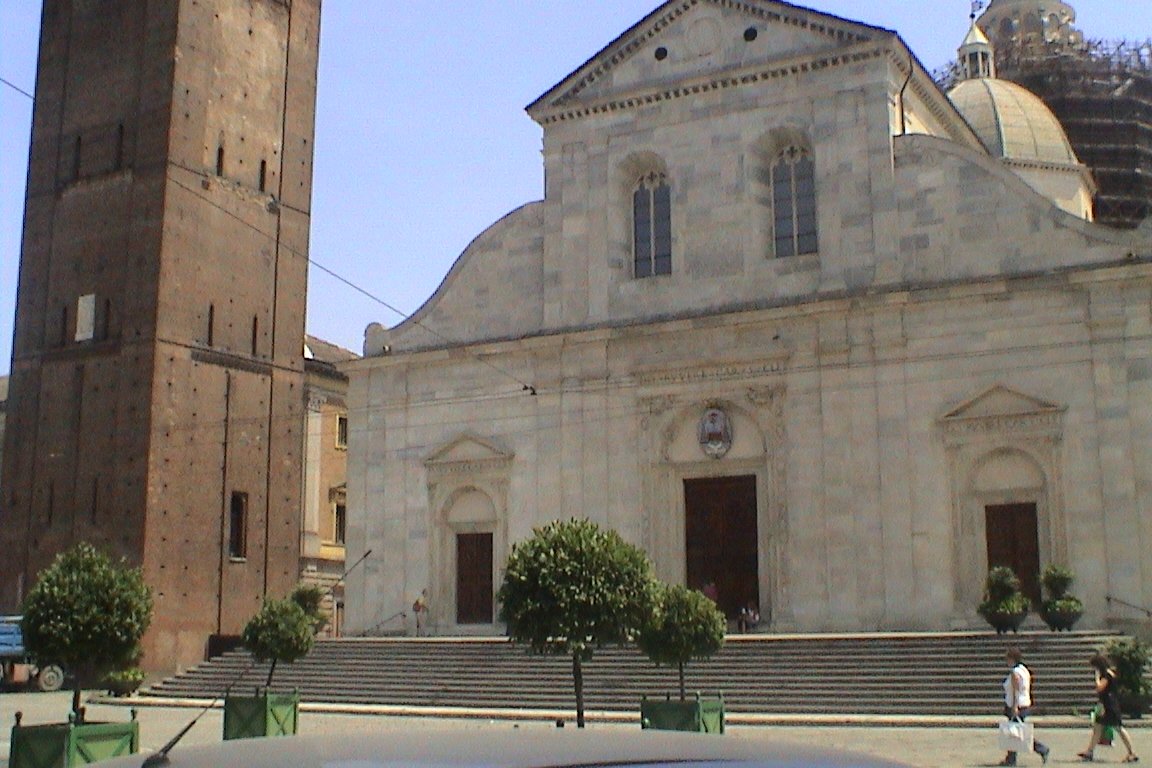
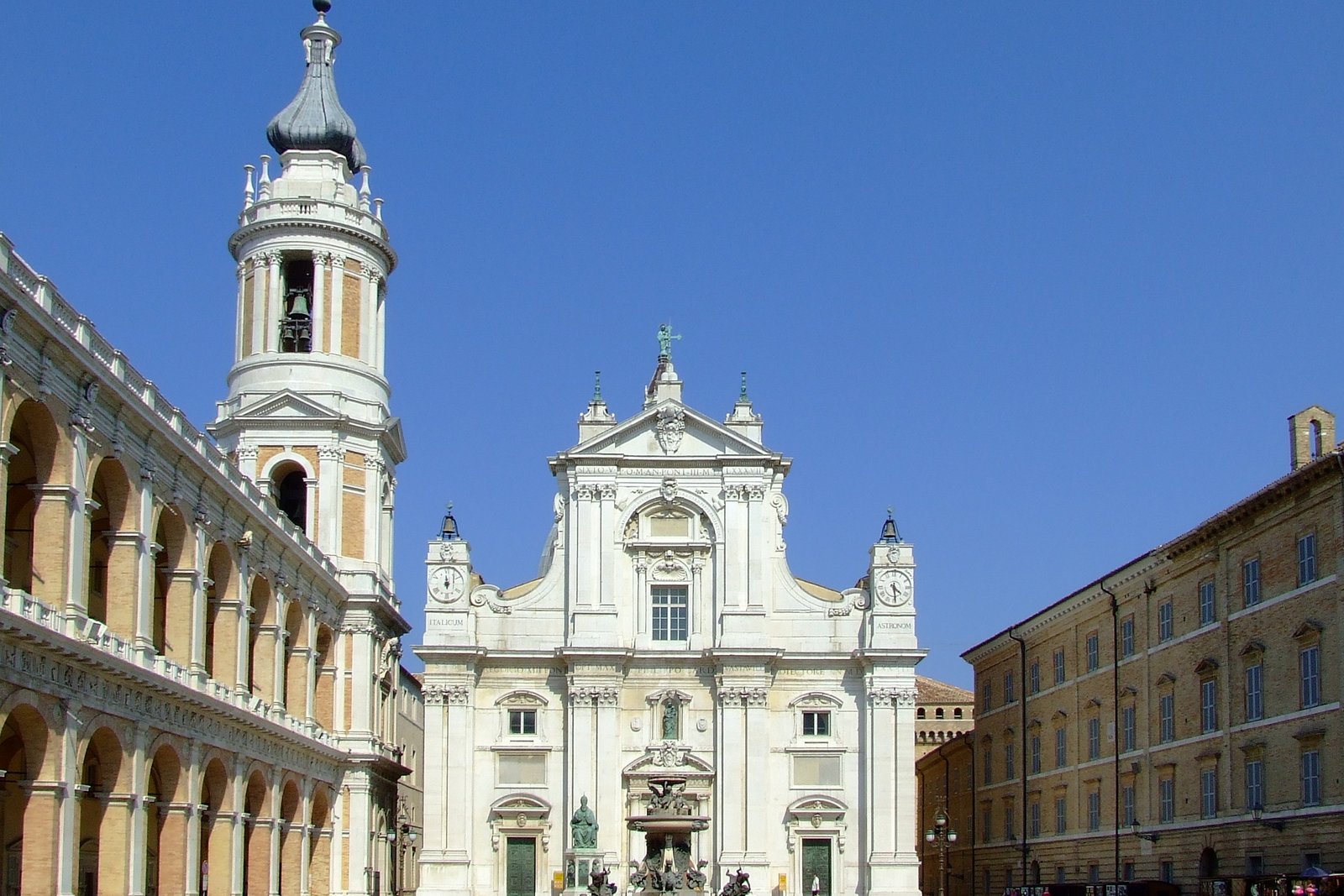
Photograph by Ambra75, Duomo di Torino, Turin, 2004 — CC BY-SA 4.0, Wikimedia Commons.
The relic in question, known today as the Shroud of Turin, is a length of linen roughly fourteen feet long bearing the faint, photographically reversed image of a man's body showing wounds consistent with scourging and crucifixion. Its authenticity as Christ's actual burial cloth has never been formally defined as Catholic doctrine and remains a subject of genuine scientific and historical debate, but its status as an object of profound devotion, regardless of the underlying historical question, has been firmly established for centuries.
The House of Savoy and a relic in search of a home
The Shroud's documented history in Europe traces to the mid-fourteenth century in France, and it came into the possession of the House of Savoy, the ruling dynasty of the region encompassing much of what is now northwestern Italy and parts of France, by the mid-fifteenth century. For over a century the Savoy family kept the relic at various residences as their capital and holdings shifted, until the dynasty moved its seat to Turin in 1563, bringing the Shroud with them to the city where it has remained ever since — a relocation driven primarily by political and dynastic considerations rather than any specific religious plan for the relic itself.
Once settled in Turin, the Savoy rulers recognized the need for a dedicated space worthy of housing so significant a devotional object, one that would connect the relic's presence directly to both the cathedral's religious authority and the ruling family's own palace and prestige. That ambition eventually produced one of the more remarkable architectural commissions of the Italian Baroque period.
Guarini's spiral dome
In 1668, the House of Savoy commissioned Guarino Guarini, a Theatine priest, mathematician, and architect known for structurally daring and geometrically complex designs, to build a dedicated chapel connecting the cathedral to the Royal Palace specifically to house the Shroud. Guarini's design, completed in 1694 after his own death partway through the project, centers on an extraordinary dome built from a series of interlocking stone arches that spiral upward toward a small oculus, constructed almost entirely from dark, richly veined black marble that gives the chapel's interior an atmosphere markedly different from the bright, restrained Renaissance cathedral it adjoins.
The chapel is widely regarded by architectural historians as one of the masterworks of Italian Baroque architecture, notable especially for the mathematical sophistication of its dome structure, which Guarini achieved through his own original theoretical work on geometry and structural engineering — expertise unusual for an architect of his era, most of whom worked from empirical building tradition rather than formal mathematical analysis.
Fire, restoration, and rare public display
The chapel suffered a severe fire in April 1997, an event that badly damaged much of its interior stonework and structure, though the Shroud itself survived undamaged because it happened to be stored elsewhere in the cathedral complex for conservation work at the time, allowing firefighters to remove it safely without having to enter the burning chapel. The subsequent restoration of Guarini's damaged structure proved a lengthy and technically demanding undertaking, and the chapel did not fully reopen to the public until 2018, over two decades after the fire.
The Shroud itself is not permanently on public display; it remains most of the time in a protective, climate-controlled case, and the cathedral only opens it to public viewing during infrequent special expositions, sometimes separated by years or even decades, that draw enormous crowds of pilgrims and visitors from around the world. Recent expositions took place in 2010, 2015, and again in 2025, each drawing millions of visitors to Turin over the weeks the relic was displayed.
Ownership, devotion, and ongoing scientific debate
Ownership of the Shroud passed from the House of Savoy to the Catholic Church itself in 1983, following the will of the last king of Italy, Umberto II, formalizing an association between the relic and the papacy that had already existed devotionally for centuries. Scientific investigation of the Shroud, including a controversial 1988 radiocarbon dating test that suggested a medieval origin, continues to generate debate among researchers, historians, and theologians, with the Church itself maintaining an official position of neutrality regarding the cloth's ultimate authenticity while continuing to honor it as a profound object of devotion.
Whatever its ultimate origin, Turin Cathedral and Guarini's extraordinary chapel remain, together, one of the most visited religious sites in Italy — a Renaissance church whose modest architectural profile belies the presence, in the chapel built specifically to hold it, of one of Christianity's most debated and most venerated relics.
Trivia
What is Turin Cathedral?
What is the Chapel of the Holy Shroud?
How did the Shroud of Turin come to be kept in Turin?
Is the Shroud of Turin always on public display?
What happened to the Chapel of the Holy Shroud in 1997?
Related Reading