Our Lady of Einsiedeln: Switzerland's Black Madonna

A hermit's death, and a monastery born from it
Switzerland's most visited Marian shrine did not begin with the Virgin Mary at all, but with the murder of a single monk. In the early 9th century, a Benedictine named Meinrad left his community to live alone as a hermit deep in a forest in what is now the canton of Schwyz — a region whose very name, Einsiedeln, comes from the German word for "hermitage." Tradition holds that Meinrad settled there with an image of Mary, which he kept with him through years of solitary prayer, and that his reputation for holiness drew visitors even to his remote clearing.
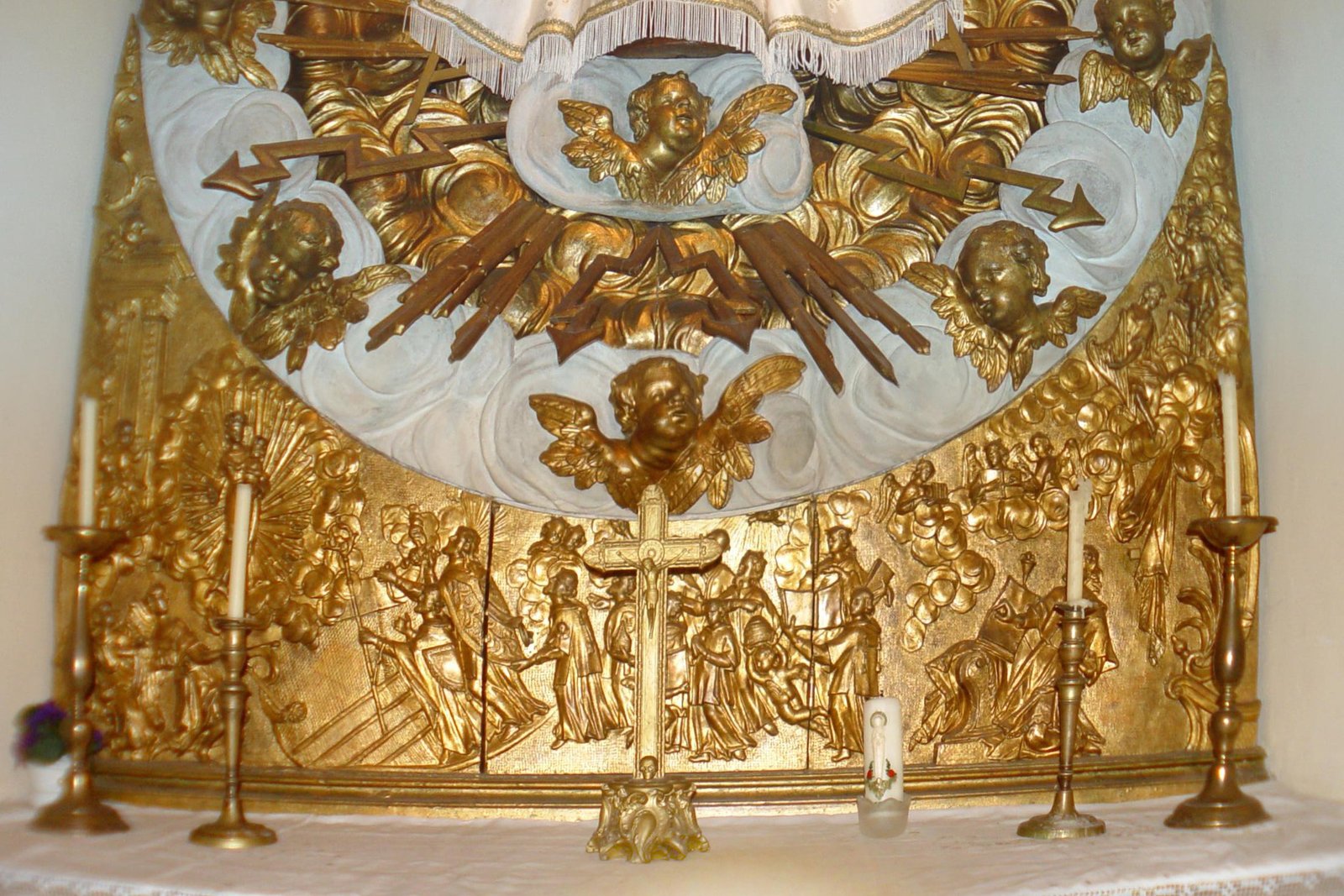
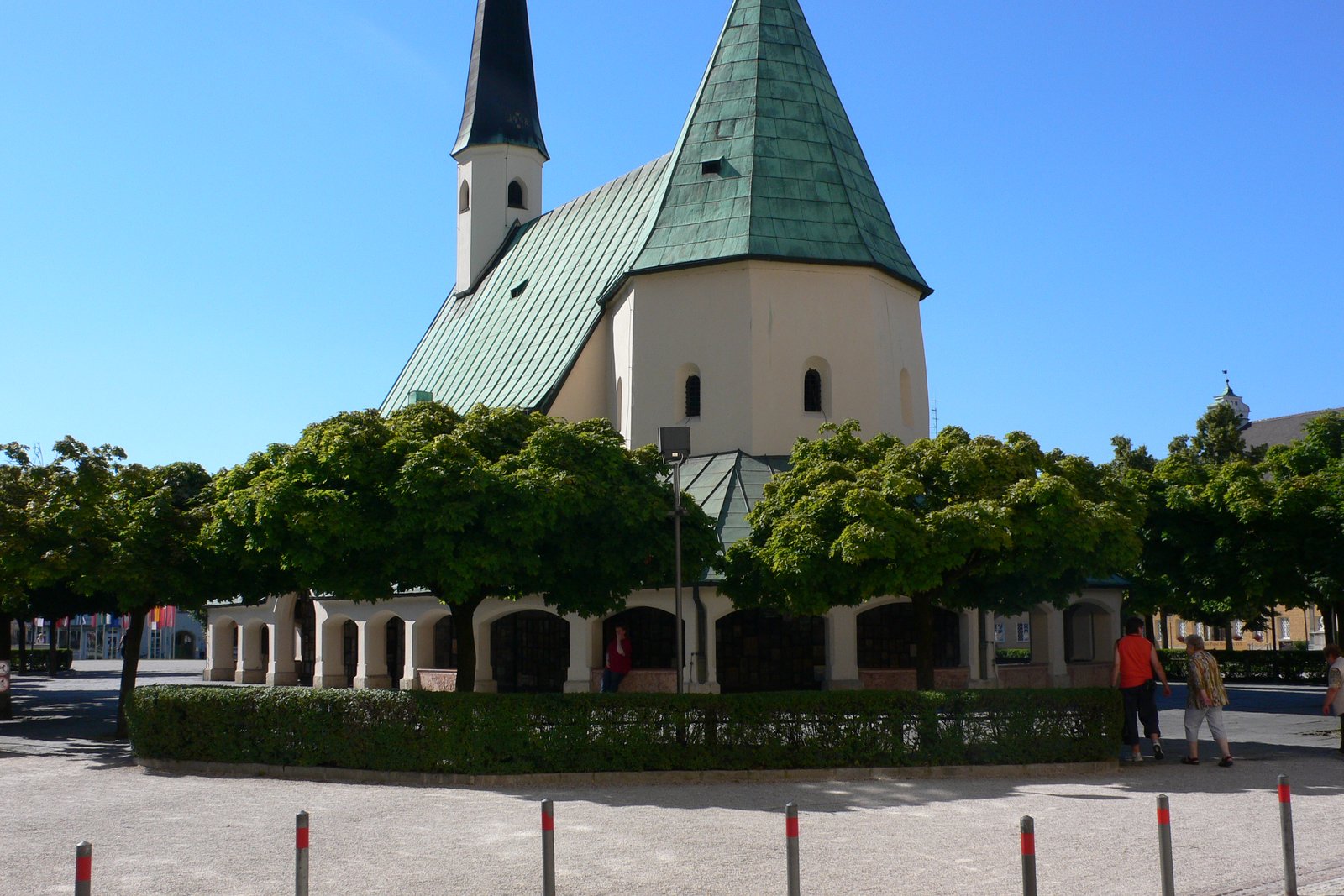
Photo by Martin Dürrschnabel (2005), via Wikimedia Commons, CC BY-SA 2.5.
That same reputation, by one grim account, is what killed him. Around the year 861, two robbers came to Meinrad's hermitage believing, wrongly, that pilgrims' donations had left him with some hidden wealth. Finding nothing to steal, they murdered him anyway. The legend adds a detail meant to underline his sanctity in death as in life: two ravens he had kept are said to have followed the killers afterward, their persistent presence eventually helping to expose the murderers' guilt. Whatever the precise facts behind a story recorded well after the fact, Meinrad's death did not end the site's significance — it founded it. Other hermits and monks gradually gathered at the place of his hermitage, and by 934 a formal Benedictine community had been established there, building the monastery that still stands today.
The legend of the "Miraculous Dedication"
Einsiedeln Abbey's own tradition holds that its original church received no ordinary consecration. According to the story passed down by the monastic community, Bishop Conrad of Constance arrived in 948 to formally consecrate the new church, as was customary, only to find — by the account later recorded — that Christ himself had already performed the consecration the previous night, appearing with a company of angels and saints to bless the building personally. When the bishop began the rite anyway the next morning, a voice is said to have interrupted him three times, declaring the church already consecrated by divine hand.
This story, still commemorated by the abbey each September 14 as the Feast of the Miraculous Dedication, is worth describing precisely as what it is: a cherished devotional tradition recorded and maintained by the monastic community itself, not a claim the wider Catholic Church has formally investigated and dogmatically ratified. Pope after pope granted indulgences connected to pilgrimage at Einsiedeln over the centuries, a sign of long-standing ecclesiastical favor toward the devotion, but favor and formal doctrinal certification are not the same thing — and the distinction matters for anyone trying to understand what, exactly, Einsiedeln asks pilgrims to believe.
The statue that centuries of candlelight turned black
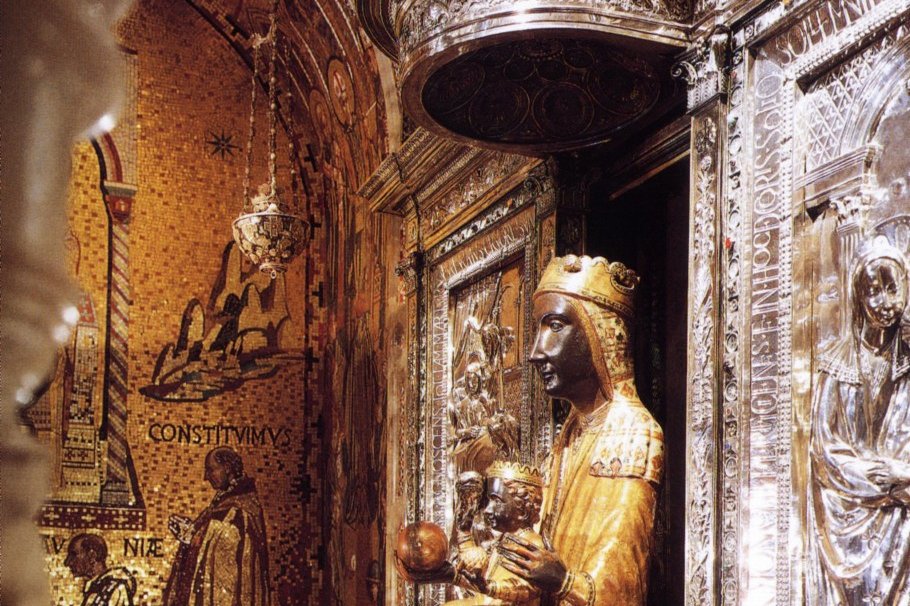
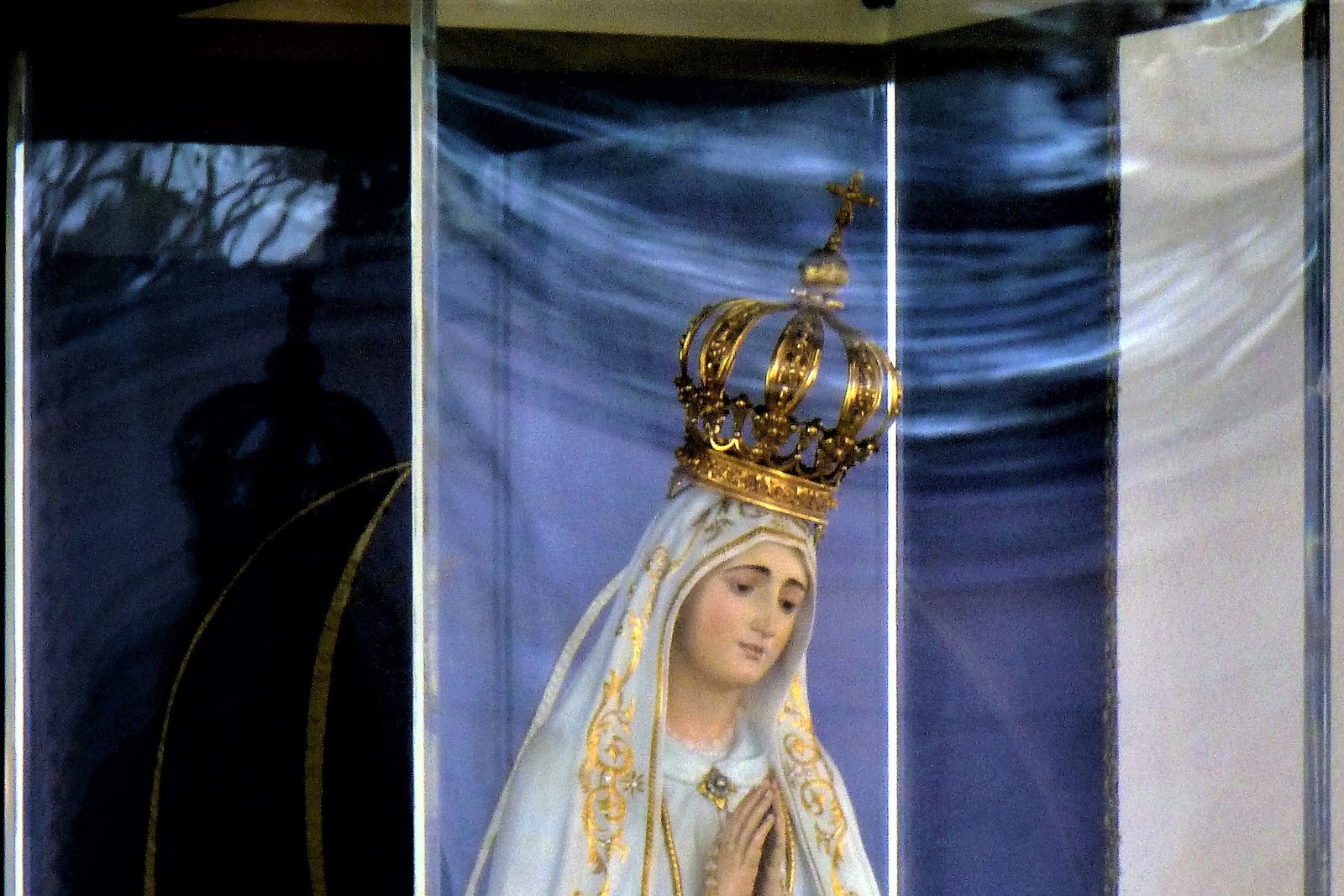
The object at the center of all this devotion is a relatively small wooden statue, generally dated to around the 15th century, showing Mary crowned and holding the Christ child, now dressed in an elaborate embroidered gown and set within a dramatic gilded niche added in the Baroque period, when the current basilica was built. Like a number of other venerated Marian images across Europe — the kind of devotion scholars broadly group under the term "Black Madonna" — the statue's face and hands have darkened dramatically over the centuries, almost certainly from the cumulative effect of smoke and soot rising from the countless oil lamps and candles lit before it by generations of pilgrims. Conservators and historians generally favor this straightforward explanation over more speculative theories sometimes proposed for other black madonnas elsewhere, though the precise original coloring beneath the darkening is no longer recoverable without more invasive examination than the abbey has chosen to pursue.
The current statue is itself believed to be a replacement for an older image, possibly connected to the very figure Meinrad is said to have carried with him as a hermit — though, as with so much of the shrine's earliest history, that continuity rests on tradition handed down within the community rather than independently verifiable documentation reaching back to the 9th century.
A living pilgrimage, not a museum piece
What sets Einsiedeln apart from many medieval shrines is how little its devotional life has faded. The abbey remains one of the most visited pilgrimage sites in the German-speaking world, drawing Catholics from across Switzerland, Germany, and Austria, particularly for major Marian feasts, alongside visitors drawn simply by the scale and beauty of the Baroque basilica that now houses the statue. The Benedictine community has also built a reputation well beyond strictly devotional circles through its boarding school, Stiftsschule Einsiedeln, and its associated boys' choir, both carrying forward a monastic tradition of education and liturgical music that stretches back, in some form, to the abbey's earliest centuries.
That continuity — a hermit's death becoming a monastery, a modest wooden statue outlasting its own original paint, a legend of Christ's personal blessing still celebrated every September — is part of what makes Einsiedeln more than a historical curiosity. As the Catechism notes regarding devotion to sacred images generally, the honor given passes through the image to what it represents (no. 1674), and at Einsiedeln what it represents has drawn pilgrims, almost without interruption, for well over a thousand years.
Trivia
Who was Saint Meinrad, and why is he connected to Einsiedeln?
What is the 'Miraculous Dedication' legend of Einsiedeln?
Why is the statue of Our Lady of Einsiedeln black?
Is Einsiedeln still an active pilgrimage site today?
Related Reading