The Image of Edessa: Christianity's Oldest Miraculous Portrait

A face sent by courier, centuries before photography
For most of the Byzantine Empire's long history, the single most venerated image in Constantinople was not a painted icon but a cloth — a small, worn piece of fabric kept in its own chapel, said to bear a likeness of Christ's face that no human artist had ever painted. It was called the Mandylion, from a Greek word for a cloth or towel, and it carried a legend older and stranger than almost any other relic later history produced: that Christ himself had pressed it to his own face during his lifetime, and it had healed a dying king on the strength of that contact alone.
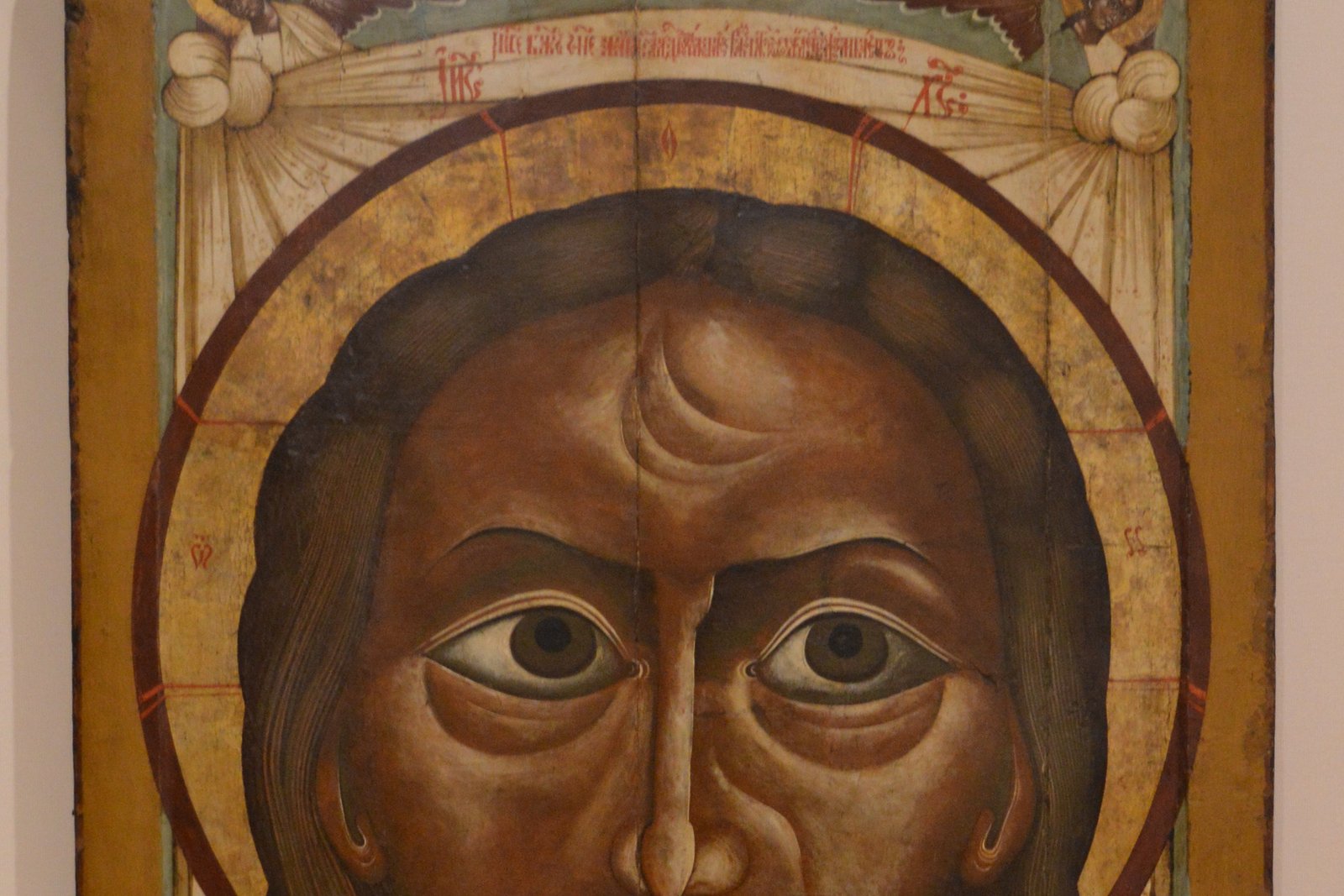
Icon of the Mandylion, 1685, Novgorod Kremlin Museum. Public domain, via Wikimedia Commons.
The legend of King Abgar
The story begins with Abgar V, a historical ruler of Edessa, a city in upper Mesopotamia (in what is now southeastern Turkey) during the 1st century AD. The earliest written trace of this tradition comes from Eusebius of Caesarea, the 4th-century historian often called the father of Church history, who records in his Ecclesiastical History that he personally examined documents in the Edessan archives describing an exchange of letters between Abgar and Jesus. In Eusebius's account, Abgar, suffering from a serious illness, wrote to Jesus asking him to come and heal him; Jesus replied by letter, declining to travel himself but promising to send a disciple after his ascension, which he did in the person of the apostle Thaddeus, who cured the king.
It's worth being exact about what Eusebius actually wrote, because the later legend added something he never mentioned: an image. Eusebius's 4th-century account describes only letters — no cloth, no face, no miraculous portrait. The image enters the story only in later versions of the legend, from the 6th century onward, which describe Thaddeus (or, in some versions, a messenger sent during Jesus's own lifetime) bringing not just a healing message but a cloth imprinted with Christ's face, created when Jesus pressed it to his skin. This is the point where sober history and devotional legend part ways, and it should be treated as legend rather than an established 1st-century fact.
From a provincial shrine to an imperial treasure
Whatever its real origin, a cloth venerated as the Image of Edessa was a documented object of devotion in the city of Edessa by at least the 6th century, credited locally with having miraculously protected the city during a Persian siege in 544. Its fame only grew from there, and by the 10th century the Byzantine Empire wanted it badly enough to make its acquisition a matter of state policy.
In 944 AD, the Byzantine court arranged for the relic to be transferred from Edessa (by then under different political control) to Constantinople, in an elaborate ceremonial procession that became one of the great public religious events of the Byzantine capital. The event was significant enough that the Byzantine liturgical calendar afterward commemorated it annually as the Feast of the Transfer of the Holy Mandylion — a date and ceremony recorded in Byzantine chronicles, which puts this part of the story on far firmer historical ground than the Abgar legend that preceded it by nine centuries. The Mandylion was enshrined in the Pharos Chapel of the imperial palace, among the most prized relics of the entire empire, alongside other treasures claimed to include fragments of the True Cross and the Crown of Thorns.
Disappearance after 1204
The Mandylion's documented history in Constantinople ends abruptly and violently. In 1204, the knights of the Fourth Crusade — originally bound for Jerusalem, but diverted by politics, debt, and opportunity — besieged and sacked Constantinople itself, a catastrophe for the Byzantine Empire that it never fully recovered from. The city's enormous accumulated store of relics, including the Mandylion, was scattered in the plunder that followed: some objects were shipped west to European churches as trophies and gifts, some were destroyed, and many simply vanish from any reliable historical record at that point.
What happened to the Image of Edessa specifically after 1204 is genuinely unknown. Various later European relics claimed, with varying credibility, to be the lost Mandylion or a copy of it, but no single claim has achieved broad historical acceptance, and the object's ultimate fate remains an open question rather than a settled one.
A contested link to the Shroud of Turin
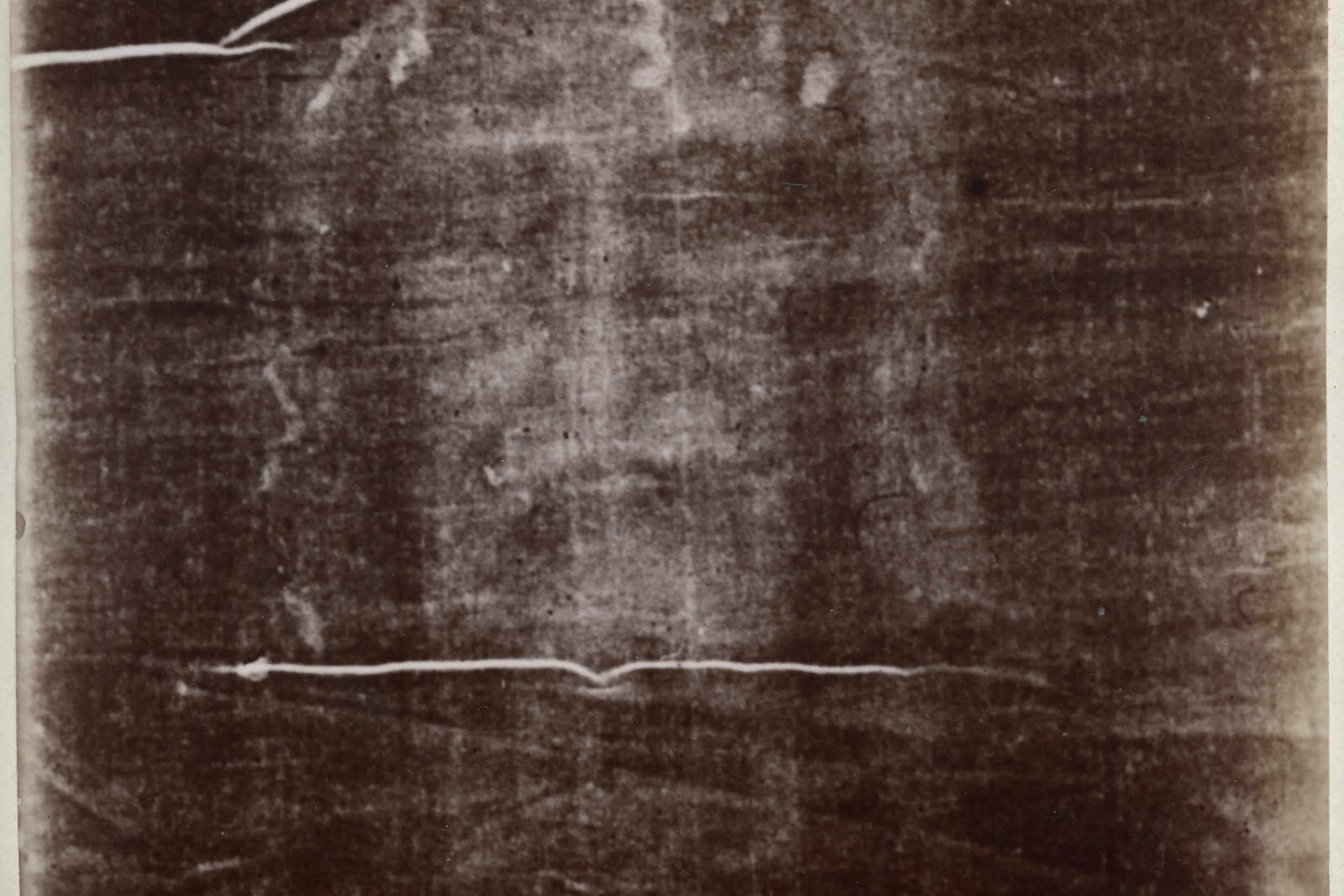
That unresolved gap has fed one of the more intriguing historical hypotheses connected to another, much better-documented relic: the Shroud of Turin. Some researchers, pointing to similarities in the surviving descriptions and to the coincidental timing of the Shroud's own documented history beginning not long after the Mandylion disappears from the record, have proposed that the two objects might be connected — perhaps even the same relic, folded or displayed in a way that showed only the face in its earlier life as the "Image of Edessa," before later becoming known as a full burial shroud.
This should be stated plainly for what it is: a contested historical hypothesis, not an established fact. No scholarly consensus supports it, and skeptics note real difficulties with the theory, including the simple mismatch between a face-only image and a full-body image, and the complete absence of any direct textual link connecting the two objects by name in medieval sources. It remains one of the more tantalizing unsolved puzzles in the long, tangled history of Christian relics — alongside questions still debated about the Veil of Veronica, another face-of-Christ tradition with its own separate and equally uncertain origin story.
Why the mystery still matters
Part of what makes the Image of Edessa worth knowing about, even without a surviving object to visit or venerate, is what it reveals about how far back the Christian impulse to seek a direct, physical likeness of Christ's face actually goes. Centuries before painted icons became theologically normalized in the Eastern Church, and centuries before the Shroud of Turin became a modern subject of forensic science, Christians in Edessa were already telling a story about a cloth that let them look, however imperfectly, at the face they could not otherwise see. Whether or not that particular cloth survives anywhere today, the longing behind the legend has outlived the object itself.
Trivia
What is the Image of Edessa?
Is the story of King Abgar based on a real historical record?
What happened to the Image of Edessa in 944 AD?
Where is the Image of Edessa today?
Is the Image of Edessa connected to the Shroud of Turin?
Related Reading