Apostolic Succession Explained: From Peter to Today's Bishops

A commission meant to outlast its first recipients
The apostles were never expected, within the New Testament's own logic, to carry out their mission alone or finish it within their own lifetimes. Christ sent them to "make disciples of all nations" and promised to be with them "always, until the end of the age" (Matthew 28:19-20, NABRE) — a promise stretching far beyond the decades the original Twelve would live. The question apostolic succession answers is a practical one that follows directly from that promise: if the mission was meant to continue after the apostles died, how would their specific authority — to teach, govern, and administer the sacraments in Christ's name — actually continue with it?
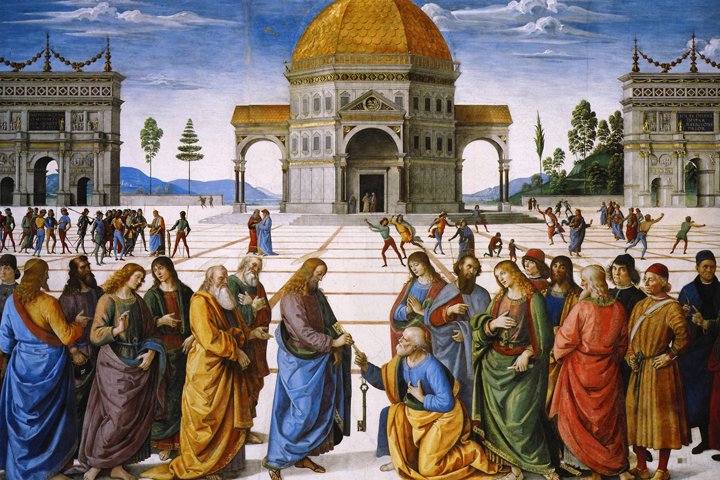
Pietro Perugino, Christ Handing the Keys to Saint Peter, 1481-82, Sistine Chapel, Vatican — public domain.
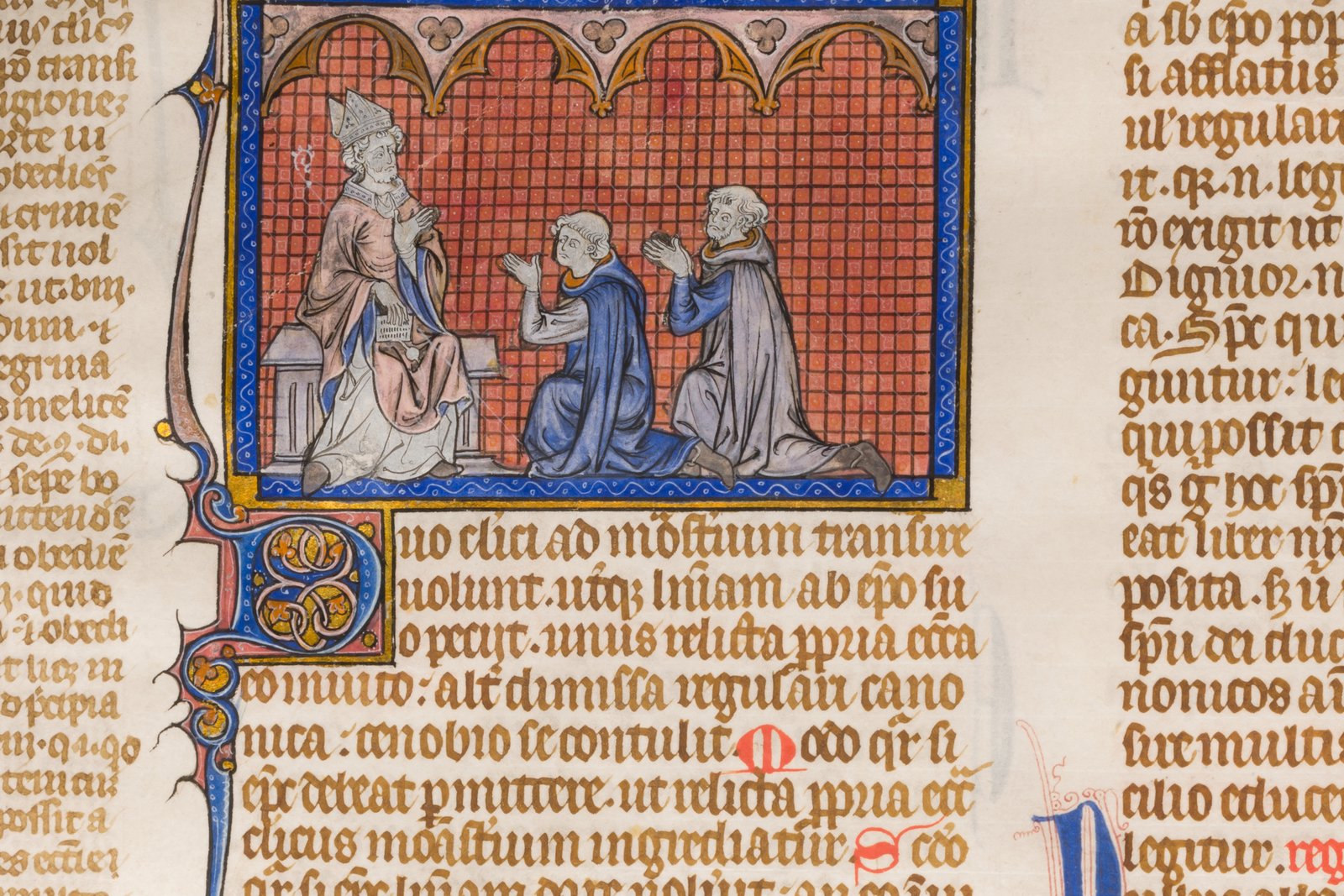
The Catholic answer is ordination: the apostles laid hands on chosen successors, commissioning them to carry the same ministry forward, and those successors did the same for the next generation, in an unbroken chain reaching to today's bishops. The Catechism describes this directly: "In order that the mission entrusted to them might be continued after their death, [the apostles] consigned, by will and testament, as it were, to their immediate collaborators the duty of completing and consolidating the work they had begun" (CCC 861).
The scriptural seeds of the practice
The pattern appears early in the New Testament itself. In Acts chapter 6, facing a practical dispute over the care of widows, the apostles have the community select seven men, and then "They presented these men to the apostles who prayed and laid hands on them." (Douay-Rheims, Acts 6:6) — a specific ritual gesture of commissioning, not just an administrative appointment. Later in Acts, Paul and Barnabas are described ordaining elders "in every church" they had founded, again "with prayer and fasting" (Acts 14:23). Paul later reminds Timothy, whom he had personally commissioned, not to "neglect the grace that is in thee, which was given thee by prophesy, with imposition of the hands of the priesthood" (1 Timothy 4:14) — language the Church reads as describing a real transmission of ministerial authority, passed hand to hand.
What the earliest Christian writers said about it
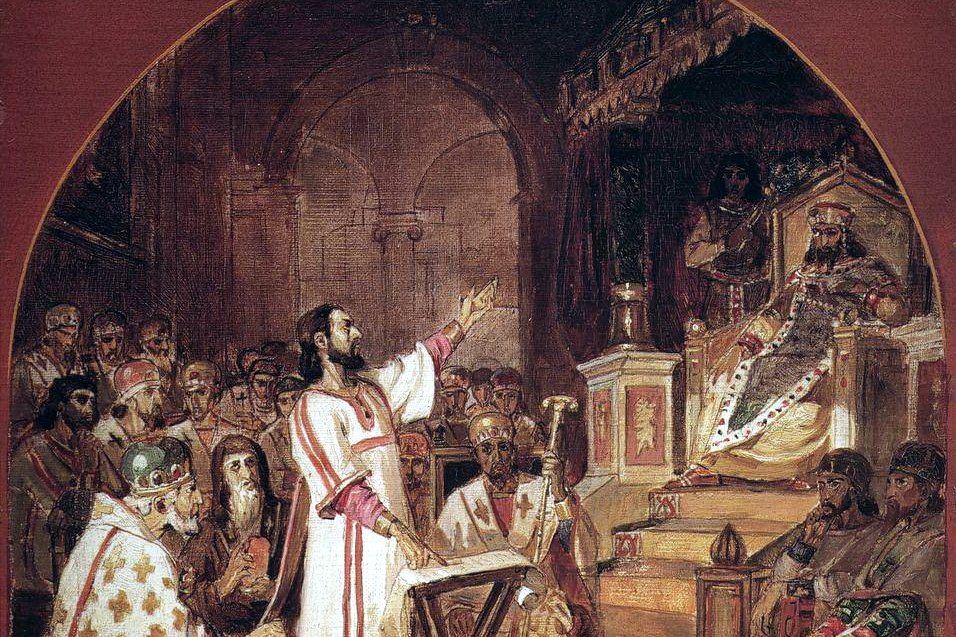
Outside the New Testament itself, the concept appears explicitly and early. Saint Clement of Rome, writing around the year 96 in a letter to the church at Corinth, describes the apostles appointing bishops and deacons and then providing for their orderly succession, so the ministry would continue after the apostles' own deaths. A few decades later, Saint Irenaeus of Lyons, writing against various early heresies, appealed directly to the traceable, public succession of bishops in major churches — including Rome — as proof of continuity with apostolic teaching, listing the bishops of Rome in unbroken order back to Peter and Paul. These aren't isolated claims from centuries later; they're some of the earliest surviving Christian writings outside the New Testament, describing succession as an already-established and important feature of Church life.
Peter's distinct place within the succession
Every bishop today shares in apostolic succession, but the Bishop of Rome — the Pope — occupies a unique position within it, rooted in Peter's own distinct role among the Twelve. When Peter confesses Jesus as "the Christ, the Son of the living God," Jesus responds: "you are Peter, and upon this rock I will build my church," adding, "I will give you the keys to the kingdom of heaven" (Matthew 16:18-19, NABRE). The Catechism describes this as making Peter the "rock" of the Church in a way given to him specifically, even while the wider "office of binding and loosing" was also given to the whole college of apostles together (CCC 881). The Chair of Saint Peter is the traditional symbol of this specific Petrine authority, continued today by the Pope as Peter's successor in the see of Rome — while every other bishop, in their own diocese, shares in the broader apostolic succession without holding that particular Petrine office. Saint Peter the Apostle himself, whose life and eventual martyrdom in Rome anchor this entire tradition, is worth knowing in his own right for how that authority came to be centered where it is.
How the chain actually works today
In practice, a man is ordained a bishop by at least one, and usually several, already-validly-ordained bishops, through prayer and the laying on of hands within a specific liturgical rite — the same essential gesture described in Acts. Careful, if imperfect, historical records allow many dioceses to document long unbroken chains of episcopal ordination, though the Church's confidence in apostolic succession doesn't rest on paperwork alone; it rests on the theological claim that a real, valid, unbroken sacramental transmission has occurred since the apostles, verified through the Church's own consistent practice and teaching across the centuries.
Not unique to Catholicism, but understood differently
The Eastern Orthodox Churches maintain their own apostolic succession through an equally ancient, unbroken line of episcopal ordination, and the Catholic Church generally recognizes Orthodox ordinations as valid, even amid the doctrinal and jurisdictional divisions separating the two communions. Anglican orders have a more contested history on this specific question within Catholic assessment. Most Protestant traditions arising from the Reformation did not retain the historic episcopate in continuous form at all, generally holding that the authority to teach and minister flows from Scripture and the community of believers rather than from a traceable chain of episcopal ordination — one more expression of the broader authority question explored in Catholic vs. Protestant Differences.
Trivia
What exactly is apostolic succession?
Where does this idea come from in Scripture or early Church practice?
Is apostolic succession only about the Pope?
Do other Christian traditions claim apostolic succession too?
Why does an unbroken chain of ordination matter theologically?
Related Reading