Jacob Wrestling with the Angel: Genesis 32 Explained

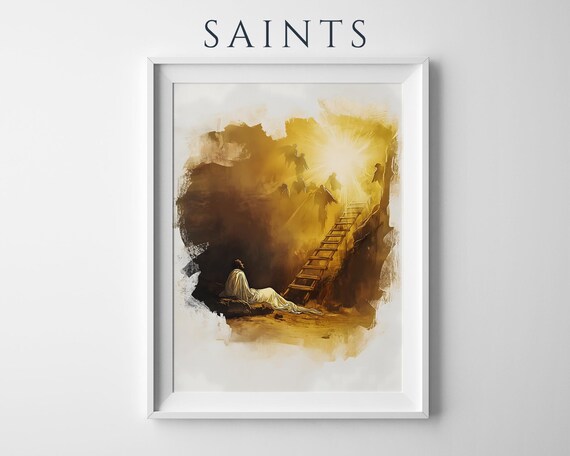
Alone on the riverbank
Genesis 32 catches Jacob at one of the most anxious moments of his life. Twenty years earlier, he had tricked his father Isaac and his brother Esau out of Esau's blessing and birthright, then fled the country to escape Esau's fury. Now, returning home wealthy and with a large household of his own, Jacob learns that Esau is approaching with four hundred men — a detail that reads, understandably, as an ominous sign to a man who still remembers exactly what he did to provoke that same brother's anger decades before. Terrified, Jacob divides his camp, sends elaborate gifts ahead to appease Esau, and prays openly for deliverance, admitting his own unworthiness even as he asks God to honor an earlier promise of protection.
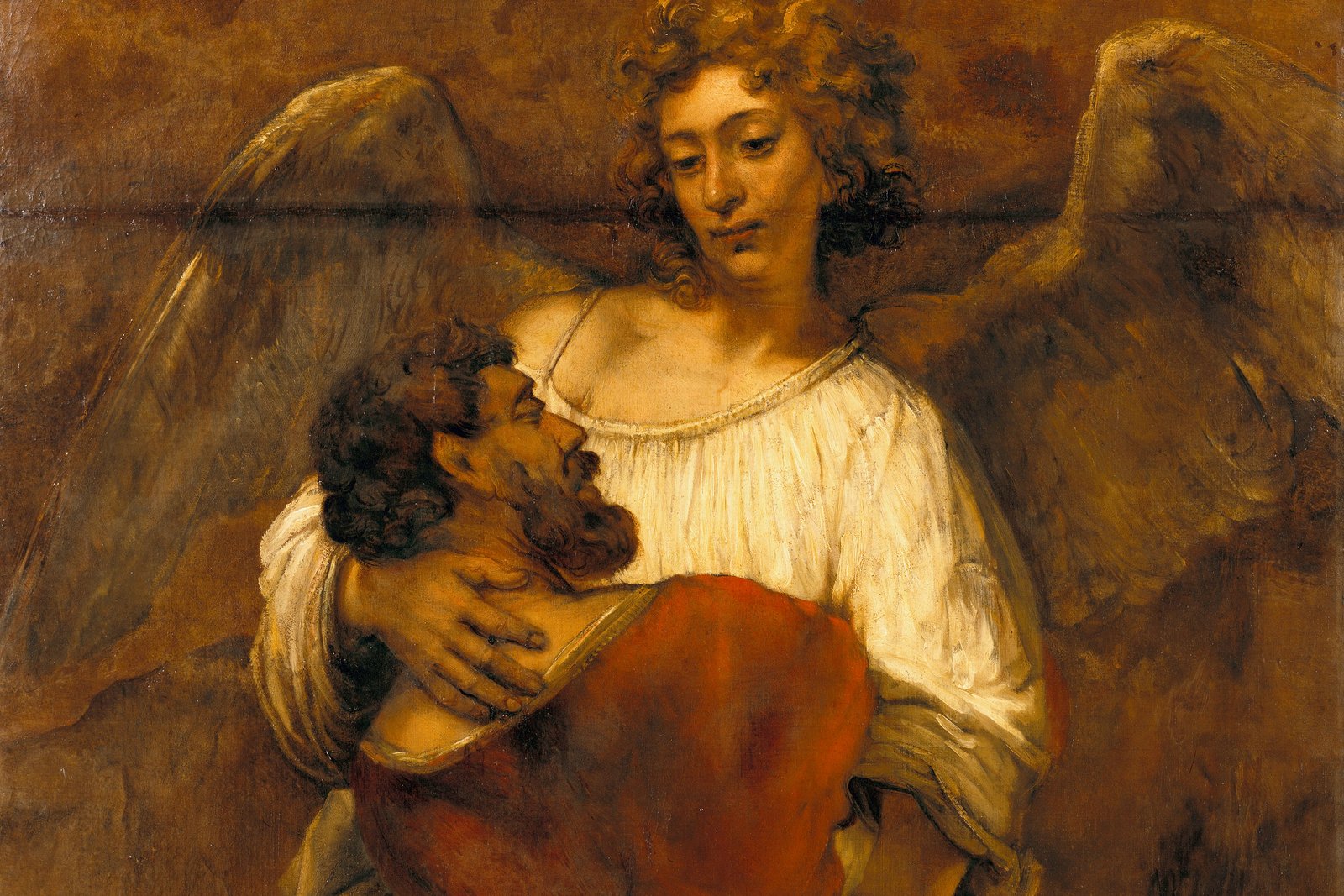
Rembrandt van Rijn, Jacob Wrestling with the Angel, c. 1659, Gemäldegalerie, Berlin — public domain.
That night, Jacob sends his two wives, two servants, eleven children, and all his possessions across the Jabbok River ford, and Genesis 32:24 records the result with stark simplicity: "Jacob was left there alone." It is in that isolation — no family, no servants, no possessions, nothing left to negotiate with or hide behind — that the strange encounter begins.
A struggle with no clear opponent
"Then a man wrestled with him until the break of dawn" (Genesis 32:25, NABRE). The text offers no introduction for this figure, no explanation of where he came from or why the confrontation started. What follows is described in unmistakably physical terms — a real, prolonged struggle, not a vision or a dream, continuing for hours in the dark. Only when the contest fails to resolve does the man escalate: "When the man saw that he could not prevail over him, he struck Jacob's hip at its socket, so that Jacob's socket was dislocated as he wrestled with him" (Genesis 32:26, NABRE) — a wound severe enough to leave Jacob permanently changed, yet not severe enough, remarkably, to make him release his grip.
Even injured, Jacob refuses to let the man go once the stranger asks to be freed as dawn approaches, insisting instead, "I will not let you go until you bless me." It is a striking demand to make of an opponent who has just injured him and whose identity remains completely unknown — Jacob is not fighting simply to survive the encounter, but bargaining for something from it, treating the struggle itself as an opportunity rather than only a threat.
A new name for a change man
Before granting the blessing, the man asks Jacob's name, and when Jacob answers, the response reframes the entire encounter: "You shall no longer be named Jacob, but Israel, because you have contended with divine and human beings and have prevailed" (Genesis 32:29, NABRE). The name Israel is presented in the text as connected to struggle — traditionally understood along the lines of "he struggles with God" or "God struggles" — and from this chapter forward in Genesis and throughout the rest of the Old Testament, Israel becomes the name not just of Jacob personally but of the entire people descended from his twelve sons, a naming moment with consequences that extend across the whole remaining biblical narrative.
Jacob, in turn, tries to learn who has just renamed him. "Please tell me your name," he asks, and receives only a deflection: "Why do you ask for my name?" — followed immediately by the blessing Jacob had demanded, with the man's identity still withheld (Genesis 32:29-30, NABRE). Jacob names the place Peniel, meaning "face of God," explaining, "because I have seen God face to face... yet my life has been spared" (Genesis 32:31) — Jacob's own interpretation of the encounter, offered by him rather than confirmed explicitly by the stranger himself.
An identity Genesis leaves open
Genesis 32 never states outright that the man was God, an angel, or something else entirely, and this ambiguity has occupied readers and commentators for millennia. The prophet Hosea, writing centuries later, offers the Bible's closest thing to independent commentary on the episode, describing Jacob as having "contended with an angel and prevailed" (Hosea 12:5, NABRE) — a brief reference that has shaped much of the later Jewish and Christian tradition reading the figure as an angelic being rather than God directly, even though Jacob's own words at Peniel suggest he understood the encounter as an encounter with God himself. Catholic and Jewish commentary alike have generally treated this as one of Scripture's genuinely open theological questions rather than a point requiring a single settled answer.
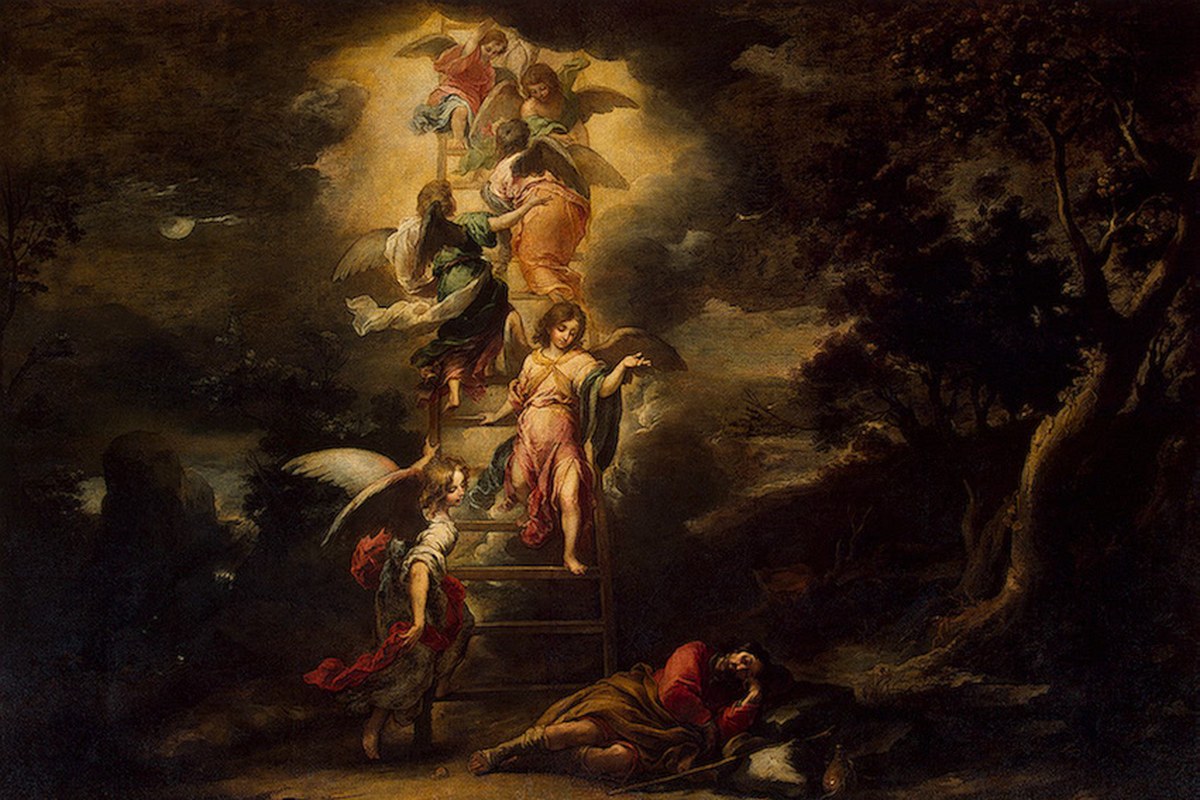
What the text leaves unambiguous is the visible, lasting mark the night left on Jacob: Genesis 32:32 notes that his descendants avoided eating the sciatic muscle near the hip because of the injury, a dietary practice the text ties directly back to this single night by the Jabbok. For the earlier vision that first revealed God's presence to Jacob during his flight from Esau decades before this encounter, see the companion article on Jacob's Ladder — two very different nighttime encounters, twenty years and a changed man apart, both marking turning points in the same life.
Trivia
Where and when did Jacob wrestle with the angel?
Does the Bible actually call the figure an angel?
What injury did Jacob receive from the wrestling match?
Why was Jacob's name changed to Israel?
Did Jacob ever learn the stranger's name?
Related Reading