Catholic Wedding Customs and Traditions Explained

Two ceremonies wearing the same clothes
Part of what makes Catholic weddings confusing to sort out is that two very different things happen at once: a legal, cultural event (a wedding, with all its regional customs) and a sacramental one (the Church's rite of Matrimony). Guests mostly experience the first — flowers, a procession, a reception afterward. The Church is fully focused on the second, and the Sacrament of Marriage it confers doesn't depend on any of the decorative choices layered around it. A couple could get every custom "wrong" by convention and still be validly and fully married in the Church's eyes, because what makes the sacrament happen is narrower and more specific than most guests assume.
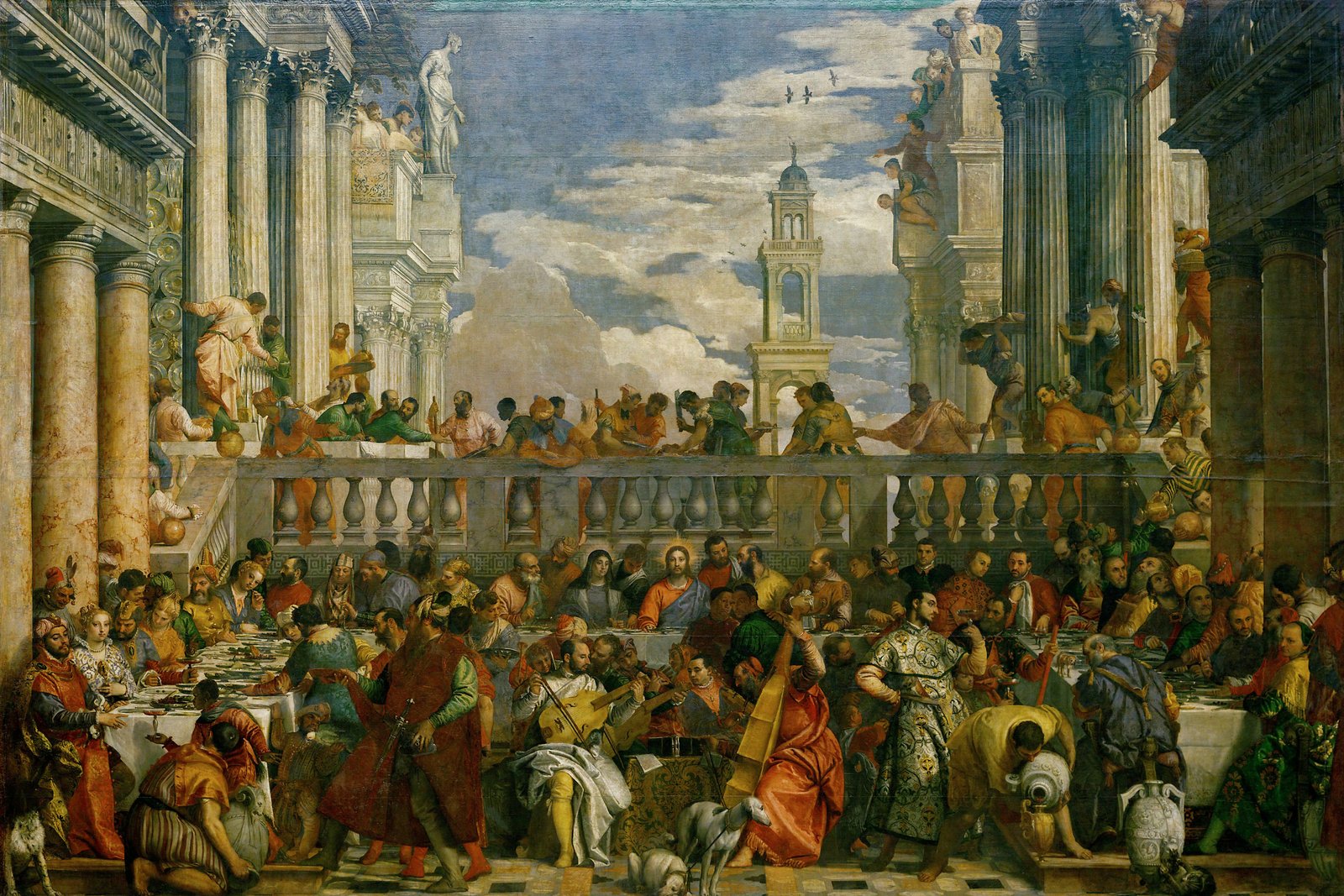
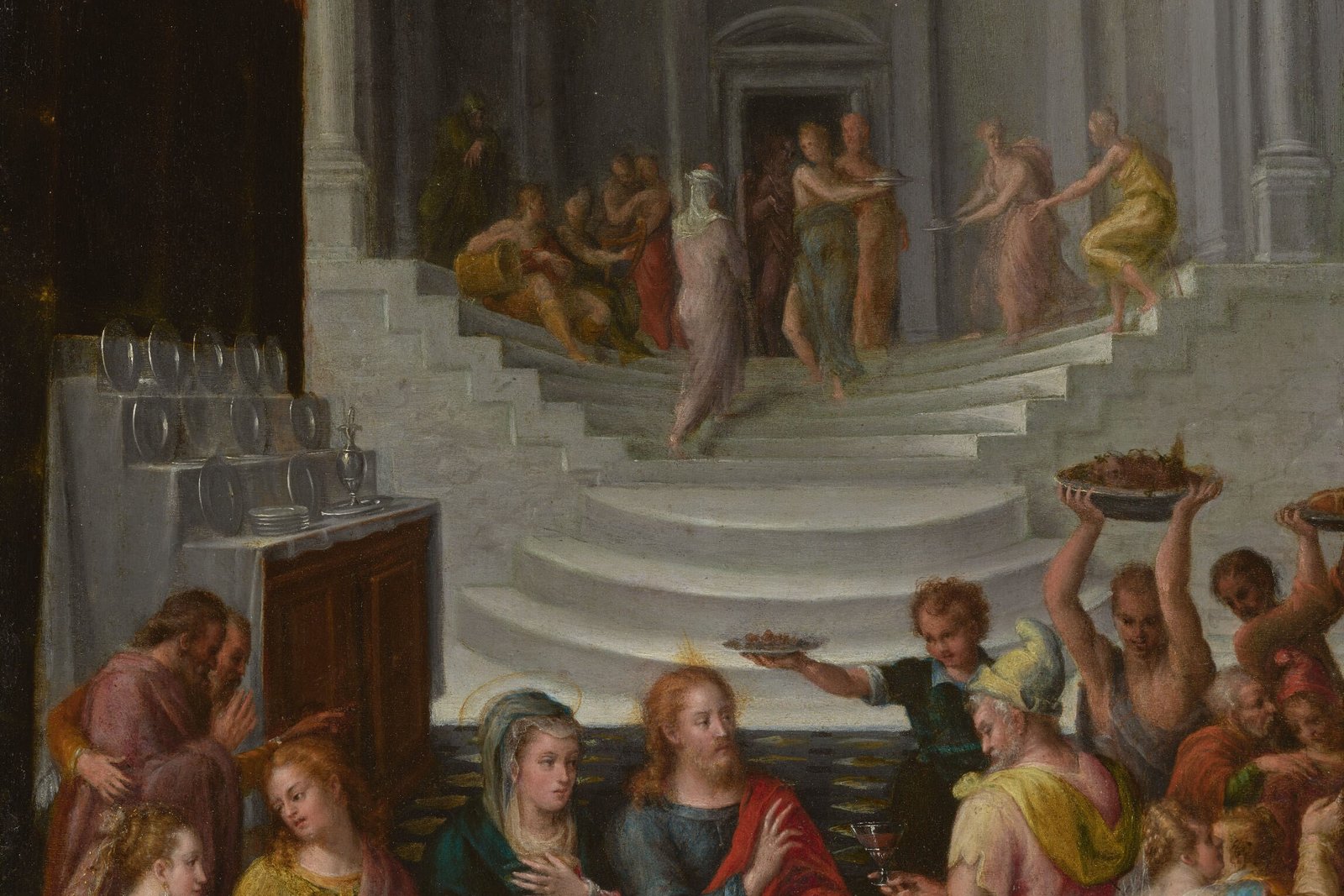
Paolo Veronese, "The Marriage at Cana," 1563, Musée du Louvre, Paris — public domain.
The parts that are actually required
Strip away the flowers and the processional music, and the Catholic rite of marriage has a fairly short list of essential elements. The couple exchanges free, informed consent — the vows — in the presence of a priest or deacon (who serves as the Church's official witness) and at least two other witnesses. They typically exchange rings as a visible sign of that consent, though rings themselves aren't sacramentally required; some early forms of the rite didn't include them at all. If celebrated within a nuptial Mass, the couple then receives a nuptial blessing during the Liturgy of the Eucharist, and often receives Communion together for the first time as a married couple. Everything that happens is meant to make one thing unmistakably clear to everyone in the room: two people are freely, publicly giving themselves to each other for life.
Why "form" matters so much to the Church
Canon law requires Catholics to marry according to "canonical form" — before a priest or deacon and two witnesses, ordinarily in a Catholic church — a requirement that surprises couples who assume any officiant will do. This isn't bureaucratic fussiness. The Church treats marriage as a public, communal act with consequences for the whole community of the faithful, not a private agreement between two people, so it insists the exchange of consent happen in a form the Church itself can recognize and later attest to if a question about validity ever arises. A bishop can dispense from this requirement in particular pastoral situations, but it's the exception, not something couples select freely off a menu of options.
Where custom takes over
Once you're past the required core, almost everything else at a Catholic wedding is custom, not rite — which is exactly why Catholic weddings look so different from country to country and even parish to parish. The unity candle, now common at American Catholic weddings, doesn't appear anywhere in the Church's official Order of Celebrating Matrimony; it's a modern addition many priests allow because it visually reinforces a theme the liturgy already teaches, even though the sacrament itself is complete the moment consent is exchanged, well before any candle gets lit.
Regional customs run deeper still. In many Hispanic Catholic communities, the lazo — a large rosary or ornamental cord draped in a figure-eight around the couple's shoulders after the vows — visually ties the two spouses together, echoing the language of being "bound" that runs through Catholic marriage theology. The arras, thirteen coins presented by the groom to the bride, symbolize a promise of shared material provision and trust. Neither custom is found in the universal Roman rite, but both are welcomed within it, because the Church has always allowed local culture to add meaningful signs around the sacrament's unchanging core.
The veil, and what it does and doesn't mean
The bridal veil predates Christianity by a long stretch — Roman brides wore a flame-colored veil called the flammeum — but Catholic tradition absorbed and reinterpreted the custom, associating it loosely with modesty, consecration, and the veiling practices seen in religious life. There's no canonical requirement for a veil in a Catholic wedding, and its symbolism has never been formally defined by the Church the way, say, the wedding ring's symbolism of fidelity has been discussed in papal teaching. It remains almost entirely a matter of custom and personal preference.
The unity candle's real theological cousin
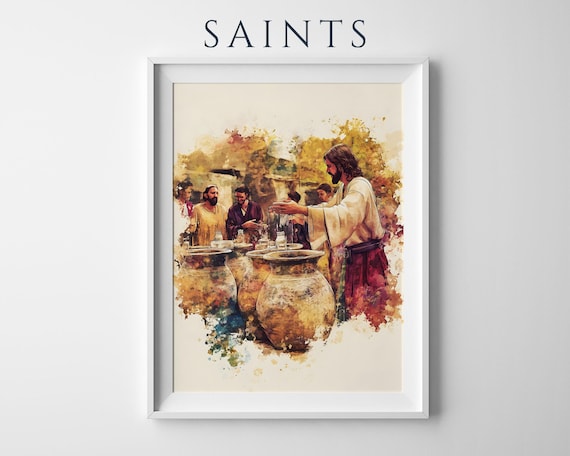
If a couple wants a visual symbol the Church does formally recognize, the Scripture readings chosen for the Mass carry that weight already. Catholic weddings frequently draw the first reading from Genesis (the creation of man and woman) or the Song of Songs, and often the Gospel from John 2, the wedding at Cana where Christ performs his first public miracle at, of all places, a wedding celebration — turning water into wine rather than a couple's short supply into an embarrassment. Catholic couples have long read this as Christ quietly signaling that ordinary domestic joy, not just dramatic miracles, falls within his care.
Preparing for more than a ceremony
The customs discussed here are all downstream of a much longer process the Church asks couples to undertake before the wedding day itself, sometimes called Pre-Cana or marriage preparation, covering everything from communication and finances to the Church's teaching on the permanence and openness-to-life built into Catholic marriage. Catholic marriage preparation exists precisely because the Church wants the wedding day's vows to rest on informed, free consent, not simply momentum toward a date already booked on a calendar.
A ceremony built to point past itself
None of these customs, required or optional, are the point on their own. A Catholic wedding is built, deliberately, to keep pointing past the event itself toward the covenant the couple is entering — a bond the Church believes is upheld not merely by two people's good intentions but by grace. Whether a particular couple lights a candle, drapes a lazo, or skips both entirely, the sacrament they receive is the same one Catholics have received for two thousand years: consent, freely given, before witnesses, meant to last a lifetime.
Trivia
Is a Catholic wedding always celebrated within a Mass?
Is the unity candle part of the official Catholic wedding rite?
Why does a priest or deacon ask 'Who gives this woman to be married'?
What are the unity symbols sometimes used in Hispanic Catholic weddings?
Can two Catholics get married outside of a church building?
Related Reading