The First Passover: Exodus 12 and the Lamb's Blood

Instructions in the middle of a crisis
By the time Exodus 12 opens, nine plagues have already struck Egypt, and Pharaoh has repeatedly refused to release the enslaved Israelites despite each disaster. What makes Exodus 12 different from the plague narratives that precede it is its shift in focus: rather than describing another catastrophe unfolding around the Israelites, the chapter records God giving Moses and Aaron a detailed set of household instructions to be carried out before the coming judgment falls. "Tell the whole community of Israel: On the tenth of this month every family must procure for itself a lamb, one apiece for each household" (Exodus 12:3, NABRE) — the text specifies a year-old male without blemish, to be kept for four days before being slaughtered "during the evening twilight" on the fourteenth day (Exodus 12:5-6).
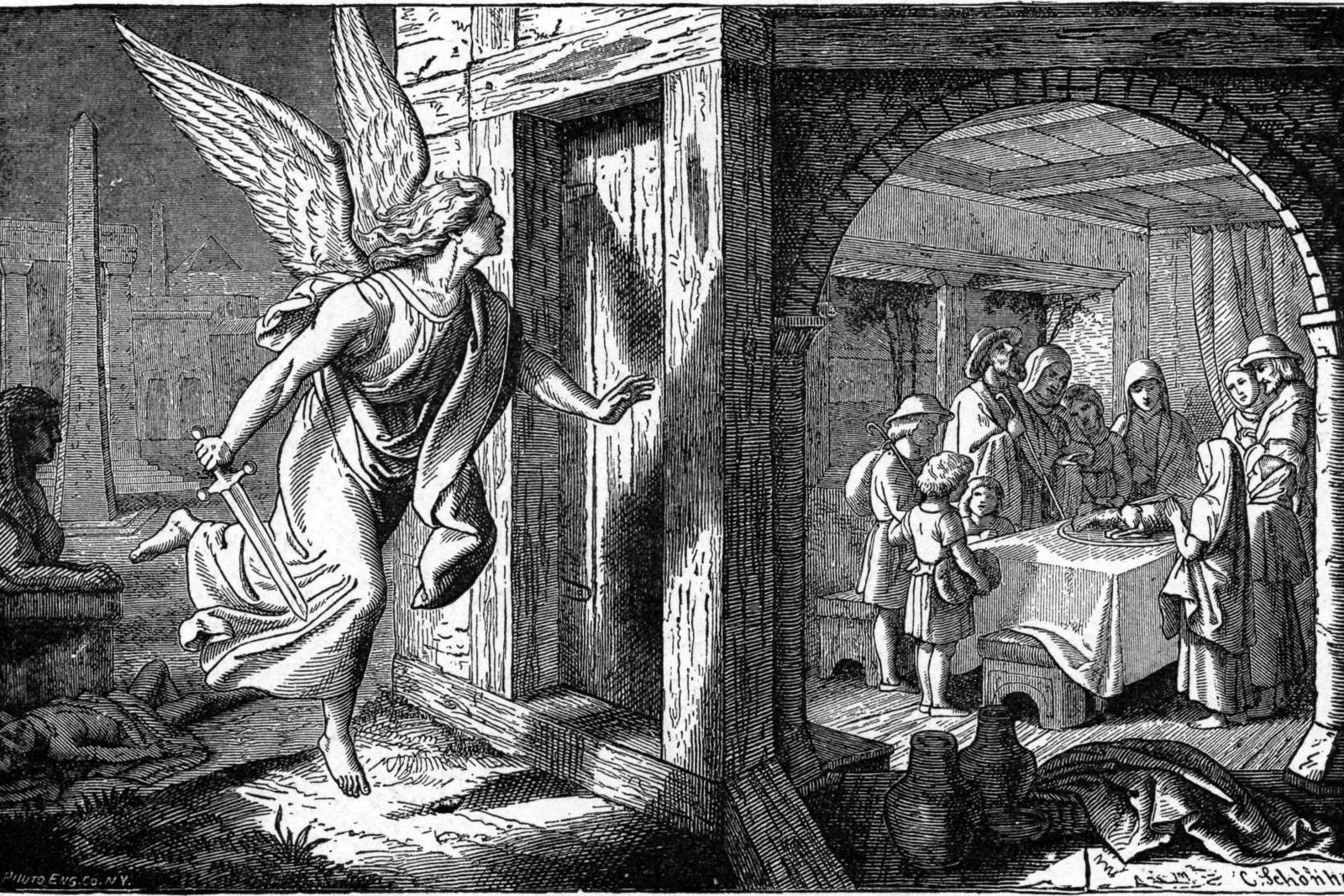
The Angel of Death and the First Passover, illustration from Bible Pictures and What They Teach Us, 1897 — public domain.
The specificity continues through every stage of the instructions. Households too small to need a whole animal were to share one with a neighbor, apportioning the cost by the number of people eating (Exodus 12:4). The blood was not simply to be disposed of but deliberately applied: "They will take some of its blood and apply it to the two doorposts and the lintel of the houses in which they eat it" (Exodus 12:7). The meat itself had to be roasted rather than boiled, eaten with unleavened bread and bitter herbs, and nothing left until morning was to remain — any leftovers had to be burned (Exodus 12:8-10).
Eating ready to run
Perhaps the most vivid detail in the whole chapter is the posture God commands for the meal itself: "with your loins girt, sandals on your feet and your staff in hand, you will eat it in a hurry. It is the Lord's Passover" (Exodus 12:11, NABRE). This was not meant as a leisurely family dinner. Every element of the instruction — clothing already fastened for travel, sandals on rather than set aside, a walking staff in hand — points toward imminent departure, a household eating its last meal in Egypt while dressed and ready to leave the moment the word came.
That same verse gives the event its name directly, using the Hebrew term that becomes "Passover" in English translation. The name is not a later addition applied by later tradition — it appears in the instructions themselves, tied explicitly to what is about to happen that night.
What the blood marked
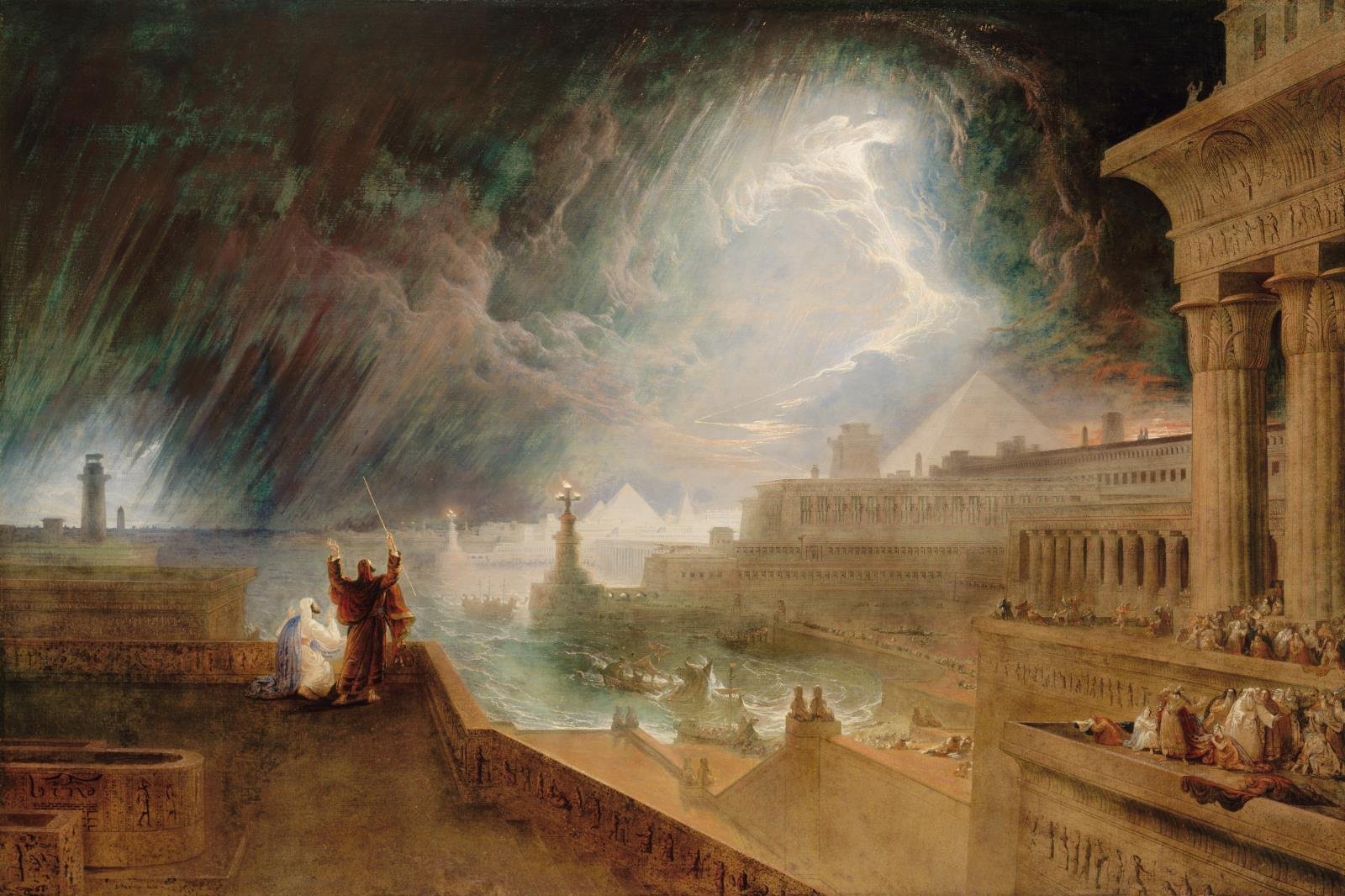
Exodus 12:12 states plainly what was coming: "on this same night I will go through Egypt, striking down every firstborn in the land, human being and beast alike, and executing judgment on all the gods of Egypt—I, the Lord!" (NABRE). This is the tenth and final plague, the culmination of the escalating confrontation between God and Pharaoh that runs through the preceding chapters of Exodus. The verse immediately following explains the function of the blood applied to the doorposts: "for you the blood will mark the houses where you are. Seeing the blood, I will pass over you; thereby, when I strike the land of Egypt, no destructive blow will come upon you" (Exodus 12:13).
The mechanism described here is direct and unambiguous within the text: the blood is not a magical charm but a sign, marking which households belonged to the community God was preserving. Every family that followed the instructions — regardless of any other circumstance — was protected; the marking, not any other quality of the household, is what the text identifies as decisive.
A feast established on the spot
What sets Exodus 12 apart from the narrative of the earlier plagues is that its instructions immediately become permanent religious law, not merely a one-time emergency measure. "This day will be a day of remembrance for you, which your future generations will celebrate with pilgrimage to the Lord; you will celebrate it as a statute forever" (Exodus 12:14, NABRE). The chapter establishes, in the middle of the crisis itself, that this single night would be commemorated by every subsequent generation of Israelites — a command carried out continuously in Jewish practice for more than three thousand years since, through the Passover Seder still observed today.
For the events immediately preceding this night, see the companion article on The Plagues of Egypt, and for what happened to the Israelites in the days directly after their departure, see The Crossing of the Red Sea. Christian tradition has additionally read the Passover lamb typologically, connecting its sacrifice to Christ's death during the Passover season centuries later — a theological interpretation the New Testament itself develops, though it stands as later reflection built on top of the Exodus 12 narrative rather than something the original text asserts about itself.
A meal that became a memory
What makes Exodus 12 unusual among biblical narratives of deliverance is how quickly it turns from a single historical night into an institution meant to be repeated indefinitely. The chapter does not simply report what happened; it builds the instructions for future commemoration directly into the account of the event itself, specifying that households explaining the practice to their children in later generations, when asked "What does this rite of yours mean?", should reply: "It is the Passover sacrifice for the Lord, who passed over the houses of the Israelites in Egypt; when he struck down the Egyptians, he delivered our houses" (Exodus 12:26-27, NABRE). The meal was designed, from its very first observance, to carry its own explanation forward across time, so that the story would not need to be reconstructed later from fragments — it was handed down complete, ritual and explanation together, from the first night onward.
Trivia
What instructions did God give the Israelites for the first Passover?
What did the blood on the doorposts actually do?
What was the tenth plague, and how does it connect to Passover?
Why is the feast called 'Passover'?
Is Passover still observed today, and does Christianity connect to it?
Related Reading